How to Play Sequence: Setup, Rules, Strategy, and Variations
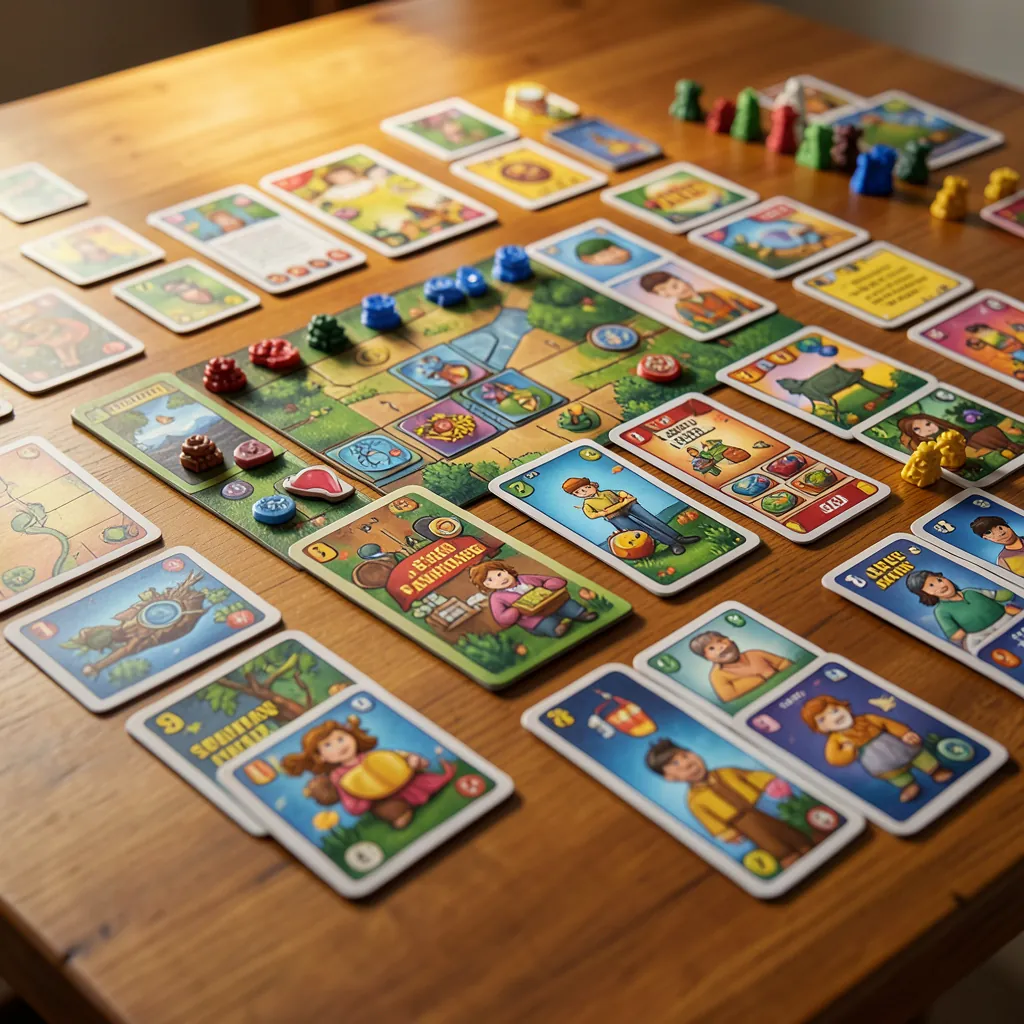
How to Play Sequence: Setup, Rules, Strategy, and Variations
Contents
♟️ Sequence is an abstract strategy board-and-card game in which players or teams play cards to place chips on matching board spaces and race to form rows of five called sequences. The goal is to complete the required number of sequences before opponents—two sequences in a two-player or two-team game, or one sequence in a three-player or three-team game.
Players: 2–12
Play Time: Up to 30 minutes
Age: 7+
Difficulty: Easy
Type: Strategy board/card game
Setup
What do you need, and how do editions compare?
| Source / edition | Listed price | Players | Age | Play time | Contents / notes |
|---|---|---|---|---|---|
| Sequence Game Premium Edition (ToysRUs) | $39.99 | 2–12 | 7+ | Not listed | Giant 20” × 26” board, exclusive marker chips, deluxe cards in a storage box |
| Sequence Fun Family Strategy Board Card Games (OnBuy) | £13.94 | 2–12 | Not specified; summary says “all ages” | Not listed | Board/card game; play a card, place a chip, make five in a row |
| Multicolour Sequence Strategy Board Card Games (Noon) | 28.35 — currency not stated in excerpt | 2–12 | 7+ | Up to 30 mins | 1 × Sequence Strategy Board Card Game; English & Arabic |
| Sequence Game by Jax (WorthPoint listing) | Sold listing; no current price shown | “2 or more” | 7+ | Not listed | Folding board, 2 decks of Sequence cards, 135 playing chips, instructions; Jacks are wild; blocking/removing chips mentioned |
| Sequence rules summary (Wikipedia) | N/A | Two-player/two-team and three-player/three-team examples | N/A | N/A | Objective, sequence formation, winning targets, house rules, official variants |
Note: Prices and availability change, and the listings use different currencies. The sources also conflict slightly on player count: most listings say 2–12, while the classic Jax listing says “2 or more.”
Setup steps
- Unfold the Sequence board and place it where all players can reach it.
- Use the two decks of Sequence cards and the playing chips listed in the classic Jax contents—or the equivalent components in your edition.
- Sort the marker chips by color so each player or team has a set. The provided sources do not specify the exact number of chips per color.
- Prepare and deal starting hands as directed by the rulebook included with your copy; the provided sources do not state a universal starting hand size.
- Agree whether you are playing individually or in teams, then set the winning target: two sequences for a two-player or two-team game, or one sequence for a three-player or three-team game.
- Remember that each corner of the board has a “Free” space that all players can use.
How to Play
- On your turn, play one card from your hand.
- Place one of your chips on the board space that corresponds to the card you played.
- Replace the played card as directed—the source describes the turn order as card, chip, replace card.
- If you forget to replace a card and another player calls out “jhampus” before you correct it, you cannot make it up later and must continue with a reduced number of cards.
- A sequence is a row of five chips placed vertically, horizontally, or diagonally. A row of four chips plus a Free corner space also counts as a sequence.
- Sequences of the same color may intersect, but only at a single position.
- In a two-player or two-team game, you need two sequences to win. You may use any single chip from your first sequence as part of your second sequence, and a straight row of nine chips counts as two sequences.
- In a three-player or three-team game, only one sequence is needed to win.
- Follow the no-table-talk rule: there is no table talk or coaching between team members.
- The game ends when a player or team completes the required number of sequences. If no one reaches the target, the game ends in a draw.
Rule details to check in your rulebook
- Hand size: The provided sources do not state a universal starting hand size.
- Jack powers: Source 4 says Jacks are wild, but the provided sources do not fully explain every Jack action.
- Blocking/removal: Source 4 mentions blocking opponents by removing their chips; the exact removal conditions are not detailed in the provided sources.
- Starting player: Not specified in the provided sources.
Scoring
Standard Sequence does not use point scoring. You win by completing the required number of sequences: two sequences in a two-player or two-team game, or one sequence in a three-player or three-team game. If no one completes the target number, Source 5 says the game ends in a draw.
Some house-rule variations use points instead. For example, one source-described variation has players compete to fill the board with sequences and score one point per sequence; the highest score wins.
💡 Strategy Tips
- Use the Free corners. Each corner is a Free space all players can use, and four chips plus a corner can complete a sequence.
- Build overlapping sequences in two-player/two-team games. A single chip from your first sequence can be reused in your second, and a straight row of nine chips counts as two sequences.
- Respect the card–chip–replace order. If you forget to replace a card and an opponent calls “jhampus,” you lose that card for later turns.
- Keep team communication legal. Source 5 explicitly says there is no table talk or coaching between team members.
- Do not ignore Jacks or blocking. Source 4 warns that Jacks are wild and that opponents can block by removing chips; check your printed rulebook for the exact Jack and removal rules.
🎲 Variations
- Two-player/two-team game: The target is two sequences; sequences can overlap, and a nine-chip straight row counts as two sequences.
- Three-player/three-team game: Only one sequence is needed to win.
- Board-fill scoring house rule: Players try to fill the board with sequences and score one point per sequence; the most points wins.
- Announce-your-sequence rule: An optional rulebook rule requires a player to announce a completed sequence; if left unannounced, it may not count until the next turn.
- Corner rule: Instead of corners always being Free, a team may put a token in a corner by skipping a turn when four of their color are lined up against that corner; another team may block with a two-eyed Jack.
- Sudden Death Overtime: If a player/team completes the final needed sequence, the next player/team may force overtime if they can complete their final needed sequence on their next turn.
- Official variants: Source 5 lists Sequence: States and Capitals, Sequence Numbers, Sequence 25th Anniversary Edition, Jumbo Sequence, Travel Sequence, Sequence Deluxe Edition, and Sequence for Kids. Sequence Dice uses dice instead of cards and has its own special rolls.
❓ FAQ
How many players can play Sequence?
Most product listings in the sources say 2–12 players, while one classic Jax listing says “2 or more.” The most repeated figure is 2–12.
How do you win Sequence?
Complete the required number of five-chip sequences: two sequences in a two-player or two-team game, or one sequence in a three-player or three-team game. If no one reaches the target, Source 5 says the game is a draw.
Can you play Sequence with 2 players?
Yes. Source 5 treats a two-player game like a two-team game: you need two sequences to win. The provided sources do not state a separate two-player hand size.
Is Sequence hard to learn?
No. The sources describe it as easy enough for children and challenging for adults, with a listed age of 7+.
How long does a game of Sequence take?
One listing gives a play time of up to 30 minutes. Other sources do not list a time, so “up to 30 minutes” is the only stated figure in these sources.
What do you need to play Sequence?
The classic Jax contents list a folding game board, two decks of Sequence cards, 135 playing chips, and instructions. Premium and other editions may include a giant board, exclusive marker chips, or a card storage box.
Related guides
- Azul Max Players: How to Play, Setup, Scoring, and Player Count Guide
- Battleship Best Placement: Where to Hide Your Fleet and How to Play
- Battleship Best Strategy: How to Play, Search, and Win More Often
- Battleship Strategy Placement: How to Play, Set Up, and Hide Your Fleet