How to Play Risk: Board Rules, Setup, Scoring, Strategy, and Variations
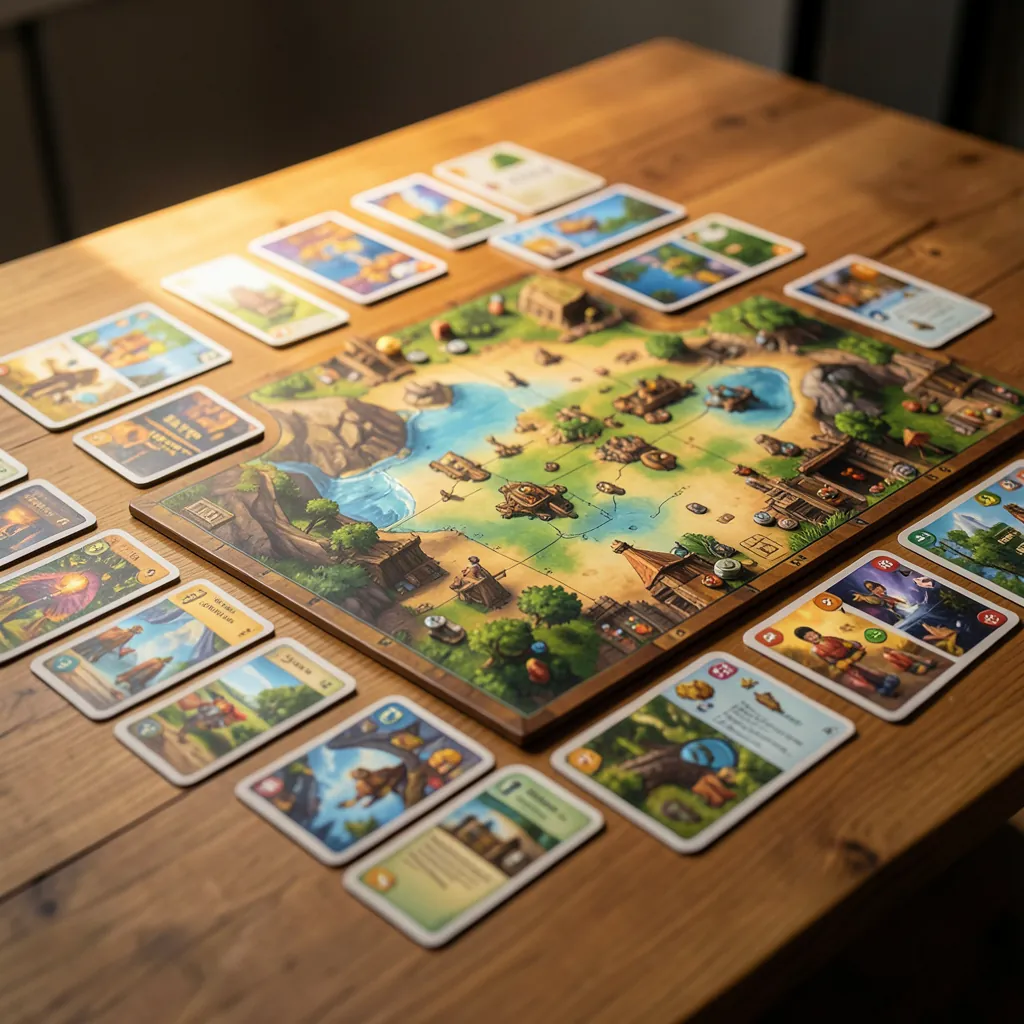
How to Play Risk: Board Rules, Setup, Scoring, Strategy, and Variations
Contents
🎲 Risk is a turn-based strategy board game, invented by Albert Lamorisse and originally released in 1957 as La Conquête du Monde, in which 2–6 players control armies on a world map of 42 territories in six continents. The goal is world domination: conquer every territory and eliminate all other players. Battles are resolved with dice, while continent bonuses, cards, and troop movement drive the strategy.
Players: 2–6
Play Time: 1–6 hours (Source 4); Source 5 says 1–8 hours, most 1–3 hours
Age: Varies by edition; not stated in the cited sources
Difficulty: Complex; luck and skill
Type: Strategy board game
Setup
- Choose colors and starting armies. Each player takes a color and counts out the initial army allotment for the player count: 2 players: 40 each; 3 players: 35 each; 4 players: 30 each; 5 players: 25 each; 6 players: 20 each.
- Determine turn order. Sources differ slightly here: one common method is to roll dice, with the highest roller placing first; Source 4 says to roll again after setup to determine play order, while Source 5 says the setup-first player begins. Agree on this before starting.
- Claim territories. Starting with the first player and proceeding clockwise, players take turns placing one army on an unoccupied territory until all 42 territories are claimed.
- Use the quicker alternate setup if desired. Deal the territory cards evenly among players, place one army on each territory shown on your cards, then place remaining starting armies.
- Place remaining starting armies. After all territories are claimed, players take turns placing their remaining initial armies on territories they control. A territory may hold any number of armies.
- Prepare the card deck. For standard Risk, remove Secret Mission cards if your edition includes them, then shuffle the remaining deck and place it face down. Card counts vary by edition: Source 1 lists 42 territory cards + 2 wild cards; Source 3 lists 56 total cards including 12 mission cards; Source 4 lists 72 total cards including 28 mission cards. Use your edition’s deck.
How to Play
| Rule area | Standard rule | Notes / conflicts |
|---|---|---|
| Players | 2–6 | Supported by Sources 4 and 5 |
| Map | 42 territories in 6 continents | Sources 1, 3, 4, and 5 agree |
| Turn structure | Reinforce, attack, fortify; trade/draw cards | Source 1 and Source 5 simplify to 3 phases; Source 4 lists 5 phases by separating card trade-in and card draw |
| Reinforcements | Territories ÷ 3, rounded down; minimum 3; plus continent bonuses | Sources 1, 4, and 5 agree |
| Continent bonuses | Asia +7; North America +5; Europe +5; Africa +3; Australia +2; South America +2 | Sources 1, 4, and 5 agree |
| Attack dice | Attacker rolls 1–3 dice; defender rolls 1–2 dice; ties go to defender | Must leave at least 1 army behind in the attacking territory |
| Card sets | 3 matching symbols or 1 of each; first sets worth 4, 6, 8, 10, 12, 15, then +5 each | Sources 4 and 5 give the sequence; Source 1 says the ascending values are usually printed on the board |
| Win condition | Eliminate all other players and control all 42 territories | Standard Risk has no point score; Secret Mission and Risk 2210 A.D. use alternate win systems |
- Start your turn by placing reinforcements. Count the territories you control, divide by 3, and round down. If the result is less than 3, you still place at least 3 armies. Add continent bonuses if you control every territory in a continent: Asia 7, North America 5, Europe 5, Africa 3, Australia 2, South America 2.
- Trade in card sets if required or useful. A valid set is either three cards with the same symbol or one card of each symbol: infantry, cavalry, and artillery. The first set traded is worth 4 armies, then 6, 8, 10, 12, and 15; after that, each set is worth 5 more than the previous set. If you own a territory shown on a traded card, you may place 2 extra armies on that territory, once per set. If you hold five or more cards at the start of a turn, trade in sets until you are under the limit; Source 1 specifically says five cards, while Source 5 says 5 or 6 cards.
- Choose whether to attack. Attacking is optional. You may attack any enemy territory adjacent to one of your territories or connected by a sea lane/dashed line, such as Alaska–Kamchatka. You must have at least 2 armies in the attacking territory, because one army must stay behind.
- Resolve each battle with dice. The attacker rolls 1–3 dice, up to the number of attacking armies minus the one left behind. The defender rolls 1–2 dice, up to the number of defending armies. Compare the highest attacker die to the highest defender die, then the second-highest attacker die to the second-highest defender die if applicable. The higher number wins each comparison; ties go to the defender. Each losing comparison removes one army.
- Continue or stop the attack. The attacker may stop after any roll. An attack ends when the attacker stops, the attacker can no longer attack, or the defender loses all defending armies in that territory.
- Capture territory. If the defender loses all armies in a territory, the attacker takes it. Move at least as many armies into the captured territory as the number of dice used in the final winning roll, and leave at least one army behind in the territory you attacked from.
- Draw a Risk card. If you captured at least one territory during your turn, draw one Risk card. You may draw no more than one card per turn. If you eliminate a player by taking their last territory, you receive all of their cards; if that puts you over the hand limit, trade in sets immediately.
- Fortify and end your turn. You may make one fortifying move: move any number of armies from one territory you control to an adjacent territory you control, leaving at least one army behind. Some groups use an alternate fortify rule allowing movement through contiguous friendly territories. Then play passes clockwise.
Scoring
Standard Risk does not use a point score. You win by eliminating all other players and controlling all 42 territories; a player is eliminated when they no longer control any territory. The “score” is effectively board position: armies, territories, continents, and card sets.
Some versions add alternate win conditions. Secret Mission Risk lets a player win by completing a secret mission, and Risk 2210 A.D. uses a point system rather than total territory domination. Card sets are not points; they are traded for reinforcements.
💡 Strategy Tips
- Go for whole continents. Continent bonuses are the most reliable way to grow your army each turn. Prioritize smaller or defensible continents when you cannot hold a large one.
- Defend your borders. Do not spread one-army territories across the map; they invite attacks. Build around a core and place more armies on border territories.
- Know the map’s strong and weak points. Argentina, Madagascar, and Japan are hard to attack. North and East Africa, China, Russia, Southern Europe, and the Middle East are easier to invade from multiple directions.
- Use dice probability instead of attacking blindly. The defender wins ties, so attacks are not guaranteed. Stop an attack when the odds turn bad; the attacker can end an attack after any roll.
- Watch opponents and use diplomacy carefully. Alliances are not mentioned or protected by the official rules, but negotiation and reading opponents’ intentions are common parts of play.
🎲 Variations
- 2-player Risk: Standard Risk supports 2–6 players. In a 2-player game, each player starts with 40 armies, making it a head-to-head tactical game.
- Quicker alternate setup: Deal territory cards evenly and place one army on each shown territory instead of claiming territories one by one.
- Secret Mission Risk: Each player receives a secret mission; completing it can win the game. Remove these cards for standard play.
- Alternate fortify rule: Allow armies to move through multiple contiguous friendly territories to their destination, as long as at least one army remains in the starting territory.
- Timed or turn-limited games: House rules may set a time limit or limit the number of turns to shorten long games.
- Themed and historical variants: Published variants include Castle Risk, Risk: Napoleon Edition, and Risk: 2210 A.D.; house rules also add geography or history questions before placing or attacking.
❓ FAQ
How many players can play Risk?
Risk supports 2–6 players. Initial armies vary by player count: 40 for 2 players, 35 for 3, 30 for 4, 25 for 5, and 20 for 6.
How do you win Risk?
In standard Risk, you win by eliminating all other players and controlling all 42 territories. Standard Risk has no point score; Secret Mission and Risk 2210 A.D. use alternate win conditions.
Can you play Risk with 2 players?
Yes. Risk supports 2–6 players, and a 2-player game gives each player 40 starting armies. It becomes a direct head-to-head strategy match.
Is Risk hard to learn?
The core loop is learnable: reinforce, attack with dice, and fortify. Risk is still considered complex because continent bonuses, card sets, probabilities, and diplomacy all affect strategy.
How long does a Risk game take?
Sources conflict: Source 4 lists 1–6 hours, while Source 5 says 1–8 hours, with most games lasting 1–3 hours. Length varies with player count, luck, and negotiating.
What do you need to play Risk?
You need the Risk board with 42 territories, armies in different colors, dice for attacker and defender, and the Risk card deck. Mission cards are used only for Secret Mission-style play, and card counts vary by edition.
Related guides
- Azul Max Players: How to Play, Setup, Scoring, and Player Count Guide
- Battleship Best Placement: Where to Hide Your Fleet and How to Play
- Battleship Best Strategy: How to Play, Search, and Win More Often
- Battleship Strategy Placement: How to Play, Set Up, and Hide Your Fleet
- Best Battleship Position: How to Play Battleship and Place Your Fleet to Survive