How to Play Risk: Board Game Directions, Setup, Rules, and Scoring
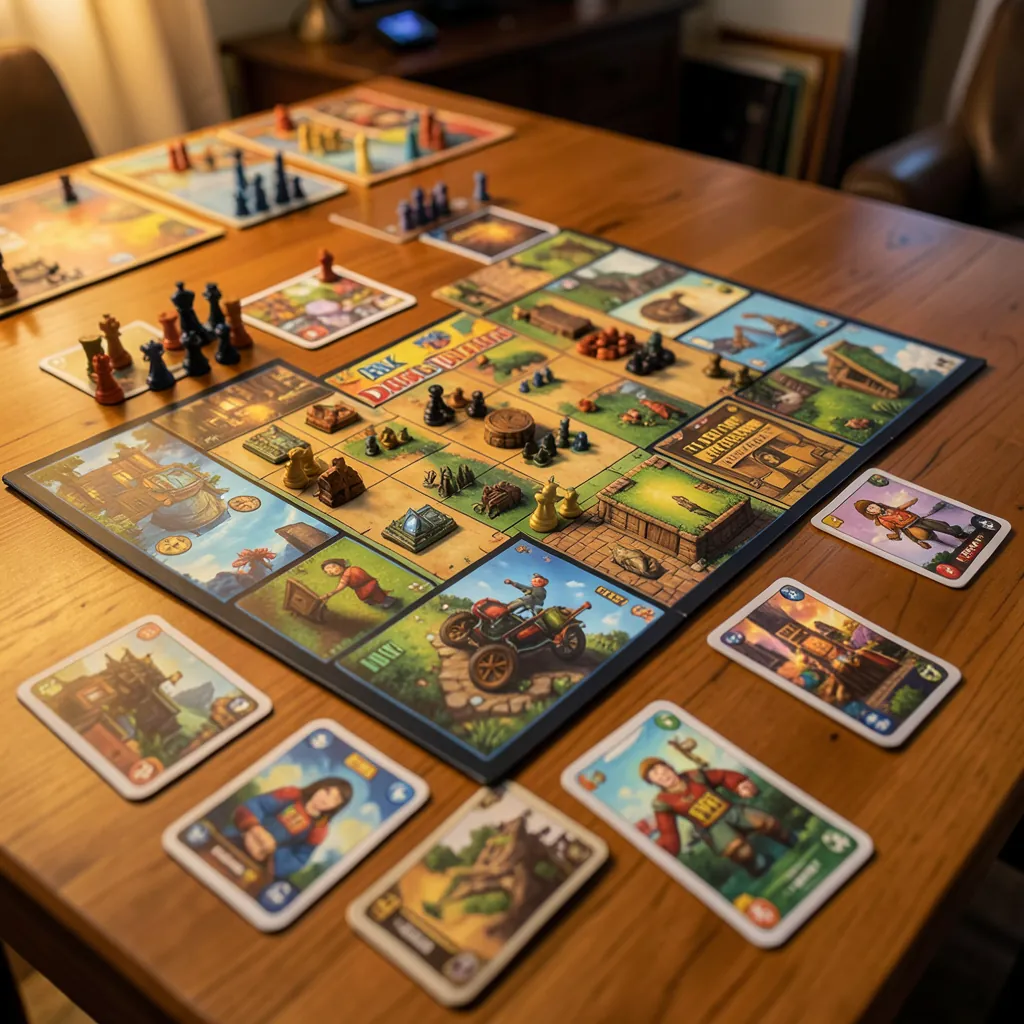
How to Play Risk: Board Game Directions, Setup, Rules, and Scoring
Contents
🎲 Risk is a turn-based strategy board game about world conquest: players command armies on a map of 42 territories grouped into six continents, attack adjacent enemy territories using dice, and try to eliminate all opponents. The standard game is for 2–6 players and often lasts 1–8 hours, though exact age, setup, and timing vary by edition.
Players: 2–6 (standard Risk; the “up to 4” biology game in Source 2 is not standard Risk)
Play Time: 1–8 hours (player- and edition-dependent; may run longer)
Age: 10+ (modern listing; an older source lists 8+)
Difficulty: Medium complexity, high strategy
Type: Strategy board game (war/conquest)
Note: One provided source describes a classroom biology game that uses a “Risk” card deck and spinner. That is not the standard Risk board game and is not used for the core rules below.
Setup
- Choose armies and prepare components. Each player takes a color/set of army pieces. Use the board with 42 territories grouped into six continents, the Risk card deck, and dice: three red attacker dice and two or three white/blue defender dice.
- Determine first player. Each player rolls one die; the highest roll plays first, and play proceeds clockwise.
- Claim territories. Players take turns placing one army on an unclaimed territory until all 42 territories have been claimed.
- Place remaining starting armies. After claiming territories, players place their remaining starting armies among territories they control. Source 3 lists starting-army totals of 20 per player for six players, 25 for five, and 30 for four; it does not state totals for two or three players. Check your edition’s rulebook for those counts.
- Prepare optional mission cards. In Secret Mission Risk variants, use the secret mission cards as directed by that edition. Standard Risk uses the territory-card deck and wild cards.
What do the sources agree and disagree about?
| Item | Source 3: 2006 Wikipedia archive | Source 6: 2023 Wikipedia archive | How this guide handles it |
|---|---|---|---|
| Players | 2–6 | 2–6 | Standard Risk is 2–6. Source 2’s “up to 4” refers to a classroom biology game, not standard Risk. |
| Play time | 1–8 hours, player dependent | 1–8 hours; text notes games can take several hours to multiple days | Use 1–8 hours as the baseline and flag that long games are possible. |
| Age | 8+ | 10+ | Use 10+ as the modern listing and flag the older 8+ listing. |
| Setup time | 5–10 minutes | 5–15 minutes | Give a 5–15 minute range and flag the source difference. |
| Complexity | Medium complexity; high strategy | Strategy game with simple rules but complex interactions | Describe it as medium complexity/high strategy. |
| Type | Strategy board game/war game | Strategy board game of diplomacy, conflict, and conquest | Describe it as a strategy board game/war game. |
| Source 1 | Classroom-adapted Risk directions for middle schoolers; full rules not shown in excerpt | — | Treat as a classroom adaptation, not the standard rule source. |
| Source 2 | — | — | A biology classroom game with a spinner and two decks; not standard Risk. |
| Sources 4–5 | Graph-algorithms homework using Risk’s board as a graph | — | Not a rules source; supports the territory/adjacency concept only. |
How to Play
- Reinforce. At the start of your turn, collect reinforcement armies: 1 army for every 3 territories you control, with a minimum of 3, plus continent bonuses: Africa +3, Australia +2, Asia +7, Europe +5, North America +5, South America +2. You may also trade in a matched set of Risk cards—three cards with the same symbol, one of each symbol, or two different symbols plus a wild card—for extra armies. The award increases as sets are turned in, but the exact table varies by edition and is not fully specified in the provided sources.
- Attack. You may attack an enemy territory adjacent to one of your territories. The attacking territory must have at least two armies, and you must leave one army behind. You may roll up to three attack dice, but you must have one more army in the attacking territory than the number of dice rolled. The defender rolls one or two defense dice and must have at least as many armies as dice rolled. Compare the highest dice: the defender wins ties. If a second defense die was rolled, compare the second-highest dice. The loser removes one army per comparison.
- Resolve captured territories. If the defender loses the last army in the territory, the attacker moves in at least as many armies as attack dice rolled and may move more, always leaving one army in the attacking territory. If this was the defender’s last territory, the defender is out of the game and gives all their cards to the attacker. The attacker may then trade in cards for reinforcements before making further attacks, but may not hold more than five cards.
- Fortify/move. After attacking, you may move any number of armies from one territory you control to one adjacent territory you already control. You must leave at least one army in each territory.
- Draw a card. If you captured at least one enemy territory during your turn, draw one Risk card at the end of the turn. You may draw no more than one card per turn and may not hold more than five cards. Then the next player takes a turn.
Scoring
Risk does not use a traditional point score. The standard winner is the last player remaining after all other players have been eliminated; the goal is to occupy every territory and eliminate opponents. In Secret Mission Risk variants, a player can win by completing the secret mission on their card, which shortens the game. Reinforcement armies and continent bonuses are resources, not points.
💡 Strategy Tips
- Attack with a numerical edge. Source 3’s dice odds show that three attack dice versus one defense die win 65.97% of the time, two versus one wins 57.87%, and one versus one wins only 41.67%. Defenders win ties.
- Do not strip your borders. Keep at least one army in every territory, and avoid attacking with a territory that will be left too weak to defend.
- Target whole continents. Continent bonuses are a major army engine: Asia +7; Europe and North America +5 each; Africa +3; Australia and South America +2 each.
- Use cards consistently. Capture at least one territory per turn when possible to draw a card, then trade matched sets at the start of your turn for reinforcements. Stay under the five-card limit.
- Common beginner mistakes: attacking with too few armies, ignoring continent bonuses, hoarding cards without trading them, and overextending borders while leaving home territories weak. Source 6 also notes that diplomacy and negotiation can matter in Risk.
🎲 Variations
- Two-player Risk: Source 6 says some two-player rules divide territories between the two players and a neutral army. The neutral army only defends when attacked; it never attacks or moves and does not take a normal turn. If the neutral army is eliminated, play continues under normal rules. Source 3 also notes that some versions use neutral armies for two-player games.
- Secret Mission Risk: Players receive secret mission cards and can win by completing their objective rather than conquering the whole world.
- Classroom adaptation: Source 1 describes middle-school-adapted Risk directions. Use those only if you are following that specific classroom resource.
- Biology classroom “Risk” game: Source 2 is a different educational game with a spinner and two card decks. Do not use its rules for standard Risk.
- Edition and house rules: Source 6 notes numerous Risk editions, themed variants, and house rules. Exact setup armies, card turn-in values, and mission rules can vary by edition.
❓ FAQ
How many players can play Risk?
Standard Risk supports 2–6 players. Source 2’s “up to 4” limit belongs to a classroom biology game, not standard Risk.
How do you win Risk?
You win by being the last player remaining after eliminating all opponents, or by completing a secret mission in Secret Mission Risk variants.
Can you play Risk with 2 players?
Yes. Standard Risk supports two players, and some two-player versions add a neutral army that only defends and never attacks or moves.
Is Risk hard to learn?
Risk is usually considered medium complexity. The basic rules are simple—reinforce, attack, fortify, draw cards—but strategy, negotiation, and dice odds make it deeper.
How long does a Risk game take?
Sources list 1–8 hours, player-dependent. Source 6 also warns that some games can run several hours to multiple days.
What do you need to play Risk?
You need the Risk board with 42 territories, army tokens, the Risk card deck including territory cards and wild cards, and dice: three red attacker dice plus two or three defender dice. Some editions also include mission cards.
Related guides
- Azul Max Players: How to Play, Setup, Scoring, and Player Count Guide
- Battleship Best Placement: Where to Hide Your Fleet and How to Play
- Battleship Best Strategy: How to Play, Search, and Win More Often
- Battleship Strategy Placement: How to Play, Set Up, and Hide Your Fleet
- Best Battleship Position: How to Play Battleship and Place Your Fleet to Survive