How to Play a War Game: Setup, Turn Sequence, and Adjudication
How to Play a War Game: Setup, Turn Sequence, and Adjudication
Contents
🎲 A war game (kriegsspiel) is a two-sided tabletop simulation in which Blue and Red teams manoeuvre forces on a map while a control team or umpire adjudicates the outcomes, so a staff can test a plan or decision before it is used for real. This guide explains how to set one up and play a turn, drawing on U.S. Naval War College planning doctrine (NWP 5-01), RAND’s SIERRA handbook, the Naval War College guide to playing wargames, and Livermore’s 1882 American Kriegsspiel manual.
Players: Two opposing teams of 4–6 each, plus a control team of 5–8 and a gaming staff of 13–20 (SIERRA figures) Play Time: No fixed length — a turn is three moves and games run a set number of turns; control monitors timing Age: Not rated in the sources; players are expected to be officers or specialists with first-hand knowledge of military/political organization, procedure and doctrine Difficulty: High — sources call preparation “a complex process” requiring specialists and complex analysis Type: Two-sided (or multi-sided) political-military map simulation with an umpire/control team
⚠️ Conflict flag on the quick facts: the default template values for this page (3–5 players, 20–30 minutes, age 10+, “trick-taking card game”) do not appear in any of the supplied sources. Every source describes a team-based, map-and-umpire professional war game, not a trick-taking card game, and none gives a fixed play time or age rating. The values above are the ones the sources actually support; the recreational card game of the same name is not covered by these sources and is not described here.
Setup
What you need
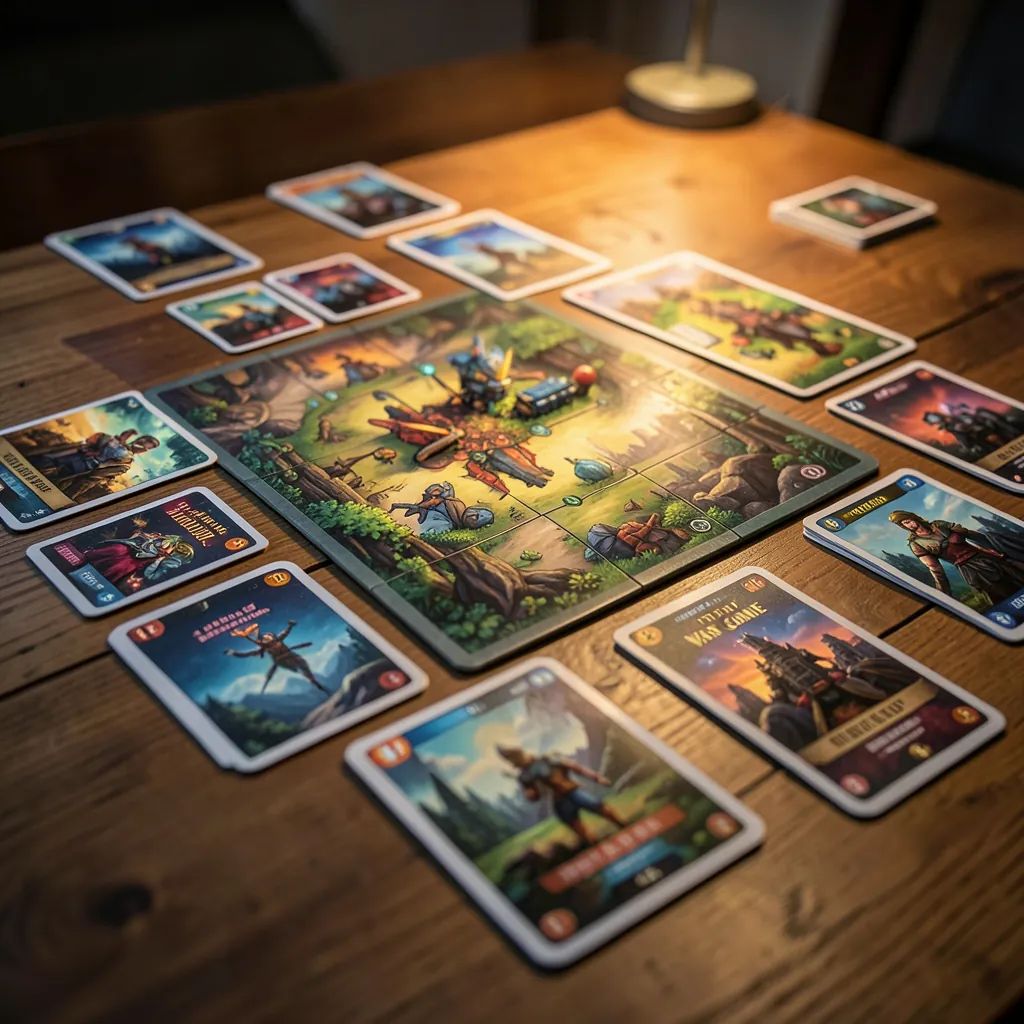
- A geographical or topographical map (or game board), small colored blocks and auxiliary apparatus “to which a conventional meaning is assigned” (Livermore, 1882).
- A scenario/game context and the data behind it.
- A Blue (friendly) team, a Red (enemy) team, and a control team/umpire.
- Recording products: a synchronization matrix, decision support products, logs and overlays. NWP 5-01 states each role player requires a copy of the current synchronization matrix and task organization, however far it has been developed; SIERRA teams keep logs and overlays showing operational details.
Step-by-step preparation
- Select the geographical area and time period for the game (SIERRA’s first preparation activity).
- Collect the appropriate data concerning that area, then organize and extrapolate it and prepare the game context — the remaining three of SIERRA’s four preparation activities.
- Form the teams. Each player team represents one or more countries and has 4–6 members. The control team might consist of the game director, an assistant, air, ground and sea assessors, and political, logistics and intelligence advisers; SIERRA used a control team of 5–8, a gaming staff of 13–20 and several clerical personnel.
- Issue preliminary information early. Players should receive the game’s objectives, scenario and any other relevant information as soon as it is usable, study it, and ask game personnel for clarification of anything questionable.
- Have command players submit an outline concept of operations to the control staff in advance, so control can use it to test and prepare for play.
- Agree on player support needs: subordinate/staff manning levels, information needs, and modes of information access before and during play (e.g. daily operational intelligence briefs). Verify that any reference publications you want are available at the game site.
- Declare what you reserve and what you delegate. Players should tell control which types of decisions they intend to keep and which they intend to delegate to controllers.
- Run the opening brief. NWP 5-01 prescribes: take roll call; review the timeline and agenda; explain the war-game method; the facilitator explains the rules — at a minimum, take all direction from the facilitator, be ready to change tempo based on remaining time, remember everyone is a recorder, the lead is the deciding authority, yield the floor during turn discussions, and stay professional.
- Brief the plan and the enemy. A friendly role player or COA representative presents the COA sketch and statement, task organization and decision support products, and highlights mission, intent, facts, assumptions, risks and current authorities; the COA representative also orients participants to the area of operations, control measures, named areas of interest and decision points, and reviews evaluation criteria. An intelligence representative explains the friendly reconnaissance and surveillance plan, and a Red cell representative explains the enemy COA considered and the enemy reconnaissance and surveillance plan.
- Confirm recorders are ready with electronic products displayed for refinement (synchronization matrix, decision support products). A similar sequence should initiate every new war game.
Who does what
| Element | Job in the game | Size / detail in the sources |
|---|---|---|
| Blue (friendly) player team | Chooses strategic then tactical objectives, plots detailed moves, draws up an integrated air/ground/sea plan | 4–6 members per team (SIERRA) |
| Red cell | Explains and plays the enemy: objectives, actions, reactions, reconnaissance plan | Established gaming facilities keep a special Red team (e.g. a Naval Operational Intelligence Center detachment at the Naval War College) |
| Control team / umpire | Makes continuous evaluation, ensures integrity of play, monitors timing, adjudicates moves | Director, assistant, air/ground/sea assessors, political/logistics/intelligence advisers; 5–8 in SIERRA |
| Gaming staff | Runs and supports the exercise | 13–20 in SIERRA, plus clerical personnel |
| Recorders | Capture adjustments into the synchronization matrix and decision support products | “Everyone is a recorder” (NWP 5-01) |
How to Play
The basic unit of play is the move cycle: one complete round of moves by Blue and Red plus the evaluation and assessment by control. A war game normally has a set number of turns, and each turn consists of three moves — Action, Reaction, Counteraction — unless special circumstances dictate additional moves; a turn may be extended if significant second- or third-order impacts emerge, and the planning team lead decides if that is required.
| Move | Who leads | What it produces |
|---|---|---|
| 1. Action (friendly) | Facilitator guides; COA rep and task force reps present | Friendly dispositions, tasks and purposes for the turn, stated as task + purpose |
| 2. Reaction (enemy) | Red cell representative | Enemy objectives, actions and reactions posted to the map |
| 3. Counteraction (friendly) | Facilitator guides; task force reps, then operational function reps, then COA rep | Tangible adjustments recorded into the synchronization matrix and decision support products |
- Open the turn (friendly Action move).
- The facilitator guides the group through the friendly actions to be analyzed and cues each role player.
- Higher headquarters and adjacent command representatives state their concepts of operations and support relationships for the turn, including the main task and purpose of each component.
- The COA representative states the commander’s objective for the turn and the starting and ending conditions (or time) of the turn, based on the construct selected (critical event, time, phase).
- The Red cell representative states the disposition of enemy forces across the area of operations.
- Task force representatives, starting with the main effort and then supporting efforts, supporting commands and sustaining forces, explain: how the task force is organized; command relationships (who holds OPCON or TACON); task force locations; and assigned tasks with their related purposes per the synchronization matrix. Present actions in the same sequence every turn — decisive action first, then supporting, shaping and sustaining — and describe them in terms of task and purpose. Subordinate commanders explain actions two echelons below their level, but information recorded is limited to one echelon below.
- Operational function representatives state their role and effort priorities for the turn.
- The COA representative guides the group to explain facts and assumptions, decision points, critical information requirements, evaluation criteria, current and proposed authorities and supplemental rules of engagement, and applicable risks.
- The Red cell asks any questions needed to clarify friendly disposition or intention.
- The facilitator announces an administrative pause, states how many minutes the Red cell has to develop reactions, and ensures the record captures what must go into the synchronization matrix.
- Play the enemy Reaction move.
- The facilitator calls the game to order and ensures the Red cell’s reactions are understood and consistent with the enemy COAs being considered.
- The Red cell explains enemy objectives and the actions to pursue them, explains enemy reactions that take advantage of critical friendly vulnerabilities, ensures the reactions are recorded and posted to the map and eventually the war-game record, and frames responses in terms of achieving enemy objectives and/or acting on friendly critical vulnerabilities.
- The facilitator announces an administrative pause so participants can form counteractions; task force representatives confirm they understand the Red reactions before pausing.
- Play the friendly Counteraction move.
- The facilitator guides discussion to ensure every enemy reaction is considered.
- Task force representatives, starting with the main effort and then supporting efforts, supporting commands and sustaining forces, explain and record tangible adjustments: location and orientation; control measures; tasks and purposes; risk (mitigated and translated into additional tasks); coordination gaps; capability shortfalls; priorities; and refinement of authorities.
- The facilitator then takes each operational function in turn to identify coordination gaps, resource adjustments or capability shortfalls from a functional perspective.
- The COA representative guides the group to readdress refinements to facts and assumptions; decision points and information-requirement adjustments; strengths and weaknesses of the COA that emerged; modifications to the COA sketch or narrative; task organization and command/support relationships; evaluation criteria; unresolved issues; previously unidentified coordination gaps; additional risk to mission or force; and additional authorities or supplemental ROE requests.
- The facilitator ensures the record captures what must be incorporated into the synchronization matrix and announces a reset for the next game or turn.
- Let control adjudicate and record. Control evaluates moves — including reconnaissance, logistics and administrative operations — as political, combat or non-combat, and makes a continuous evaluation of the game. After the turn, adjustments from the posted record are captured: the originator of recorded information personally explains each adjustment to the recorder entering it into the synchronization matrix.
- Capture decision points as they emerge. A decision point is an event or location where the commander anticipates making a key decision during execution. The recorder annotates the synchronization matrix and decision support products with the associated critical information requirements, the time the decision applies, any options discussed (branches or sequels for later planning), the location, and the supporting criteria. Do not try to fully develop feasible options during the counteraction move.
- Repeat for the set number of turns. To raise tempo, planning leads may truncate steps or adjust pace to fit time restrictions. Do not drift into speculative loss accounting: potential losses during reaction or counteraction should drive improvements to the COA — scheme of manoeuvre, tasks and purposes, task organization, capability shortfalls, risk, control measures, vulnerabilities — not subjective guesses at numbers and types of losses on either side; the impact of losses is handled later as branches or sequels.
- Close out the game with the post-game commentary described under Scoring.
Scoring
There is no point score in these sources — outcomes are adjudicated, not tallied, and this is the clearest divergence from the card game that shares the name.
- Adjudication: the control team/umpire determines results of each move cycle, and Livermore’s American Kriegsspiel handles fire computations and hand-to-hand fights through prescribed procedures and a record of positions and losses.
- What “winning” means: the aim of analysis is to test and improve the COAs. Each COA is continually assessed against the qualities the commander wants (governing factors and evaluation criteria) and checked for feasibility (can the force accomplish the mission within time, space and resource limits?), suitability (within the commander’s guidance?), acceptability (are potential cost and risk balanced against potential advantages?) and completeness (does it incorporate objectives, desired effects, tasks and purposes, forces, deployment, employment, sustainment and end-state conditions?).
- Post-game analysis can focus on overall game evaluation (the most common — a critical narrative showing how gamed actions contributed to the final outcome), a single aspect, causal factors governing the use of specific forces, or unforeseen problems that arose.
- Player input: nearly all Navy wargames end with a “hot wash-up” where players give an overall assessment and specific comments; some games also hold such sessions during play.
💡 Strategy Tips
- Stay in role, and make others stay in theirs. The hardest and most important task once play starts is staying in character — a fleet commander should not personally specify which missile ship engages which target, and should still obey higher authority. If assessment results surprise you, ask for an explanation in operational terms (failed reconnaissance, poor tactical execution, misjudged enemy), not in game terms; complaining about the model during play is seldom productive.
- Always state task and purpose, in the fixed sequence. Present decisive action first, then supporting, shaping and sustaining, mirroring the synchronization matrix — this is what makes the record usable afterwards.
- Keep a battle diary. Base hot wash-up comments on notes taken during or immediately after the action, so you can separate your actual reasoning at the time from hindsight.
- Optimize the plan, not the body count. Use Red’s reactions to fix control measures, task organization, coordination gaps, capability shortfalls and priorities rather than arguing about speculative losses.
- If you play Red, think Red — but not rigidly. Learn the opposition’s tactical doctrine as well as its technical capabilities, and when a situation calls for a more imaginative response, deviate and carefully explain your rationale, noting that it may not match strict intelligence interpretations. (Common beginner mistake: playing Red as a mirror of Blue, or treating doctrine as a straitjacket.)
🎲 Variations
Two-sided formats (SIERRA)
| Format | Information available | Advantages | Disadvantages |
|---|---|---|---|
| Open information (“open scenario”) | Both sides see each other’s forces, objectives, attack times and dispositions; the initial situation is common knowledge | Emphasizes military capability and reduces political play; faster and better defined; isolates critical factors in the use of force | No hidden information; less realistic political interaction |
| Closed information, predetermined form | Each side gets a prepared scenario with some information the other side lacks; only the referee is omniscient; the scenario also imposes restraints | Compels extensive contingency planning | Takes longer; demands more complex analysis and better judgement; restraints may feel artificial |
| Closed information, situation-determined form | Starts from a prepared scenario but without fixed restraints; control imposes and removes restraints as a function of play | Flexible, play-driven pressure | Requires an active, judgement-heavy control team |
Special play methods
- Projection: once the remaining options are reasonably clear, one or both teams and control spell out the rest of the course without detailed gaming.
- Meshing: at a critical branch point, a new “variant” game starts from that point to pursue another course of action.
- Series: change the initial conditions and run a series of games.
- Joint adjudication play: opposing teams plan overall tactical operations separately over an extended period, then discuss the plans and resolve conflicts in joint meetings around the war map — faster and less paper, but sacrifices detail and blocks exploration of intelligence-gathering.
- Seminar play: all three teams work together around the war map continuously from the start.
Player-count variants
- The sources describe teams, not individual players: 4–6 members per national player team, and a control team of 5–8 with a gaming staff of 13–20 (SIERRA).
- Three-team seminar play is the smallest practical structure described: Blue, Red and control all working the same map together.
- Can you play with two players? Not as described. No source gives a two-person version: you need at least a friendly side, an enemy side and a control/adjudicating element. Treat any 2-player “war” variant as a house rule outside these sources.
❓ FAQ
How many players do you need for a war game? At minimum three elements: a friendly (Blue) team, an enemy (Red) team and a control team. SIERRA used player teams of 4–6 members, a control team of 5–8 (director, assistant, air/ground/sea assessors, political/logistics/intelligence advisers), a gaming staff of 13–20 and clerical support.
How do you win a war game? You don’t win on points. The aim of analysis is to test and improve the course of action, so success is judged by whether the COA proves feasible, suitable, acceptable and complete, and by what the post-game analysis (usually a critical narrative of how gamed actions produced the outcome, plus a hot wash-up) says about it.
Can you play with 2 players? Not according to these sources. Every format described is two-sided or three-team play with an umpire/control element that adjudicates moves — open information, closed information with predetermined form, or closed information with situation-determined form. A two-person version would be a house rule, not something documented here.
Is it hard to learn? Yes — it is a professional exercise, not a casual game. Preparation alone is “a complex process” of at least four activities (area/time selection, data collection, data organization and extrapolation, game context), games involve large quantities of data and require specialists for player and control teams, and players are expected to know military and political organization, procedure and doctrine.
How long does a game take? The sources give no fixed duration. A game normally has a set number of turns; each turn is three moves (action, reaction, counteraction) and can be extended when significant second- and third-order impacts emerge. The facilitator paces the game to the time remaining, announces how many minutes the Red cell gets to develop reactions, and may truncate steps to increase tempo.
What do you need to play? A topographical map or board with colored blocks and apparatus assigned conventional meanings, a scenario with supporting data, a Blue team and a Red cell, a control team/umpire, and recording products — a synchronization matrix, decision support products, logs and overlays. Each role player needs a copy of the current synchronization matrix and task organization; players should also confirm in advance what staff support, information access and reference publications they will have.
Related guides
- Azul Max Players: How to Play, Setup, Scoring, and Player Count Guide
- Battleship Best Placement: Where to Hide Your Fleet and How to Play
- Battleship Best Strategy: How to Play, Search, and Win More Often
- Battleship Strategy Placement: How to Play, Set Up, and Hide Your Fleet
- Best Battleship Position: How to Play Battleship and Place Your Fleet to Survive