How to Play Battleship: Rules, Setup, Scoring, and Variations
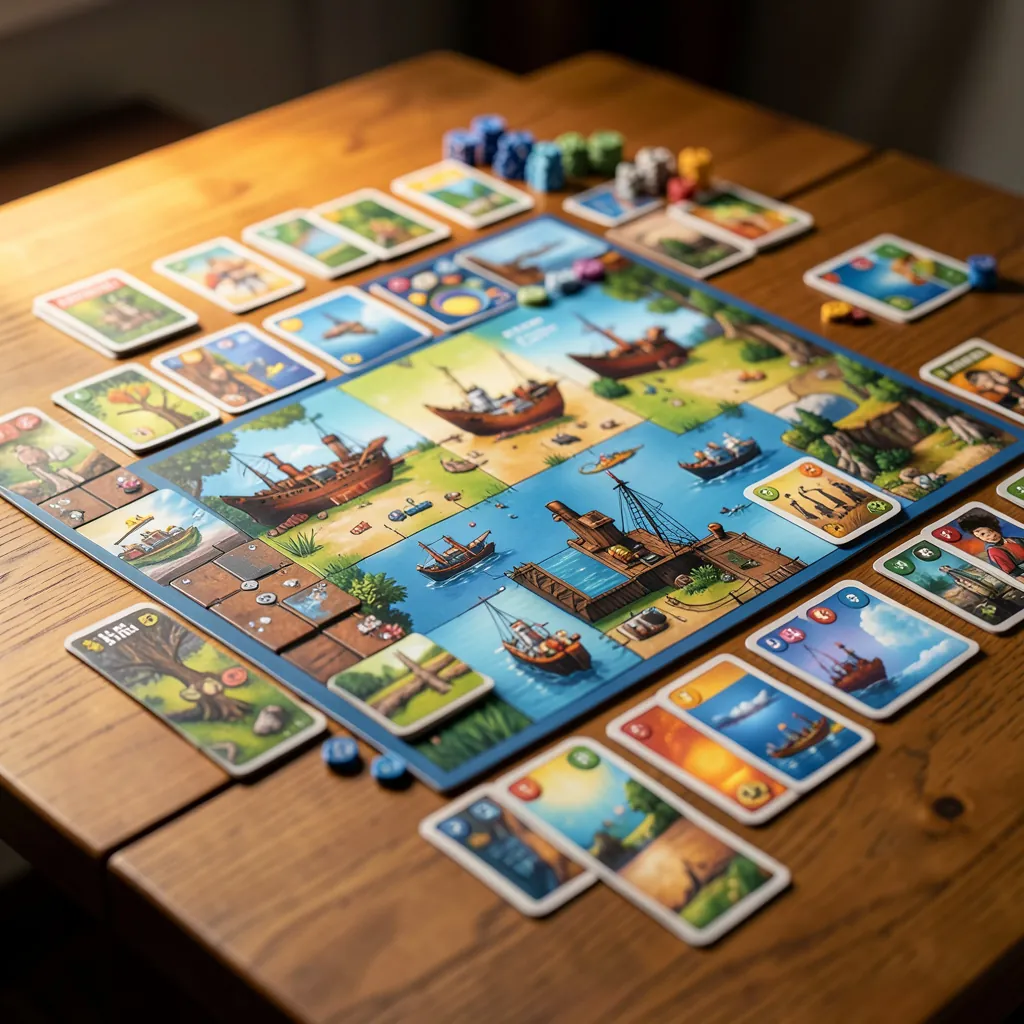
How to Play Battleship: Rules, Setup, Scoring, and Variations
Contents
🎲 Battleship is a two-player strategy guessing game in which each player secretly places a fleet of five ships on a grid and then takes turns calling coordinates to hit and sink the opponent’s ships. The first player to sink all five enemy ships wins; classic rules usually take 10–60 minutes.
Players: 2
Play Time: 10–60 minutes (classic rules; versions vary)
Age: 8+ (classic Wikipedia rules); Hasbro Grab & Go lists 7+
Difficulty: Easy to learn — simple coordinate calls; sources do not give a formal difficulty rating
Type: Strategy/guessing board or paper game
Setup
- Separate the two battle cases by sliding them apart; each player takes one. Sit facing each other with the lids raised so neither player can see the other’s ocean grid.
- Give each player a fleet of five ships. With current Hasbro-style rules, these are usually Carrier (5 holes), Battleship (4), Destroyer (3), Submarine (3), and Patrol Boat (2).
- Each player secretly places all five ships on their ocean grid. Ships may be placed horizontally or vertically, but not diagonally in standard rules. Do not place any part of a ship off the grid.
- Ships cannot overlap or share the same square/coordinate. One classroom paper version explicitly allows ships to touch as long as they do not occupy the same coordinate.
- Once play begins, you cannot change a ship’s position.
- Divide the red and white pegs between players and place them in the storage areas. Red pegs mark hits; white pegs mark misses.
- For a paper version, each player needs a “My Ships” grid and an “Enemy Ships” grid, plus red and black markers/crayons and a folder or divider between players. Decide who goes first.
Which ship set and version am I using?
Ship names, ship sizes, grids, and victory conditions vary by edition and source. Use the rules that came with your set; do not mix versions.
| Version/source | Ships and sizes | Grid/board | Turn style | Win condition |
|---|---|---|---|---|
| Hasbro Grab & Go (Source 1) | Carrier 5, Battleship 4, Destroyer 3, Submarine 3, Patrol Boat 2 | Two battle cases with ocean/target grids; letter-number coordinates | One shot per turn; red peg = hit, white peg = miss | Sink all five opponent ships |
| Current Hasbro-style rules summarized by Wikipedia (Source 5) | Carrier 5, Battleship 4, Destroyer 3, Submarine 3, Patrol Boat 2. Older 1990 Milton Bradley rules used Carrier 5, Battleship 4, Cruiser 3, Submarine 3, Destroyer 2 | Usually 10×10 letter-number grids; paper versions often use four grids, two per player | One shot per turn; record hits and misses | Sink the entire opposing fleet |
| Classroom paper coordinate version (Source 2) | Aircraft Carrier 5, Battleship 4, Cruiser 3, Submarine 3, Patrol Boat 2 | Coordinate-plane grid sheets; players choose a unit length and fractional unit; folder as divider | One shot per turn; red mark/check = hit, black X = miss | Source says first to sink all, or the most, opposing ships — a classroom adaptation |
| Classroom coordinate-grid version (Source 3) | Each player has 3 battleships; each battleship is 3 adjacent points, including diagonal/corner adjacency | Grid limited to 6 units in each direction from zero; intersections named as (x, y) | Volleys of 3 shots per turn | Game ends when a player loses all 3 battleships |
| Digital app (Source 4) | Classic five-ship concept; Commanders Mode has unique abilities and ship shapes | App grid and arenas | Basic rules: take turns calling a coordinate; Commanders Mode adds abilities | Sink all opponent’s ships first |
Conflict note: Source 1 and current Hasbro/Wikipedia rules use Destroyer 3 and Patrol Boat 2, while Source 2 lists Cruiser 3 and Patrol Boat 2, and older 1990 rules used Cruiser 3 and Destroyer 2. Source 3 uses only three 3-point battleships. These are different editions/adaptations, not one universal ship list.
How to Play
- Decide who goes first. Players then alternate turns, with each player generally calling one shot per turn in standard Battleship.
- On your turn, choose a coordinate on your target grid and call it out. In the Hasbro peg game, call it by letter and number. In coordinate-grid versions, call the pair in the correct order; Source 3 notes that x is counted horizontally and named first, while y is counted vertically and named second.
- Your opponent checks their ocean grid. If the coordinate is unoccupied, it is a miss. If it is occupied by a ship, it is a hit, and the opponent tells you which ship you hit.
- Record the result. In the Hasbro peg version, place a red peg in the corresponding hole on your target grid for a hit, and the ship’s owner places a red peg in the hit ship. For a miss, place a white peg in the target grid so you do not call that shot again.
- In paper versions, mark each attempted shot on your Enemy Ships grid: for example, a red mark/check for a hit and a black X for a miss. The ship owner also marks hits on their own “My Ships” grid.
- When every hole/square/point of a ship has been hit, that ship is sunk. The ship’s owner announces which ship was sunk.
- The first player to sink the opponent’s entire fleet of five ships wins under standard Hasbro-style rules. One classroom version instead allows “all (or the most)” opposing ships to win; treat that as a classroom variant, not the standard Hasbro rule.
Scoring
Standard Battleship has no point scoring. Players track hits and misses with pegs or marks, and the winner is the first player to sink all of the opponent’s ships. In the classroom paper version in Source 2, the stated victory condition is “all (or the most)” opposing ships; that is a classroom adaptation and conflicts with standard Hasbro-style rules that require sinking the full fleet. Other variations, such as Source 3’s classroom game, end when a player loses all three of their battleships.
💡 Strategy Tips
- After a hit, target the adjacent squares horizontally and vertically, not diagonally in standard rules, because ships must lie in straight lines. Source 2 gives the example that after a hit at (3, 2), useful next guesses include (2, 2), (3, 1), (4, 2), or (3, 3).
- Track every miss on your target grid so you do not waste turns calling the same coordinate again.
- Use ship sizes to narrow possibilities: a 5-hole Carrier needs five consecutive squares, while a 2-hole Patrol Boat needs only two.
- Listen carefully when your opponent names the ship you hit; knowing which ships remain helps you infer what shapes are still hidden.
- Avoid common beginner mistakes: placing ships diagonally in standard rules, overlapping ships, placing part of a ship off the grid, or trying to move a ship after play has begun.
🎲 Variations
- Two-player standard: Battleship is designed for 2 players. Each player takes one concealed grid or battle case and alternates shots; no special two-player house rule is needed.
- Salvo variant: Experienced players can fire multiple shots per turn. Wikipedia notes that modern Milton Bradley rules list Salvo as a variation, with the number of shots equal to the number of ships the firing player has remaining; older variants used fixed five-shot salvos or reduced shots as ships were lost.
- Classroom paper version: Source 2 uses coordinate grids, chosen unit lengths and fractional units, a folder divider, and a victory condition of sinking all or most opposing ships. Ships may touch but may not occupy the same coordinate.
- ERIC classroom coordinate version: Source 3 uses three 3-point battleships per player, allows diagonal/corner adjacency for a battleship’s shape, uses a grid limited to 6 units in each direction from zero, and lets players fire volleys of three shots per turn.
- Digital app variations: Source 4’s official digital adaptation includes Single Player, Online Mode, Play with Friends Mode, and Commanders Mode, where commanders have unique abilities such as Airstrike, Torpedo, and Bombardment.
- House variants noted by Wikipedia: Players may decline to announce that a ship has been sunk, forcing extra shots to confirm an area is clear, or allow a player to move one ship to a new uncalled location every fourth or fifth move.
- Player-count note: Standard tabletop Battleship is a two-player game. Wikipedia notes that a digital Clubhouse Games version included four-player gameplay, but that is not standard Hasbro tabletop Battleship.
❓ FAQ
How many players do you need for Battleship?
Two players for standard tabletop Battleship. Some digital adaptations have included four-player gameplay, but the official Hasbro Grab & Go game and classic tabletop rules are for 2 players.
How do you win Battleship?
Sink all five of your opponent’s ships under standard Hasbro-style rules. One classroom paper version says “all (or the most)” opposing ships wins, but that is a classroom adaptation and conflicts with the standard rule.
Can you play Battleship with 2 players?
Yes — Battleship is designed for exactly 2 players in standard tabletop play. Each player takes one concealed grid or battle case and alternates shots.
Is Battleship hard to learn?
No. It is easy to learn: place ships, call coordinates, mark hits and misses, and sink ships. The sources do not provide a formal difficulty rating; the challenge comes from deduction and tracking information.
How long does a game take?
Classic Battleship is listed at about 10–60 minutes. A classroom coordinate version may aim to finish within a normal 40–50 minute class period by limiting grid size; the Hasbro Grab & Go source does not specify a duration.
What do you need to play Battleship?
For Hasbro Grab & Go Battleship, you need 2 battle cases, 10 ships, red pegs, and white pegs. For a paper version, you need two grid sheets per player — a “My Ships” grid and an “Enemy Ships” grid — plus red and black markers/crayons and a folder or divider between players.
Related guides
- Azul Max Players: How to Play, Setup, Scoring, and Player Count Guide
- Battleship Best Placement: Where to Hide Your Fleet and How to Play
- Battleship Best Strategy: How to Play, Search, and Win More Often
- Battleship Strategy Placement: How to Play, Set Up, and Hide Your Fleet
- Best Battleship Position: How to Play Battleship and Place Your Fleet to Survive