How to Play Chess: Rules, Setup, Scoring, and Beginner Strategy
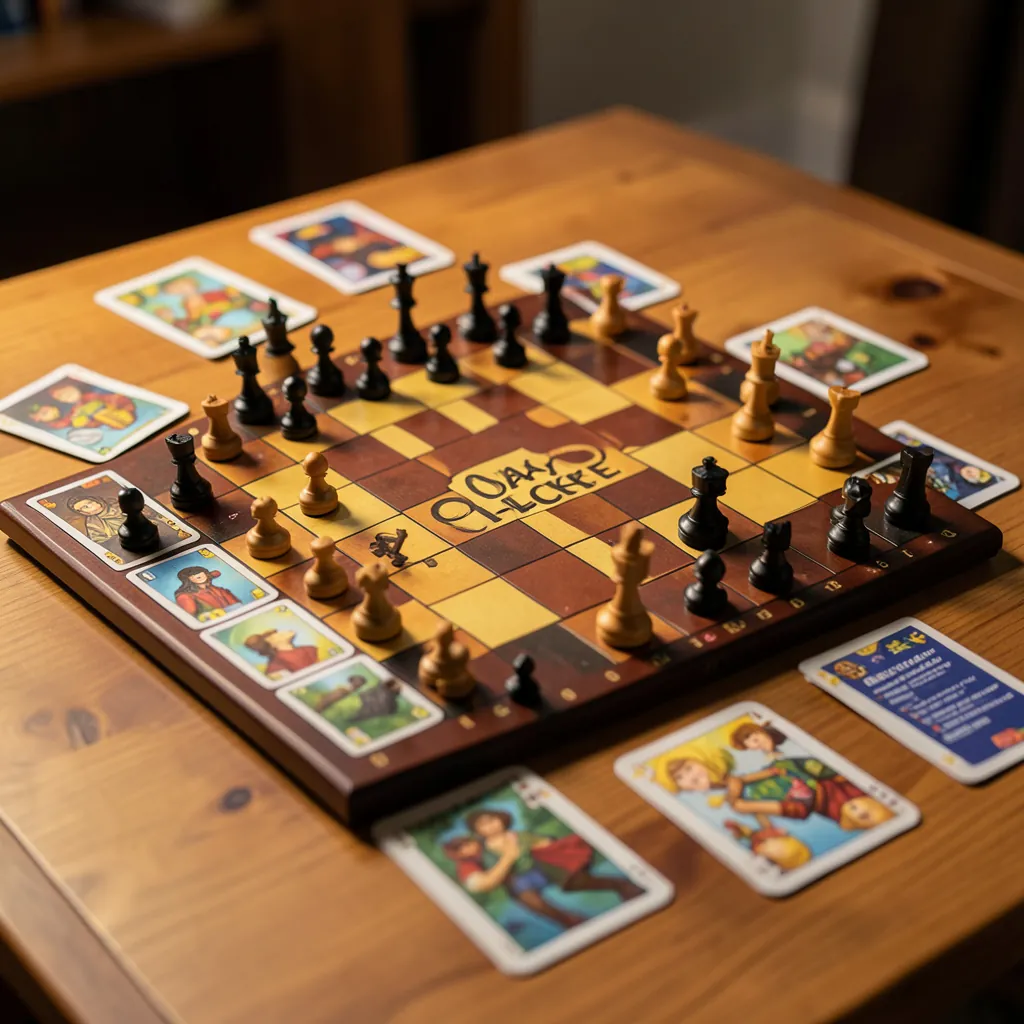
How to Play Chess: Rules, Setup, Scoring, and Beginner Strategy
Contents
♟️ Chess is a two-player strategy game played on an 8×8 board with 16 pieces per side; the goal is to checkmate the opponent’s king. Beginners should learn the move rules, opening principles, tactics, and basic endgames. Levy Rozman’s How to Win at Chess organizes improvement around openings, endings, tactics, and strategy for players around 0–800 Elo, then builds to 800–1300 Elo.
Players: 2
Play Time: 10–60 minutes for casual/rapid play; longer for classical
Age: 6+ for basic rules; no official age in the sources
Difficulty: Easy to learn basics; hard to master
Type: Abstract strategy board game
Setup
- Use an 8×8 board with a light square on each player’s right-hand corner.
- Each player has 16 pieces: 1 king, 1 queen, 2 rooks, 2 bishops, 2 knights, and 8 pawns.
- Place rooks in the corners, knights next, bishops next, then the queen on her own color and the king beside the queen. Put the pawns on the second rank.
- White moves first. Use a chess clock if you are playing a timed game.
How to Play
- White moves first, then players alternate one move at a time. The goal is to checkmate the opponent’s king, not to capture every piece.
- Move pawns forward. Pawns move one square forward and may move two squares from their starting rank. They capture diagonally forward and cannot move backward.
- Move the pieces according to standard chess rules. Knights move in an L-shape; bishops move diagonally; rooks move in straight lines; queens move straight or diagonally; kings move one square in any direction.
- Give check and checkmate. Check means the king is under attack and must be answered. Checkmate means the king is in check and has no legal escape. You may not make a move that leaves your own king in check.
- Castle to protect the king. Under standard conditions, the king moves two squares toward a rook and the rook moves to the other side. You cannot castle if the king or rook has moved, if pieces are between them, or if the king passes through or lands in check.
- Use en passant when available. If an opponent’s pawn moves two squares and lands beside your pawn, you may capture it as if it had moved one square — but only immediately.
- Promote a pawn on the last rank. When a pawn reaches the opponent’s back rank, it becomes a queen, rook, bishop, or knight.
- Know the draw rules. A game is drawn by stalemate, insufficient material, threefold repetition, the 50-move rule, or agreement.
What should beginners vs. intermediate players study?
| Stage | Elo range in Rozman’s How to Win at Chess | Main focus |
|---|---|---|
| Beginner | 0–800 | Openings, endings, tactics, and strategy |
| Intermediate | 800–1300 | Building on the same core skills |
Source note: Rozman’s book is 272 pages and includes 500+ instructional illustrations. Source 2 lists the ebook as October 24, 2023, while Source 5 lists a paperback for March 3, 2026; that is a format/date difference, not a rules conflict.
Scoring
Chess does not use capture points for winning; material values are only teaching aids. A player wins by checkmate. If neither side can force checkmate, the game is a draw by stalemate, insufficient material, threefold repetition, the 50-move rule, or agreement. In tournament scoring, a win is 1 point, a draw is ½ point, and a loss is 0. Elo ratings are a separate rating system, not in-game scoring.
💡 Strategy Tips
- Think before every move. Ask: Is my piece protected? What is my opponent threatening? Can they capture something? Does my move create a real threat?
- Solve chess puzzles. Train recognition of forks, pins, skewers, discovered attacks, and checkmate patterns, including back-rank mate.
- Analyze your losses. After a loss, review where the game went wrong instead of immediately starting another game.
- Learn opening principles, not just memorized lines. Control the center, develop knights and bishops, castle to protect your king, and connect your rooks.
- Study endgames and play slower games. Learn basic king-and-pawn and rook endings, how to promote a passed pawn, and avoid fast-only play that can create bad habits.
🎲 Variations
- Time-control variation: Bullet and blitz are fast chess; Source 3 notes that fast-only play can make calculation harder. Slower games give more time to think.
- Rated vs. unrated online play: Source 1 discusses Lichess rating-range controls. The thread shows disagreement about whether restrictions are a “punishment,” but the most cited explanation is that rating-range sliders are disabled when your playing strength is poorly known because you have played few rated games.
- Two-player standard: Chess is already a two-player game, so no player-count change is needed.
- House rules and opening choices: The provided sources do not describe official house rules. Openings such as the Caro-Kann Defense are choices within standard chess, not separate rules. For more than two players, no standard multi-player chess variant is described in the sources.
❓ FAQ
How many players can play chess?
Chess is a two-player game. One player controls White and the other controls Black.
How do you win at chess?
You win by checkmate — putting the opponent’s king in check with no legal escape. If neither player can force checkmate, the game can be drawn.
Can you play chess with 2 players?
Yes. Two players is the standard way to play chess.
Is chess hard to learn?
The basic rules are easy to learn, but chess is hard to master. Rozman’s book structures improvement from roughly 0–800 Elo to 800–1300 Elo.
How long does a game take?
A casual or rapid game often takes about 10–60 minutes, while classical games can take longer. Time controls also change the pace.
What do you need to play?
You need an 8×8 chessboard and 32 pieces, or a digital chess app. A clock is optional unless you are playing a timed game.
Related guides
- Azul Max Players: How to Play, Setup, Scoring, and Player Count Guide
- Battleship Best Placement: Where to Hide Your Fleet and How to Play
- Battleship Best Strategy: How to Play, Search, and Win More Often
- Battleship Strategy Placement: How to Play, Set Up, and Hide Your Fleet
- Best Battleship Position: How to Play Battleship and Place Your Fleet to Survive