How to Play Risk: Rules, Setup, Scoring, Strategy, and Variations
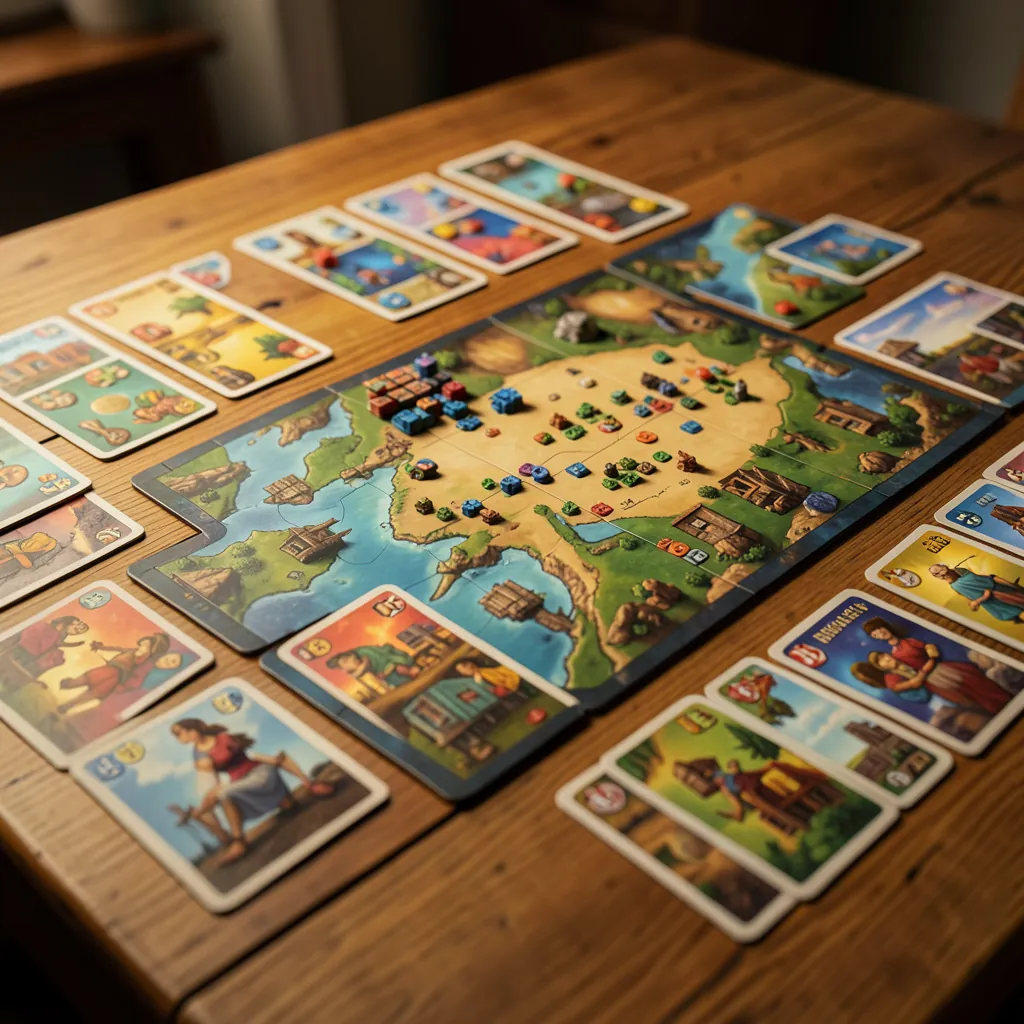
How to Play Risk: Rules, Setup, Scoring, Strategy, and Variations
Contents
🎲 Risk is a classic world-conquest board game in which 2–6 players deploy armies, attack adjacent territories with dice, and fortify positions to eliminate rivals. The classic goal is to be the last player standing by controlling all 42 territories, though some digital modes change the win condition. Turns follow three phases: deploy reinforcements, attack, then fortify.
Players: 2–6
Play Time: About 1–3 hours for most games; can run 1–8 hours
Age: Not stated in the supplied sources; check your edition
Difficulty: Moderate; sources disagree, with one calling it “not difficult” and another calling it “very complicated”
Type: Board game / strategy war game
Setup
- Choose a color and take that set of armies.
- Determine the first player: each player rolls a die, and the highest roll starts.
- Claim territories: starting with the first player, place one army on any unoccupied territory. Continue clockwise until all 42 territories are claimed.
- Faster alternative from some rule sets: deal territory cards as evenly as possible, then place one army on each territory shown on your cards.
- After all territories are claimed, place your remaining starting armies on territories you already control. Some editions require placing them one at a time.
- Prepare the card deck: if your edition includes mission cards, remove them for classic world-domination play; shuffle the territory deck and place it face down.
Which starting-army count applies to your player count?
| Players | Starting armies per player | Notes |
|---|---|---|
| 2 | 40 | Use the neutral-army variant for a standard 2-player buffer; see Variations |
| 3 | 35 | |
| 4 | 30 | |
| 5 | 25 | |
| 6 | 20 |
These counts appear in the GAME guide and Parker Brothers/Winning Moves manuals.
How to Play
- Deploy reinforcements. At the start of your turn, count the territories you own, divide by 3, and round down. You always receive at least 3 armies. Add continent bonuses if you controlled all territories of a continent at the start of your turn. If you trade in a valid card set, add those armies too. Place all reinforcements on any territories you own.
- Trade cards if required or useful. A valid set is 3 cards with matching infantry/cavalry/artillery emblems, or one of each emblem; wild cards can substitute. One common progressive value is 4, 6, 8, 10, 12, 15 armies for the first six sets, then +5 each after that. Some classic rules also give +2 armies on a traded card’s matching territory if you own it, once per set. Card-holding limits vary by edition: some sources say trade if you hold 5 or 6 cards at the start of a turn, while others say if eliminating a player pushes you to 6+ cards, trade immediately until you are at 4 or fewer.
- Attack if you choose. You may attack any adjacent enemy territory, or one connected by a sea line such as Alaska–Kamchatka. The attacking territory must have at least 2 armies. Roll up to 3 dice, but never more than your attacking army minus 1; the defender rolls up to 2 dice, but no more than the defending army. Compare highest die to highest die, then second-highest to second-highest; ties go to the defender. Remove one army per lost comparison, so at most two armies are lost per roll. You may stop attacking at any time, and you may attack multiple territories in one turn.
- Capture territories. If the defender loses all armies, you take the territory. Move in at least as many armies as the number of dice you used in the final battle, and always leave at least one army behind. If you captured at least one territory this turn, draw one Risk card; you never draw more than one card in a turn.
- Eliminate players if possible. If you take a player’s last territory, that player is eliminated. You receive their territory cards, then immediately trade in a set if your edition’s card limit requires it.
- Fortify if you choose. In classic tabletop rules, make one move of any number of armies from one territory you own to one adjacent territory you own, leaving at least one army behind. Some digital editions allow fortifying through a connected chain of controlled territories; follow the mode you are playing. You do not have to attack or fortify, but you must deploy reinforcements.
- End your turn. Play passes clockwise. The classic game ends when one player remains and controls all 42 territories, or when the chosen game mode’s win condition is met.
Where do the sources disagree on play details?
| Detail | Conflict in sources | Recommended handling |
|---|---|---|
| Fortify move | Classic manuals: one adjacent move, leaving one army behind. Hasbro digital rules: reinforce between territories connected through territories you control. | Use the adjacent-move rule for classic tabletop; use the app’s connected-path rule in digital play. |
| Card limit | MIT Risk paper: trade if you hold 5 cards at the start. GAME guide: trade if you have 5 or 6 at the start. Parker Brothers manual: after elimination, if you have 6+ cards, trade until you have 4 or fewer. | Follow your edition’s rulebook; the mandatory-trade principle is consistent, but the exact threshold varies. |
| Australia bonus | Most listed sources give Australia 2 armies. One scanned Winning Moves/Parker OCR lists Australia as 3. | Use 2 for standard classic play; treat 3 as an edition or scan outlier unless your rulebook says otherwise. |
| Dice included | MIT Risk paper lists 6 dice: 3 white, 3 colored. Winning Moves/Parker manual lists 5 dice: 2 white and 3 red. | Components vary by edition; use the dice included with your set. |
Scoring
Classic Risk does not use victory points. The winner eliminates every opponent and occupies all 42 territories; a player is eliminated when they control no territories, and their cards go to the player who took their last territory. The Hasbro digital game adds alternative win conditions: World Domination, the 70% challenge (control 70% or more territories), Fast Blitz (most territories after 5 rounds), Zombie Apocalypse (defeat opponents and the undead), and Capital Conquest (take every capital). Digital Risk also uses an ELO-style ranking, but that is separate from tabletop scoring.
Which continent bonuses apply?
| Continent | Bonus armies | Notes |
|---|---|---|
| Australia | 2 | Standard classic value; one scanned source lists 3 |
| South America | 2 | |
| Africa | 3 | |
| North America | 5 | |
| Europe | 5 | |
| Asia | 7 |
💡 Strategy Tips
- Do not leave border territories with 1 army. Two armies are much harder to remove than one, and weak borders invite attacks.
- Use bottlenecks. Maps often let you defend a large area by securing just a few key territories.
- Attack only with superiority unless it is absolutely necessary. Common suggested minimums are 4 vs 1, 5 vs 2, 6 vs 3, and 8 vs 4; for larger stacks, about 1.5 attackers per defender is often treated as a safer baseline.
- Deny continent bonuses when that is more valuable than taking one yourself. Removing an opponent’s bonus can be stronger than securing your own.
- With progressive card bonuses, delay trading sets as long as safely possible. Also try to eliminate card-rich players, because you inherit their cards. Common beginner mistakes are spreading armies too thin, leaving one-army borders, attacking without odds, and over-trusting temporary alliances.
🎲 Variations
- 2-player neutral-army variant: Use a third “neutral” army set as a buffer. Each player uses 40 armies; neutral armies defend but do not attack or receive reinforcements. You win by eliminating your opponent, not necessarily by eliminating every neutral army.
- Hasbro digital modes: World Domination, 70% challenge, Fast Blitz, Zombie Apocalypse, and Capital Conquest each change the win condition.
- Digital setup/options: Manual placement, fixed or progressive card bonuses, Fog of War, Blizzards, turn timers, and difficulty settings can change the experience.
- Fortify variation: Classic tabletop sources describe a single adjacent move; some digital rules allow reinforcement through a connected chain of controlled territories.
❓ FAQ
How many players can play Risk?
Classic Risk supports 2–6 players. For 2 players, use the neutral-army variant so the board is not a pure head-to-head rush.
How do you win Risk?
In classic World Domination, eliminate every opponent and occupy all 42 territories. Digital modes may instead use 70% territory control, most territories after 5 rounds, taking every capital, or defeating both opponents and the undead.
Can you play Risk with 2 players?
Yes. The standard 2-player variant uses a neutral third army set. Each player has 40 armies, neutral armies defend but do not attack or receive reinforcements, and you win by eliminating your opponent rather than necessarily clearing all neutrals.
Is Risk hard to learn?
Sources conflict: one calls it “not difficult” but different, while another describes it as very complicated and dynamic. The basic turn loop—deploy, attack, fortify—is easy to teach; probability, troop management, and diplomacy make it deeper.
How long does a game take?
Most games run about 1–3 hours, but Risk can last 1–8 hours depending on player count, dice luck, and mode. Digital Fast Blitz is much shorter, ending after 5 rounds.
What do you need to play?
You need the Risk board with 42 territories, 2–6 sets of armies, territory cards plus wild cards, dice, and the rulebook. Dice count varies by edition: one source lists 6 dice, 3 white and 3 colored; another lists 5 dice, 2 white and 3 red.
Related guides
- Azul Max Players: How to Play, Setup, Scoring, and Player Count Guide
- Battleship Best Placement: Where to Hide Your Fleet and How to Play
- Battleship Best Strategy: How to Play, Search, and Win More Often
- Battleship Strategy Placement: How to Play, Set Up, and Hide Your Fleet
- Best Battleship Position: How to Play Battleship and Place Your Fleet to Survive