How to Play Risk: Rules, Setup, Scoring, and Strategy
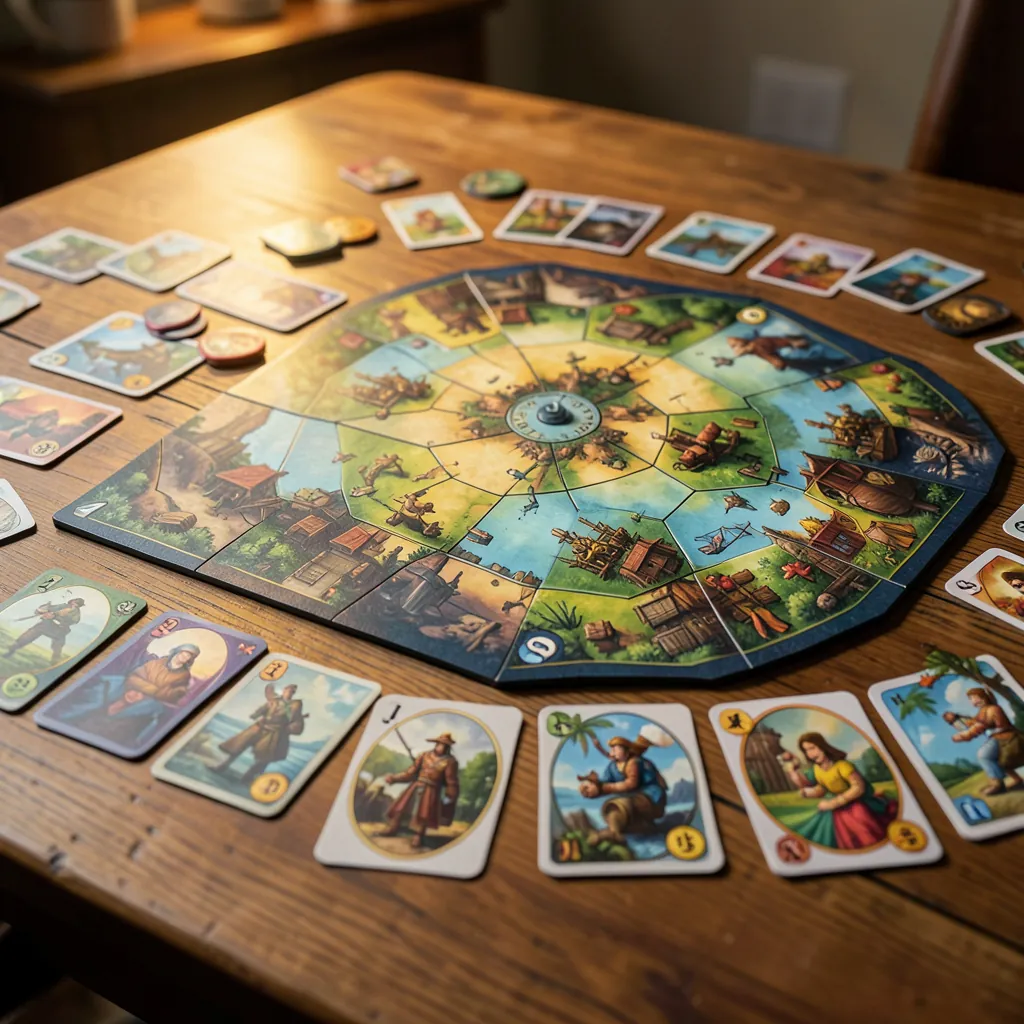
How to Play Risk: Rules, Setup, Scoring, and Strategy
Contents
🎲 Risk is a board war game where 2–6 players command armies, claim territories, attack neighbors, and try to eliminate all rivals by controlling all 42 territories. The goal is world domination: be the last player with territory and hold the entire map.
Players: 2–6
Play Time: 1–8 hours; most games last 1–3 hours
Age: Not specified in the cited sources; check your edition’s box
Difficulty: Easy rules to learn, but strategically challenging and often long
Type: Board war/strategy game
Setup
- Choose a player color and take your starting infantry. The number depends on player count:
| Players | Starting infantry per player |
|---|---|
| 2 | 40 |
| 3 | 35 |
| 4 | 30 |
| 5 | 25 |
| 6 | 20 |
- Use replacement pieces for larger armies: a cavalry piece counts as 5 infantry, and an artillery/cannon piece counts as 10 infantry.
- Roll dice to determine the first player. The highest roll places the first infantry piece on any territory, then play proceeds clockwise.
- Claim the 42 territories one at a time. On your turn, place one infantry on an unclaimed territory of your choice.
- Once all 42 territories are claimed, place your remaining starting infantry on territories you already own. There is no limit to how many armies can occupy one territory.
- Remove the secret mission cards unless you are playing the Secret Mission variation. Shuffle the remaining Risk deck and place it face down next to the board.
- Begin play with the player who went first during setup.
How to Play
- Reinforce your armies. At the start of your turn, count your territories, divide by 3, and round down. You always receive at least 3 infantry. Add any continent bonus if you control an entire continent:
| Continent | Bonus armies |
|---|---|
| Africa | 3 |
| Asia | 7 |
| Australia | 2 |
| Europe | 5 |
| North America | 5 |
| South America | 2 |
- Trade in Risk cards when required or useful. During reinforcement, you may trade in a valid card set for extra armies. If you hold 5 or 6 cards at the start of your turn, you must trade in one set. Valid standard sets are:
| Valid set | What it contains | Notes |
|---|---|---|
| Matching-icon set | 3 cards with the same icon: 3 infantry, 3 cavalry, or 3 artillery | Described in Source 1 |
| Mixed-arms set | 1 infantry + 1 cavalry + 1 artillery | Standard Risk allows this; do not reject it |
| Wild-card set | A wild card can substitute for a needed icon | Wild cards have all three army icons |
Important card-set correction: Source 1 describes a set only as three cards with matching icons. Standard Risk also allows one infantry, one cavalry, and one artillery as a valid set, and Source 2 confirms the deck uses those three army types. Use the mixed-arms set in standard Risk unless your specific edition says otherwise.
Card trade-in values are:
| Set traded in | Armies received |
|---|---|
| 1st set | 4 |
| 2nd set | 6 |
| 3rd set | 8 |
| 4th set | 10 |
| 5th set | 12 |
| 6th set | 15 |
| 7th and later | Previous value +5 |
If one card in the set shows a territory you own, place 2 extra armies on that territory. This bonus applies only once per set. If eliminating a player pushes you above 6 cards, immediately trade in a set.
-
Place reinforcements. Put your new armies on any territories you control. You may stack them or spread them out.
-
Attack if you choose. Attacking is optional. To attack, choose an owned territory with at least 2 armies and attack an adjacent enemy territory or one connected by a dashed sea line. Announce the attacking and defending territories.
-
Resolve battles with dice. The attacker rolls 1–3 dice, never more than the attacking territory’s armies minus 1. The defender rolls 1–2 dice, limited by the defending armies. Roll at the same time. Compare the highest attacker die with the highest defender die, then the second-highest dice if both sides rolled at least two dice. The defender wins ties. Each comparison removes one army from the loser. Continue until the attacker stops, the defender is eliminated, or the attacker cannot continue.
-
Capture territories. If you defeat all defenders, you take the territory. Leave at least one army behind in the territory you attacked from, and move at least the number of dice used in the final attack into the captured territory. You may move more, up to all but one army. If you capture at least one territory this turn, draw one Risk card. You never draw more than one card per turn.
-
Eliminate players. If you take a player’s last territory, that player is out of the game. You acquire all of their cards. If this gives you more than 6 cards, immediately trade in a set.
-
Fortify once. At the end of your turn, you may move any number of armies from one owned territory to one adjacent owned territory. You must leave at least one army behind. This can be done only once per turn.
-
End your turn. Play passes clockwise to the next player.
Source conflict note: Source 1 says alliances are legal because the rules do not mention them; Source 2 says the official rules do not recognize alliances but diplomacy is common in practice. Treat alliances as informal, non-binding, and breakable—only one player can win.
Scoring
Standard Risk does not use a point total. You win by eliminating all other players and controlling all 42 territories on the board. A player is eliminated when they lose their last territory and final army is removed. There can be only one winner.
| Game type | How winning works |
|---|---|
| Standard Risk | Eliminate all opponents and hold all 42 territories |
| Secret Mission Risk | Complete your secret mission to win |
| Risk 2210 A.D. | Uses a time limit and point system rather than total territory domination |
Card trade-ins give you armies, not points. The numbers in the trade-in table are reinforcements only.
💡 Strategy Tips
- Take whole continents when possible. Continent bonuses repeat every turn and are more reliable than one-time card gains.
- Defend your borders. Do not spread one-army territories everywhere; thin borders invite attacks. Build outward from a core and keep stronger stacks on threatened borders.
- Know the map. Source 2 names Argentina, Madagascar, and Japan as difficult strongholds, while North and East Africa, China, Russia, Southern Europe, and the Middle East are easier to attack from multiple directions.
- Manage cards correctly. Remember that mixed-arms sets are valid in standard Risk, trade mandatorily at 5 or 6 cards, and use the +2 territory bonus when possible.
- Study opponents and use diplomacy cautiously. Alliances may be informal and non-binding. Common beginner mistakes are spreading too thin, forgetting to leave one army behind, rejecting valid mixed card sets, and ignoring continent bonuses.
🎲 Variations
| Variation | How it changes play |
|---|---|
| 2-player Risk | The cited rules allow 2 players; each starts with 40 infantry. No separate 2-player truce rule appears in these sources. |
| Secret Mission Risk | Use the 12 secret mission cards; completing your mission wins the game. |
| Timed or turn-limited Risk | Limit total turns or play timed matches to shorten long games. |
| Geography/history house rules | Players must identify a state, province, or country, or answer a history question, before placing or attacking. |
| Official spin-offs | Castle Risk, Risk: Napoleon Edition, and Risk: 2210 A.D. change the map, pieces, time limit, or victory system. |
❓ FAQ
How many players can play Risk?
Risk supports 2–6 players. Two-player games are allowed, and three or more players add more unpredictability.
How do you win Risk?
In standard Risk, eliminate all other players and control all 42 territories. In Secret Mission Risk, complete your secret mission to win.
Can you play Risk with 2 players?
Yes. The cited rules allow 2 players, with each player starting with 40 infantry. The sources do not list a separate 2-player truce rule, so use the normal claim-attack-fortify rules.
Is Risk hard to learn?
The basic rules are easy to learn: reinforce, attack, and fortify. The challenge comes from strategy, negotiation, dice luck, and games that can run long.
How long does a game of Risk take?
A game can last anywhere from 1 to 8 hours, though most games last about 1–3 hours.
What do you need to play Risk?
You need the Risk board with 42 territories, army pieces, dice, and the Risk card deck. The standard deck includes 43 territory cards, 2 wild cards, and 12 secret mission cards used only in the Secret Mission variation.
Related guides
- Azul Max Players: How to Play, Setup, Scoring, and Player Count Guide
- Battleship Best Placement: Where to Hide Your Fleet and How to Play
- Battleship Best Strategy: How to Play, Search, and Win More Often
- Battleship Strategy Placement: How to Play, Set Up, and Hide Your Fleet
- Best Battleship Position: How to Play Battleship and Place Your Fleet to Survive