How to Play Risk: Setup, Rules, Scoring, Strategy, and Variations
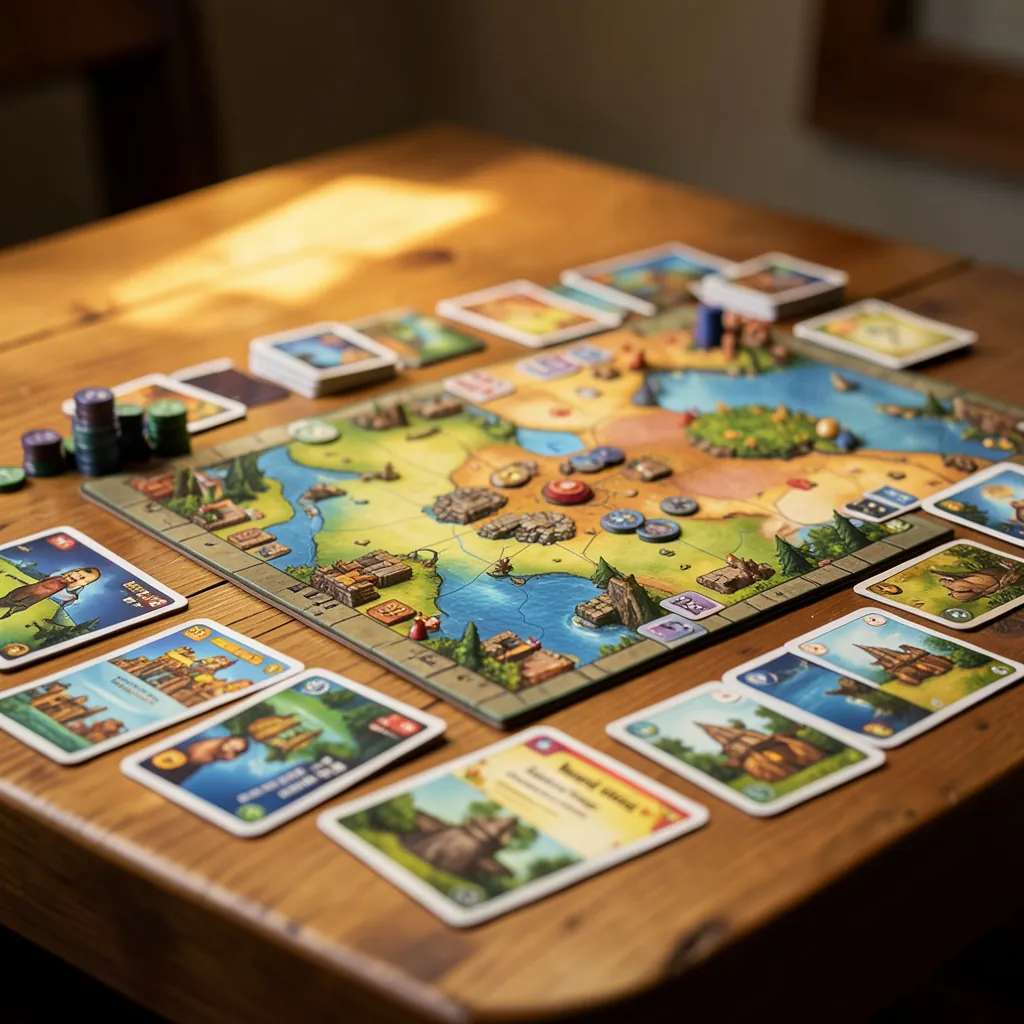
How to Play Risk: Setup, Rules, Scoring, Strategy, and Variations
Contents
🎲 Risk is a strategy board game of global conquest: players deploy reinforcements, attack adjacent territories with dice, and fortify borders to weaken and eliminate rivals. The goal is to control all 42 territories and eliminate opponents—or, in editions that include Secret Mission cards, complete your secret mission first and reveal it. Standard play uses the territory/Risk deck for card draws, not the removed Secret Mission cards.
Players: 2–5 in current Hasbro editions; some rule guides list 2–6
Play Time: 1–3 hours typical; can run 1–8 hours
Age: 10+
Difficulty: Medium
Type: Strategy board game / war game
Setup
- Choose a color and take that army set. Starting infantry varies by edition and player count; a common guide lists 40 infantry for 2 players, 35 for 3, 30 for 4, 25 for 5, and 20 for 6. Current Hasbro product pages list Risk for 2–5 players, so follow your edition’s rulebook if the counts differ.
- Roll dice. The highest roller places the first infantry piece on any territory. Then players take turns clockwise, each placing one infantry on an unclaimed territory until all 42 territories are claimed.
- Once all 42 territories are claimed, players place their remaining starting infantry on territories they already own. There is no limit to how many infantry can be on one territory.
- Set up the card deck correctly: remove the 12 Secret Mission cards and set them aside for standard global-domination play. Do not use the removed Secret Mission cards to form the draw pile. Shuffle the remaining territory/Risk cards and place them face down beside the board as the draw pile. If you are playing a Secret Mission edition or variant, use the mission cards according to that edition’s rules.
- Place the dice, card box or war crates, and army pieces within reach. The player who placed first during setup goes first.
How to Play
- Start your turn by deploying reinforcements. Count the territories you own, divide by 3, and round down; you receive at least 3 armies regardless of territory count. Add continent bonuses if you control an entire continent: Africa +3, Asia +7, Australia +2, Europe +5, North America +5, South America +2.
- Trade in Risk card sets when allowed or required. A set is three cards with matching infantry, cavalry, or artillery icons; a wild card can match any icon. Trade values are commonly 4 armies for the first set, then 6, 8, 10, 12, and 15, increasing by 5 after the sixth set. If a traded card shows a territory you own, place 2 extra armies on that territory, once per set. Some rules require trading a set if you hold 5 or 6 cards at the start of your turn.
- Place your reinforcements on any territories you own. You may put them all in one territory or spread them out.
- Attack if you choose. You may skip attacking and go straight to fortifying, but you must deploy. You can attack only territories adjacent to your own or connected by a dashed line. You need at least 2 armies in the attacking territory to launch an attack.
- Resolve battles with dice. The attacker may roll up to 3 dice if enough armies are available; the defender may roll up to 2 dice if enough armies are available. Roll simultaneously. Compare highest die to highest die, then the next highest pair. Ties go to the defender. Remove one army for each comparison lost; no more than 2 defending armies can be lost in a single round.
- Continue or stop attacking. After each roll, the attacker may continue attacking or stop. If all defenders are removed, the attacker captures the territory.
- Move armies into captured territory. Move at least as many armies as the number of dice used in the final attack, and always leave at least one army behind in the territory you attacked from. If you captured at least one territory this turn, draw one Risk card; you never draw more than one card per turn.
- Handle eliminations. If you take a player’s last territory, that player is eliminated and you take their cards. If this puts you over 6 cards, immediately trade in a set if required.
- Fortify once per turn. Move any number of armies from one owned territory to one adjacent owned territory, leaving at least one army behind. Then end your turn.
- Repeat until the win condition is met. Play continues clockwise until one player controls all 42 territories and eliminates all opponents, or until a Secret Mission player completes and reveals their mission, depending on the edition.
Scoring
Standard Risk does not use a point score. Track territories, continent bonuses, armies, and Risk cards instead. In standard global-domination play, you win by eliminating all opponents and controlling all 42 territories. In current Hasbro editions that use Secret Mission cards, the first player to complete their secret mission and reveal the card wins.
There is a real rules/edition conflict across sources: one common guide describes standard global domination and says to remove the Secret Mission cards, while current Hasbro product pages describe Secret Mission completion as the win condition. Source 2 describes Secret Mission as a variation. Check your edition’s rulebook.
| Rule set / source | Players | Win condition | Secret Mission handling |
|---|---|---|---|
| Standard global-domination guide | 2–6 | Eliminate all opponents and hold all 42 territories | Remove 12 Secret Mission cards; shuffle remaining Risk deck as draw pile |
| Current Hasbro Risk product pages | 2–5 | Complete your Secret Mission first and reveal the card | Includes 12 Secret Missions and uses them |
| Hasbro online How To Play | Not stated | Take over the entire map and defeat all other players | Not detailed |
| HowStuffWorks overview | Not stated | Conquer and eliminate opponents; Secret Mission is a variation | 12 Secret Mission cards used only in Secret Mission Risk |
Risk 2210 A.D. is a separate variant that uses a point system and time limit; that is not standard Risk scoring.
💡 Strategy Tips
- Go for whole continents. Continent bonuses give extra armies every turn and are more reliable than chasing single territories.
- Do not leave one-army borders. A territory with 1 army is an easy target. Two armies are much harder to defeat than one.
- Attack only with superiority unless necessary. Suggested minimums are 4 vs 1, 5 vs 2, 6 vs 3, and 8 vs 4; for larger stacks, about 1.5 attackers per defender is a safer bet.
- Use bottlenecks and know the map. Some territories are easy to defend because they have few borders; others can be attacked from many directions. Build outward from a secure core and keep border defenses strong.
- Use alliances cautiously. Official rules do not mention alliances, but they are commonly used. There is no rule protecting an alliance, and there can be only one winner—so do not trust an ally permanently.
🎲 Variations
- Secret Mission Risk: Players receive secret missions and win by completing their mission first, then revealing the card. This is the version described on current Hasbro product pages.
- 2-player Risk: Current Hasbro editions support 2 players. An older/common 2-player setup gives each player 40 infantry, then uses the normal claim-and-place setup and standard attack/fortify rules.
- Castle Risk / Napoleon Edition: Smaller or themed versions that focus on specific maps or campaigns.
- Risk 2210 A.D.: Uses a time limit and points rather than total territory domination.
- House rules: Common variations include timed matches, turn limits, geography or history questions before placing or attacking, custom maps, blitz dice resolution, and progressive card bonuses.
❓ FAQ
How many players can play Risk?
Current Hasbro Risk product pages list 2–5 players. Some rule guides list 2–6 players, so check your edition’s box and rulebook.
How do you win Risk?
In standard global-domination play, eliminate all opponents and control all 42 territories. In Secret Mission editions, complete your secret mission first and reveal the card.
Can you play Risk with 2 players?
Yes. Current Hasbro editions support 2–5 players. A common older 2-player setup gives each player 40 infantry and then follows the normal territory-claiming and army-placement process.
Is Risk hard to learn?
Risk is medium difficulty. Each turn has three simple phases—deploy, attack, fortify—but strategy, card timing, and diplomacy make it deeper than it first appears. Hasbro lists it for ages 10+.
How long does a game of Risk take?
Most games take about 1–3 hours, but Risk can run from roughly 1 to 8 hours depending on player count, luck, alliances, and which victory condition you use.
What do you need to play Risk?
You need a Risk board, army pieces, five dice, and the Risk card deck. Current Hasbro sets include 40 Infantry, 12 Cavalry, and 8 Artillery per color, plus war crates; Secret Mission cards are used in editions that include them.
Related guides
- Azul Max Players: How to Play, Setup, Scoring, and Player Count Guide
- Battleship Best Placement: Where to Hide Your Fleet and How to Play
- Battleship Best Strategy: How to Play, Search, and Win More Often
- Battleship Strategy Placement: How to Play, Set Up, and Hide Your Fleet
- Best Battleship Position: How to Play Battleship and Place Your Fleet to Survive