Lucky Corner Game Rules: How to Play the Lucky-Tile Tile Game
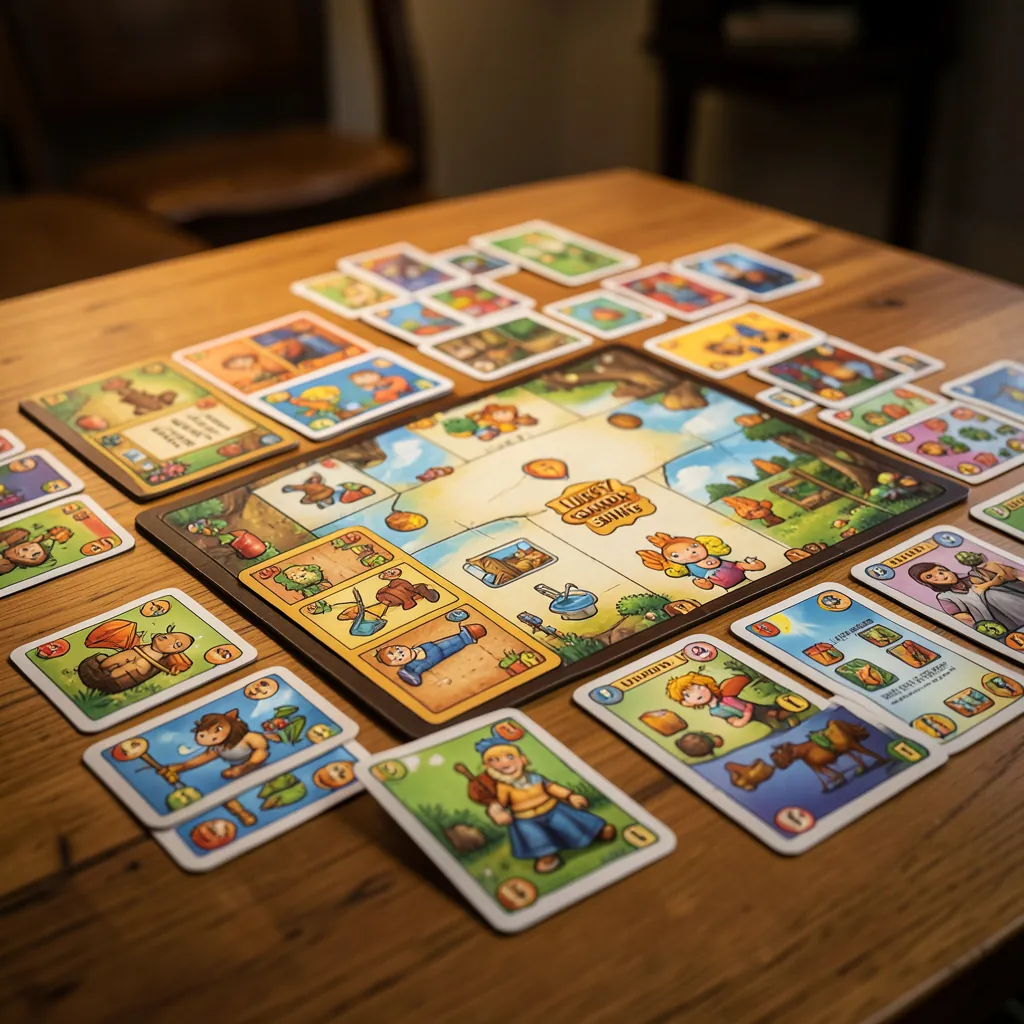
Lucky Corner Game Rules: How to Play the Lucky-Tile Tile Game
Contents
- Which Supplied Source Actually Describes the Lucky-Corner Rules?
- Setup
- How to Play
- Scoring
- 💡 Strategy Tips
- 🎲 Variations
- ❓ FAQ
🀄 Lucky Corner is a tile-combination game in which players draw, discard, and claim tiles to build four sets of three related tiles or collect all four lucky tiles. The goal is to win rounds and score the most points across as many rounds as you choose. This guide uses the only supplied source that describes lucky-tile rules; the other “corner” sources describe different games and are flagged below.
Players: 2–4 (Source 1; not 3–5)
Play Time: Not fixed; play as many rounds as desired
Age: Not stated in Source 1
Difficulty: Not stated; described as chance and skill for varied skill levels
Type: Tile-combination game with lucky/trump tiles
Which Supplied Source Actually Describes the Lucky-Corner Rules?
No supplied source names a single official game called “Lucky Corner.” Source 1 is the only source with lucky tiles, draws, discards, claimed tiles, and combo-building, so it is the basis for the playable rules below. The other sources use “corner” in different game titles or puzzle contexts and should not be mixed into Source 1’s rules.
| Source | Game or topic described | Players | Core mechanic | Use in this guide |
|---|---|---|---|---|
| Source 1 | Lucky-tile tile-combination game | 2–4 | Draw, discard, claim tiles, build four sets of three or collect four lucky tiles | Main rules source |
| Source 2 | Corner the Market | 2–8 | Market-speculation board game with contracts, corners, and buying/selling | Different game; not mixed |
| Source 3 | L-shaped puzzle strategy | Not stated | Puzzle strategy with moving pieces | Different puzzle; not mixed |
| Source 4 | Corner the Empress / Wythoff Nim | 2 | Mathematical chess-queen game on an infinite board | Different game; not mixed |
| Source 5 | Thai slot/simulator page | Not stated | Board-and-ribbon scoring simulator | Not a tabletop game; not mixed |
Setup
- Use the full 112-tile set for the standard 4-player version: 36 tiles in each of three suits plus 4 lucky/trump tiles. Source 1 also lists a die, scoring chips, and a ruler/scoring guide.
- For 3 players, Source 1 says to remove one suit and remove the lucky tiles, leaving 72 tiles.
- For 2 players, use the same 72-tile set as the 3-player version; lucky tiles are not used.
- For 3 players, form the bank as three rows, each 12 tiles long and 2 tiles high.
- For 2 players, form the bank as two rows, each 18 tiles long and 2 tiles high.
- The first player rolls the die to establish the cut. Deal starting with the first player after the cut: first stack of four tiles to the first player, second stack to the second player, third stack to the third player, and repeat.
- Source 1 says to deal until all players have 8 tiles, then the first player takes one more tile. That gives the first player 9 tiles and the other players 8 tiles in the 2- and 3-player setup.
- Source 1 does not give a complete 4-player deal procedure in the excerpt, so do not invent one; use only the deal counts the source states.
How to Play
- Choose the first player. Source 1 says play continues in counterclockwise order.
- On your turn, draw one tile from the bank. If you draw a lucky tile, place it face up and draw another tile.
- Source 1’s draw/discard passage says the newly drawn tile brings your hand to 12 tiles. Unless that tile makes you the winner, discard one tile face up to return to 11 tiles.
- A discarded tile must be discarded face up. Another player may immediately claim it by “taking” or “picking up” the tile to form a combo.
- If the discarded tile is not picked up immediately after it is discarded, it becomes a “dead” tile and may not be used again.
- Build toward a hand made entirely of combos. Source 1 specifically describes the round-ending condition as forming four sets of three related tiles, or drawing/collecting all four lucky tiles.
- A player who draws a lucky tile must lay it face up and draw another tile. Track exposed lucky tiles because collecting all four is an alternate way to end the round.
- Continue counterclockwise until one player has formed a hand made entirely of combos or has drawn/collected all four lucky tiles. That ends the round.
- Score the round, then shuffle and deal again if you are playing multiple rounds.
- For 2-player games, do not use the lucky tiles and do not use the rules for “picking up,” “taking,” or advancing out of turn.
Scoring
The round ends when one player forms four sets of three related tiles or draws/collects all four lucky tiles. Source 1 says points are awarded each round based on the number of lucky tiles obtained or the kind of combos in the winning hand, and points are awarded in relation to the difficulty of assembling the particular group. The winner of the game is the player who scores the most points at the end of all rounds played.
Source 1 does not provide a complete point-value table in the excerpt. It mentions scoring chips and scoring guides as part of the equipment, so use the supplied scoring guide rather than inventing point values.
💡 Strategy Tips
- Claim a useful discard immediately. In Source 1, a tile that is not picked up right after it is discarded becomes dead and cannot be used again.
- Track lucky tiles carefully. Drawing a lucky tile exposes it face up and forces an extra draw, and collecting all four lucky tiles is an alternate round-ending condition.
- Do not mix 2-player and 3-player rules with the full 4-player set. The 2- and 3-player versions use 72 tiles; the 2-player version also removes lucky tiles and out-of-turn pickup rules.
- Use the scoring guide to judge combo difficulty before discarding. Source 1 says scoring depends on the kind of combos and the difficulty of assembling them.
- A common beginner mistake is treating a discarded tile as available later. Source 1 is explicit: if it is not claimed immediately, it is dead.
🎲 Variations
- 4-player standard: Use the full 112-tile set with the 4 lucky tiles. Source 1 states the game can be played with two, three, or four players, but the excerpt does not give a full 4-player deal.
- 3-player version: Remove one suit and the lucky tiles. Use 72 tiles. Form three rows of 12 tiles by 2 tiles high. Deal 8 tiles each, then the first player takes one more.
- 2-player version: Use the same 72 tiles as the 3-player version. Form two rows of 18 tiles by 2 tiles high. Do not use lucky tiles. Do not use the “picking up,” “taking,” or advancing out-of-turn rules.
- Round count: The game can be played for as many rounds as desired. The overall winner is the player with the most points after all rounds.
- Do not substitute other “corner” games: Corner the Market is a 2–8 player market-speculation board game, and Corner the Empress is a 2-player mathematical chess-queen game. Their rules are not compatible with the lucky-tile game from Source 1.
❓ FAQ
How many players can play the lucky-tile game?
Source 1 supports 2–4 players. The 3–5 player figure is not supported by the lucky-tile source; Source 2’s 2–8 player count belongs to Corner the Market, a different game.
How do you win?
Win a round by being the first to form four sets of three related tiles or by drawing/collecting all four lucky tiles. The overall winner is the player with the most points after all rounds played.
Can you play with 2 players?
Yes. Source 1 says the 2-player game uses 72 tiles, the same set as the 3-player version, and does not use lucky tiles. The “picking up,” “taking,” and advancing out-of-turn rules are also not needed in the 2-player game.
Is it hard to learn?
Source 1 does not state an age or difficulty rating. It describes the game as involving chance and skill and as suitable for players with few game skills as well as highly developed skills.
How long does a game take?
Source 1 does not give a fixed play time. It says the game is played for as many rounds as desired, so length depends on the number of rounds you choose.
What do you need to play?
For the standard 4-player version, Source 1 lists 112 tiles: three 36-tile suits plus 4 lucky/trump tiles, along with a die, scoring chips, and a ruler/scoring guide. For 2 or 3 players, use the 72-tile version described in the variations.
Related guides
- How to Play Sorry! — Complete Rules, Card Guide, Strategy, and Variations
- FLIP Gameplay Guide: How to Play the Digital Memory Game
- Sorry! Game Rules: Setup, How to Play, Scoring, and Variations
- How to Play Sorry!: Complete Rules, Setup, Scoring, and Variations
- How to Play Pegs and Jokers: Board-and-Peg Card Game Guide