How to Play Sorry!: Complete Rules, Card Guide, and Variations
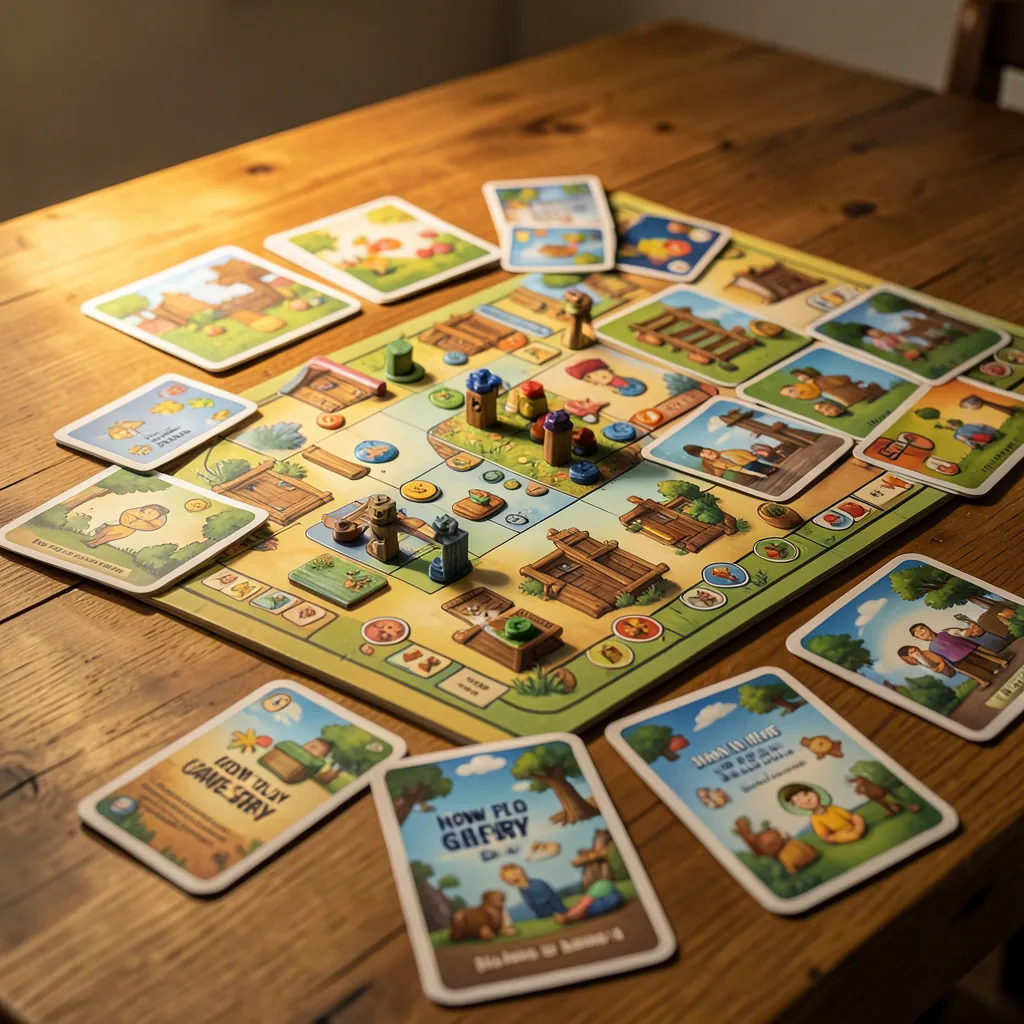
How to Play Sorry!: Complete Rules, Card Guide, and Variations
Contents
🎲 Sorry! is a Hasbro board game in which 2–4 players draw cards and race their pawns from Start around the track to Home; the first player to get every pawn Home by exact count wins. On a turn you draw one card, apply its move—forward, backward, split, swap, or a Sorry! bump—and try to avoid being sent back to Start. This guide follows the standard card-based rules and flags edition differences.
Players: 2–4
Play Time: Not fixed in the cited rules; varies by edition and pawn count
Age: 6+ for modern Hasbro editions
Difficulty: Easy to learn
Type: Board game / card-driven race game
Setup
- Check your edition before setting up. Sorry! component counts and even the randomizer vary by edition; see the comparison table below.
- Place the board in the center. Give each player the pawns of one color and put those pawns in their Start area.
- Shuffle the card deck and place it face down on the board’s card space. Standard card editions use a draw pile and a place for the flipped card. If the deck runs out, reshuffle and place it face down again.
- In the 1939 rules, determine the first “Leader” by having each player draw a card; the highest card leads, and a Sorry! card counts highest. The Leader chooses color and plays first. Modern summarized sources do not give a setup method, so use your edition’s rulebook if it differs.
- For the Road Trip edition, pieces click into the portable case, and play uses a spinner and a special “Stop Sign” space rather than standard cards.
Edition differences that affect setup
| Edition/source | Players | Pawns per player | Randomizer/components | Notes |
|---|---|---|---|---|
| 1939 United States rules | Not stated in excerpt | 4 men | 44 cards; no 6 or 9 | Older wording; Sorry! can be listed as a Start card |
| Simple Wikipedia summary | 2–4 | 4 pawns | Cards | General summary; has a slide-wording conflict |
| Current Hasbro listing | 2–4 | 3 pawns | 45 cards | Ages 6+; includes 12 pawns total |
| Road Trip Series | 2–4 | 4 pawns | Spinner + Stop Sign space | Ages 6+; 16 pawns; portable case |
| Sorry World digital | 2–4 | 3 pawns | Modified card deck | Digital adaptation |
How to Play
- On your turn, draw the top card from the draw pile and place it face up in the card area. Resolve the card completely before the next player draws.
- Move one of your pawns exactly as the card directs. You must move the full number or take an allowed alternate; if neither is possible, you forfeit that turn. You may pass over your own or an opponent’s pawns, but every square must be counted.
- Use a 1 or a 2 to bring a pawn into play: place that pawn on your colored Start circle. In the 1939 rules, a 1 or 2 used to start a pawn does not also move it forward that turn.
- Use a Sorry! card—under the modern/common rule—by taking a pawn from your Start area and placing it on an opponent’s pawn on the track; the opponent’s pawn returns to Start. The Sorry! card does not merely place your pawn on your colored Start circle and stop. Sources conflict here: the 1939 rules list Sorry! as a card that can start a pawn out, and Simple Wikipedia also allows moving a pawn forward 4 with it. Follow your edition’s card text.
- Resolve the other card values. 3, 5, 8, and 12 move forward; 4 moves backward 4; 7 can be split between two pawns; 10 moves forward 10 or backward 1; 11 moves forward 11 or swaps with an opponent’s margin pawn. See the card table below.
- If you end a move on a margin square occupied by an opponent’s pawn, return that opponent’s pawn to its Start. No two pawns may occupy the same square. If the only legal move would land on your own pawn, you forfeit the move.
- Slide rule: in the explicit 1939 rule, if your pawn ends on a slide triangle of another color, it slides to the circle at the end and sends every pawn on the slide—including your own—back to Start. It does not slide when it ends on a triangle of its own color. Simple Wikipedia’s wording suggests the opposite for own-color triangles, so this is a flagged source conflict; check your edition’s board and rules.
- Safety Zone and Home: enter your own Safety Zone only by a forward move through the square marked “Enters to Go Home.” In the 1939 rules, you may not move forward beyond that entrance except to enter your Safety Zone, except when an 11-card exchange applies. You need the exact count to move a pawn Home. Once a pawn is Home, it is out of play.
- When the draw pile is exhausted, reshuffle the cards and place them face down again.
- Continue until one player gets all required pawns from Start to Home by exact count; that player wins.
Card actions at a glance
| Card | Standard effect | Notes / source conflicts |
|---|---|---|
| 1 | Start a pawn on your colored Start circle, or move one pawn in play forward 1. | If used to start, do not also move it forward in the 1939 rules. |
| 2 | Start a pawn, or move a pawn in play forward 2. | 1939 rules resolve the 2 before an extra draw; Simple Wikipedia omits the extra draw. |
| 3 | Move forward 3. | Must move the full count if possible. |
| 4 | Move backward 4. | If the only pawn is in the Safety Zone, the 1939 rules require moving it backward 4. |
| 5 | Move forward 5. | — |
| 7 | Move forward 7, or split 7 between two pawns. | Cannot start a pawn or move backward; the full 7 must be used. |
| 8 | Move forward 8. | — |
| 10 | Move forward 10, or backward 1. | The backward 1 can apply even in the Safety Zone. |
| 11 | Move forward 11, or swap with an opponent’s margin pawn. | 1939 rules say margin men only; Simple Wikipedia says Start, Safety, and Home pawns cannot be swapped. |
| 12 | Move forward 12. | — |
| Sorry! | Modern/common: take a pawn from Start and place it on an opponent’s track pawn; opponent returns to Start. | Sources conflict: Simple Wikipedia also allows moving 4 forward; 1939 rules list Sorry! as a Start card. Follow edition text. |
Scoring
Standard Sorry! does not use points. You win by moving every pawn from Start to Home by exact count; once a pawn is Home, it is out of play. The winning number depends on the edition: current Hasbro listing and digital Sorry World use 3 pawns, while the 1939 rules and Road Trip edition use 4 pawns.
In Partnership Sorry, the first team to get all eight men into their proper homes wins; if both partners get all eight home before either opponent gets four men home, the game becomes a double game worth two single wins.
The 1939 booklet also describes a Point Scoring variant: each player gets five cards, starts one man out, plays one card, and refills to five. At the end, each player scores one point for every man Home, and the winner adds a bonus—but the provided excerpt cuts off before that bonus is fully stated, so the exact bonus cannot be confirmed from these sources.
💡 Strategy Tips
- Count every square, including occupied squares. You may jump over pawns, but you must count through them; miscounting is a common beginner mistake.
- Use 4, 10, 11, and Sorry! to shorten your route into the Safety Zone. The 1939 rules explicitly note these cards can position a pawn to enter its Safety Zone without completing the full circuit.
- Avoid blocking your own pawns. No two pawns may share a square, and if your only legal move would land on your own pawn, you forfeit the turn.
- Near Home, plan exact counts. A pawn must enter Home by exact count, so overshooting wastes a move.
- Learn your edition’s slide rule before playing. The 1939 rule says you slide on another color’s triangle, not your own; beginners often get this backward.
🎲 Variations
- Faster game: the 1939 rules allow each player to use three men instead of four. Modern Hasbro editions already use 3 pawns.
- Partnership Sorry: Red and Yellow are partners; Green and Blue are partners. After drawing, a player may use the card for their own pawn or their partner’s. A Sorry! card must be used even if it removes a partner’s pawn. The first set of partners to get all eight men home wins.
- Point Scoring Sorry: deal five cards to each player, start one man out per player, play one card and refill to five. If a player cannot follow any card, they discard one card and draw one, then end their turn. The winner is first to get all men Home by exact count; scoring details are partially truncated in the cited excerpt.
- 2-player play: modern editions list 2–4 players, so 2-player Sorry! uses the standard rules with each player controlling one color. The cited sources do not give a special 2-player variant.
- Road Trip edition: uses a spinner instead of cards and adds a “Stop Sign” space that can move a pawn forward or back 2 spaces depending on the car’s speed. It uses 4 pawns per player.
- Digital Sorry World: uses 3 pawns per player, 2–4 players, and a modified card deck; the goal is still to get all pawns Home first.
❓ FAQ
How many players can play Sorry!?
Modern Hasbro and digital editions list 2–4 players. The 1939 rules excerpt does not state a player count.
How do you win Sorry!?
Be the first player to move all of your pawns from Start to Home by exact count. Standard Sorry! has no point total; the number of pawns is 3 in current Hasbro and digital editions, and 4 in the 1939 rules and Road Trip edition.
Can you play Sorry! with 2 players?
Yes. Modern editions are listed for 2–4 players. The cited sources do not provide a special 2-player rule, so use the standard rules with one color per player.
Is Sorry! hard to learn?
No. The core turn is simple: draw a card, follow its move, and try to get every pawn Home. Modern Hasbro editions list ages 6 and up.
How long does a Sorry! game take?
The cited sources do not give a fixed play time. Game length varies with player count, whether the edition uses 3 or 4 pawns, and how often pawns are bumped back to Start.
What do you need to play Sorry!?
A standard card edition needs the board, pawns, card deck, and rules. The current Hasbro listing includes a gameboard, 12 pawns, and 45 cards; the 1939 version used 44 cards and 4 men per player; the Road Trip edition uses a spinner and 16 pawns. Check your edition’s components.
Related guides
- How to Play Sorry! — Complete Rules, Card Guide, Strategy, and Variations
- FLIP Gameplay Guide: How to Play the Digital Memory Game
- Sorry! Game Rules: Setup, How to Play, Scoring, and Variations
- How to Play Sorry!: Complete Rules, Setup, Scoring, and Variations
- How to Play Pegs and Jokers: Board-and-Peg Card Game Guide