How to Win in Sequence: A Source-Checked Tabletop Guide
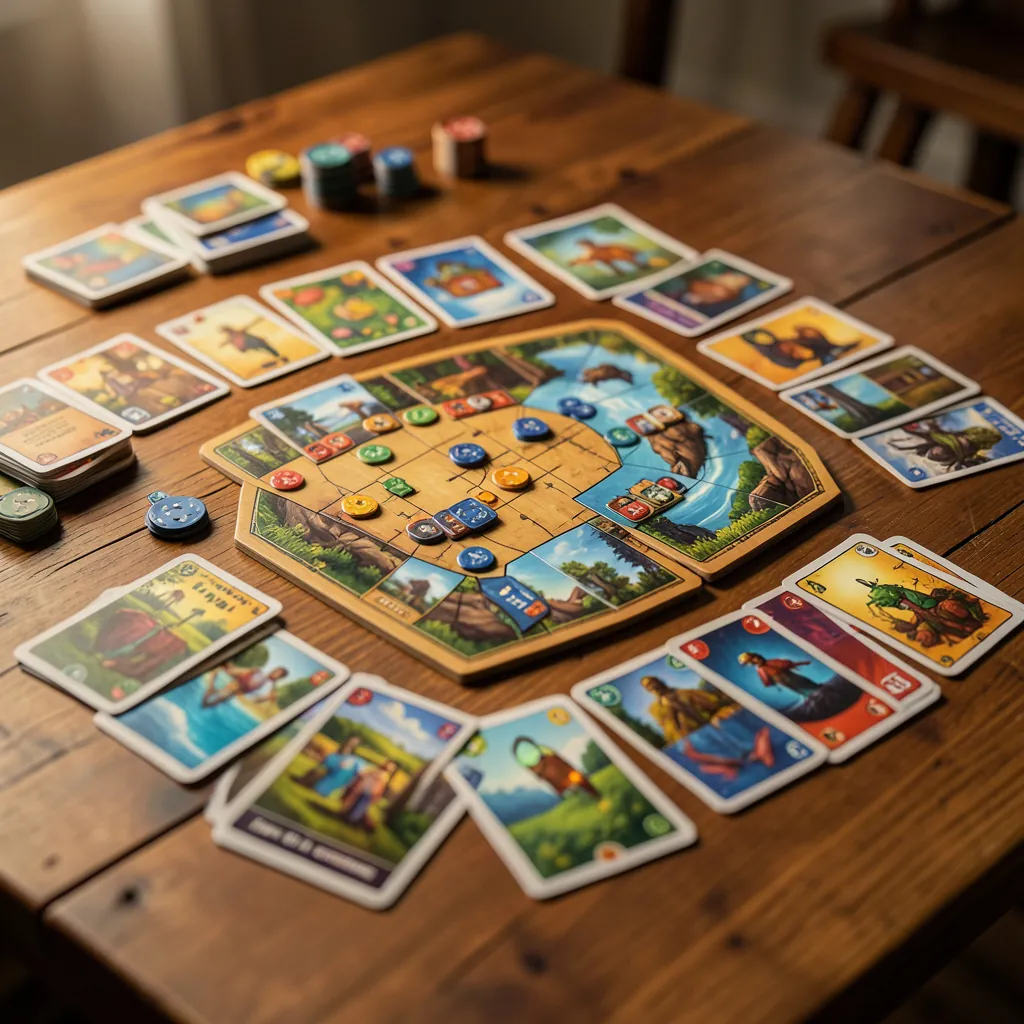
How to Win in Sequence: A Source-Checked Tabletop Guide
Contents
🎲 Sequence is a tabletop game where teams race to place same-color tokens in straight lines. To win, complete the required number of sequences first: Source 1 defines a sequence as five same-color tokens in a horizontal or vertical row and says three-team games need one sequence, while other scenarios can require one or two. The supplied sources omit a full official rulebook, so this guide only states source-supported details.
Players: 3 teams in the only explicit example (Source 1); full range not stated
Play Time: Not stated in the supplied sources
Age: Not stated in the supplied sources
Difficulty: Beginner-friendly (Source 3 frames its guide for beginners)
Type: Board game with colored tokens (Source 1); Source 3 provides a beginner’s rules guide
Setup
The supplied sources do not include deal counts, board layout, or exact starting conditions. Use this as a source-verification checklist, not a complete setup:
- Source 1 confirms a board with colored tokens and team colors such as blue and green.
- Source 1 confirms tokens are arranged in rows on the board.
- A completed sequence is shown as five same-color tokens in a horizontal or vertical row.
- Source 3 says a beginner guide includes step-by-step setup and official rules, but the supplied product description does not list those setup steps.
- Do not use setup details from Source 2, Source 4, or Source 5; those sources discuss coin-flip sequences, sequence arithmetic, and a mobile scoreboard mini-game, not tabletop Sequence.
How to Play
The supplied sources do not contain a complete turn-by-turn rule set. These are the verified play facts:
- Form teams; Source 1 uses an example with a blue team and a green team, and also mentions a three-team scenario.
- Use a board and colored tokens; Source 1 describes five green tokens placed on the board.
- Build sequences: five same-color tokens in a straight row, either horizontally or vertically, per Source 1.
- Check the winning target for your team count. Source 1 says that in three-team games, securing one sequence wins; in other scenarios, the first team to complete 1 to 2 sequences wins.
- Source 3 says a complete Sequence guide would cover turns, what to do on every move, scoring, blocking, and variations, but the supplied excerpt does not provide those specific rules.
- Conflict note: Source 2 is about probability in coin-flip sequences, Source 4 is about mathematical sequence arithmetic, and Source 5 is about tapping quickly in a mobile “Scoreboard Sequence.” None of those define tabletop Sequence rules.
Scoring
Source 1 does not describe a point-scoring system. It describes winning by completing sequences. Source 3 says a full guide includes scoring and how winners are decided, but the supplied description gives no point values.
| Context | What the source says | Relevance to tabletop Sequence |
|---|---|---|
| Tabletop Sequence, three teams | Secure one sequence to win | Relevant; Source 1 |
| Tabletop Sequence, other scenarios | First to complete 1 to 2 sequences wins | Relevant, but exact mapping to player counts is not given; Source 1 |
| Coin-flip sequences | Probabilities and waiting times for patterns such as HT and HH | Not tabletop Sequence; Source 2 |
| Sequence arithmetic | Mathematical theorems about sequences | Not tabletop Sequence; Source 4 |
| “Scoreboard Sequence” in Idle Sports Tycoon | Tap fast to fill the bar and earn rewards | Not tabletop Sequence; Source 5 |
💡 Strategy Tips
- Know the winning target first. In a three-team game, Source 1 says one sequence is enough; in other scenarios, the target may be one or two sequences.
- Check both horizontal and vertical rows. Source 1 explicitly describes five green tokens arranged horizontally and vertically as sequences.
- Track team colors and token rows. Source 1’s example uses blue and green teams and five green tokens in a row, so color awareness matters.
- Learn blocking and winning-row tactics, but verify the exact rules. Source 3 says a beginner guide covers blocking opponents and building winning rows, but the supplied excerpt does not give specific legal moves.
- Common beginner mistake: mixing up “sequence” sources. Coin-flip probabilities, sequence arithmetic, and mobile scoreboard tapping are not tabletop Sequence rules.
🎲 Variations
- Three-team variation: Source 1 says three teams need only one sequence to win.
- Other scenarios: Source 1 says the first team to complete 1 to 2 sequences wins, but it does not specify which player counts require one versus two.
- House rules and player-count variants: Source 3 says a complete guide includes variations, but the supplied description does not list any specific house rules.
- Two-player variant: The supplied sources do not describe a two-player version. Do not assume rules that are not stated.
- Mobile “Scoreboard Sequence”: Source 5 is a separate mobile mini-game, not a tabletop Sequence variation.
❓ FAQ
How many players can play Sequence?
The supplied sources do not give a full player range. Source 1 explicitly discusses three teams and uses blue and green teams as an example, so three teams is the only count that can be confirmed from these sources.
How do you win in Sequence?
Be the first team to complete the required number of sequences. Source 1 says three-team games require one sequence, while other scenarios can require one or two sequences.
Can you play Sequence with 2 players?
The supplied sources do not describe a two-player variant. Source 3 says a complete guide includes variations, but the excerpt gives no details, so two-player rules cannot be confirmed from these sources.
Is Sequence hard to learn?
Source 3 presents its guide as beginner-friendly and step-by-step, so the game is marketed as learnable for beginners. The supplied excerpt does not provide a difficulty rating or the actual rules.
How long does a game take?
The supplied sources do not state a play time. Source 3 refers to a complete gameplay guide, but the excerpt gives no duration.
What do you need to play?
Source 1 explicitly mentions a board and colored tokens. Source 3 refers to official rules and scoring, but the supplied excerpt does not list all components, so check the official rulebook for the complete component list.
Related guides
- How to Play Sorry! — Complete Rules, Card Guide, Strategy, and Variations
- FLIP Gameplay Guide: How to Play the Digital Memory Game
- Sorry! Game Rules: Setup, How to Play, Scoring, and Variations
- How to Play Sorry!: Complete Rules, Setup, Scoring, and Variations