How to Play Sorry! — Rules, Setup, Scoring, and Variations
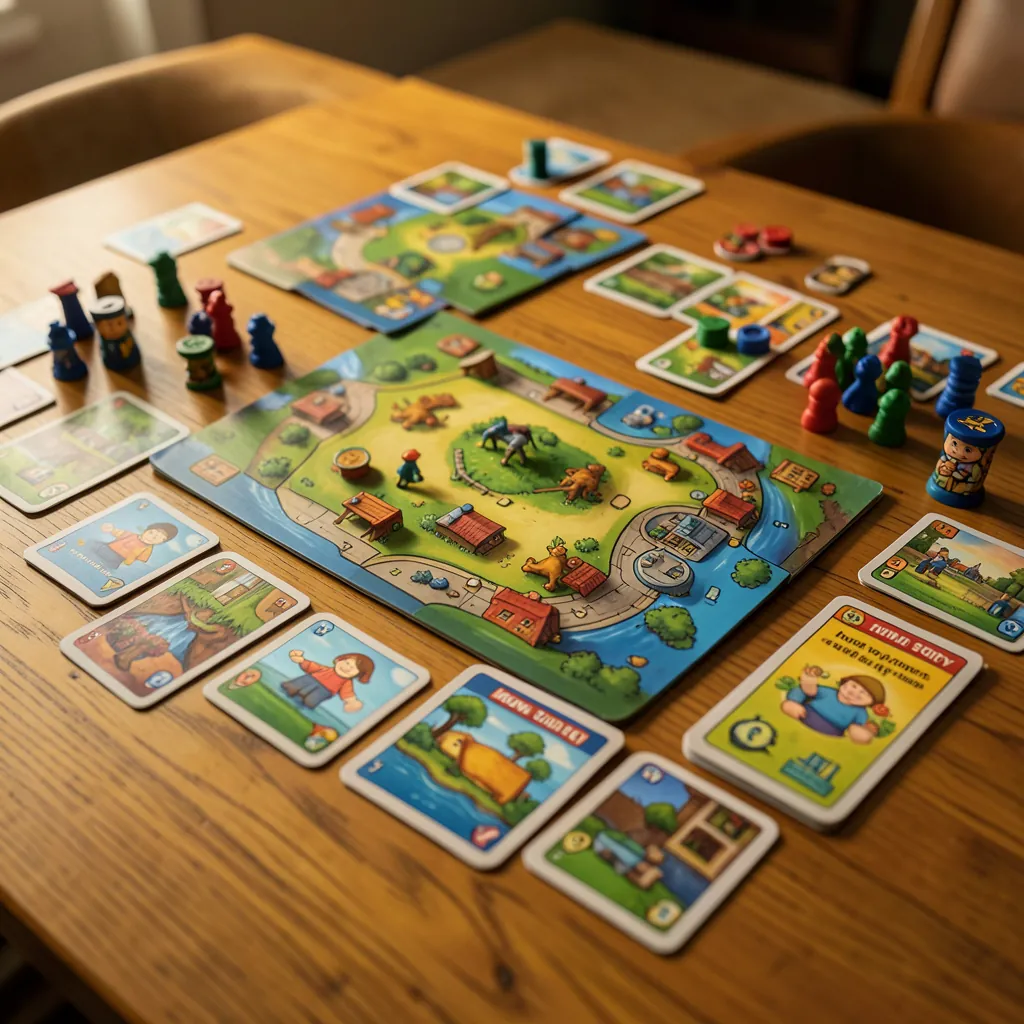
How to Play Sorry! — Rules, Setup, Scoring, and Variations
Contents
🎲 To play Sorry!, 2–4 players each choose a color, place their pawns in Start, shuffle the deck, and on each turn draw one card and follow its printed instruction to move a pawn from Start, around the board, or into Home. The first player to get all their pawns Home wins; pawn count varies by edition (current Hasbro lists 3, many classic/older rules use 4).
Players: 2–4
Play Time: Not stated in the cited sources; varies by edition and pawn count
Age: 6 and up
Difficulty: Easy to moderate; standard rules require reading (UNI labels standard “Advanced,” simplified “Intermediate”)
Type: Board game / race-and-chase game
Setup
- Choose colors and pawn count. Each player takes one color. Use the pawn count for your edition, and make sure everyone agrees before play:
- Current Hasbro product info: 3 pawns per player.
- 1939 Winning Moves rules and UNI standard rules: 4 pawns per player.
- 1939 “faster game” option: 3 pawns per player.
- Sorry World digital app: 3 pawns per player.
- Place pawns in Start. Put all of your pawns in the Start area matching your color.
- Shuffle the deck. Place it face down in the center of the board as the draw pile. Leave space beside it for a face-up discard pile.
- Current Hasbro lists 45 cards and 12 pawns.
- The 1939 rules describe a 44-card pack.
- The UNI simplified classroom version uses 40 number cards, 1–10.
- Choose the first player. The 1939 rules say each player draws a card and the highest card leads, with the Sorry! card highest; UNI’s classroom rules simply say players decide who goes first.
- Reshuffle when needed. When the draw pile is exhausted, reshuffle the discards and place them face down again.
How Many Pawns Should Each Player Use?
Sources conflict here, so do not silently assume one number. Use the pawns included with your edition.
| Source / version | Pawns per player | What it says |
|---|---|---|
| Current Hasbro product page | 3 | “Get all 3 of their pawns to the home space”; includes 12 pawns total |
| 1939 Winning Moves rules | 4 | Object is to move 4 men from Start to Home; faster game may use 3 |
| UNI standard rules | 4 | 16 markers, 4 each of red, yellow, green, blue |
| UNI simplified classroom rules | Up to 4 | Still uses 16 markers; may reduce markers if game runs long |
| Wikipedia | Conflicting | Intro says “three or four”; objective says “all three (four for the modern version)”; its classic rules then describe four pawns |
| Sorry World app | 3 | Digital adaptation says move all three pawns Home |
How to Play
- Draw one card on your turn. Place it face up on the discard pile and follow its printed instruction. The 1939 rules say no player draws until the previous play is completed.
- Move if you can. You must make a legal move if one exists. You must use the full number on the card unless the card gives an alternate move. If no legal move is possible, your turn is forfeited.
- Start pawns only with a 1, 2, or Sorry! card. A 1 or 2 places a pawn on the space directly outside Start; it does not also move forward that same number. A Sorry! card is used according to its card text.
- Count every square. You may jump over your own or opponents’ pawns, but every square counts, whether occupied or not. Movement is normally forward/clockwise unless a card says otherwise.
- Bump opponents on normal board spaces. If you end your move on a space occupied by an opponent’s pawn, that pawn returns to its Start. In standard rules, two pawns cannot share one square.
- Do not bump your own pawns. If the only possible move would land on your own pawn, you forfeit the move—except when a slide rule forces your own pawns back.
- Use slides carefully. In classic rules, if your pawn ends on a slide-start triangle that is not your own color, it slides to the end of the slide. Every pawn on the slide—including your own—returns to Start. A pawn does not slide when it lands on a triangle of its own color. Some modern/2013 editions change slide-color details, so check your board.
- Enter the Safety Zone correctly. The last five colored squares before Home are the Safety Zone. It can be entered only by a pawn of that color, from or through the correct entrance, by a forward move. Pawns in the Safety Zone are immune to bumps and to 11/Sorry! swaps.
- Leave Safety if forced backward. If a 4 or 10 card forces a pawn backward out of the Safety Zone, it is no longer safe until it re-enters.
- Enter Home by exact count. You must draw the exact number needed to move a pawn into Home. If the only possible move would overshoot Home, you forfeit. Once a pawn is Home, it stays out of play.
- Win by getting all your pawns Home. With current Hasbro rules that means 3 pawns; with classic/older rules it means 4 pawns.
What Does Each Sorry! Card Do?
| Card | Classic action | Edition/conflict notes |
|---|---|---|
| 1 | Start a pawn, or move one pawn 1 space forward. | Standard start card. |
| 2 | Start a pawn, or move one pawn 2 spaces forward. | Older rules allow an extra draw after playing the 2; the 2013 edition removes the “draw again” rule. |
| 3 | Move a pawn 3 spaces forward. | If you cannot move the full amount, forfeit. |
| 4 | Move a pawn 4 spaces backward. | The 1939 rules specify that if your only pawn in play is in the Safety Zone, you must move it backward 4. |
| 5 | Move a pawn 5 spaces forward. | If you cannot move the full amount, forfeit. |
| 7 | Move one pawn 7 spaces forward, or split the 7 between two pawns. | Cannot be used to start a pawn; cannot move backward; the full 7 must be used. A split 7 can move two pawns Home, return two opponents, use two slides, or combine effects. |
| 8 | Move a pawn 8 spaces forward. | If you cannot move the full amount, forfeit. |
| 10 | Move a pawn 10 spaces forward, or 1 space backward. | If you cannot or do not wish to move forward 10, you must move backward 1, even from the Safety Zone. |
| 11 | Move a pawn 11 spaces forward, or switch one of your pawns with an opponent’s pawn on the main board. | Cannot switch a pawn in the Safety Zone, and cannot move a pawn out of Start this way. Sources differ on whether you are forced to switch if you cannot move 11. |
| 12 | Move a pawn 12 spaces forward. | If you cannot move the full amount, forfeit. |
| Sorry! | Take a pawn from Start and place it on a square occupied by an opponent, sending that opponent back to Start. | Classic rules exclude opponent pawns in the Safety Zone or Home. The Sorry World app describes a broader “replace any opponent’s pawn” effect, so app rules may differ from physical classic rules. |
Scoring
Standard Sorry! does not use points. The winner is the first player to move all of their pawns from Start into Home by exact count. The number of pawns needed depends on the edition: current Hasbro lists 3, while the 1939 rules and UNI standard rules use 4. Because the sources conflict on the modern pawn count—and Wikipedia is internally inconsistent—agree on the pawn count before setup and use that same count for the win condition.
The 1939 rules also include Point-Scoring Sorry!, a separate variant. In that version, each player is dealt 5 cards, starts with one pawn out, plays one card per turn, and refills to 5 cards. At the end, each player scores 1 point for every pawn they got Home; the winner also scores points for opponents’ pawns that got Home plus a bonus. The cited source excerpt is truncated after the first bonus value, so use the full printed scoring table in your copy for exact bonus numbers.
💡 Strategy Tips
- Split a 7 to land on a slide or finish two pawns. The 7 is flexible, but you must use all 7 spaces and cannot use it to start a pawn.
- Avoid parking just outside an opponent’s Start. Many cards let that opponent enter play and bump you, so that square can be dangerous.
- Use 11, 4, and Sorry! to slow the leader. Sorry! can swing quickly because players can send opponents backward or switch places.
- Consider keeping one pawn near your own Start. A backward 4 or 10 can sometimes move it toward your Safety Zone without going all the way around the board.
- Common beginner mistakes: trying to start with a 3, 5, 8, or 12; forgetting the exact-count Home rule; forgetting that Safety Zone pawns are immune; and forgetting that you must use the full card move or forfeit if no legal move exists.
🎲 Variations
- 2 players: Standard Sorry! supports 2–4 players. Use two colors and normal rules; the cited sources do not give a separate official 2-player rule change.
- 3 players: Use three colors and normal rules.
- Faster game: The 1939 rules allow each player to use 3 pawns instead of 4. Current Hasbro already uses 3 pawns.
- Partnership Sorry: Four players form teams: Red/Yellow vs. Green/Blue. A player may use a drawn card for their partner’s pawn. You may not forfeit if either you or your partner can move. A Sorry! card must be used even if it removes a partner’s pawn; a 7 may be split between partners. The first team to get all eight pawns Home wins.
- Point-Scoring Sorry!: The 1939 scoring variant uses a 5-card hand, one pawn starting out, and end-of-game points as described under Scoring.
- Simplified classroom version: UNI describes a non-reader version using number cards 1–10, no Sorry! card, and no 1/2-only start restriction. In that simplified version, same-color markers may share a space—this conflicts with standard Sorry! rules, where two pawns cannot occupy one square.
- Digital Sorry World: The app uses 3 pawns and may apply app-specific card behavior, such as a broader Sorry! card effect. Do not assume app rules match every physical edition.
❓ FAQ
How many players can play Sorry?
2–4 players. Current Hasbro, UNI, Wikipedia, and the Sorry World app all describe a 2–4 player game.
How do you win Sorry?
Be the first player to move all your pawns from Start into Home by exact count. Use the pawn count for your edition: current Hasbro lists 3 pawns, while classic/older rules use 4.
Can you play Sorry with 2 players?
Yes. Sorry! is a 2–4 player game, so two players can use two colors and normal rules. The cited sources do not provide a separate official 2-player variant.
Is Sorry hard to learn?
It is easy to moderate. The basic turn is simple—draw a card and move—but standard rules require reading card instructions, and UNI labels the standard classroom version “Advanced” and the simplified version “Intermediate.”
How long does a game take?
The cited sources do not state a fixed play time. Game length depends on the edition, the number of pawns used, card draws, and how often players bump or slide each other back to Start.
What do you need to play Sorry?
A Sorry! board, matching-color pawns, and the Sorry! card deck. Current Hasbro includes 12 pawns and 45 cards; the 1939 rules describe 44 cards; the UNI simplified version uses 40 number cards. You also need space for a draw pile and discard pile.
Related guides
- How to Play Sorry! — Complete Rules, Card Guide, Strategy, and Variations
- FLIP Gameplay Guide: How to Play the Digital Memory Game
- Sorry! Game Rules: Setup, How to Play, Scoring, and Variations
- How to Play Sorry!: Complete Rules, Setup, Scoring, and Variations