How to Play Kings in the Corner: Rules, Layout, Scoring and Strategy
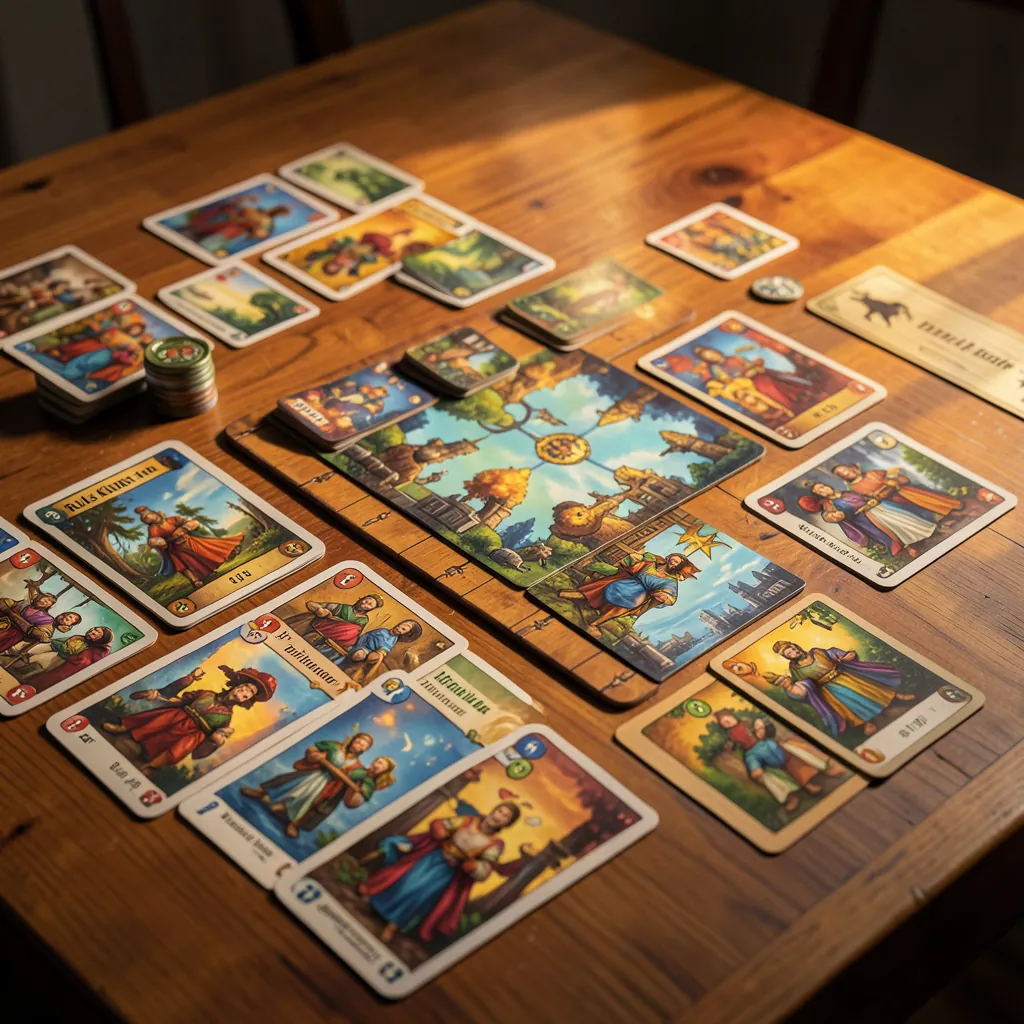
How to Play Kings in the Corner: Rules, Layout, Scoring and Strategy
Contents
🃏 Kings in the Corner (also written King’s Corner or Kings Corners) is a shedding card game played around a solitaire-style layout of eight spaces — four of them reserved in the corners for kings. Players race to empty their hands by building cards downward in descending order and in alternating colors, and the first player out of cards wins.
Players: 2–4 (you plus one to three opponents in the app versions) Play Time: 20–30 minutes Age: 4+ (App Store age rating; the listings call it “a great game for all ages”) Difficulty: Easy Type: Shedding card game (solitaire-style; not trick-taking)
Note on sources: Sources 1–4 describe the multiplayer shedding game covered here. Source 5 (Semicolon Software) uses the same name for a one-player solitaire game with a completely different layout and goal — see the Variations section for that conflict.
Setup
- Shuffle a standard 52-card deck and set it face down in the middle as the draw pile — the layout is built around the deck.
- Create eight spaces around the deck: four corner spaces (marked with a crown) and four unmarked spaces between them.
- Place one face-up card in each of the four unmarked spaces. These are the four starting piles — Source 4 confirms “there are four piles at the start.”
- Leave the four corner spaces empty. They stay empty until someone plays a king into them; “four more in the corners can be begun with a king.”
- Deal each player a hand and keep the rest of the deck face down. The app listings say “you’ll get a new card at the beginning of every turn” but do not state a hand size, so physical players use their own house rule here.
| Space | Corner (crown) | Unmarked |
|---|---|---|
| Starts the game with a pile? | No — empty at setup | Yes — four starting piles |
| Card that can start the pile | King only | Any card |
| Can the pile be moved? | No — “king stacks don’t move” | Yes — card or stack can be moved |
| How it builds | Down, alternating color (K, Q, J…) | Down, alternating color |
How to Play
- Draw first. At the start of every turn, take the top card of the deck — “you’ll get a new card at the beginning of every turn.”
- Build in descending order, alternating colors. A red 9 can go on a black 10, and a black ace can go on a red 2. This is the same basic rule as Solitaire.
- Add a card to any existing stack — any legal bottom card, in any of the eight spaces.
- Move a card or a whole stack from one unmarked space to the bottom of any other card or stack, as long as the build rule is met.
- Never move a king stack. King stacks are frozen in place “since there’s nothing higher than a King.”
- Start a new stack in an empty unmarked space with any card.
- Start a corner stack with a king only — no other card may go into a crown space.
- Keep making moves as long as you have legal ones, then end your turn and pass play. (The apps handle the end-of-turn card automatically; the listings don’t spell out a physical discard procedure, so agree on a house rule before you start.)
- Round ends when one player has played or moved their last card.
Scoring
The sources describe a race, not a points game: “the goal of the game is to get rid of your cards first by making as many of the following types of moves as possible.” The player who empties their hand first wins the round. No card values, penalty points or running totals appear in Sources 1–4 — if your group plays for points on cards left in hand, that is a house rule, not part of the published rules described here.
💡 Strategy Tips
- Play a king into a corner as soon as you reasonably can. A king has exactly one legal home — a crown space — so it is dead weight in your hand otherwise.
- Remember what follows a king: a queen. A corner pile builds K → Q → J → 10 → 9 in alternating colors. If no queen of the right color appears, that corner stalls for everyone — so don’t count on a corner pile as your fast route out.
- Keep at least one unmarked space empty. It’s the only place you can start a brand-new stack or park a stack you want to relocate later.
- Move stacks, not just single cards. Relocating a whole sequence into another unmarked space consolidates your build and frees a space for the next king or new stack.
- Common beginner mistakes: trying to move a king stack (illegal — it never moves), and hoarding a king while waiting for the “perfect” moment, when the corner is the only place it can ever go.
🎲 Variations
- 2 players: Fully supported. Source 4’s Kings in the Corners Pro is explicitly “played with 2 people, you versus the Computer,” and 2-player physical play uses the same rules and layout.
- 3–4 players: The King’s Corner apps support “one to three opponents,” i.e. up to four players total.
- Pass & play / online: The app versions offer local pass-and-play and Game Center online play — useful if you don’t want to shuffle and deal.
- Hand size and end-of-turn discards: Sources 1–4 are silent on both, so physical groups vary. Agree before the first deal.
- ⚠️ Conflict to flag: Source 5’s “Kings in the Corner” is a different, solitaire game — five face-up cards in a cross, four empty corner foundations, tableaus building down circularly regardless of suit (king may be played on ace), foundations building up in suit from ace to king, no redeals, and the goal is to move all cards onto the foundations. If a rule page you find mentions foundations building ace-to-king or “no redeals,” you are reading the solitaire variant, not the multiplayer shedding game described above.
❓ FAQ
How many players can play Kings in the Corner? Two to four. The app versions support you plus one to three opponents, and the 2-player version (you vs. the computer) is a dedicated release.
How do you win at Kings in the Corner? Be the first player to get rid of all your cards by playing and moving them onto the eight-space layout. There is no point tally in the published rules — it’s a straight race.
Can you play Kings in the Corner with 2 players? Yes. The rules and layout don’t change; you simply alternate turns. Source 4’s version is built specifically for two players.
Is it hard to learn? No. The App Store listing calls it “easy to pick up and endlessly entertaining,” and it carries a 4+ age rating. The only rule to internalize is descending order plus alternating colors.
How long does a game take? The app listings don’t state a play time, but because each turn is a single new card, rounds are short. Budget roughly 20–30 minutes for a full session including several rounds.
What do you need to play? One standard 52-card deck and enough table space for eight piles arranged around a central draw pile, with the four corner spots reserved for kings.
Why does another “Kings in the Corner” rule page describe something completely different? Because the name is shared. Sources 1–4 describe a multiplayer shedding game; Source 5 describes a solitaire game with ace-to-king foundations and a cross of five tableaus. They are not the same game.
Related guides
- How to Play Phase 10: Rules, Scoring, and Strategy
- How to Play War: Rules for the 2-Player Card Game
- 5 hundred card game