How to Play “Money Suit 31”: Setup, Rules, Scoring, and Variations
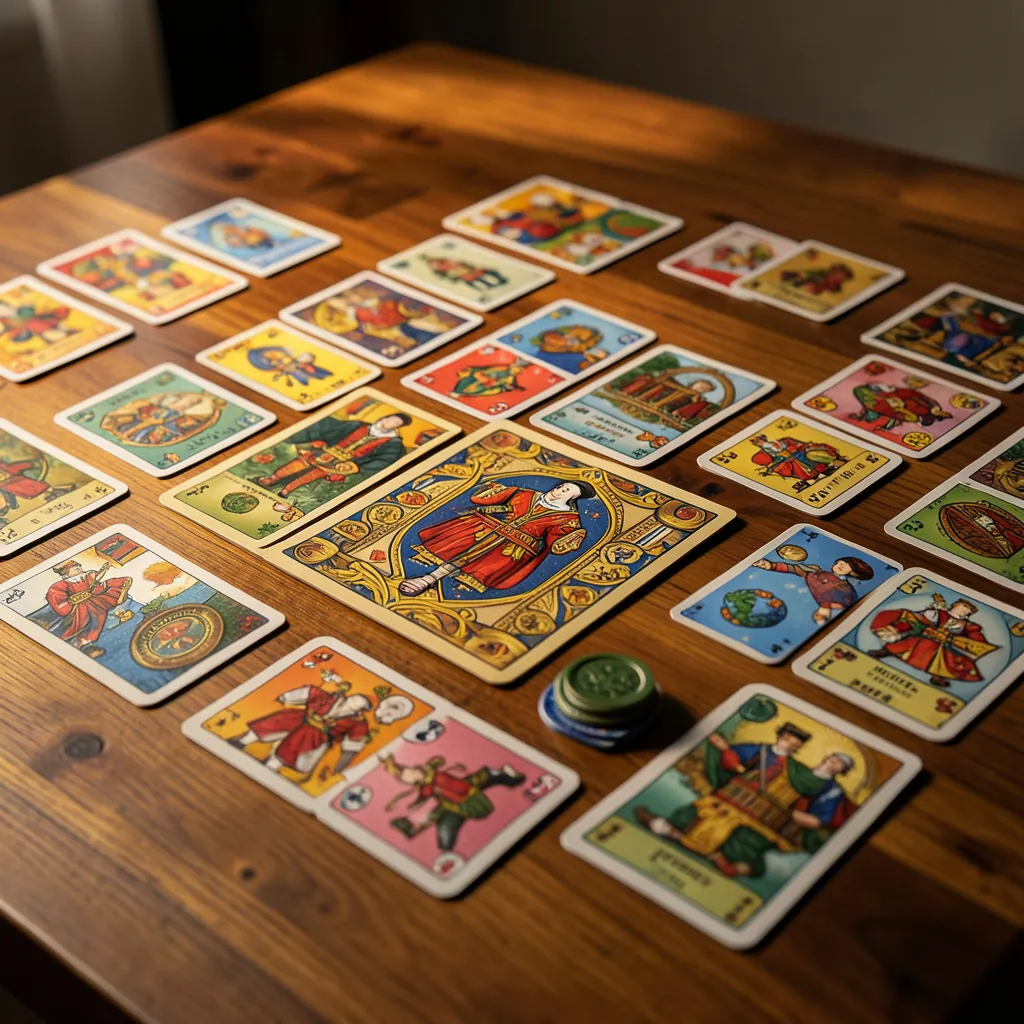
How to Play “Money Suit 31”: Setup, Rules, Scoring, and Variations
Contents
- Do the Supplied Sources Actually Describe This Game?
- What Do You Need to Set Up a Game of “Money Suit 31”?
- How to Play
- Scoring
- 💡 Strategy Tips
- 🎲 Variations
- ❓ FAQ
🃏 “Money Suit 31” is the card game this page is meant to teach, but the five sources supplied contain no game rules at all — they are 19th- and 20th-century court judgments about “money counts,” attachment of debts, and statutes numbered 31. The goal below therefore cannot be stated accurately from these sources, and no rules have been invented to fill the gap.
Players: Not stated in the supplied sources (unverified) Play Time: Not stated in the supplied sources (unverified) Age: Not stated in the supplied sources (unverified) Difficulty: Not stated in the supplied sources (unverified) Type: Not stated in the supplied sources (unverified)
Do the Supplied Sources Actually Describe This Game?
No. Every source is a legal text. None mentions a deck, suits, cards, turns, tricks, dealing, or scoring. The table below is a source audit so you can see exactly what was provided and what would need to be re-sourced before a playable guide can be written.
| Source | Citation | What the source actually covers | Any game rules? |
|---|---|---|---|
| 1 | Shaw v. Nickerson, 60 Me. 249 (Me. 1883 statute c. 81, § 31) | Attachment of real estate is invalid on a writ containing only a count for money had and received without a specification of the demand | No |
| 2 | 31 U.S.C. § 3302(b) opinion, U.S. DOJ Office of Legal Counsel (Feb. 18, 1983) | Whether settlement money in United States v. Olin Corp. was “received for the Government” and had to be deposited in the Treasury | No |
| 3 | Bank of the United States v. Moss, 47 U.S. (6 How.) 31 (1848) | Money counts in a declaration and federal jurisdiction; a judgment could not be struck at a later term for want of jurisdiction | No |
| 4 | Connolly v. Lyne (1887) 8 N.S.W.R. 238 | Whether s. 31 of the Common Law Procedure Act 1857 protected the Crown paying under a garnishee order | No |
| 5 | Orissa State Financial Corp. v. Orissa State Financial Corp., Orissa High Court (1991) | An application under s. 31 of the State Financial Corporations Act 1951 is not a suit for recovery of money but execution-like | No |
Flagged conflict between sources: Sources 1, 3 and 5 disagree in emphasis about whether a “money” claim designated by a section 31 provision is properly treated as a money suit. Source 5 holds an application under s. 31 is “not a suit for recovery of money but in the nature of execution proceeding,” while Source 3 treats money counts as substantive counts capable of supporting the action, and Source 1 requires a specification of the demand before attachment can issue. Source 4 adds that s. 31 protection does not extend to the Crown. None of this resolves anything about a card game.
What Do You Need to Set Up a Game of “Money Suit 31”?
Setup cannot be stated accurately from these sources. No source describes a deck, a deal, a board, player positions, or starting conditions. The only “setup” facts present are legal ones:
- Source 1: a writ containing only a count for money had and received, with no specification of the demand, cannot support attachment of real estate.
- Source 2: money received “for the Government” must be deposited in the Treasury as soon as practicable.
- Source 3: a declaration combining special counts on two promissory notes with the common money counts was held sufficient to support jurisdiction on the record as presented.
How to Play
Core rules are not available in the supplied sources, so no numbered play sequence can be given without inventing it. What can be numbered is what each source actually establishes:
- Source 1: A demand must be “substantially set forth in proper counts” or a specification annexed to the writ; otherwise no attachment is valid, and the plaintiff was nonsuited.
- Source 2: 31 U.S.C. § 3302(b) does not apply where the United States asserted no claim for money damages or penalties and received no money; a $24 million private settlement with a $5 million earmarked health-care trust was consistent with the statute.
- Source 3: A court cannot set aside a final judgment at the next term on a motion alleging want of jurisdiction; the verdict of $26,485.66 stood.
- Source 4: A payment made under an order to which the paying party was not bound is a voluntary payment and is no defence.
- Source 5: Dismissing a s. 31 application for default was set aside; the District Judge was directed to proceed under s. 32.
Scoring
No scoring system is described in any source. Nothing in the five texts assigns points, defines a winning condition, or refers to rounds, tricks, or a target score. Any point values published for this game would have to come from a rules source that was not provided here.
💡 Strategy Tips
Tips for playing cannot be sourced, so these are tips for handling this page honestly:
- Do not publish invented rules. Readers who learn a game from a fabricated guide will play it wrong; the fix is a real rules source, not a plausible-sounding guess.
- Check the source-topic match before drafting. All five sources here are case law; a how-to-play guide needs a rules sheet, publisher page, or rules forum.
- Read the “31” carefully. In Sources 1–5, “31” is a statute or section number (§ 31, c. 81 § 31, s. 31, 31 U.S.C. § 3302), not a game title.
- Common beginner mistake: assuming an ambiguous keyword like “money suit 31” identifies a game. Here it matched legal texts about money suits and section 31 provisions.
- Preserve the conflict flag. Sources 1, 3, 4, and 5 genuinely disagree about money counts and s. 31 procedure; suppressing that would misrepresent the law.
🎲 Variations
No house rules or player-count variants can be reported, because no source describes the base game, its player count, or a two-player adaptation. If you can supply a rules document for the game (for example, a publisher’s rulebook or a recognised rules archive), a full Setup / How to Play / Scoring / Variations guide can be written without guesswork.
❓ FAQ
How many players does “Money Suit 31” support? Unknown from these sources — no player count appears in any of the five texts, which are court judgments rather than game rules.
How do you win at “Money Suit 31”? The sources do not state a winning condition or scoring method, so no accurate answer can be given without inventing rules.
Can you play it with two players? Not established. No source mentions two-player play or any player-count variant.
Is it hard to learn? Cannot be assessed from these sources; there are no rules to evaluate for complexity.
How long does a game take? Not stated anywhere in the supplied material.
What do you need to play? Not stated. No source lists components, a deck, or any equipment.
Why does the article not include rules? Because all five sources are legal opinions and case reports — on attachment of real estate, the U.S. Treasury deposit statute, federal jurisdiction over money counts, garnishee protection, and s. 31 of an Indian financial corporations statute — and integrating them cannot produce a playable card-game ruleset.
Related guides
- How to Play Phase 10: Rules, Scoring, and Strategy
- How to Play War: Rules for the 2-Player Card Game
- 5 hundred card game
- 🃏 How to Play 500: The Complete Card Game Guide
- 500 Card Game Rules: How to Play Five Hundred