How to Play Speed (Spit/Slam): Rules, Setup, Scoring and Strategy
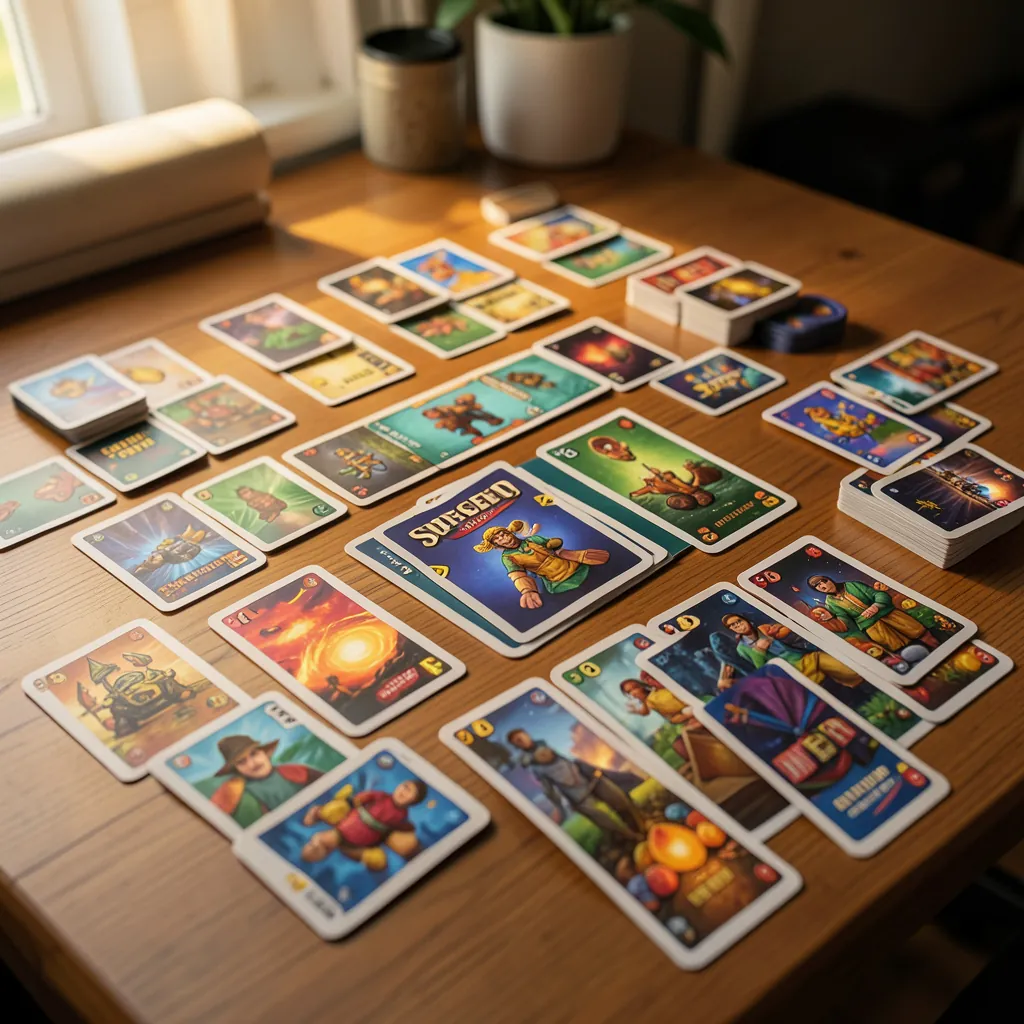
How to Play Speed (Spit/Slam): Rules, Setup, Scoring and Strategy
Contents
🃏 Speed — also called Spit or Slam — is a two-player shedding card game in which both players race at the same time, with no turns, to empty their hands and stock piles by playing cards one rank higher or lower than the cards on two shared centre piles. The goal is simple: be the first player to get rid of every card you were dealt.
Players: 2 Play Time: 2–5 minutes Age: 8+ Difficulty: Easy Type: Shedding / real-time racing card game (not trick-taking)
A note on those specs: Every rule source below describes Speed as a strictly two-player, non-turn-based shedding game that finishes in minutes — not a 3–5 player, 20–30 minute trick-taking game. No tricks are won and there are no turns. App versions add online and AI opponents, but the physical game is head-to-head.
Setup
- Take a standard 52-card deck. Remove the jokers, or keep them as wild cards (see Variations).
- Deal each player a hand of 5 cards, face down.
- Deal each player a face-down draw pile of 15 cards. (One source uses 20 — see the table below.)
- Give each player a face-down side stack of 5 cards — the “replacement pile” — placed to the side, between the two players.
- Place two cards face down in the centre, one in front of each player, between the two side stacks. These become the two shared centre piles (“spit piles”).
- Check the count: 5 hand + 15 draw pile + 5 side stack = 25 cards per player, ×2 = 50, plus the 2 centre cards = 52. It fits exactly.
- Sit opposite each other so both players can reach both centre piles, agree on a countdown, and get your hands ready.
How much does each source deal?
| Source | Hand | Draw / stock pile | Face-down side stack | Centre piles |
|---|---|---|---|---|
| Speed the Card Game Spit Slam (app) | 5 | 15 | 5 per player | 2 face down (one per player) |
| Speed Card: Slam Card Game | 5 | 15 | Two stacks of 5 between the players | 2 face up |
| Everything2 (Fort Wayne, Indiana rules) | 5 | 20-card pile per player | “Side piles” referenced in play | 2 |
| RivalPit rules guide | 5 | Remaining stock | “A few” face-down side-row cards | 2, one card each |
Where the sources disagree: the draw pile is 15 cards in two sources and a 20-card pile in another. The 15 + 5 + 5 split is the only one that uses the deck exactly, so it is the version set out above; if you use the 20-card pile, expect a shorter side stack or a house-rule adjustment.
How to Play
- Start the race. Both players flip their centre card face up at the same moment (count “3-2-1”). Play begins immediately — there is no first turn.
- Everyone plays at once. Both players play simultaneously, and either player may play onto either centre pile. A play that your opponent has already covered is simply taken back into your hand.
- Play one rank higher or one rank lower. A card is legal if it is exactly one rank above or below the top card of a centre pile. A 5 can go on a 6 or a 4; a Queen can go on a King or a Jack. Suits never matter.
- Aces wrap around. An Ace may be played on a King or a 2, and a King or a 2 may be played on an Ace — K-A-2 and 2-A-K are both legal, so the sequence never dead-ends.
- Play from your hand, as fast as you can. You may play as many cards per turn-free scramble as you can legally place, switching between the two centre piles whenever it helps.
- Top your hand back up to five. Whenever you have fewer than 5 cards in hand, draw from your face-down draw pile until you hold 5 again. Your hand should almost always be full.
- When both players are stuck, flip from the side stacks. If neither player can make a legal play, each player turns the top card of their own side stack face up onto their own centre pile, creating a new starting rank. Play resumes instantly.
- If the side stacks run out, shuffle the centre piles and deal them out as fresh side stacks so play can continue.
- Win by shedding everything. The first player to empty their hand and their draw pile (and their side stack) wins the game. One source summarises it exactly: “First player to play all of his/her cards wins!”
Where the sources disagree on the core rules
- Can you play side-stack cards directly? No in the app-based and Everything2 rules — side cards are only flipped when both players are stuck. RivalPit’s guide allows racing with “cards from their hand or side row.” Pick one before you start.
- What happens when nobody can play? Everything2 and Speed Card: Slam say flip from the side piles. RivalPit describes a showdown: both players slap a hand on their own stock pile, shout “Speed!” (or “Spit!”), and whoever has fewer cards left restarts the centre piles for the next mini-round.
- What counts as “all your cards”? One source says hand + draw pile; another says hand + side row. Agree on this before the first deal.
Scoring
In the standard two-player game there is no scoring — you either win the game or you don’t. The first player out of cards takes it; the loser is the one still holding cards. Because a single game takes only a couple of minutes, most players run a best-of-five or best-of-seven match to decide who’s actually faster.
Where scoring does appear:
- RivalPit’s round-based version: when neither player can move, both slap their stock pile and shout “Speed!”; whoever has fewer cards left in their stock and side row combined wins that mini-round and deals the next set of centre piles. The overall winner is still the first to completely empty their hand and side row.
- Digital versions: Speed the Card Game Spit Slam uses the Elo rating system (the chess-style relative-skill rating) for multiplayer, plus in-app coins purchased at $0.99–$6.99.
- A different game with the same name: a 1960s UK “Speed” game published by Pepys is scored by adding the numbers left in your hand, with the lowest total winning. It uses Speedway, Lightning and Extra Turn cards, not a 52-card deck — see Variations.
💡 Strategy Tips
- Pre-load your next two or three plays. Instead of rescanning your whole hand every time a pile changes, keep a running mental note of the cards you’re most likely to play next, so you’re already reaching for them. This is the single biggest speed gain.
- Watch both centre piles at once. Beginners fixate on one pile. A card that’s dead on the left pile is often exactly what the right pile needs.
- Play instantly; don’t hunt for the “best” card. Since there are no turns, hesitation loses races outright. A legal card now beats a clever card half a second later.
- Fan your hand the same way every time. A consistent grip with ranks visible at a glance improves win rate more than almost any other habit.
- Stay calm — and don’t bend the cards. One source’s honest warning: Speed “could result in damage to the cards.” Keep the slapping light and keep your head cool; accuracy at speed beats pure panic.
Common beginner mistakes: sitting on a playable card while hoping for a better one; forgetting to refill your hand to five; letting the draw pile drift out of reach; and playing so hard that cards crease.
🎲 Variations
What is it called in different places? Speed is the US name; Spit is more common in the UK and Canada, and Slam is another alias. All three refer to the same 52-card racing game. Speed is also related to Nertz, and to Pounce, Double Dutch, Solitaire Showdown, Truco and Ladrão.
| Game | Deck | Players | Play style | How you win |
|---|---|---|---|---|
| Speed / Spit / Slam | 52 standard | 2 | Simultaneous, no turns | First to shed all cards |
| Nertz | Multiple decks, one per player, different backs | 2+ | Simultaneous, no turns | First to shed, plus points for Nertz pile |
| The 1960s Pepys “Speed” | Custom set: Aeroplane, ship, train, motor cards + Speedway, Lightning, Extra Turn | 3+ | Turn-based, matching set or number | Empty your hand; others scored by card values |
House rules and player-count variants:
- Jokers as wild cards. If you include jokers, treat them as wilds and give each draw pile 16 cards instead of 15.
- Side-row racing. Let players play side-stack cards directly onto the centre piles, not just flip them when stuck.
- The “Speed!” showdown. Play in mini-rounds: when both players are stuck, slap your stock, shout “Speed!”, and let the player with fewer cards redeal the centre piles.
- Playing with 3 or more. No rule source documents a 3+ player version of Speed — it is designed for exactly two. The only documented ways to add players are app-based online multiplayer (Speed the Card Game lets you play friends online or against ten AI opponents of increasing difficulty) or running a knockout bracket of 1v1 matches so the winner stays on.
- Digital adaptations. The app versions add hints that highlight legal cards, auto-restock, adjustable card speed, sound-effect toggles and an interactive tutorial — useful if you’re learning the rules before playing with real cards.
Is Speed’s history known?
Barely. Speed spread almost entirely by word of mouth rather than published rulebooks. The earliest known print reference is Margie Golick’s 1973 book Deal Me In!, which described it as a game children taught each other. No designer, earlier source or confirmed country of origin has ever surfaced — it’s generally treated as a mid-to-late 20th-century game.
❓ FAQ
How many players can play Speed? Two, and only two in the standard game. Every rule source describes Speed as a two-player game. Three or more players requires a house rule (such as a knockout bracket) or an app with online multiplayer.
How do you win at Speed? Be the first to get rid of every card you were dealt — hand, draw pile and side stack. There are no points in the standard game; because matches are so short, most players use a best-of-five series.
Can you play Speed with 2 players? Yes — that’s exactly what it’s built for. One player deals, each player takes 5 cards in hand, 15 in a draw pile and 5 in a side stack, and two cards go face down in the centre to start the two shared piles.
Is Speed hard to learn? No. It’s rated easy: if you can read numbers and go one higher or one lower, you can play. The rules take about two minutes to explain, and one source notes it’s accessible to young children with basic maths skills. The hard part isn’t the rules — it’s the hand speed.
How long does a game of Speed take? Two to five minutes. One source notes “a typical game can be completed in mere minutes,” which is why best-of-five matches are the norm.
What do you need to play Speed? A standard 52-card deck and a flat playing surface. That’s it — no board, no score pad, no tokens. Jokers are optional wild cards; if you use them, each draw pile gets 16 cards instead of 15.
Is Speed the same as Spit? Effectively yes. “Speed” is the more common name in the United States and “Spit” in the UK and Canada; “Slam” is also used. Rule details vary region to region, so agree on the dealing numbers and the stuck-pile rule before you start.
Related guides
- How to Play Phase 10: Rules, Scoring, and Strategy
- How to Play War: Rules for the 2-Player Card Game