How to Play Nertz: Rules, Scoring, and Variations
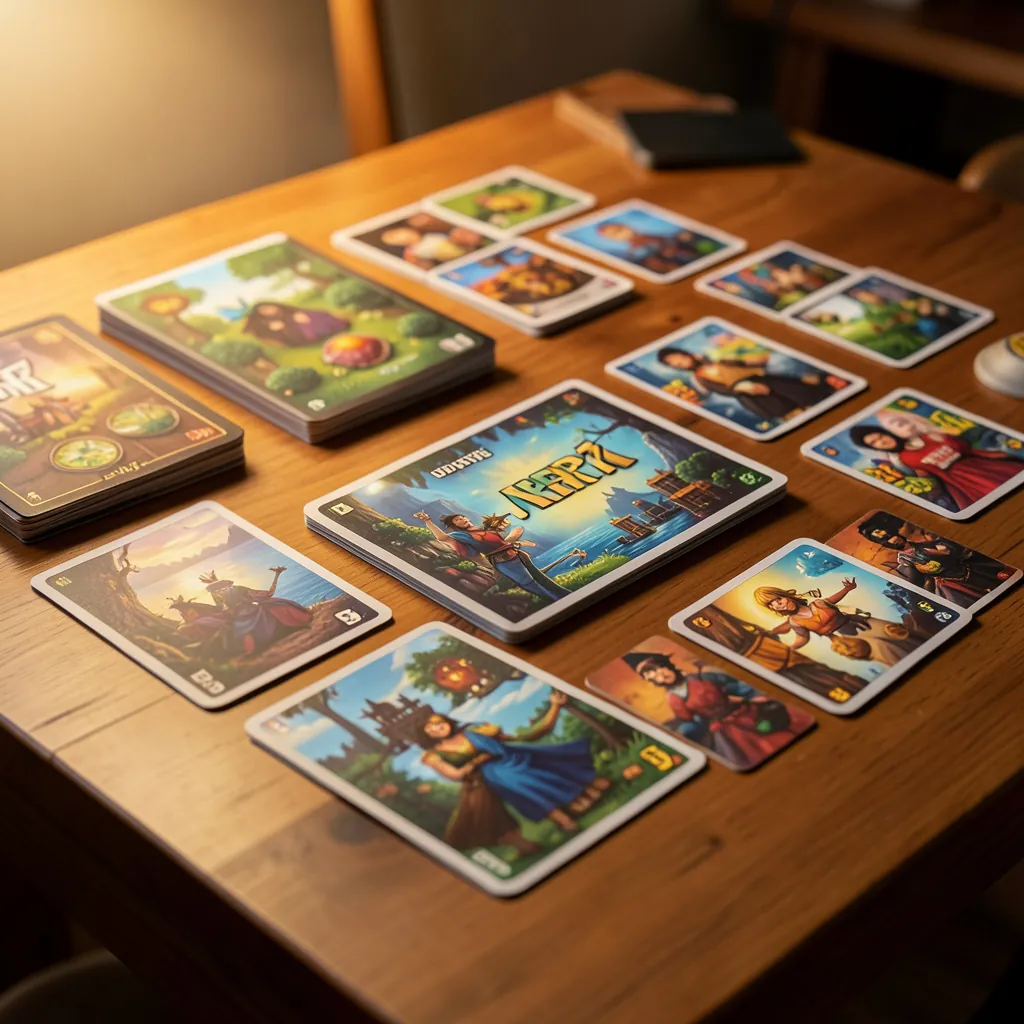
How to Play Nertz: Rules, Scoring, and Variations
Contents
🃏 Nertz (also spelled Nerts) is a real-time, multiplayer card game that combines Speed with Solitaire — everyone plays at once, racing through their own deck and onto shared foundation piles. The goal is to be the first player to play every card in your 13-card “Nertz” pile and call out “Nertz” to end the hand. A full game is commonly played to a score of 100.
Players: 2 or more (the Nertz JD app is built for 4) Play Time: No fixed clock — play is simultaneous, and a full game runs to 100 points Age: 4+ (Nertz JD app age rating) Difficulty: Easy — if you know Solitaire, you know most of it Type: Real-time multiplayer solitaire (Speed + Solitaire)
A note on the sources: Nertz is documented here from two game-focused sources (the Nertz JD app listing and a dictionary encyclopedia entry). Both describe the game’s structure, name variants and win condition, but neither publishes a full rulebook, so a few fine details (such as exact tableau column counts and per-card point values) are flagged as gaps rather than guessed at. A third set of sources uses “NertZ”/“nerts” for unrelated things — a professional Counter-Strike player and a slang interjection — and is addressed in the FAQ.
What is Nertz also called?
Nertz travels under many names, and the two sources disagree on the full list — flagged below rather than merged silently.
| Name | Listed as a Nertz alias? | Appears in |
|---|---|---|
| Nertz | Yes — “the most recognized” name | Nertz JD app; dictionary entry |
| Nerts | Yes (alternate spelling) | Nertz JD app; dictionary entry |
| Hell | Yes | Nertz JD app; dictionary entry |
| Pounce | Yes | Nertz JD app; dictionary entry |
| Peanuts | Yes | Nertz JD app; dictionary entry |
| Racing Demon | Yes | Nertz JD app; dictionary entry |
| Canfield | Yes | Nertz JD app only |
| Blitz | Yes | Nertz JD app only |
| Ligretto | Yes | Nertz JD app only |
| Fire | Yes | Dictionary entry only |
| Squinch | Yes | Dictionary entry only |
Conflict flagged: the Nertz JD app lists Canfield, Blitz and Ligretto but not Fire or Squinch; the dictionary entry lists Fire and Squinch but not Canfield, Blitz or Ligretto. Both agree on Nertz/Nerts, Hell, Pounce, Peanuts and Racing Demon.
Setup
- One deck per player. Each player uses their own deck of playing cards — Nertz is played with multiple decks in play at the same time, one per person.
- Build your Nertz pile. Take 13 cards from your deck and stack them as your personal “Nertz” pile. This is the stack you must get rid of to win the hand.
- Lay out your solitaire tableau. Arrange the rest of your deck in front of you in a solitaire-style layout, using the Nertz pile as your target stack.
- Create the shared foundation area. All players play onto the same central foundation piles — this shared middle area is what makes Nertz a race rather than a solo game.
- Agree the target score. The Nertz JD app plays a game to 100 points; agree your target before the first hand.
Gap flagged: the sources do not specify how many tableau columns to deal or the exact layout counts — check the house rules you’re using before the first deal.
How to Play
- Everyone starts at the same time. There are no turns. All players play simultaneously, in real time, as fast as they can.
- Work your solitaire-style tableau. Move cards around your own layout the way you would in Solitaire, freeing up cards you need.
- Play onto the shared foundations. Any player may add to the central foundation piles at any time — they are common property, so a pile you were about to use can change in an instant.
- Feed cards from your Nertz pile. Your objective is to move cards out of your 13-card Nertz pile and into play. The faster you free and place those cards, the closer you are to going out.
- Call “Nertz” to end the hand. The first player to play every card from their 13-card Nertz pile calls out “Nertz.” That ends the hand.
- Score, reshuffle and deal again. Hands are played repeatedly until the agreed target score (100 in the Nertz JD app version) is reached.
Gap flagged: the sources describe the foundations as shared, solitaire-style piles but do not spell out the build order in words; they assume familiarity with standard Solitaire foundations.
Scoring
- The hand ends when someone calls “Nertz” — i.e., when a player has played all 13 cards of their Nertz pile.
- A game is played to 100 points (the target used by the Nertz JD app). The first player to reach the target score wins the game.
- Scoring is cumulative across hands. Because the game is played to a score rather than a single hand, you deal and play multiple hands until someone hits the target.
Conflict/gap flagged: the sources give the game’s target score (100) but do not publish per-card point values (what a played card, a card left in the Nertz pile, or a card left in the tableau is worth). Different published rule sets handle this differently, so confirm the point values with your table before play rather than assuming.
💡 Strategy Tips
- Speed beats deliberation. Play is real-time and there are no turns, so the player who hesitates loses ground every second. Decide fast and move.
- Watch the shared foundations constantly. Because everyone can play on the same piles, a foundation can be changed by an opponent between your moves — always rescan the centre before committing a card.
- Prioritise the Nertz pile. Tableau reshuffling feels productive but doesn’t end the hand; only emptying the 13-card Nertz pile does. Free those cards first whenever you can.
- Don’t fixate on one stack. If your next Nertz card won’t play, switch to another part of your tableau and come back — the foundation you need will likely open up.
- Common beginner mistake: playing in turns or waiting for others, as you would in a normal card game. Nertz only works at full speed, all at once.
🎲 Variations
- Player count. The sources state Nertz “can be played with any amount of people,” while the Nertz JD app is specifically a 4-player version. For 2 players, each player simply uses their own deck and races the other head-to-head — the shared-foundation structure doesn’t change.
- Alternate names as house games. Nertz, Nerts, Pounce, Peanuts, Hell and Racing Demon are the same family of game under different names; if a table calls it “Pounce” or “Racing Demon,” expect the same 13-card-pile, shared-foundation race.
- Name variants with narrower listings. Canfield, Blitz and Ligretto appear as Nertz aliases in the app listing, and Fire and Squinch in the dictionary entry — if someone uses one of these names, confirm the rules before dealing, since the sources disagree on which names belong to the family.
- Target score. The app’s 100-point game is a house convention; shorter sessions often end after a set number of hands instead.
❓ FAQ
How many players can play Nertz? Any number. The sources say Nertz can be played with any amount of people, though the Nertz JD app is designed as a 4-player version. Each player needs their own deck.
How do you win at Nertz? Be the first to play all 13 cards in your Nertz pile and call “Nertz” to end the hand, then keep scoring across hands until someone reaches the target — 100 points in the app version.
Can you play Nertz with 2 players? Yes. Since Nertz supports “any amount of people,” two players simply race each other using one deck each and the same shared foundation piles.
Is Nertz hard to learn? No — it’s rated easy. Nertz is described as a combination of Speed and Solitaire, so anyone who knows Solitaire already knows the card movement; the only new skill is playing at full speed against opponents.
How long does a game of Nertz take? The sources don’t give a fixed duration. Individual hands are quick because all players play simultaneously, but a full game is played to 100 points across multiple hands, so total length depends on the target score and the number of players.
Is “Nertz” the same as the slang word “nerts” or the pro player “NertZ”? No — these are unrelated. Green’s Dictionary of Slang records “nerts” as a US interjection meaning “nonsense!” and an adjective meaning “crazy, foolish,” and Liquipedia’s “NertZ” is Guy Iluz, a professional Counter-Strike player. The card game Nertz is a separate thing entirely, which is why the spelling varies so much.
Related guides
- How to Play Phase 10: Rules, Scoring, and Strategy
- How to Play War: Rules for the 2-Player Card Game
- 5 hundred card game