How to Play UNO: Rules, Scoring, and Variations Explained
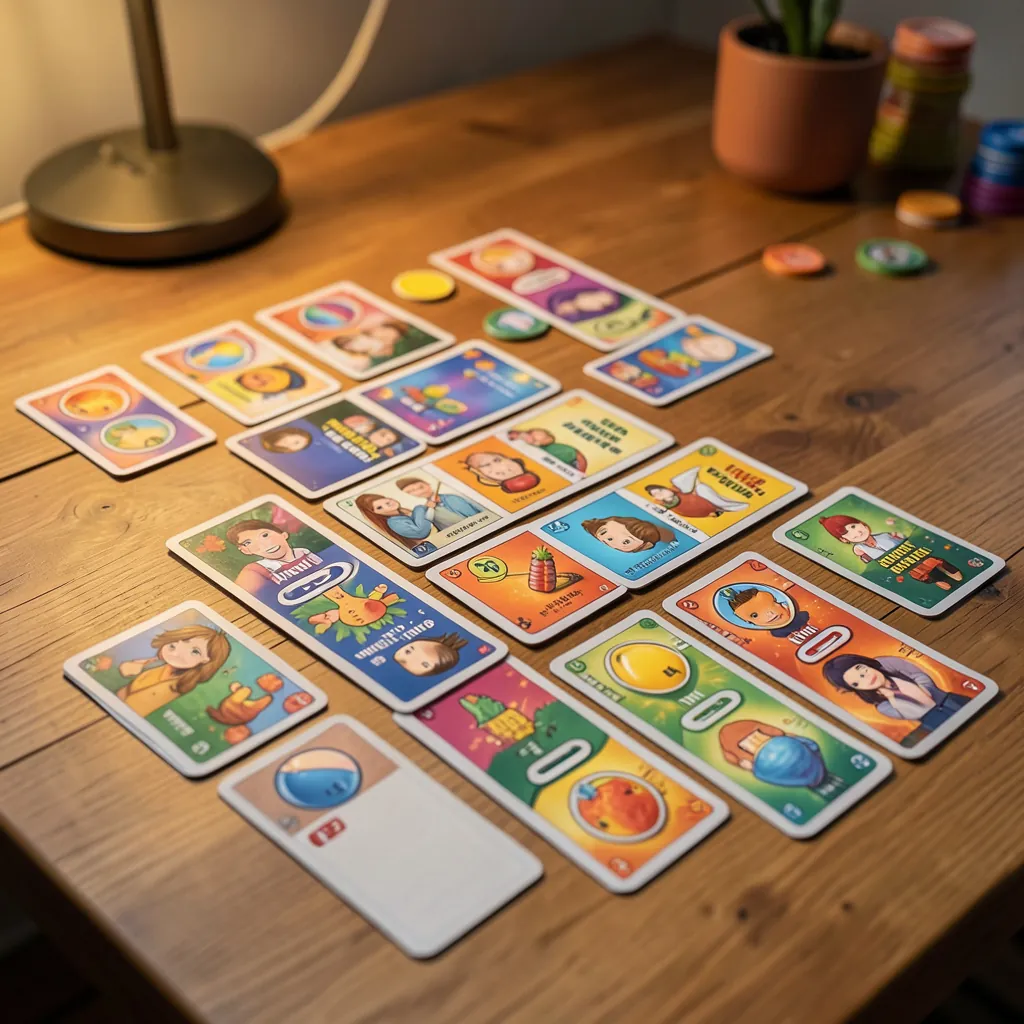
How to Play UNO: Rules, Scoring, and Variations Explained
Contents
🃏 UNO is a colour-matching card game in which players race to empty their hand by matching the top card’s colour, number, or symbol. The goal is to be the first to play your last card — shouting “UNO” when you’re down to one — and to score points across rounds until someone reaches 500. This guide covers the official rules, scoring, and the house rules groups actually use.
Players: 2–10 Play Time: Multiple short rounds — a full game runs until one player reaches 500 points Age: 7+ Difficulty: Easy Type: Matching / shedding card game (not a trick-taking game)
Setup
- Shuffle the deck. A standard UNO deck contains 108 cards (Asmodee, Baidu): 25 cards of each colour (red, yellow, blue, green — 19 number cards plus 2 each of Reverse, Skip, and Draw 2), plus 4 Wild and 4 Wild Draw 4 cards. Some retail listings describe a 112-card deck (Tabletop Gaming, Google Shopping listing) — see the conflict note below.
- Deal 7 cards to each player, face down. This is consistent across all sources.
- Place the remaining cards face down in the centre as the draw pile.
- Flip the top card of the draw pile face up to start the discard pile. Asmodee’s official rules say that if the flipped card is a Wild, put it back in the deck and flip the next card. Baidu’s version says to redraw until a Number Card appears — a minor conflict worth agreeing on before you start.
- Choose the first player. Asmodee allows either the player to the left of the dealer or the youngest player. Baidu suggests the highest-numbered card drawn becomes the dealer. Play proceeds clockwise.
- If the starting card is a Wild or colour-choice card, the first player (or the group) declares the colour in play before anyone takes a turn (Tabletop Gaming).
How to Play
- Take turns in the play direction (clockwise to start). On your turn you may play one card onto the discard pile.
- Match the top card by colour or by number/symbol. A red 7 can be played on a red 3 (same colour) or a blue 7 (same number). If the top card is a yellow Draw 2, you may play any yellow card or any Draw 2 of another colour (Baidu).
- Wild cards can be played on anything. Announce the colour that continues play; the next player must match that colour.
- If you have no playable card, draw one from the draw pile. If the drawn card is playable you may play it immediately — otherwise your turn ends. Per Asmodee’s FAQ, you may also choose to draw even when you do have a playable card.
- Play special cards to affect other players:
| Card | What it does | Point value |
|---|---|---|
| Draw 2 | Next player draws 2 cards and misses their turn | 20 |
| Reverse | Flips the direction of play (clockwise ↔ anticlockwise) | 20 |
| Skip | Next player loses their turn | 20 |
| Wild | Player names the next colour | 50 |
| Wild Draw 4 | Player names the next colour; next player draws 4 and misses a turn | 50 |
| Number card | No effect | Face value (0–9) |
- Wild Draw 4 has a legality rule. You may only play it if you hold no card matching the colour currently in play (Asmodee, Baidu). The player forced to draw 4 may challenge: the player of the Wild Draw 4 shows their hand. If the challenge succeeds, the player who played it draws 4 instead. If the challenge fails, the challenger draws 4 plus 2 extra (6 total) and misses their turn.
- Call “UNO” when you play your second-to-last card. If another player catches you before the next player takes their turn, you draw a penalty. If nobody catches you in time, no penalty applies (Asmodee).
- If the draw pile runs out, reshuffle the discard pile (keeping the top card as the reference card) and continue.
- The round ends the moment a player plays their last card. You may finish on an action or Wild card — the next player still draws and/or misses their turn (Asmodee).
Where do the sources disagree?
| Rule detail | Asmodee / Baidu | Tabletop Gaming / other sources | Recommendation |
|---|---|---|---|
| Deck size | 108 cards | 112 cards (boxed retail listing) | 108 is the standard playable count; the extra cards are usually blanks/instructions |
| Penalty for not saying UNO | 4 cards (Asmodee) | 2 cards (Baidu), 2 (Google review) | Pick one before the game — 4 is the official Asmodee rule |
| Stacking Draw 2 / Draw 4 | Not an official rule; stacking surprised players in 2019 (Asmodee) | Baidu describes cumulative stacking as standard | House rule only — agree in advance |
| Starting card | If Wild, return it and flip again (Asmodee) | Redraw until a Number Card (Baidu) | Either works; announce it |
| Reverse with 2 players | Next player misses a turn, so you play again (Baidu) | — | Treat as a Skip |
Scoring
- The round winner scores points for every card left in opponents’ hands (Asmodee): number cards are worth their face value, Draw 2 / Reverse / Skip are 20 points each, and Wild / Wild Draw 4 are 50 points each.
- First to 500 points wins the overall game. This is confirmed by Asmodee’s rules and by Mattel’s own product listing.
- Alternative scoring: players tally their own remaining hand points, and when one player reaches 500, the player with the lowest total wins (Asmodee).
- Tabletop Gaming’s variation: lower scores are better per round, and Wild Shuffle Hands / custom cards are scored at 40 points.
- Many groups skip scoring entirely and simply play single rounds until someone wins — common in casual and digital play (GameSpot review).
💡 Strategy Tips
- Hold Wilds for a colour you can’t match. A Wild played when you have four reds left just frees you to dump them.
- Watch the colour you call. Call the colour you actually need to play next, not the one you’re holding the most of — the player after you gets first crack at it.
- Use Skip and Reverse defensively. When someone has called UNO, the Skip or Reverse (or a well-timed Draw 2) is what stops them winning next turn.
- Keep one card of every colour if you can. Multiple colours in hand means fewer forced draws.
- Common beginner mistakes: forgetting to call UNO before the next player acts (four-card penalty), playing a Wild Draw 4 while holding the current colour, and forgetting that Reverse reverses direction, not just skips.
🎲 Variations
- Stacking (very common house rule). You respond to a Draw 2 with another Draw 2, or a Wild Draw 4 with another Wild Draw 4, passing the growing penalty onward. Not an official rule — Asmodee confirms it is a house rule, and Tabletop Gaming notes groups argue about it.
- Playing with 2 players. Reverse acts as a Skip: your opponent misses their turn and you play again (Baidu). Draw 2 and Skip also effectively give you a free turn.
- Seven-O. Every 7 played lets you swap hands with any player; every 0 played makes all players pass their hand to the next player in the direction of play (Asmodee).
- Jump-in. If you hold a card that exactly matches the top card in both colour and number, you may play it out of turn (Asmodee).
- Doubles. Play two identical cards at once (e.g., two red 4s) (Asmodee).
- Shuffle Hands. The player takes everyone’s hands, shuffles them, and redeals evenly (Asmodee); Tabletop Gaming describes the related Wild Swap Hands in newer editions.
- Other editions: UNO Flip, UNO Extreme, UNO No Mercy, UNO Flex, UNO All Wild, UNO Team and DOS all change the rules in specific ways (Tabletop Gaming).
❓ FAQ
How many players can play UNO? Official UNO supports 2 to 10 players, ages 7+. Larger groups can play by combining decks, but a single deck is balanced for 2–10.
How do you win at UNO? Win a round by playing your last card; win the game by being the first to score 500 points from opponents’ remaining cards (or by having the lowest total, depending on which scoring method your group uses).
Can you play UNO with 2 players? Yes. In the two-player game, a Reverse card functions like a Skip — your opponent misses a turn and you play again.
What happens if you forget to say UNO? Sources conflict: Asmodee’s official rules require you to draw 4 cards; Baidu lists 2 cards. You’re safe once the next player has taken their turn. Agree on one penalty before dealing.
Can you finish on a Wild Draw 4? Yes. Ending on an action card is legal — the next player still draws their penalties and/or misses their turn, which adds to their point total.
Is UNO hard to learn? No. Match colour or number, draw if you can’t play, and call UNO at one card. Most players learn it in a single round of about 10–20 minutes.
Related guides
- How to Play Phase 10: Rules, Scoring, and Strategy
- How to Play War: Rules for the 2-Player Card Game
- 5 hundred card game
- 🃏 How to Play 500: The Complete Card Game Guide
- 500 Card Game Rules: How to Play Five Hundred