Rummy Rules: How to Play Basic Rummy, Score, and Variations
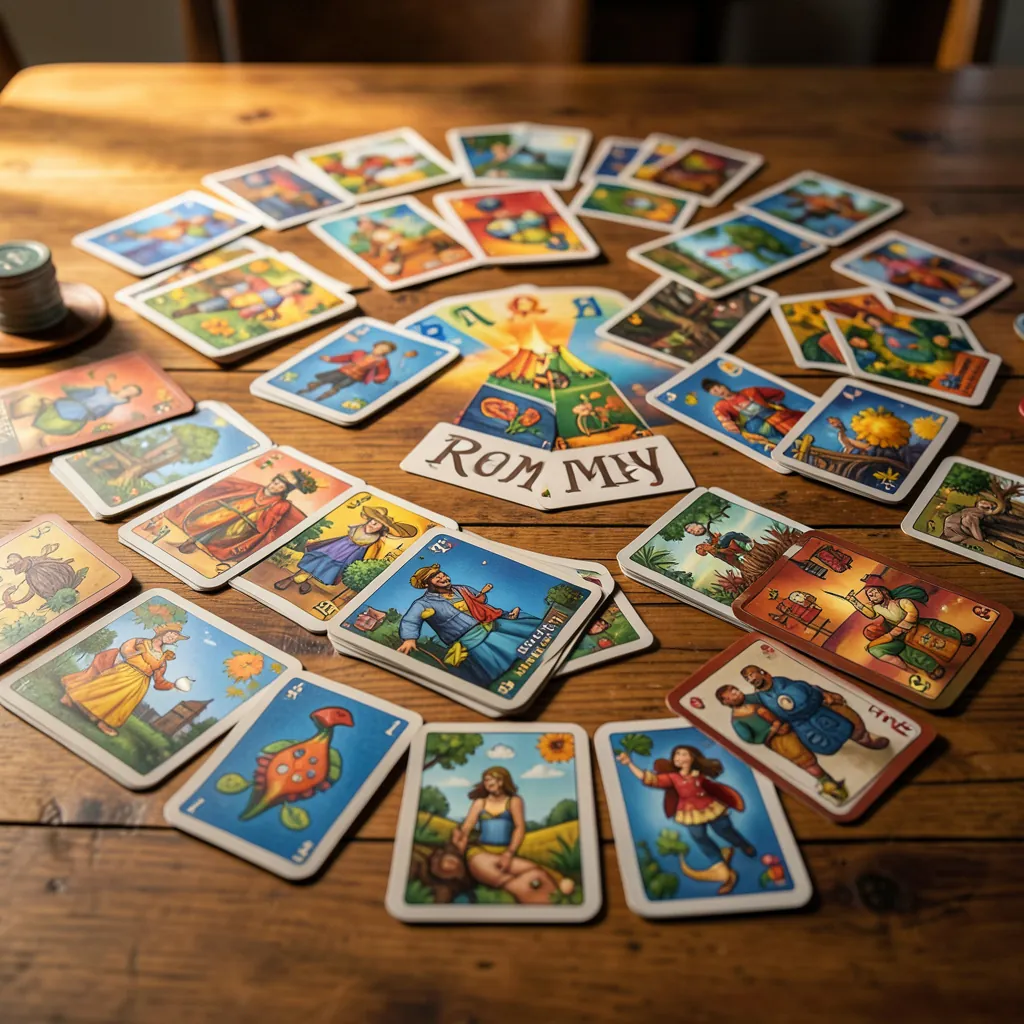
Rummy Rules: How to Play Basic Rummy, Score, and Variations
Contents
🃏 Rummy is a draw-and-discard card game where players race to meld all their cards into sets (same rank) or runs (consecutive same suit). The goal is to go out first by playing or discarding your last card; unmelded cards score penalties. Basic Rummy is easy to learn, but published rules vary on dealing, discard-pile draws, and scoring.
Players: 2–5 with one 52-card deck; 3–5 is within that single-deck range. 4–7 with a double deck (Britannica). Bicycle Cards lists 2, 3, 4, and 5+.
Play Time: Not specified in the cited sources; length varies by deal count and variant.
Age: Sources conflict: Bicycle Cards lists 18+; Britannica and Gaming Pedia give no fixed age.
Difficulty: Easy — Bicycle Cards describes Rummy as “so simple to play.”
Type: Draw-and-discard melding/shedding card game, not a trick-taking game.
Setup
- Use one 52-card deck for 2–5 players, or two decks for 4–7 players, according to Britannica. Add two or more jokers per deck if your group uses jokers.
- Appoint a dealer and, if playing multiple hands, a scorer (Gaming Pedia).
- Shuffle and deal face down one card at a time, starting with the player to the dealer’s left (Bicycle Cards).
- Sources disagree on exact deal sizes. Use the table below and agree before play.
Dealing by player count: published rules conflict
| Ruleset | 2 players | 3 players | 4 players | 5 players | 6 players |
|---|---|---|---|---|---|
| Bicycle Cards, single deck | 10 | 7 | 7 | 6 | 6 |
| Britannica, typical single deck | 10 | 7 or 10 | 7 | 7 | Not stated |
| Britannica, double deck (104 cards) | — | — | 10 | 10 | 10 for 4–7 players |
Gaming Pedia pages add another conflicting summary: 2–4 players get 10 cards each, while 5+ players use two decks and get 7 each. Because sources differ, the deal is a house-rule decision.
- Put the rest of the deck face down as the stock. Turn the top card face up beside it to start the discard/waste pile (Britannica; Bicycle Cards).
- The player to the dealer’s left begins (Bicycle Cards). A Gaming Pedia summary says the nondealer starts, which is normally the same player.
How to Play
- Draw. On your turn, take the top card of the stock or the top card of the discard/waste pile (Britannica; Bicycle Cards). Basic Rummy uses only the top discard. In Rummy 500-style variants, you may take a lower discard only if you also take every card above it and immediately use the chosen card in a meld or lay-off (Gaming Pedia). One Gaming Pedia page says Rummy players must draw from the discard pile; Britannica and Bicycle allow either stock or discard, so treat that as a variant or oversimplification.
- Meld if you can. A meld is either a set of three or four cards of the same rank, or a run of three or more consecutive cards of the same suit (Britannica). The lowest run is A-2-3; the highest is often J-Q-K, but many rules allow both A-2-3 and Q-K-A while forbidding K-A-2 (Britannica).
- Use jokers carefully. Jokers are wild and can stand for any card in a set or run. If you take a wild card from a meld on the table, you must replace it with the natural card it represents (Britannica). Joker limits vary; one common house rule caps two jokers in a meld (Gaming Pedia).
- Lay off. You may add one or more cards from your hand to any meld already on the table, regardless of who made it (Britannica; Bicycle Cards). Some variants require you to make at least one meld of your own before laying off (Gaming Pedia), so agree on this before play.
- Discard. After melding or laying off, discard one card face up to the discard pile. If you drew the top discard, you may not discard that same card on that turn (Britannica; Bicycle Cards).
- Go out. Play your last card as part of a new meld, as a lay-off, or as a discard. The game ends immediately when a player goes out (Britannica; Bicycle Cards). If all your remaining cards are matched, Bicycle Cards allows you to lay them down and go out without a final discard; some groups require a final discard instead (Gaming Pedia).
- If the stock runs out. Turn the discard pile over—without shuffling—to form a new stock, then turn its top card face up to start a new discard pile (Britannica; Bicycle Cards). Some variants instead end the round and score deadwood when the stock is empty and the next player declines the discard (Gaming Pedia).
Scoring
At the end of a hand, the player who went out wins. The other players score penalties for cards left in hand, called deadwood. In basic Rummy, card values are:
| Card left in hand | Penalty value |
|---|---|
| Joker | 15 points (Britannica); some variants use 20 (Gaming Pedia) — conflict |
| Face cards (J, Q, K) | 10 points |
| Ace | 1 point; 11 if Q-K-A is allowed (Britannica) |
| Number cards 2–10 | face/index value |
Each player pays the winner the pip value of cards left in hand, whether matched or not (Bicycle Cards). A Gaming Pedia summary says each player loses points equal to deadwood and the winner gains the sum of all opponents’ penalties. If a player goes “rummy”—getting rid of all cards in one turn without having previously put down or laid off any cards—each opponent pays double (Bicycle Cards).
The first player out wins the hand. If playing multiple deals, keep cumulative score; the cited sources do not state a universal target score. Variants such as Indian 13-card Rummy and Rummy 500 use different scoring, so do not mix them with basic Rummy.
💡 Strategy Tips
- Discard ungrouped high-value cards early. High cards create big penalties if you lose, and a Gaming Pedia “golden rule” is to get rid of high-value cards when they are not part of a likely meld.
- Watch what opponents discard and pick up. Avoid discarding cards that plainly complete an opponent’s run or set.
- Build toward a clear set or run before collecting too many unrelated high cards; flexibility matters more than hoarding.
- Use jokers to finish hard melds, but remember that a table joker can be stolen if an opponent can replace it with the natural card (Britannica).
- If your variant requires immediate use of a discard-pile pickup, do not take the discard unless you can meld or lay it off right away (Gaming Pedia).
Common beginner mistakes: taking the discard pile “just because,” forgetting that a drawn discard cannot be discarded again that turn, forgetting to lay off cards onto existing melds, and assuming one Rummy variant’s rules apply to all.
🎲 Variations
- Two-player Rummy: Deal 10 cards each from one deck (Bicycle Cards; Britannica). Bicycle Cards says the winner of each hand deals the next.
- Three-to-six-player Rummy: Deal sizes differ by source; see the Setup table. With five or more players, many groups use two decks and 7 cards each, but published rules conflict on this.
- Gin Rummy: Ten-card game where players knock when deadwood is 10 points or less; aces count 1, face cards 10, and lay-offs happen after the knock (Britannica; Gaming Pedia). One Gaming Pedia page says Rummy players must draw from the discard pile, but basic Rummy sources allow stock or discard—this is a conflicting simplification.
- Indian 13-card Rummy: Each player gets 13 cards; a valid declaration needs at least two sequences, including one pure sequence; aces are often scored at 10 in Indian Rummy (Gaming Pedia). This is a different scoring and declaration system from basic Rummy.
- Rummy 500 / deeper discard-pile rules: If you take a lower card from the discard pile, you must take all cards above it and immediately use the selected card (Gaming Pedia). Some house rules also say a discarded joker cannot be picked up.
- Seven-card Rummy: Play with seven cards and aim for the lowest score; aces are 1, face cards 10, and other cards their face value (Gaming Pedia).
- Contract Rummy: The first meld of each deal must match a required pattern that gets harder over the deal sequence (Britannica).
❓ FAQ
How many players can play Rummy?
Rummy usually supports 2–5 players with one 52-card deck; with a double deck it can support 4–7 players (Britannica). Bicycle Cards lists 2, 3, 4, and 5+. Exact deal sizes vary by source, so agree before playing.
How do you win at Rummy?
Go out first by playing or discarding your last card. You may meld all remaining matched cards and go out without a final discard under Bicycle Cards’ rules, though some groups require a final discard. The first player out wins the hand; other players score penalties for deadwood.
Can you play Rummy with 2 players?
Yes. Two-player Rummy commonly deals 10 cards each from one deck (Bicycle Cards; Britannica). Bicycle Cards says the winner of each hand deals the next hand.
Is Rummy hard to learn?
No. Basic Rummy is easy: draw, meld or lay off if possible, then discard. The main complications are the many published rule variations for dealing, discard-pile pickups, joker limits, and final-discard requirements.
How long does a game take?
The cited sources do not give a fixed play time. Length depends on player count, deal size, number of deals, and whether you play a single hand or use cumulative scoring.
What do you need to play Rummy?
You need a standard 52-card deck for most 2–5 player games, plus optional jokers; use a double deck for 4–7 players. You also need table space for a face-down stock and a face-up discard/waste pile, and a score pad if playing multiple hands.
Related guides
- How to Play Phase 10: Rules, Scoring, and Strategy
- How to Play War: Rules for the 2-Player Card Game
- 5 hundred card game
- 🃏 How to Play 500: The Complete Card Game Guide