Phase 10 Rules: How to Play, Score, and Win
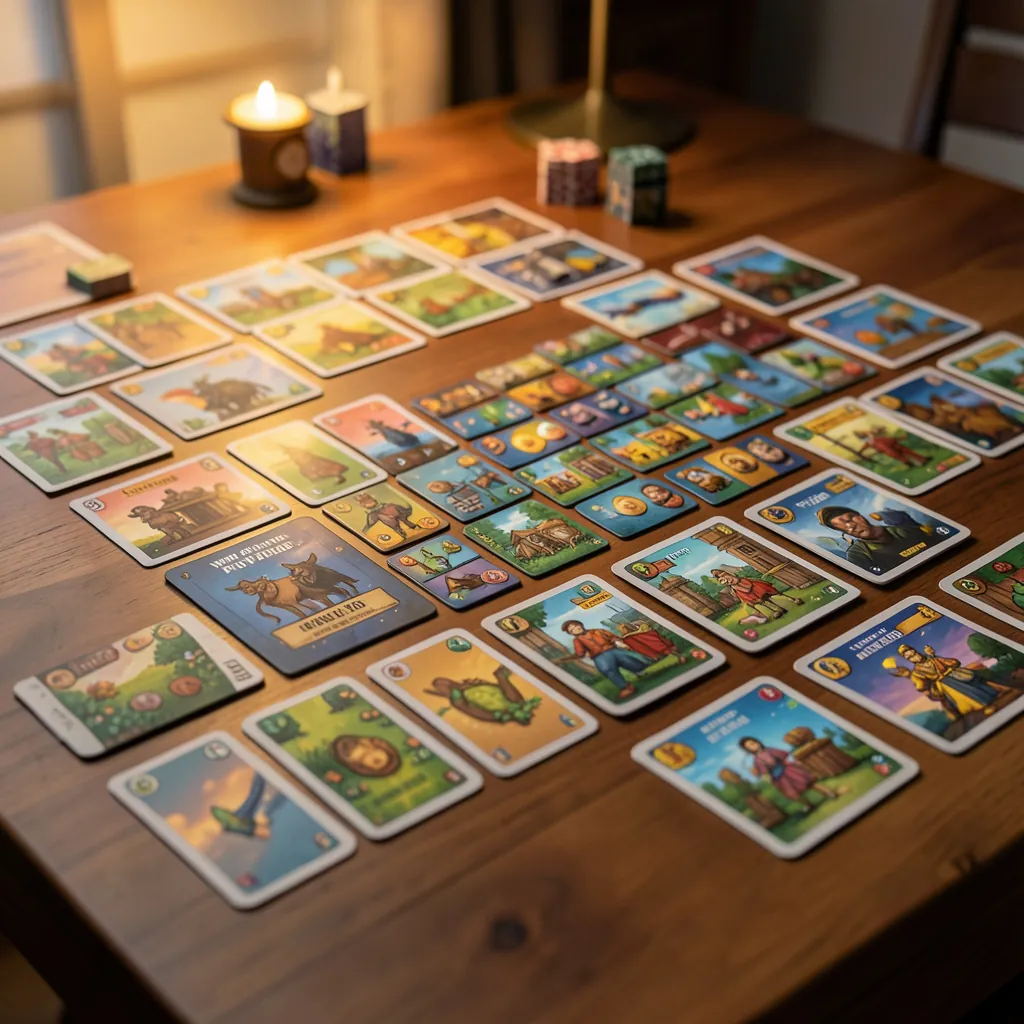
Phase 10 Rules: How to Play, Score, and Win
Contents
🃏 Phase 10 is a Mattel rummy-type card game for 2–6 players who race through 10 card combinations called Phases. The goal is to be first to complete Phase 10; if players finish in the same hand, the lowest score wins. Each turn you draw, lay down your current Phase if possible, hit matching cards onto completed Phases, and discard; miss a Phase and you must repeat it.
Players: 2–6
Play Time: About 60+ minutes
Age: 7+
Difficulty: Moderate
Type: Rummy-type card game
Setup
- Choose a dealer. If your edition includes the two Phase Reference cards, place them where all players can see the 10 Phases.
- Shuffle the deck. The standard deck contains 96 numbered cards — 24 each in red, blue, yellow, and green, numbered 1–12 — plus 8 Wild cards and 4 Skip cards. Some Mattel sheets count 108 play cards; another lists 110 total cards including the 2 Phase Reference cards.
- Deal 10 cards face down to each player, one at a time. Players hold their cards so others cannot see them.
- Place the remaining deck face down in the center as the draw pile. Turn the top card face up beside it to start the discard pile.
- The player to the dealer’s left goes first. Play continues clockwise.
How to Play
- Draw one card. On your turn, take either the top card from the draw pile or the top card from the discard pile and add it to your hand.
- Lay down your current Phase if you can. A Phase is a set, a run, cards of one color, or a combination of sets and runs. You must have the whole Phase in hand before laying it down, and you can make only one Phase per hand. Phases must be completed in order from 1 to 10. You get credit as soon as you lay the Phase down, even if you do not win the hand.
- Hit completed Phases after your own Phase is down. Hitting means adding cards from your hand to any Phase already laid on the table — yours or another player’s. The card must properly fit: add another 4 to a set of 4s, add a 2 or 7 to a run, add another green card to a seven-green Phase, or add a Wild where allowed. You may hit only during your turn and only after your own Phase is laid down. You may make multiple hits.
- End your turn by discarding one card. Place one card face up on the discard pile. If you discard a Skip card, choose a player to lose their next turn; that discard ends your turn. A Skip may never be picked up from the discard pile or used in a Phase. Skip restrictions vary slightly by Mattel sheet: one says only one Skip against each player per round; another says a Skip may not be played against the same player two turns in a row.
- Go out to end the hand. After your Phase is down, get rid of all remaining cards by hitting or by discarding your last card. The first player to go out wins the hand and ends the round for everyone.
- Advance or repeat. The player who went out and any other players who completed their Phase advance to the next Phase. Players who did not complete their Phase must try the same Phase again next hand. Record scores, shuffle, deal a new hand, and continue until someone completes Phase 10.
What are the 10 Phases in order?
| Phase | Requirement |
|---|---|
| 1 | 2 sets of 3 |
| 2 | 1 set of 3 + 1 run of 4 |
| 3 | 1 set of 4 + 1 run of 4 |
| 4 | 1 run of 7 |
| 5 | 1 run of 8 |
| 6 | 1 run of 9 |
| 7 | 2 sets of 4 |
| 8 | 7 cards of 1 color |
| 9 | 1 set of 5 + 1 set of 2 |
| 10 | 1 set of 5 + 1 set of 3 |
How do sets, runs, colors, and special cards work?
- Set: Two or more cards with the same number, in any color combination. Example: three 7s and three 10s.
- Run: Four or more cards in consecutive number order, in any color combination. Example: 3, 4, 5, 6.
- All one color: Cards of the same color; they do not need to be in number order. Example: seven red cards.
- Wild cards: A Wild may replace a number card or act as any color to complete a Phase. You may use as many Wilds as you want as long as you use at least one natural numbered card. Once a Wild is played in a Phase, it cannot be removed or replaced for the rest of the hand. If the dealer starts the discard pile with a Wild, the first player may pick it up.
- Skip cards: A Skip makes another player lose a turn. If you draw a Skip, you may discard it immediately or save it for a later turn. A Skip may never be used in making a Phase or picked up from the discard pile. If the dealer starts the discard pile with a Skip, the first player’s first turn is automatically skipped.
Scoring
Use paper and pencil to keep a running total for each player. The winner of the hand scores zero. Every other player scores points for cards still in their hand; cards already laid down are not scored.
| Card left in hand | Points |
|---|---|
| Numbered 1–9 | 5 |
| Numbered 10–12 | 10 |
| Skip | 15 |
| Wild | 25 |
Source conflict: The NYT Wirecutter review says Skips and Wilds are worth 25 points. Mattel’s official standard instructions score a Skip at 15 and a Wild at 25. Use the official Mattel values unless your edition’s rulebook says otherwise.
The first player to complete Phase 10 at the end of a hand wins the game. If two or more players complete Phase 10 in the same hand, the player with the lowest total score wins. If they tie, the tied players replay Phase 10, and the first to go out wins.
💡 Strategy Tips
- Track every player’s current Phase. The NYT review specifically recommends watching the Phase your opponent is on, because it tells you what cards they need and what may be safe to discard.
- Shuffle thoroughly between hands. Because players receive a new 10-card hand each round, weak shuffling can deal cards too similar to the previous hand and unfairly “rig” the Phase.
- Do not lay down a partial Phase. Official rules require the whole Phase in hand before you place it on the table. You may add extra cards only if they directly extend cards already in that Phase.
- Remember that you cannot hit until your own Phase is down. A common beginner mistake is trying to get rid of cards onto other Phases before completing their own Phase.
- Use Wilds carefully. Wilds are powerful but locked in place once played in a Phase. Mattel rules allow multiple Wilds, but you must include at least one natural numbered card.
🎲 Variations
- Play exactly 10 hands: All players advance to the next Phase each hand whether or not they completed the current one. After 10 hands, the player with the lowest total score wins.
- Shorter game: Before play starts, agree on how many Phases must be completed, such as 5 or 7. All other rules stay the same.
- Even Phases only: One Mattel sheet lists a variant using only Phases 2, 4, 6, 8, and 10. All other rules remain the same.
- Two-player play: Standard Phase 10 officially supports 2–6 players, so two players can use the normal rules. The official sheets do not provide a separate two-player variant. The Phase 10 Masters Edition is different: it supports 2–4 players and adds Phase Cards and a Save Pile.
❓ FAQ
How many players can play Phase 10?
Standard Phase 10 supports 2–6 players. The Masters Edition supports 2–4 players.
How do you win Phase 10?
Be the first player to complete Phase 10 at the end of a hand. If multiple players complete Phase 10 in the same hand, the lowest total score wins; tied players replay Phase 10 and the first to go out wins.
Can you play Phase 10 with 2 players?
Yes. Mattel’s standard rules list 2–6 players, and the NYT review says the game can be played with as few as two. The official sheets do not give a separate two-player ruleset, so use the normal rules.
Is Phase 10 hard to learn?
It is moderate rather than hard. The turn sequence is simple — draw, lay down a Phase if possible, hit, discard — but you must track Phases in order. The NYT review calls it “a little complicated” and “the chess of card games,” while Mattel lists it for ages 7+.
How long does a game take?
About an hour or more. The NYT review describes a full game as about an hour or hour-plus, and the Masters Edition sheet says 60–90 minutes. Actual time varies with player count and familiarity.
What do you need to play Phase 10?
A standard Phase 10 deck and 2–6 players. The deck has 96 numbered cards, 8 Wilds, and 4 Skips; some editions also include two Phase Reference cards. You also need space for draw and discard piles and paper and pencil for scoring.
Related guides
- How to Play War: Rules for the 2-Player Card Game
- 5 hundred card game
- 🃏 How to Play 500: The Complete Card Game Guide