How to Play Rook: Rules, Bidding, Scoring and Variations
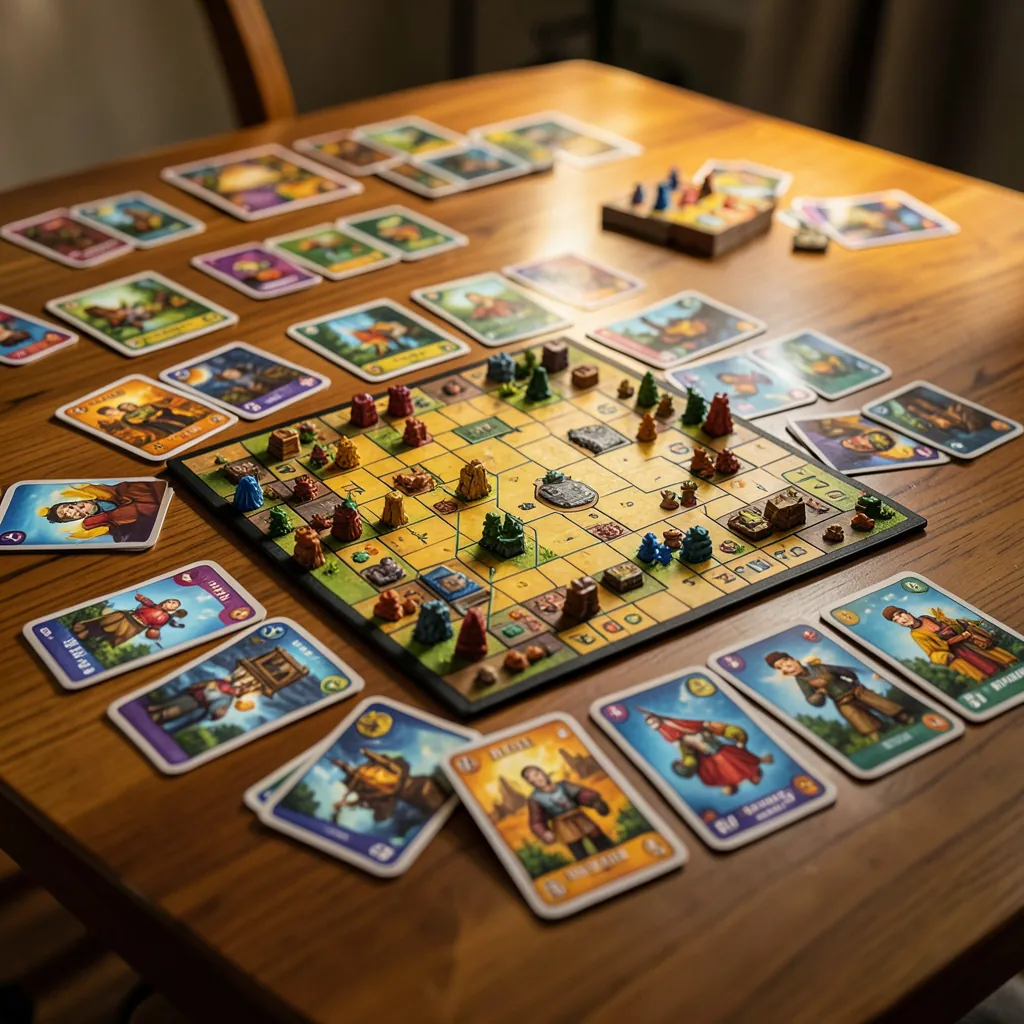
How to Play Rook: Rules, Bidding, Scoring and Variations
Contents
🃏 Rook is a trump-based trick-taking card game played with a dedicated deck numbered 1–14 in four colors, plus the special Rook card. Your goal is to capture the count cards — the 5s, 10s, 14s and the Rook — so your side can make the number of points it bid for trump. It is also known as Missionary Poker.
Players: 2-6 (best with 4) Play Time: About 45 minutes Age: 8+ Difficulty: Easy (simple follow-suit rules, deeper bidding) Type: Trick-taking card game
Source conflict on the quick facts: the page brief suggested “3-5 players, 20-30 minutes, age 10+.” The only card-game source used here (Source 4) states 2-6 players (best 4), ages 8 and up, and roughly 45 minutes. This guide uses the source figures and flags the difference rather than silently picking one.
Note on the keyword: “Tyr” and “Rook” also refer to two unrelated games — the Rook tank in the Tyr video game, and the TYR tafl board-game variant. There is a comparison table at the end of this article.
Setup
- Get a Rook deck. It looks like a standard deck but has only numbers 1–14 in four colors — no face cards and no suits such as spades or hearts.
- Choose the standard game. Source 4 describes the standard format as a 4-player partnership game, i.e. two teams of two.
- Strip the low cards. Remove the 1s, 2s, 3s and 4s. That leaves 41 cards: 40 numbered cards (5 through 14 in each of the four colors) plus the Rook card.
- Agree the deal and the bidding order before you start. Source 4 confirms that players bid for trump each hand but does not spell out how many cards each player receives or whether a kitty/nest is used. Published Rook rulebooks vary here, so settle it with the rule sheet that came with your deck.
How to Play
- Bid for trump. Each hand opens with an auction in which players bid for trump. The partnership that wins the bid takes on a contract.
- The contract is a points target. The bidding partnership must make the number of points it bid during that hand. Bid too high and you fail the contract; bid too low and you leave points on the table.
- Trump is set by the winning bid. The bid determines which color is trump for the hand.
- Lead a card to start the first trick. The leader plays any card from their hand.
- Follow the color led. Every other player must play a card of the same color if they have one.
- If you can’t follow, you may trump. A player holding none of the led color may play a trump color instead.
- Highest card wins the trick. The highest card of the color led takes the trick — unless the trick is trumped, in which case the highest trump wins.
- The Rook card is the exception. It can be played at any time and always wins the trick.
- Collect the count cards. Any 5, 10, 14 or the Rook card taken in a trick is worth points to the side that wins it. Ordinary tricks with no count cards score nothing.
- Winner leads next, then score the hand. The player who won the trick leads to the next one. When the hand ends, count the bidding partnership’s points against its bid, then deal the next hand.
Scoring
Rook is scored on count cards, not on tricks won — Source 4 is explicit that “the amount of tricks is not important.”
| Card | Scores points? | Notes |
|---|---|---|
| 5 | Yes | Count card, one in each of the four colors |
| 10 | Yes | Count card, one in each of the four colors |
| 14 | Yes | Count card, one in each of the four colors |
| Rook | Yes | Count card and always wins the trick it is played on |
| 6, 7, 8, 9, 11, 12, 13 | No | Capture them and you get nothing |
That means there are 13 scoring cards in the standard 41-card deck (three count ranks × four colors, plus the Rook).
Winning a hand: the bidding partnership succeeds if it captures at least the number of points it bid. Source gap: Source 4 does not state the numeric point value of each count card, nor the exact penalty when a bid fails — those figures vary by edition and are printed in the rulebook supplied with the deck. Check yours before the first hand.
💡 Strategy Tips
- Chase points, not tricks. A trick containing a 5, 10, 14 or the Rook is the only trick that matters. Winning an empty trick with a high card is often wasted strength.
- Count the 13 scoring cards. Track which 5s, 10s and 14s have already fallen, in which colors. That tells you how much is still live when you bid.
- Hold the Rook for a scoring trick. It can be played at any time and always wins, so it is a guaranteed capture — spend it on a trick that actually contains points.
- Follow-suit discipline wins hands. Because you must play the led color if you hold it, dumping a color early lets you trump later. Going void in a color is how you take tricks with trump.
- Beginner mistake: counting tricks the way you would in Bridge or Whist. In Rook a 7-trick hand with no count cards can lose to a 3-trick hand holding two 14s and the Rook.
🎲 Variations
| Players | What Source 4 says | Notes |
|---|---|---|
| 2 | A 2-player variant is included in the published rules | Uses the same deck; expect a different deal and bidding flow |
| 3 | A 3-player variant is included in the published rules | No partnership — each player bids for themselves |
| 4 | The standard game | Partnership play, 1s–4s removed, 41 cards |
| 5-6 | Listed as supported (2-6, best with 4) | Source 4 does not describe the 5-6 player procedure |
House rules are normal. Source 4 notes that “there also are many variations and house rules used in play,” so local groups frequently adjust bidding, point values and deal size. Agree on these before the first hand — especially the count-card values, since the source does not fix them.
❓ FAQ
How many players can play Rook? Two to six, with four — played as two partnerships — being the best count. The standard 4-player game uses 41 cards after removing the 1s, 2s, 3s and 4s.
How do you win at Rook? By scoring more points than the opposing side. Points come only from count cards (5s, 10s, 14s and the Rook) captured in tricks, and the partnership that wins the trump bid must make at least the number of points it bid in that hand. Source 4 does not specify a target score or a fixed number of hands, so agree on a match length up front.
Can you play Rook with 2 players? Yes. Source 4 confirms that 2-player and 3-player variants are included in the published rules, alongside the standard 4-player partnership game.
Is Rook hard to learn? No. The play mechanic is Whist/Bridge-style — follow the color led, highest card or highest trump wins — which makes it easy to teach. The bidding is where the real skill sits, since your bid is a binding points contract.
How long does a game take? About 45 minutes according to Source 4. Some listings quote 20-30 minutes; treat 45 minutes as the sourced figure and expect shorter games with fewer hands.
What do you need to play? A Rook deck: four colors numbered 1–14 with no face cards and no suits, plus the Rook card. For the standard 4-player game you also need to pull the 1s through 4s. A standard 52-card deck is not a direct substitute, because Rook has no suits and no face cards.
Which “Tyr Rook” did you mean?
Three different games share these names, and they are not interchangeable:
| Search meaning | What it actually is | What “Rook” refers to | Played with |
|---|---|---|---|
| Rook (card game) | Trump-based trick-taking card game, also called Missionary Poker | The whole game | Rook deck, 2-6 players, ~45 min |
| Tyr (video game) | Free 8v8 tank shooter from Stoke Games, Steam Early Access since September 2, 2026; 18 tanks across three classes, one life per match | A Medium-class tank with the Wall ability | PC |
| TYR (tafl variant) | Board-game variant written by Luk Martens (“MasterLuke”), played on 11×11, 15×15 or 17×17 boards | Nothing — pieces simply move like a rook in chess | Two players, attackers vs. king’s men |
For reference, here are the Rook tank’s stats in Tyr (Sources 1 and 5, which agree):
| Stat | Value |
|---|---|
| Class | Medium |
| Health | 1425 |
| Damage | 210 |
| Penetration | 80 mm |
| Reload | 7 s |
| DPM | 1,800 |
| Vision / Detection | 400 m / 70 m |
| Camo | 21% |
| Speed (forward / reverse) | 36 kph / 18 kph |
| Ability | Wall — low, stackable wall at a target location, 25 energy |
| Difficulty | 2/5 |
In the TYR tafl variant, by contrast, the attackers move first, all pieces slide any number of vacant squares along a row or column, captures happen by sandwiching a piece between two enemies, and the king wins by reaching any edge of the board. None of those rules apply to the Rook card game.
Related guides
- How to Play Phase 10: Rules, Scoring, and Strategy
- How to Play War: Rules for the 2-Player Card Game
- 5 hundred card game
- 🃏 How to Play 500: The Complete Card Game Guide