How to Play Mancala (African Stone Game): Rules, Scoring, and Stone-Capturing Strategy
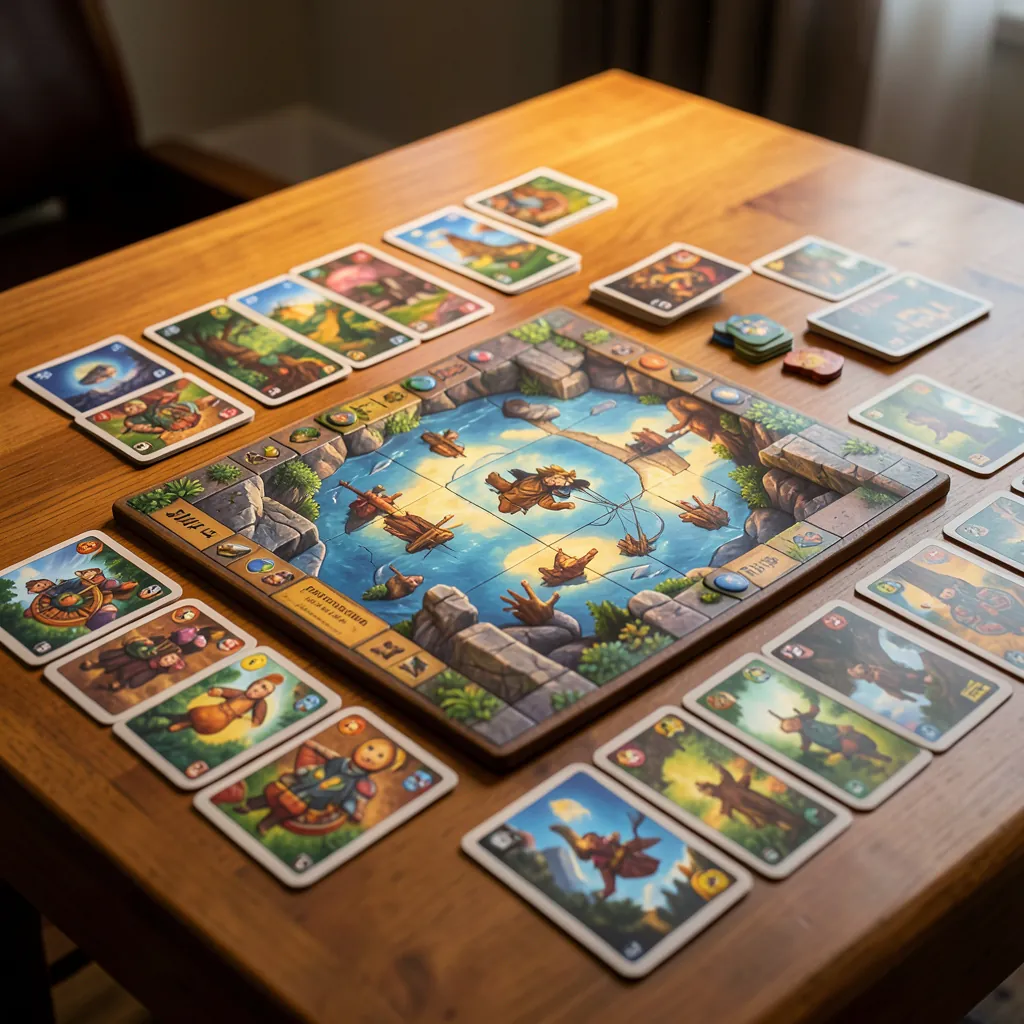
How to Play Mancala (African Stone Game): Rules, Scoring, and Stone-Capturing Strategy
Contents
🎲 Mancala, also called the African Stone Game, Kalaha, or Sungka, is a two-player stone-sowing and capture board game. The goal is to collect as many stones as possible in your own larger scoring pit (cala) before one player’s six small pits are emptied. This guide follows the standard two-player African Stone Game rules from the sources and flags where retail listings conflict.
Players: 2
Play Time: Approximately 10 minutes
Age: Sources conflict: one retail listing says 17+; the rules describe the game for adults and children, and there is a small-parts choking warning for under 3.
Difficulty: Simple rule set with strategic depth; Source 2 compares its complexity to chess.
Type: Classic two-player stone-sowing and capture board game
Setup
- Place the board between the two players with the long sides facing them. Each player’s six small pits sit in front of that player, and their larger scoring pit—the cala or mancala—is to their right.
- Put four stones in each of the six small pits on your side. Colors do not matter; a standard set uses 48 stones total, which is four in each of the 12 small pits.
- Treat the calas as scoring pits. The source setup instructions place stones only in the six small pits on each side.
- Decide who goes first, typically by coin toss.
How to Play
- On your turn, pick up all stones from any one of your own six small pits.
- Sow them one at a time around the board to your right, which is counterclockwise. Drop one stone into each consecutive small pit. You do drop a stone into your own cala and into your opponent’s small pits if you have enough stones, but you never drop a stone into your opponent’s cala.
- If your last stone lands in your own cala, take another turn.
- If your last stone lands in one of your own empty pits, capture all opponent stones in the opposite pit. Add those captured stones to your own cala along with the capturing stone.
- If the last stone does not trigger an extra turn or a capture, your turn ends and the other player takes a turn.
- Once you touch stones, you must play them, so choose your pit before touching any stones.
- The game ends when all six pits on one player’s side are empty. The player who emptied their pits first receives the remaining stones in the opponent’s pits.
Scoring
- Each stone in your cala counts toward your final total.
- Captured stones go into your cala; the capturing stone also goes there.
- When one side is emptied, the player who emptied it takes all remaining stones from the opponent’s pits.
- The player with the most stones in their cala wins.
- The sources do not describe a tie-breaker.
💡 Strategy Tips
- Count your final landing before you touch stones: landing in your own cala earns another turn, while landing in your own empty pit triggers a capture.
- Track empty pits on your side and the opposite pits, because captures depend on landing in one of your own empty pits.
- Remember the forbidden drop: you never place a stone in your opponent’s cala.
- Sow in the correct direction—to your right/counterclockwise—because sowing the wrong way changes the whole turn.
- Plan before touching stones, since touched stones must be played no matter what.
🎲 Variations
The sources describe standard Mancala as a two-player game. They do not provide official 3–5-player rules or house-rule variants for Mancala, so those should not be treated as standard. The game is also known as the African Stone Game, Kalaha, and Sungka; retail sets may include a 22-inch by 6-inch solid wood board, glass stones, and a drawstring bag. Related stone-capturing games have different player counts: Journey Stones is two-player, while Pente supports 2–4 players.
How does Mancala compare with other stone-capturing games?
| Game | Players | Goal / win condition | Capture mechanic | Play time | Age rating in sources |
|---|---|---|---|---|---|
| Mancala / African Stone Game | 2 | Most stones in your cala after one side is emptied | Last stone in your own empty pit captures the opposite pit | Approximately 10 minutes | Conflict: retail listing says 17+; rules describe adults and children; small-parts warning under 3 |
| Journey Stones | 2 | Capture 7 stones from your opponent | Warrior stones capture vertically/horizontally; Journey stones capture diagonally; stacks count as multiple pieces | Approximately 15 minutes | 8+ |
| Pente | 2–4 | Get 5 in a row or capture 5 pairs/sets | Surround/flank 2 opponent stones on both sides | Not stated | 8+ |
❓ FAQ
How many players can play Mancala?
Mancala is a two-player game in the sources. The standard setup gives each player six small pits and one cala; no official 3–5-player rules are provided.
How do you win at Mancala?
You win by having the most stones in your cala when the game ends. The game ends when all six pits on one side are empty; the player who empties their side first collects the opponent’s remaining pit stones, then the cala totals are compared.
Can you play Mancala with 2 players?
Yes. The rules in the sources are written for exactly two players, with one board placed between them.
Is Mancala hard to learn?
The core turn is simple—pick up, sow, and check for an extra turn or capture. Source 2 notes that the game also has mathematical complexity said to rival chess.
How long does a game take?
A normal game takes approximately 10 minutes, according to the African Stone Game instructions.
What do you need to play Mancala?
You need a Mancala board with 12 small pits and two larger scoring pits (calas), plus 48 stones—four in each small pit. A retail set described in the sources includes a 22-inch by 6-inch solid wood board, glass stones, and a drawstring bag.
Related guides
- Backgammon Direction of Play: Complete How-to-Play Guide
- How to Play Backgammon: Complete Rules, Setup & Strategy Guide
- backgammon how to
- How to Play Backgammon: Complete Rules, Setup, Scoring, and Strategy