How to Play Speed: A Complete Guide to the Fast-Paced Card Game
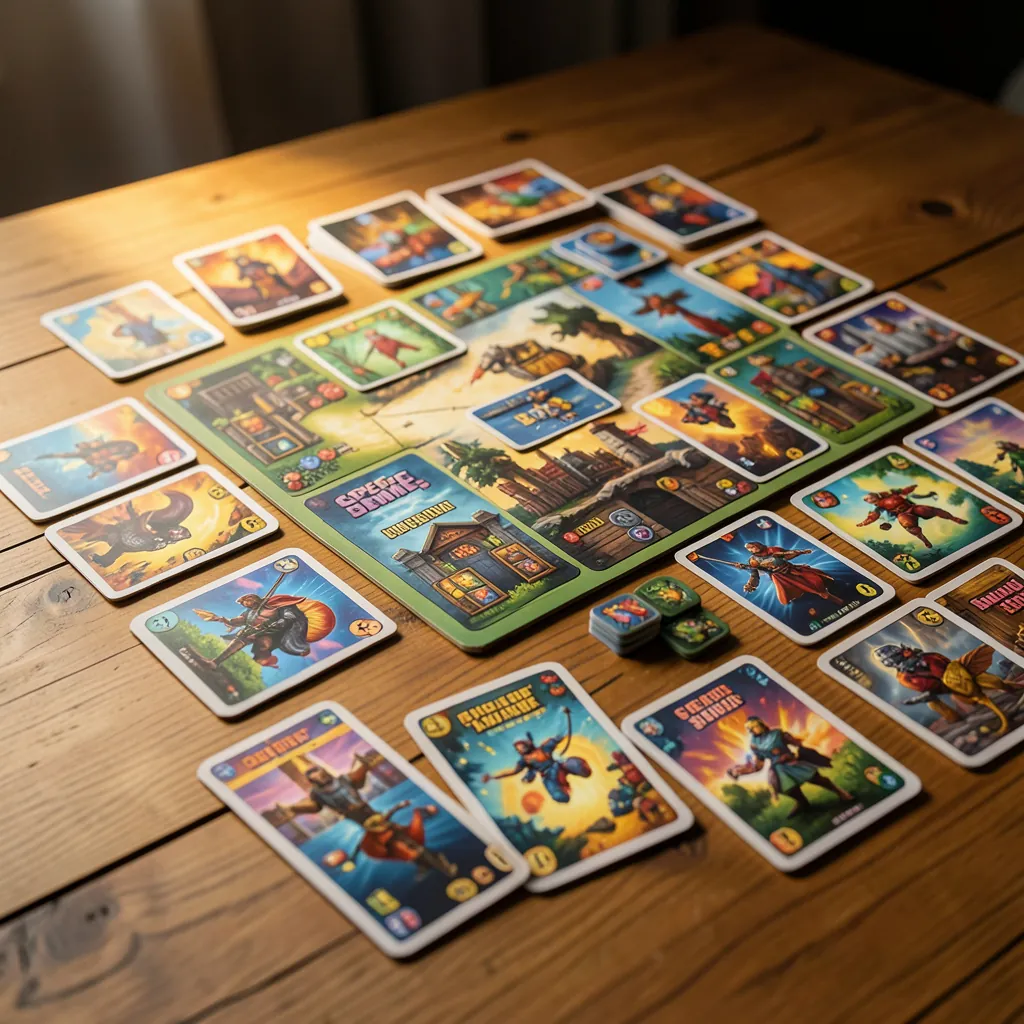
How to Play Speed: A Complete Guide to the Fast-Paced Card Game
Contents
🃏 Speed is a rapid-fire card game where two players race simultaneously to play all their cards onto shared center piles. Unlike turn-based games, Speed tests your reflexes and pattern recognition as you compete to be the first to empty your hand and draw pile.
Players: 2 Play Time: 2-5 minutes per round Age: 10+ Difficulty: Easy Type: Matching card game
Setup
Sources describe different setup methods for Speed. The most common approach (per Sources 3 and 4) works as follows:
-
Shuffle and deal: Use a standard 52-card deck (no Jokers). Deal the entire deck evenly between both players—26 cards each.
-
Create your stock piles: Each player places 5 cards face-up in a row in front of them. These are your stock piles.
-
Create your draw pile: Place your remaining 21 cards face-down beside your stock piles. This is your draw pile.
-
Set up center piles: Leave space between the two players for 2 shared center piles. Flip one card from each player’s draw pile face-up to create these piles (Source 3).
Note on setup variations: Source 4 describes an alternative setup where each player receives 20 cards (15 draw, 5 hand) with 12 cards forming center piles and side piles. Source 1 describes a simpler setup using a custom 0-20 deck with 6 center piles. The core gameplay remains similar across versions.
How to Play
-
Start simultaneously: Both players say “Ready, set, SPEED!” and flip the top card of their draw pile onto a center pile (or if using Source 4’s setup, flip a center card). Play begins immediately—there are no turns.
-
Play cards by rank: You may play a card from any of your stock piles onto either center pile if it is exactly one rank higher or lower than the center pile’s top card. Suit doesn’t matter.
- Example: If the center shows a 7, you can play a 6 or 8.
- Aces wrap around: an Ace can go on a King or a 2, and a King or 2 can go on an Ace (Sources 3, 4).
-
Refill empty stock piles: When one of your 5 stock piles is empty, immediately draw a card from your draw pile and place it face-up in that spot. Keep all 5 positions filled whenever possible (Source 3).
-
Handle simultaneous plays: If both players try to play on the same center pile at the same time, the first card down stays—the other player takes their card back (Source 3).
-
When both players are stuck: If neither player can make a legal play, both players simultaneously flip the top card of their draw pile onto the center piles and play resumes. If draw piles are empty and nobody can play, shuffle the center piles to create new center cards and continue (Sources 3, 4).
-
One hand only: Players use only one hand during play (Source 3).
-
Win the round: The first player to play all their stock cards AND empty their draw pile shouts “SPEED!” to win (Sources 3, 4).
Scoring
Speed is typically played as a series of rounds rather than with cumulative points. The winner of each round is the first player to legally play all their cards and call out “SPEED!”
Match format: Play best of 3 or best of 5 rounds to determine the overall winner (Source 3).
Spit variant scoring: In the Spit variation, the round winner gets to choose the smaller center pile for their next-round deck, creating an advantage (Source 3).
💡 Strategy Tips
-
Scan all stock piles constantly: Know your options at all times—don’t fixate on just one or two piles (Source 3).
-
Prioritize largest piles: Play from your biggest stock piles first to open up more spaces for drawing new cards (Source 3).
-
Use peripheral vision: Watch both center piles simultaneously rather than focusing on just one (Source 3).
-
Don’t hesitate: If a play is valid, make it instantly. Thinking slows you down—develop muscle memory for card recognition (Source 3).
-
Refill immediately: As soon as a stock pile empties, draw a replacement. More stock cards means more options (Source 3).
Common beginner mistakes: Holding more than 5 cards in hand (Source 1 notes this for the Beast Academy version), playing two-handed, or failing to call “SPEED!” after emptying your cards.
🎲 Variations
Spit (Staircase Layout): Instead of 5 single cards, create a staircase: Pile 1 has 1 card; Pile 2 has 1 face-down and 1 face-up; Pile 3 has 2 face-down and 1 face-up; continuing to Pile 5 with 4 face-down and 1 face-up. When you play a face-up card, flip the card beneath it. This adds strategic depth through hidden cards (Source 3).
California Speed: Match by rank rather than +1/-1. Play a card on a center pile if it matches the rank exactly. Much faster and more chaotic (Source 3).
Speed for Kids (Ages 6+): Play with open stock piles (all visible) and allow two hands. Reduces speed pressure while teaching the +1/-1 mechanic (Source 3).
Two Speedy (Beast Academy variation): Using a custom 0-20 deck, players can place cards that are 1 more, 1 less, 2 more, or 2 less than the card beneath—practicing addition and subtraction of 2 instead of 10 (Source 1).
Slow (Beast Academy variation): Instead of playing simultaneously, take turns. This results in skipped turns when stuck but gives young players time to spot opportunities. You can also play with hands face-up so players can help each other (Source 1).
Playing with more than 2 players: House rules sometimes allow 3-4 players with modifications, though standard Speed is designed for exactly 2 players (Source 4).
Note on game identity: Speed is related to but distinct from Spit. They share similar pace and concept but differ in setup and mechanics (Source 4).
❓ FAQ
How many players can play Speed? Speed is designed for exactly 2 players. Some house rules allow 3-4 players with modifications, but the standard game is head-to-head (Sources 3, 4).
How do you win at Speed? Be the first player to play all your stock cards and empty your draw pile, then shout “SPEED!” The winner is determined per round, with matches typically played best of 3 or 5 (Sources 3, 4).
Can you play Speed with 2 players? Yes—Speed is specifically a two-player game. It’s designed for head-to-head competition with no turns (Sources 3, 4).
Is Speed hard to learn? No. Speed is considered easy to learn—the core rule is simply matching cards one rank higher or lower. The challenge comes from speed and reflexes, not complex rules (Sources 3, 4).
How long does a game of Speed take? Each round typically takes 2-5 minutes. A full match (best of 3 or 5) takes proportionally longer (Source 3).
What do you need to play Speed? A standard 52-card deck (no Jokers) and two players. Some math-focused versions use custom 0-20 decks for educational purposes (Sources 1, 3, 4).
Related guides
- How to Play Phase 10: Rules, Scoring, and Strategy
- How to Play War: Rules for the 2-Player Card Game
- 5 hundred card game