Skip-Bo Rules for 3 Players: Setup, Gameplay, Scoring, and FAQ
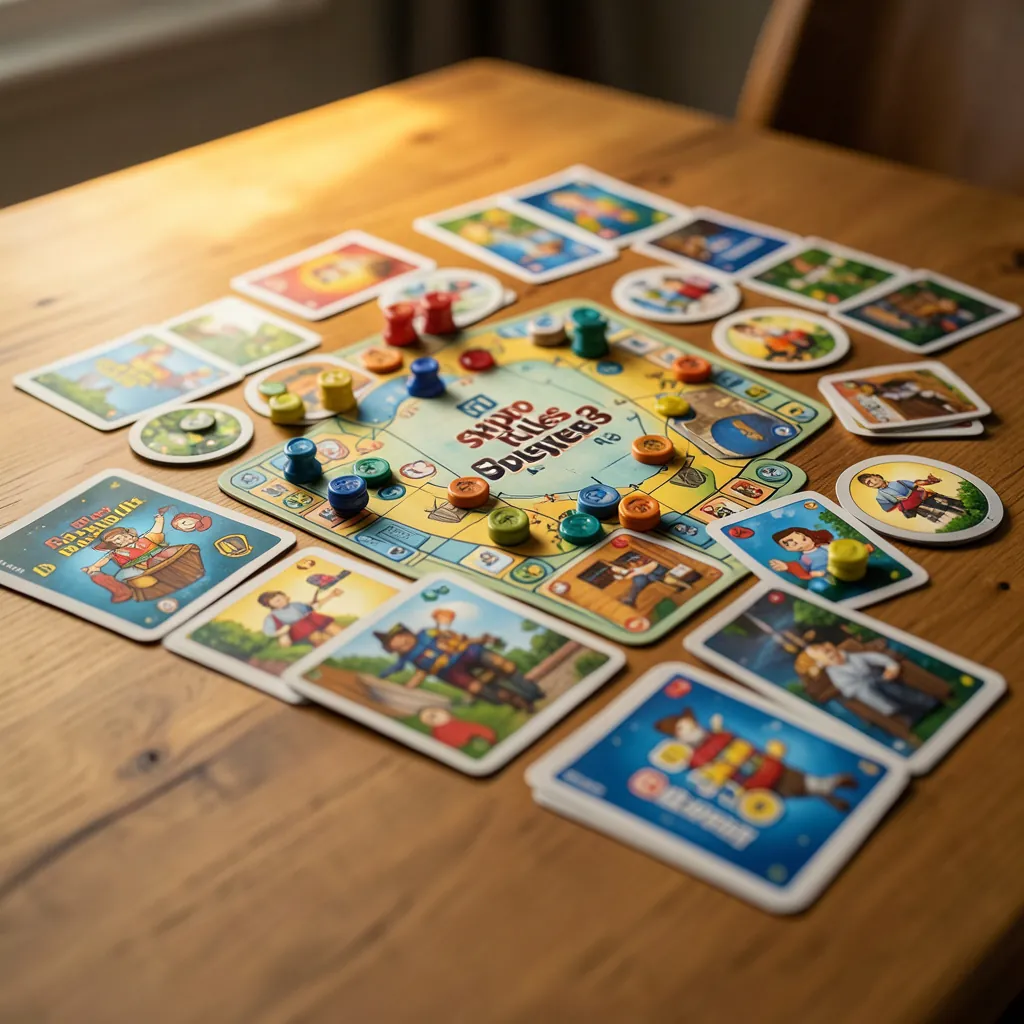
Skip-Bo Rules for 3 Players: Setup, Gameplay, Scoring, and FAQ
Contents
🃏 Skip-Bo is a sequencing and shedding card game in which players race to empty their stock pile by playing cards in ascending order, 1 through 12, onto shared build piles. With 3 players, each person plays individually: each gets a stock pile and a five-card hand, then players take turns adding legal cards and discarding one card to end a turn. The first player to empty their stock pile wins.
Players: 2–4 individuals (3-player game covered); team play is listed for 6+ players
Play Time: Varies by stock size; use 10–15 stock cards for a faster game
Age: 7+ in one cited source; other sources do not specify an age
Difficulty: Easy to learn, with strategy in sequencing choices
Type: Sequencing/shedding card game
Setup
For a standard 3-player game, use individual play. Partnerships are not the standard 3-player mode in the cited rules.
- Shuffle the deck. Use the Skip-Bo deck supplied with your set, or substitute three regular decks including jokers: Ace–Queen usually correspond to 1–12, and Kings/Jokers act as Skip-Bo cards. Deck-count conflict: standard commercial references list a 162-card deck—twelve each of numbers 1–12 plus eighteen Skip-Bo cards—while one digital instruction manual lists 216 numbered cards plus 27 Skip-Bo cards. Use the deck that came with your set.
- Choose a dealer and starting player. Sources conflict: one says the player to the dealer’s left starts; another says the middle-aged player starts. For 3 players, agree on one method before dealing.
- Deal each player’s stock pile. For standard individual play, deal 30 cards face down per player and turn the top card face up. Two sources recommend 10–15 stock cards for faster play; one digital version allows 5, 10, 20, or 30.
- Deal each player’s hand. Give each player 5 cards, kept private.
- Make the draw pile. Place the remaining cards face down in the center as a common draw pile.
- Set up the play area. Leave space for up to 4 shared build piles. Each player can create up to 4 personal discard piles. Only the top card of a stock pile or discard pile can be played.
3-player setup comparison
| Option | Players | Stock pile per player | Hand size | Notes |
|---|---|---|---|---|
| Standard individual 3-player game | 3 | 30 cards | 5 | Uses shared build piles and individual discard piles; standard/longer game |
| Faster individual game | 3 | 10–15 cards recommended by some sources | 5 | Shortens play; other sources allow 10–30 depending on preference |
| 5–6 player alternate | 5–6 | 20 cards in one cited source | 5 | Conflicts with sources that list 2–4 individual players |
| Team/partnership variant | 6+ | Each partnership has two stock piles | 5 | Up to three partnerships; not a standard 3-player partnership mode |
Player-count conflict: Wikipedia and Lodige list 2–4 individual players; one source describes a 5–6 player deal of 20 cards each; Wikipedia also lists 6+ players in teams with no more than three partnerships. A digital manual says more than 4 can play but focuses on 4. For exactly 3 players, use individual play.
How to Play
- Start your turn by drawing to five cards. On the first turn, draw 5 if your hand is empty. On later turns, draw until you have 5 cards in hand.
- Play legal cards onto shared build piles. Build piles must start with a 1 or a Skip-Bo card. After that, each card must be exactly one number higher than the card on top. Card colors do not matter—only the number matters.
- Use cards from three places. On your turn, you may play from your hand, the top card of your stock pile, or the top card of any of your discard piles. You cannot search through a discard pile; only the top card is available.
- Use Skip-Bo cards as wilds—with a rules conflict to settle. Most cited sources say a Skip-Bo card may be played as any number, including starting a pile as 1. One source says you cannot play two Skip-Bo cards in a row and cannot use a Skip-Bo as a 12. Agree before play if your table follows that restriction.
- Clear completed build piles. When a build pile reaches 12, remove it and free that space for a new pile. When the draw pile runs out, completed build piles can be shuffled to make a new draw pile.
- Keep playing while you can. If you play all 5 cards from your hand, draw 5 more and continue your turn. You may keep playing legal cards until you cannot or do not want to continue.
- End your turn by discarding one card. Place one card onto one of your up to 4 discard piles. Turn-end conflict: one source says discarding is required every turn; other sources say you discard when no more plays are available. Follow one version consistently. Only the top card of each discard pile can be used later.
- Pass to the next player. Play continues to the left, or in the agreed turn order.
Scoring
For a single round, the first player to play all cards from their stock pile wins immediately.
For multiple rounds, use the common point system: the winning player scores 25 points for winning plus 5 points for each card remaining in each opponent’s stock pile. In a 3-player game, add up the cards left in both opponents’ stock piles. For example, if the two opponents have 5 and 8 stock cards left, the winner scores 25 + 5 × (5 + 8) = 90 points. The first player to reach 500 points wins.
Scoring conflict: one digital implementation uses a different formula—turns needed divided by starting stock-pile size, with lower scores better. That is not the standard tabletop multi-round scoring described above.
💡 Strategy Tips
- Build toward your stock card. Use hand and discard cards to create the number just below your face-up stock card, so you can play the stock card next.
- Protect useful discard tops. Since only the top discard card is available, avoid burying a card you may need soon.
- Spend Skip-Bo wilds carefully. Save them for bottlenecks, such as starting a pile or bridging a gap that unlocks your stock pile.
- Watch the endgame. In multi-round scoring, winning with more cards left in opponents’ stock piles gives more points—but you still must be the first to empty your stock.
- Common beginner mistakes: treating colors as suits, searching discard piles, forgetting that a 12 clears the build pile, and discarding a card without checking whether it blocks a future move.
🎲 Variations
- Faster game: Use 10–15 stock cards per player instead of 30. Some sources allow 10–30; one digital version allows 5, 10, 20, or 30.
- 5–6 players: One source deals 20 stock cards per player. This conflicts with standard 2–4 player rules, so treat it as a house variant.
- Teams/partnerships: With 6+ players, up to three partnerships can play. Each partnership has two stock piles and two sets of four discard piles; the active player may use their partner’s stock and discard piles, and partners must remain silent.
- Regular-deck substitution: Use three regular decks including jokers. Most sources map Ace = 1, 2–10 = 2–10, Jack = 11, Queen = 12, and King/Joker = Skip-Bo. One source lists an inconsistent ranking order, so agree on the mapping before play.
❓ FAQ
Can you play Skip-Bo with 3 players?
Yes. Standard individual rules support 2–4 players, so 3 players can each use their own stock, hand, and discard piles while sharing the build piles. Team play is listed for 6+ players, not as a standard 3-player mode.
How do you set up Skip-Bo for 3 players?
Deal each player a stock pile—30 cards for standard play or 10–15 for a faster game—then give each player 5 hand cards. Turn the top stock card face up, place the remaining cards as a common draw pile, and leave space for up to 4 shared build piles and up to 4 discard piles per player.
How do you win Skip-Bo?
For a single round, the first player to play all cards from their stock pile wins. For multi-round scoring, the winner gets 25 points plus 5 points per card left in opponents’ stock piles, and the first player to reach 500 points wins.
Can you play Skip-Bo with 2 players?
Yes. The cited standard rules allow 2–4 individual players, so 2-player Skip-Bo uses the same individual setup with two stock piles and the shared build piles.
Is Skip-Bo hard to learn?
No. The core rule is simple: play cards in order from 1 to 12 and discard one card to end your turn. Strategy comes from managing your discard piles, stock card, and Skip-Bo wilds. One cited source gives an age rating of 7+.
How long does a 3-player game take?
The cited sources do not give a fixed play time. Game length depends mainly on stock-pile size: a 30-card stock is the standard/longer game, while 10–15 stock cards are recommended by some sources for faster play.
Related guides
- How to Play Phase 10: Rules, Scoring, and Strategy
- How to Play War: Rules for the 2-Player Card Game
- 5 hundred card game
- 🃏 How to Play 500: The Complete Card Game Guide
- 500 Card Game Rules: How to Play Five Hundred