How to Play War: Rules, Scoring, Variations, and Tips
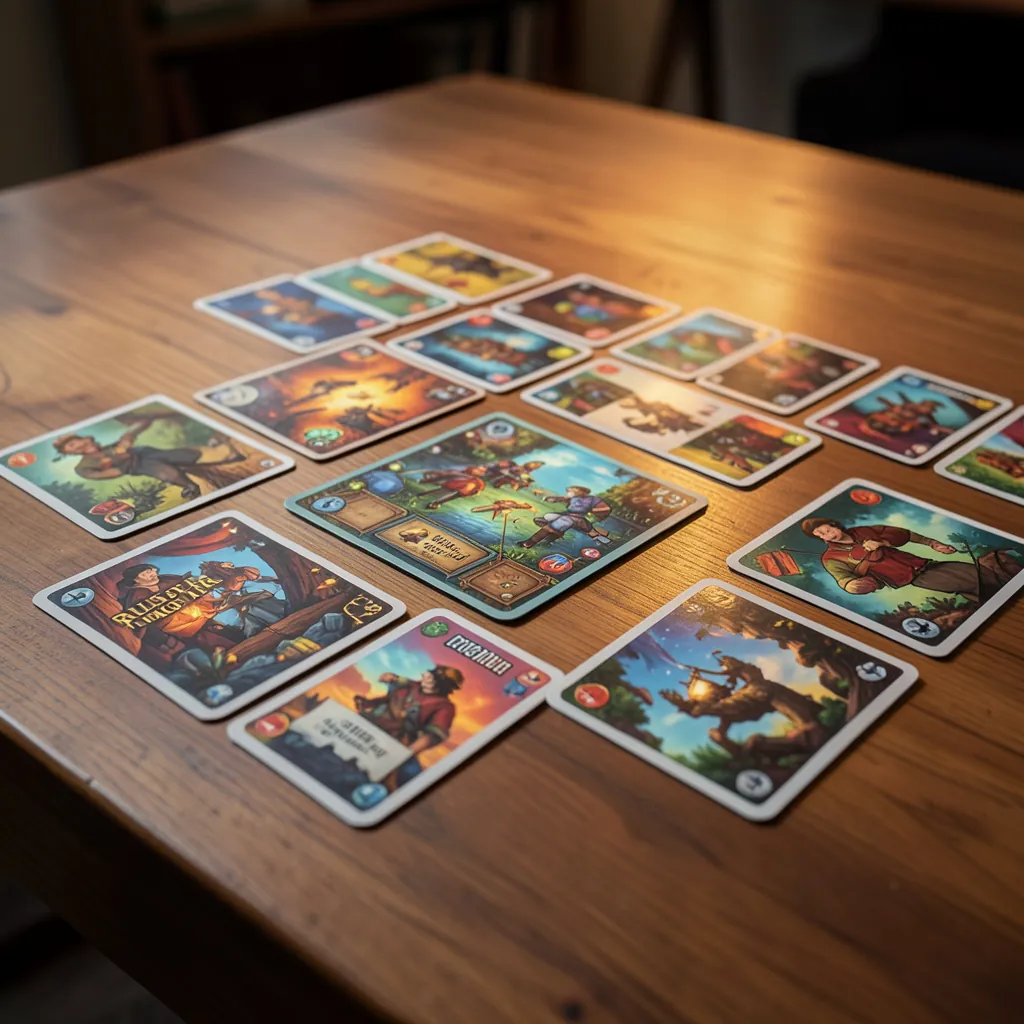
How to Play War: Rules, Scoring, Variations, and Tips
Contents
🃏 War (also called Battle) is a simple comparing card game usually played by two players with a standard 52-card deck. The goal is to win all the cards: each player flips a card, the higher card takes both, and ties trigger a war. There are no suits; Aces are high and 2s are low.
Players: 2 in standard play; 3–4 in multiplayer variants (17 cards each for 3 players, 13 each for 4)
Play Time: 10–40 minutes
Age: Any (often played by children; app-store ratings vary, e.g. 4+ or 13+)
Difficulty: Easy
Type: Catching/simple card game, not a trick-taking game
Setup
- Use a standard 52-card deck and remove the jokers.
- Shuffle the deck. For standard two-player War, deal all cards evenly so each player has 26 cards.
- Each player keeps their cards face down in a stack and does not look at them.
- For multiplayer variants, Wikipedia says a 3-player game gives each player 17 cards, and a 4-player game gives each player 13 cards. The sources do not specify a standard 5-player version.
- Agree before play on the war rule you will use: the standard “one card face down, one card face up” rule, or a common app/classroom variant such as “three cards face down, one face up.”
How to Play
- Both players turn over the top card of their stack at the same time. This is a “battle.”
- Compare card ranks only. The standard ranking is A K Q J 10 9 8 7 6 5 4 3 2, with Ace high and 2 low. Suits are ignored.
- The player with the higher card wins the battle and takes both cards. In standard rules, they place the won cards face down at the bottom of their stack. Some app versions use a separate “win stack” instead.
- If the two face-up cards are equal, declare a war. In the standard Wikipedia rules, each player places one card face down and then one card face up. The higher face-up card wins the war, and the winner takes all cards played in that war.
- If the face-up cards are equal again, repeat the war: one card face down and one card face up each time until one player’s face-up card is higher.
- If a player runs out of cards during a war, the sources are not fully consistent. Some variants say that player immediately loses; others allow the last card to be played face up for the rest of the war; another possible house rule is to replay the game. Decide this before starting.
- Continue until one player has all 52 cards. In some app variants, the game can also end when a player is first to win 3 wars, or when a timed game ends with the most cards.
How do rule variants differ?
Sources conflict on how big a war should be and how some games end. The table below flags the main differences rather than choosing one silently.
| Rule point | Standard two-player War | Other documented variants | Conflict to flag |
|---|---|---|---|
| Card ranks | A K Q J 10 9 8 7 6 5 4 3 2; Ace high, suits ignored | Most versions use the same ranking | No conflict |
| War stake | Each player plays 1 card face down, then 1 card face up | Source 3 app: 3 face-down cards plus 1 face-up card each, creating a 10-card pot; Source 4 app: next 3 cards each, with an 8-card pot; Source 2 classroom version: 1 face down and 1 face up | Yes: war pot size differs |
| Winning condition | Collect all 52 cards | Source 3 app: also “first to win 3 wars”; Source 4 app: 3-minute timed mode, most cards wins | Yes: some apps allow alternate endings |
| Player count | 2 players standard | 3 players: 17 cards each; 4 players: 13 cards each; multiplayer war can include all players | 5-player standard is not specified |
| Running out during a war | Sources are unclear | Some variants: immediate loss; others: play last card face up; or replay game | Yes: unresolved in many descriptions |
Scoring
War does not use points in the standard game. The winner is the player who collects all 52 cards. In multiplayer games, players who run out of cards are eliminated, and play continues until one player has all the cards. Some app versions change the ending: one app says the winner is the first player to win 3 wars or collect all 52 cards, and another app offers a 3-minute timed mode where the player with more cards wins.
💡 Strategy Tips
- Agree on the war rule and the “running out of cards” rule before dealing. Most disputes come from these two unclear points.
- Remember that suits do not matter. A 7 of hearts and a 7 of spades are equal and trigger a war.
- In the basic game, there are almost no decisions; Wikipedia notes that outcomes are random and some definitions do not even consider it a game of skill. Treat it as a light chance game, not a strategic duel.
- If your rules allow it, return won cards in a deliberate order. Wikipedia notes that the order of returning cards can affect the outcome when the cards are not reshuffled randomly.
- For more decisions, use variants such as Prisoners of War, Peace, or Automatic War instead of expecting deep strategy from the standard rules.
🎲 Variations
- Two-player standard: 26 cards each; higher card wins; ties use one face-down and one face-up card.
- Multiplayer War: 3 players get 17 cards each; 4 players get 13 each. All players reveal simultaneously; if the highest cards tie, war can involve all players, and players are eliminated when out of cards.
- Three cards: Many players use three face-down cards during a war instead of one.
- Peace: The opposite of War; the lowest card wins.
- Automatic War: Playing a 2 of any suit automatically starts a war.
- Prisoners of War: Usually for more than two players. A winner can take a “prisoner” card, and later play that prisoner instead of drawing from their deck, with special consequences if they lose.
- Casino War: A money-played casino variant.
- Bettelmann and Tod und Leben: German variants using a 32-card Skat pack; players get 16 cards each, and Tod und Leben gives one player red suits and the other black suits.
- Underdog: If a player loses a war but one of their three discard cards is a Jack, they can steal the victory.
- Classroom number variant: Use custom decks with numerals, written words, or images. The teacher sets the rule as “greater than” or “less than,” and players compare cards; this is still based on the War tie structure.
- App variants: Some apps add first-to-3-wars wins, 3-minute timed games, and online multiplayer.
❓ FAQ
How many players can play War?
Standard War is a two-player game. Multiplayer variants exist: Wikipedia describes 3-player games with 17 cards each and 4-player games with 13 cards each. The sources do not give a standard 5-player version.
How do you win War?
In standard play, you win by collecting all 52 cards. Some app versions add alternate endings, such as being the first player to win 3 wars or having the most cards after a 3-minute timer.
Can you play War with 2 players?
Yes. Two players is the standard way to play. Shuffle a 52-card deck, deal 26 cards to each player, and compare the top card each turn.
Is War hard to learn?
No. It is very easy to learn. The main rules are that Aces are high, suits are ignored, the higher card wins, and tied cards trigger a war. The basic game is high-chance and has little strategy.
How long does a game take?
A standard game can take about 10–40 minutes, but it can run longer because cards can keep cycling. Some app versions avoid long games by using a 3-minute timed mode.
What do you need to play War?
You need a standard 52-card deck with jokers removed. Some classroom versions use custom decks with numerals, written number words, or images to practice comparing numbers.
Related guides
- How to Play Phase 10: Rules, Scoring, and Strategy
- How to Play War: Rules for the 2-Player Card Game
- 5 hundred card game
- 🃏 How to Play 500: The Complete Card Game Guide
- 500 Card Game Rules: How to Play Five Hundred