How to Play Spoons: Rules, Setup, Scoring, and Variations
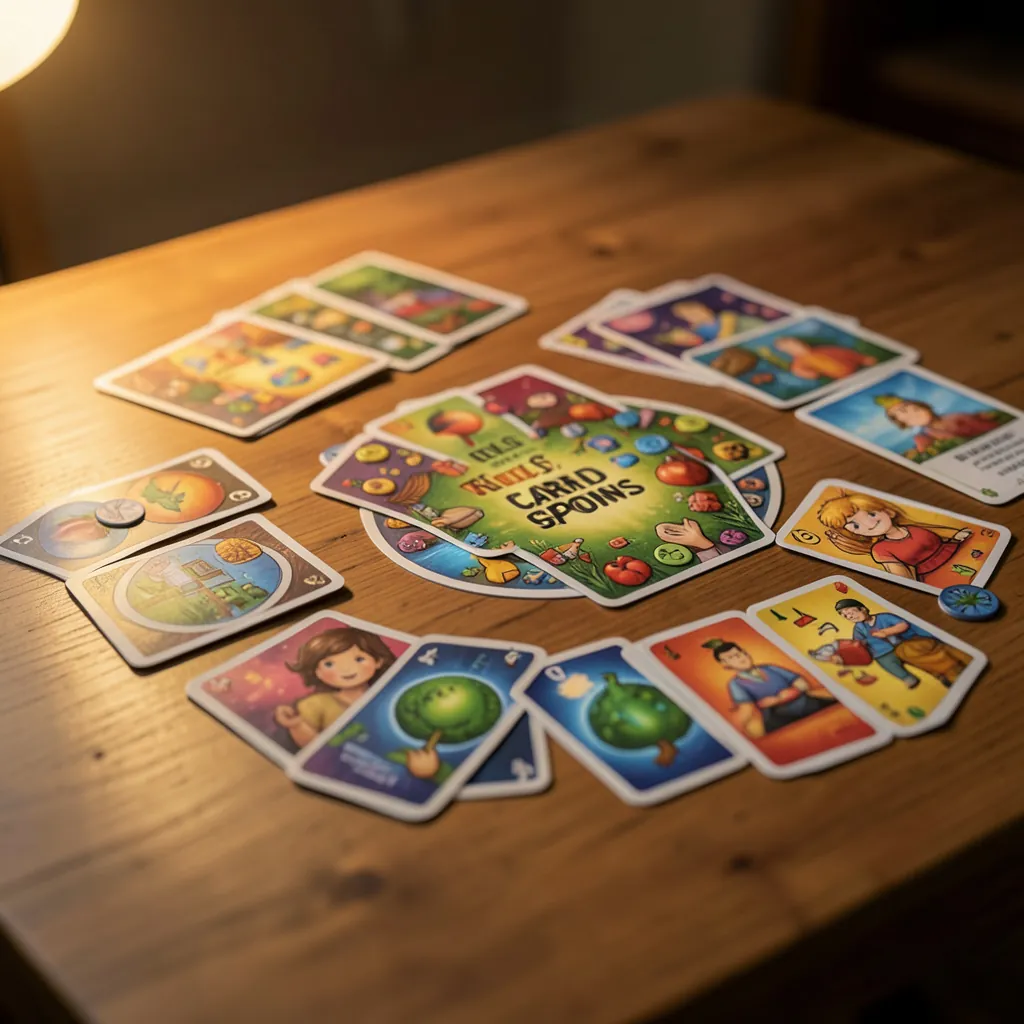
How to Play Spoons: Rules, Setup, Scoring, and Variations
Contents
🃏 Spoons is a fast, often chaotic card game in which players pass cards around a circle trying to collect four of a kind, then race to grab a spoon. The core goal is to be among the first to grab a spoon so you are not the player left without one. There is no single universal ruleset in these sources, so this guide follows the common four-of-a-kind version and flags variant rules.
Players: 3–8 (Source 1); 4 is typical, more may play (Source 3)
Play Time: Not specified in the sources; rounds are short and fast
Age: Not specified in the sources
Difficulty: Easy (Source 5 describes it as simple)
Type: Matching/set-collection party card game (not trick-taking)
Rules conflict: Source 1 describes a different “get rid of cards” game; Source 5 allows four-card runs and simultaneous discarding; Sources 2, 3, and 4 agree on collecting four of a kind and grabbing spoons. Source 4 repeats Source 3.
Setup
- Use one standard 52-card deck without jokers (Sources 1 and 2). Source 5 allows a second pack “if lots [of] people are playing.”
- Place one fewer spoon than there are players in the center of the table: N players = N−1 spoons (Sources 1, 2, 3, and 5). For example, 8 players need 7 spoons (Source 2).
- Seat everyone in a circle with the spoons equally reachable so no player is closer to the pile than anyone else (Source 2).
- Choose a dealer, shuffle, and deal 4 cards to each player in the main version below (Source 2). Conflict: Sources 3 and 4 deal 5 cards each; Source 5 deals all cards out.
- Place the remaining deck within the dealer’s reach. In the main version, the dealer draws from this deck; if it runs out, use the accumulated discards to continue (Source 2).
- Agree on the winning hand before play. The common goal is four cards of the same rank, such as four 7s (Source 2). Source 5 also allows a four-card run of the same suit, such as 2-3-4-5 of spades.
How to Play
- The dealer starts by drawing the top card from the deck. They decide whether to keep it; either way, they pass one card face down to the player on their left, so the dealer returns to four cards in the main version (Source 2).
- The player on the left picks up the passed card, adds it to their hand, decides whether to keep it, and passes one card face down to the player on their left (Sources 2 and 3).
- Continue around the circle in the same direction. Each player receives a card from the right, keeps or rejects it, and passes one card to the left. The dealer continues drawing from the deck and feeding new cards into the chain; players do not wait politely (Source 2).
- In the main four-card version, your hand stays at four cards. If you keep the incoming card, you must pass a different card from your hand (Source 2).
- The first player to hold four of a kind grabs a spoon from the center. They do not have to announce it; Source 5 notes that a silent grab is part of the fun.
- As soon as one spoon is taken, every other player stops passing and grabs a spoon, regardless of what cards they hold (Sources 2 and 5).
- Because there is one fewer spoon than players, one player will be left without a spoon. That player is the round loser and receives the penalty described under Scoring (Sources 1, 2, 3, and 5).
- Reset for the next round. If using elimination by spelling “SPOON,” the loser gets a letter; when they spell S-P-O-O-N they are eliminated (Source 2). If using round-by-round elimination, remove the loser and one spoon, then continue until one player remains (Source 1). If playing casually, record the loss and keep playing (Source 3).
- If the deck runs out before anyone gets four of a kind, the dealer picks up accumulated discards and continues the game (Source 2).
- Optional Source 5 variant: players may aim for a four-card run of the same suit as well as four of a kind, and instead of one-card passing, everyone simultaneously discards any number of cards to the left and picks up new cards from the right.
Which source differences should I know before playing?
| Rule element | Common four-of-a-kind version (Sources 2–4) | Simultaneous all-cards version (Source 5) | “Get rid of cards” variant (Source 1) |
|---|---|---|---|
| Object | Collect four of a kind, then grab a spoon | Collect a four-card set or same-suit run, then grab a spoon | Get rid of your cards; player discarding last card grabs a spoon |
| Deal | 4 cards each (Source 2) or 5 cards each (Sources 3–4) | Deal all cards out | 5 cards each; remaining deck in center |
| Passing | One-card passing around the circle; maintain hand size | Everyone discards any number to the left and picks up from the right at the same time | Discard a card matching current discard by suit or rank, or draw from deck; announce card names |
| Spoons | N−1 spoons | N−1 spoons | N−1 spoons per round |
| Losing condition | Player with no spoon | Player with no spoon | Player with no spoon after last-card grab |
| Main conflict | Hand size 4 vs. 5; elimination spelling vs. casual tracking | Allows runs and simultaneous discarding | Different objective and turn mechanics |
Scoring
- There are no numeric card points in the sources; Spoons is scored by spoon-grab penalties and eliminations.
- In the Source 2 elimination version, a player left without a spoon gets a letter. The first letters spell S-P-O-O-N; once a player spells SPOON, they are eliminated. The last remaining player wins.
- In the Source 1 round-elimination version, the player without a spoon is out, the next round uses fewer spoons, and play continues until only one player is left as the winner.
- In casual play, do not eliminate players. Record how many times each player is left without a spoon; after the agreed number of rounds, the player with the fewest no-spoon losses wins (Source 3).
- The player who first gets four of a kind and grabs a spoon is safe for that round, but that single grab does not automatically win the whole game unless your group is playing a one-round game.
💡 Strategy Tips
- Watch the spoons as much as your cards. Source 5 advises balancing focus between your hand and other players.
- Listen for the “tell-tale clatter” of spoons; sound is often the first sign that someone has completed a set or run (Source 5).
- Do not overvalue every card. Source 5 notes that a safe player may pass cards without looking much and keep attention on the spoon pile.
- Keep a poker face. A silent spoon grab can go unnoticed until it is too late (Source 5).
- Avoid common beginner mistakes: do not grab more than one spoon, do not hide an extra spoon, and do not stare at the spoon pile so obviously that you give away the first grab (Source 5).
🎲 Variations
- Spelling elimination: Use S-P-O-O-N letters instead of immediate elimination; spell SPOON and you are out (Source 2).
- Round elimination: Remove the no-spoon player after each round and use one fewer spoon next round, continuing until one player remains (Source 1).
- Casual scoring: Keep all players in and track who loses most often; the player with the fewest losses after agreed rounds wins (Source 3).
- Four-card runs: Allow four cards of the same suit in sequence as a valid hand, in addition to four of a kind (Source 5).
- Simultaneous all-cards version: Deal all cards, have everyone discard any number to the left and pick up from the right at the same time, and grab a spoon when you complete a set or run (Source 5).
- No-spoon variant: Instead of grabbing a spoon, the winner puts a finger on their nose; everyone else must follow, leaving the last player confused (Source 5).
- Active spoons: Put spoons outside the circle so players must run to grab one, or hide the spoons so players must search for them (Source 2).
- Patented educational variant: Source 1 describes a classroom-style version using data cards and a data spoon; the winning hand is one data card plus four playing cards of identical value, with N−1 data cards and N−2 playing spoons plus the data spoon.
- Two players: The sources do not document a 2-player Spoons rule. Source 1 says 3–8 players may play; with the standard N−1 spoon rule, 2 players would have only 1 spoon, but that is an adaptation rather than a source-backed official variant.
❓ FAQ
How many players can play Spoons? Source 1 says 3–8 players may play. Source 3 says the game is typically played with four people but can be played with more; Source 5 even allows a second deck if lots of people are playing. Use one fewer spoon than players.
How do you win Spoons? You win the overall game by avoiding the no-spoon penalty. In elimination versions, be the last player not eliminated (Source 1) or the last player who has not spelled S-P-O-O-N (Source 2). In casual play, have the fewest no-spoon losses after the agreed rounds (Source 3).
Can you play Spoons with 2 players? The sources do not provide a 2-player Spoons rule. Source 1 lists 3–8 players, and the standard setup is one fewer spoon than players; a 2-player version would be an adaptation, not a source-backed official rule.
Is Spoons hard to learn? No. Source 5 calls it a simple card game. The basic idea is to collect four of a kind, or sometimes a four-card run, then grab a spoon before someone else is left without one.
How long does a game take? The sources do not state a play time. A round ends quickly once someone completes a hand and spoons are grabbed; total length depends on whether you play one round, spell SPOON, or use round-by-round elimination.
What do you need to play Spoons? You need one standard 52-card deck without jokers (Sources 1 and 2) and one fewer spoon than players (Source 2). Source 5 permits a second deck for large groups, and Source 3 says non-spoon objects may work but spoons are preferred.
Related guides
- How to Play Phase 10: Rules, Scoring, and Strategy
- How to Play War: Rules for the 2-Player Card Game
- 5 hundred card game
- 🃏 How to Play 500: The Complete Card Game Guide
- 500 Card Game Rules: How to Play Five Hundred