How to Play Remi 51: Remi Card Game Rules, Setup, Melds, and Scoring
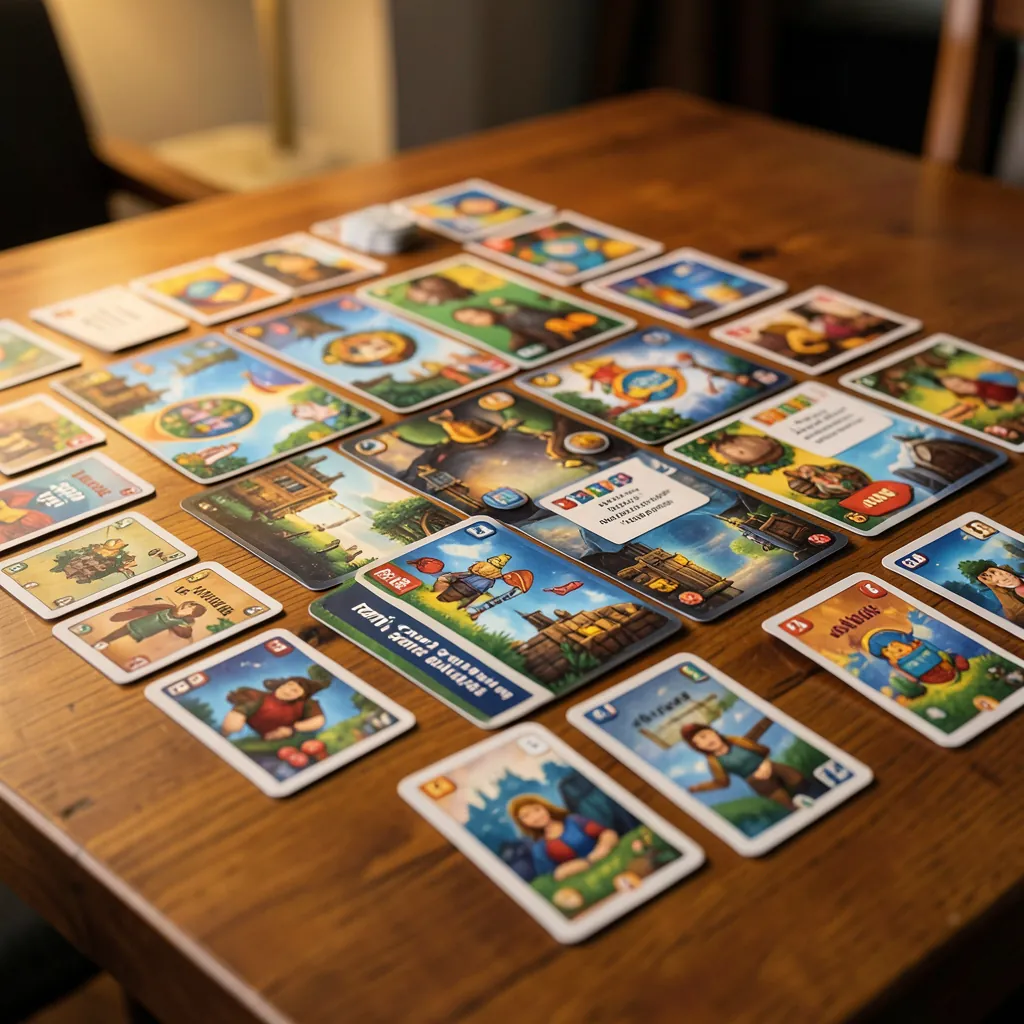
How to Play Remi 51: Remi Card Game Rules, Setup, Melds, and Scoring
Contents
🃏 Remi 51 is a rummy-style card game that the app descriptions call a “traditional rummy 51 card game” similar to OKEY. The goal is to form valid same-rank or same-suit card formations and meet the 51-point first-combine requirement, with the game ending when a player has only one card left.
Players: Not specified in the sources; the app version is played against the CPU.
Play Time: Not specified in the sources.
Age: Not specified for the card game; the app-store age rating is 4+.
Difficulty: Not rated in the sources; the app interface is described as easy and simple.
Type: Rummy-style card game (Remi 51).
Setup
The app-store sources describe the starting materials but do not state a human player count, hand size, or how many cards are dealt to each player.
| Rule element | What the sources say | What is missing or needs care |
|---|---|---|
| Deck | 106 cards, 2 decks, and 4 wild cards | The sources do not reconcile the 106-card count with “2 decks and 4 wild cards.” |
| Players | Not specified | Do not assume a 3–5 player count; that is not supported by the provided sources. |
| First combine | Same rank or suit; total at least 51 points | The sources do not list exact point values by card. |
| Turn | Draw from the card piles or take the card the previous player put on the table; then put a card on the table for the next player | The sources do not say how many cards are drawn or whether taking the previous card is always optional. |
| End condition | A player has only one card left and it is thrown back into the deck | The sources do not describe full scoring or final winner determination. |
Setup steps:
- Use the source-stated starting components: 106 cards, 2 decks, and 4 wild cards.
- Begin each game with a new deal; the sources say each game begins with dealing new card sets.
- Do not assume a player count or deal size from these sources—neither is specified.
- Prepare card piles for drawing and a table area where melds and played cards are placed.
How to Play
- Start with the source-stated components: 106 cards, 2 decks, and 4 wild cards.
- Form valid card formations in the same rank or same suit. The sources describe these as combinations placed on the table.
- On your first combine, make sure the combined cards total at least 51 points. This is the opening meld threshold.
- On your turn, draw a card from the card piles or take the card that the previous player put on the table.
- After drawing, put a card on the table for the next player; this continues the turn cycle.
- When it is your turn, you may meld a sequence of cards or lay out a card on a proper melded set already on the table. The sources use “melt” for this melding action.
- Keep building valid same-rank or same-suit formations and add cards to existing melds where permitted.
- The game ends when a player has only one card in their hand and it is thrown back into the deck.
Scoring
The only point value the sources give is the 51-point first-combine requirement. Your first meld/combine must total at least 51 points; the sources do not state that 51 is the final winning score.
- First combine: at least 51 points.
- End trigger: a player has only one card left and it is thrown back into the deck.
- Remaining-card penalties, bonus points, and final winner: not described in the provided sources.
Because the sources do not explain the full scoring system, treat the 51-point rule as an opening threshold and the one-card-left condition as the end trigger. Do not infer a complete scoring or winner formula from these app listings.
💡 Strategy Tips
- Track dealt and discarded cards. The source explicitly says keeping in mind the cards dealt and discarded is important to success.
- Watch both your hand and opponents’ hands. The source says to focus on both and discard accordingly.
- Plan your first combine around the 51-point minimum before you attempt to open.
- Build only valid same-rank or same-suit formations; avoid mixing invalid sets.
- Remember the turn rhythm: draw or take the previous card, then put a card on the table. A common beginner mistake is forgetting the card played for the next player.
🎲 Variations
The provided sources do not document house rules or player-count variants. They do not explain how to play with 2 players, and they do not state a supported human player count; the app is described as offline play against the CPU. The only “variation” mentioned is a landscape-mode display update in the app, which is a UI change, not a rule variant.
❓ FAQ
How many players can play Remi 51?
The provided sources do not state a supported human player count. The app version is described as offline play against the CPU, so a 3–5 player count should not be assumed from these sources.
How do you win at Remi 51?
The sources do not fully describe winning. They state that the game ends when a player has only one card left and it is thrown back into the deck, but they do not give final scoring or tie-break rules.
Can you play Remi 51 with 2 players?
The sources do not specify 2-player rules or any human player count. They only describe the app’s CPU opponent mode, so no 2-player variant is supported by these sources.
Is Remi 51 hard to learn?
The app description says the game is easy to start and has a simple, gamer-friendly interface. That is an interface claim, not a verified difficulty rating for the full tabletop rules.
How long does a game of Remi 51 take?
The sources do not specify a play time. Do not rely on a 20–30 minute estimate from these sources; no duration is given.
What do you need to play Remi 51?
The sources list 106 cards, 2 decks, and 4 wild cards. They do not state the required number of players, deal size, or full scoring materials.
Related guides
- How to Play Phase 10: Rules, Scoring, and Strategy
- How to Play War: Rules for the 2-Player Card Game
- 5 hundred card game
- 🃏 How to Play 500: The Complete Card Game Guide