How to Play Cribbage: Rules, Scoring, Strategy, and Variations
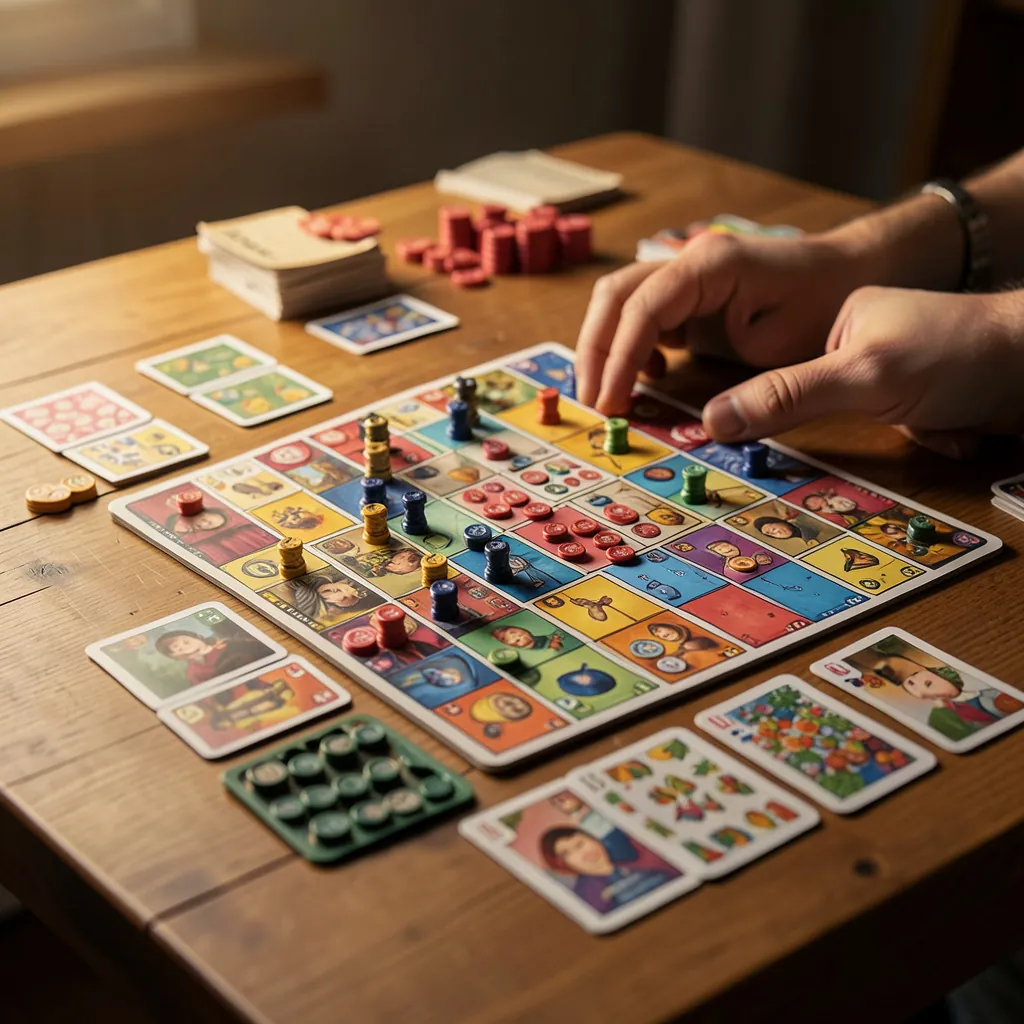
How to Play Cribbage: Rules, Scoring, Strategy, and Variations
Contents
🃏 Cribbage is a 52-card race to 121 points (or 61 in older rules) for two to four players. You deal, discard to the dealer’s crib, alternately play cards toward 31 while pegging combinations, then count hands and the crib for fifteens, pairs, runs, flushes, and the right Jack. The goal is to be first to peg out.
Players: 2–4 (two, three, or four players; four can be two partnerships of two)
Play Time: Not fixed in the sources; a game runs to the agreed target, commonly 121 points, with older sources often using 61
Age: Not specified in the sources; Source 5 notes tournament players ranged from 16 to 90
Difficulty: Rules are “a little tricky to learn” but manageable after a couple of rounds (Source 5)
Type: Card game; a point-scoring race using pegging and hand/crib scoring, not trick-taking
Setup
- Use a regular 52-card deck. You can score with pen and paper, but traditional cribbage uses a board drilled with holes and two pegs per player (Source 5).
- Decide the first dealer by cutting cards. Source 3 and Source 4 say the lowest card deals; Source 1’s three-handed rules say the high cut deals first, so agree on the table rule before starting.
- For standard two-player six-card cribbage, deal 6 cards to each player one at a time. Source 2 specifies dealing one by one; Source 4 records a custom of dealing three at a time in six-card cribbage, so follow your table’s convention.
- Each player discards 2 cards face down to form the crib. The crib belongs to the dealer and is not looked at until the show.
- The nondealer cuts the remaining pack, and the dealer turns up the top card as the starter or turn-up. If the starter is a Jack, the dealer immediately pegs 2 points for “two for his heels.”
- Place the cribbage board between the players. Each player starts with pegs in the home or game holes; as points are scored, move the rear peg forward and leave the front peg in place until the next score (Source 1).
| Format | Cards dealt | Discard to crib | Crib | Key notes |
|---|---|---|---|---|
| 2-player six-card standard | 6 each | 2 each | 4 cards, dealer’s | Nondealer cuts and leads; common modern two-player game |
| 2-player five-card variant | 5 each | 2 each | 4 cards, dealer’s | Older form; nondealer pegs 3 before play to offset dealer’s crib (Source 1; Source 4) |
| 3-player regular | 5 each plus 1 extra to crib | 1 each | 4 cards, dealer’s | Source 1 says one extra card goes to crib; triangular board is used |
| 4-player partnership | 5 each | 1 each | 4 cards, dealer’s | Two play as partners against two; one player per side pegs for the team (Source 1) |
Source conflict: Source 5’s beginner summary says each player is dealt six and discards two, while older rule sources specify five cards and one discard for three- and four-handed cribbage. For 3–4 players, use the five-card/one-discard setup unless your table agrees otherwise.
How to Play
- After the crib is formed and the starter is turned, the nondealer or eldest hand leads the first card face up. Players then alternate cards, calling the running total.
- Count card values as follows: ace = 1, number cards = face value, and Jacks, Queens, and Kings = 10. The running total may not exceed 31.
- Score pegging points as combinations appear in the current play sequence: 15 = 2 points; pair = 2; pair royal, or three of a kind = 6; double pair royal, or four of a kind = 12; runs count 1 point per card in the run; exactly 31 = 2; a “Go” = 1; the last card played = 1 (Source 2; Source 3).
- If you cannot play a card without exceeding 31, say “Go.” The opponent plays any legal cards; if they make exactly 31, they peg 2 instead of the Go point, and the last card played also scores 1 (Source 2).
- After 31 or after both players cannot play, reset the count for the next series of cards. A card once played may not be picked up again unless the count passes 31 (Source 1).
- When all cards have been played, proceed to “the show.” The nondealer counts their hand first, then the dealer counts their hand and crib. The starter is included in every hand and crib count.
- In the show, score every combination of cards totaling 15, every pair and larger set of matching ranks, every run, flushes where allowed, and the Jack of the same suit as the starter for “one for his nob.”
- Peg all points on the cribbage board as they are scored. A player uses two pegs alternately: leave the peg just used in its hole and move the rear peg forward for the new score (Source 1).
- The deal passes to the left after each hand, and a new hand begins until someone reaches the agreed game target.
- Common penalties: too many or too few cards after the crib is formed lets the opponent peg 2 and may allow a new deal; announcing “Go” when you can still play lets the opponent peg 2; failing to score before the next card is played or before the cards are packed can forfeit those points (Source 1; Source 3).
Scoring
Cribbage points are pegged during play and again during the show. The first player or team to reach the agreed target wins; modern beginner guidance often uses 121 points, while older sources often describe a 61-point game. Source 1 explains that 61 is the home hole and 121 is “twice around” the board. Flag this conflict before play: decide whether you are racing to 61 or 121.
| Scoring event | Points | Notes |
|---|---|---|
| Fifteen | 2 | Every combination summing to 15; during pegging, when the running total is 15 |
| Pair | 2 | Two cards of the same rank |
| Pair royal | 6 | Three cards of the same rank |
| Double pair royal | 12 | Four cards of the same rank |
| Run or sequence | 1 per card | A 3-card run = 3; 4-card run = 4; ace is low only |
| Flush in hand | 4, or 5 with starter | Sources vary in wording; Source 2 says 4 or 5; Source 3 says 1 per card |
| Flush in crib | Usually requires starter to match | Source 4 says the turn-up must be of the same suit as the crib cards |
| One for his nob | 1 | Jack of the same suit as the starter, held in hand or crib |
| Two for his heels | 2 | Dealer turns a Jack as the starter |
| Go | 1 | During pegging when the opponent cannot play |
| Exactly 31 | 2 | During pegging |
| Last card | 1 | Source 2 says the player of the last card scores 1 |
The highest possible hand is 29 points, made from four fives and the Jack matching the starter suit (Source 3). A skunk is a win before the opponent scores 31 and is equivalent to a double game only if agreed before play (Source 3). Optional “Muggins” or cutthroat rules let a player steal points the opponent fails to count (Source 5).
💡 Strategy Tips
- Do not lead with a five. Tens and face cards are common, so leading a five invites the opponent to make 15 for 2 points (Source 5).
- Try leading from a pair. If you play an eight and the opponent pairs it for 2, you can play the third eight for 6 points (Source 5).
- Keep low cards for pegging, especially late in the game when pegging matters more (Source 5).
- Discard differently depending on whose crib it is: avoid giving the opponent fives, tens, and dangerous close cards; when it is your crib, favor cards that can make runs, flushes, or fifteens (Source 3; Source 4).
- Common beginner mistakes: counting arbitrary subsets during pegging instead of the current running sequence, forgetting to include the starter in hand and crib counts, missing “his nob” or “his heels,” and failing to count every fifteen and run combination.
🎲 Variations
- Two-player standard: deal 6 cards each, discard 2 to the crib, and play to the agreed target. Source 2 calls two-handed six-card cribbage the common game in the United States.
- Two-player five-card cribbage: deal 5 cards each and discard 2 to the crib. The nondealer pegs 3 points before play to compensate for the dealer’s crib advantage (Source 1; Source 4).
- Three-player cribbage: each player receives 5 cards; Source 1 adds one extra card to the crib and each player discards one. A triangular board is often used, and the player to the dealer’s left leads (Source 1; Source 3).
- Four-player partnership cribbage: two players form a team against two others. Each receives 5 cards and discards one to the dealer’s crib; one scorer per side pegs for both partners, and partners may advise but not peg (Source 1).
- Three-handed cutthroat: Source 1 describes a variant in which the dealer receives 6 cards, the opponents receive 5 each and discard one to the dealer’s hand, and the dealer then sets aside 4 cards as the crib; both opponents play as partners against the dealer.
- House/table variants: Muggins or cutthroat scoring lets players claim uncounted opponent points; game targets vary between 61 and 121; Source 1 also describes solitaire cribbage variants.
❓ FAQ
How many players can play cribbage?
Cribbage is commonly played by 2, 3, or 4 players. Four-player cribbage is usually two partnerships of two, while three-player games often use a triangular board.
How do you win at cribbage?
Be the first player or team to peg the agreed target. Modern guides often use 121 points, but older sources often describe 61-point games. Source 1 notes that 61 is the home hole and 121 is twice around the board.
Can you play cribbage with 2 players?
Yes. Standard two-player cribbage deals six cards to each player and each discards two to the crib. An older five-card variant deals five each, discards two to the crib, and gives the nondealer 3 points before play.
Is cribbage hard to learn?
The rules are a little tricky at first, especially pegging and counting runs, but Source 5 says you will have the hang of it after a couple of rounds. Count systematically and use the board to track pegging and hand scores.
How long does a game take?
The sources do not give a fixed play time. Length depends on whether you play to 61 or 121 and how quickly players peg points; a 121-point game naturally takes longer than a 61-point game.
What do you need to play cribbage?
You need a standard 52-card deck and a way to keep score. A cribbage board with pegs is traditional and uses two pegs per player; pen and paper can work if no board is available (Source 5).
Related guides
- How to Play Phase 10: Rules, Scoring, and Strategy
- How to Play War: Rules for the 2-Player Card Game
- 5 hundred card game
- 🃏 How to Play 500: The Complete Card Game Guide
Sources
- Full text of “The Complete Card Player” - puts too many cards in the crib, he cannot count for the crib
- The young folks’ cyclopædia of games and sports / By John D. Champlin and Arthur E. Bostwick, . | HathiTrust Digital Library - The young folks’ cyclopædia of games and sports / By John D. Champlin and Arthur E. Bostwick, . | HathiTrust Digital Library