How to Play Speed (Spit / Slam): Rules, Setup, and Strategy
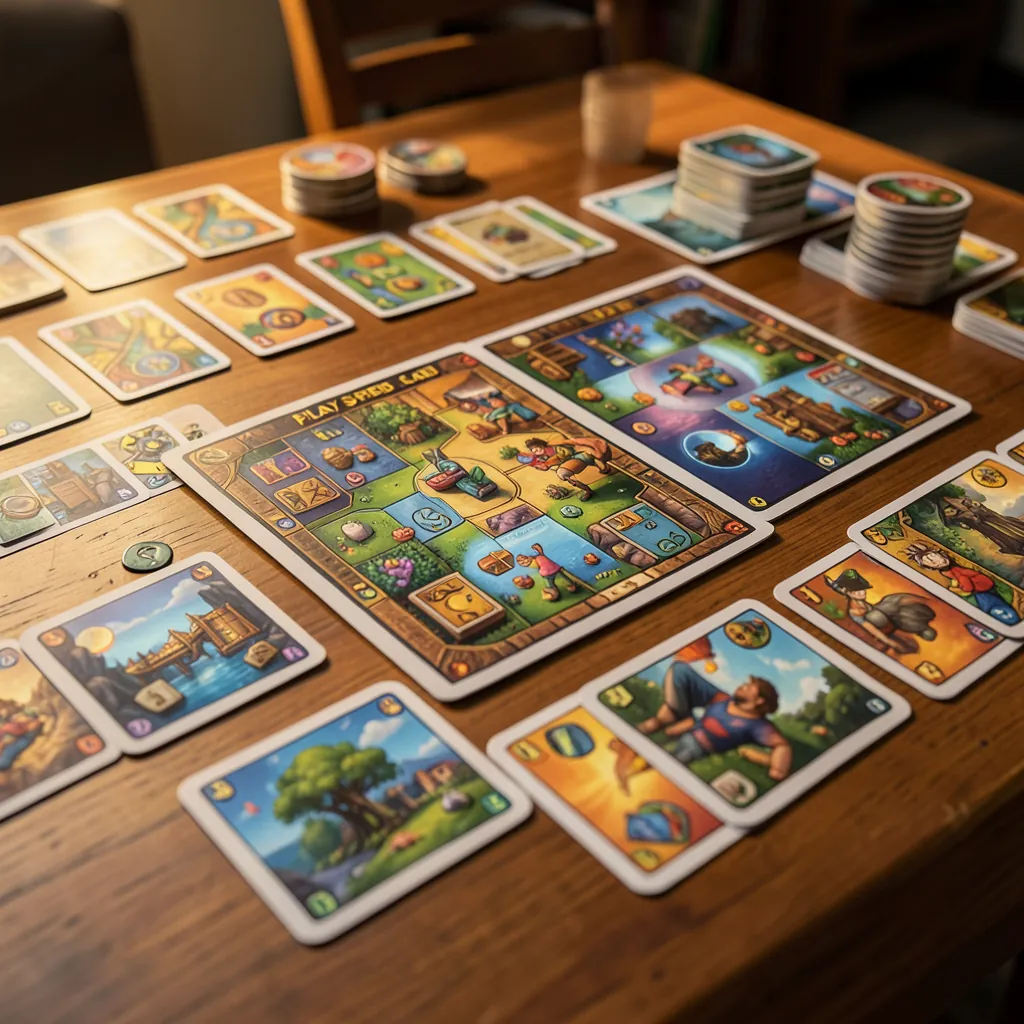
How to Play Speed (Spit / Slam): Rules, Setup, and Strategy
Contents
🃏 Speed — also called Spit or Slam — is a two-player, real-time shedding card game in which both players race at the same moment with no turns, each trying to be first to get rid of all 20 of their cards. You play a card onto one of two shared centre piles whenever its rank is exactly one higher or one lower than the card showing. Speed and accuracy matter more than planning.
Players: 2 Play Time: About 2 minutes per game (a best-of series takes 5–10) Age: 4+ (app-store rating); best for children who can add and subtract 1 Difficulty: Easy Type: Real-time shedding card game (no turns)
Note: every source describes Speed as a member of the “shedding” family — you never win tricks, you only race to empty your cards.
Setup
- Use one standard 52-card deck. Source 1 mentions jokers as wild cards, but the standard deal below uses all 52 cards, so jokers only fit if you remove two other cards first — leave them out unless your table agrees otherwise.
- Deal 20 cards to each player: five cards become that player’s hand, and 15 go face down as their personal stock (draw pile) — the “20 race cards” described in Sources 2 and 5.
- Build two replacement piles from the 12 cards left over: two face-down stacks of five, one on each side between the players (Source 1).
- Turn two cards face up in the centre, between the replacement piles — these are the two shared piles everyone plays onto.
- Agree your stalemate rule before you start (see How to Play, step 7 — the sources differ here).
| Component | Cards | Position |
|---|---|---|
| Hand | 5 per player | Held, hidden from opponent |
| Stock / draw pile | 15 per player | Face down in front of its owner |
| Replacement piles | 2 × 5 | Face down, one on each side between the players |
| Centre piles (shared) | 2 | Face up, between the players |
| Total | 52 | Full deck in play |
How to Play
- There are no turns. Both players begin at the same instant and keep playing until someone runs out — Source 1: “Forget taking turns!”
- Play a card one rank above or one rank below the top card of either centre pile. Example: if a 6 is showing, a 5 or a 7 may be played on it (Sources 1, 2, 5).
- Ignore suits and colours. Only rank matters; suits are decoration (Source 5).
- Ranks wrap around. An Ace is both one value above a King and one below a 2, so A→K, K→A, A→2 and 2→A are all legal (Sources 1, 2).
- Play as fast as you can, onto either pile. You may drop several cards in a row; if both players reach for the same pile, the first legal card down counts and the other attempt simply doesn’t register (Source 2). No slapping or penalty for a mistimed play.
- Refill your hand immediately. Whenever your hand drops below five cards, top it back up from your own stock until the stock is empty (Sources 1, 2).
- If nobody can play, the table “resets.” ⚠️ Source conflict — agree which version you’re using:
- When the replacement piles run out, Source 1 says shuffle each centre pile separately and use them as new face-down side piles; Source 5 says shuffle old centre discards back in while the current centre cards stay put.
- Win the instant you empty both your hand and your stock — that player wins on the spot (Sources 1, 2, 5).
- If the table stalls after both stocks are empty, the player holding fewer cards wins, and an equal count is a draw (Sources 2, 5).
How the sources handle a stalemate:
| Situation | Source 1 (Speed Card app) | Source 2 (MultiplayerHub) | Source 5 (AIGameShare) |
|---|---|---|---|
| Nobody can play | Cards flip automatically from the side (replacement) piles onto the centre stacks | After roughly 4 seconds with no play, a fresh card from each player’s stock goes onto each pile | “Reset” cards are flipped onto the centre |
| Replacement cards exhausted | Centre stacks shuffled individually and reused as new face-down side piles | If it stalls after both stocks are empty, fewer cards wins; equal is a draw | Old centre discards shuffled back in; if reset piles are empty the race ends and fewer cards wins |
Source conflict: Source 1 feeds the centre piles from separate 10-card replacement piles, while Source 2 feeds them from the players’ own stocks. Both are common tabletop versions of Speed; pick one at the start so nobody argues mid-race.
Scoring
Classic Speed is not a points game — it is a straight race, so the result is win, loss, or draw.
| Situation | Outcome |
|---|---|
| You empty your hand and your stock first | You win immediately |
| Both stocks empty, table stalls | Player with fewer cards left wins |
| Both stocks empty, equal cards left | Draw |
⚠️ Source conflict: Source 5’s browser version layers a points system on top — every card played scores points, playing again within about two seconds builds a combo that raises each play’s value, and winning adds bonuses for a fast finish, for cards the opponent still held, and for your best combo, with the total posted to a leaderboard. That scoring is specific to that app and is not part of the standard tabletop rules in Sources 1 and 2.
💡 Strategy Tips
- Scan your whole hand before you touch a card. Holding 6-7-8 lets you drop three cards on one pile in a single burst before your opponent reacts (Source 2).
- Watch both piles, not just the one you last played on. Beginners lock onto one side and miss easy plays on the other.
- When a card fits either pile, choose the pile that sets up your next card rather than the nearest one.
- Never treat an Ace or King as dead. The wrap means an Ace bridges to both ends of the deck, so it is almost always playable.
- Glance at your opponent’s stock height. If they are far ahead, dump every legal card instantly instead of holding back for a tidy sequence. The most common beginner mistake is hesitating — a slightly awkward legal play beats a perfect plan that arrives late.
🎲 Variations
| Game | Players | Core mechanic | Relation to Speed |
|---|---|---|---|
| Speed | 2 | Play ±1 rank onto two shared piles, simultaneously | The game in this guide |
| Spit | 2 | Same race, often with a slap/pile-slapping phase | Close cousin; the names are used interchangeably (Sources 1, 2) |
| Slam | 2 | Alternate name for the same shedding game | Same game (Source 1) |
| California Speed | 2 | Cover matching cards across a row of piles | A different game despite the name (Source 2) |
- Jokers wild (Source 1): some players treat jokers as wild cards. This needs a 54-card deck or two cards removed, since the standard deal already uses all 52.
- Digital single-player versions (Source 3): the Garia Games app turns Speed into a level-based solo game with 500+ levels, daily challenges, offline play and custom decks — an interpretation of the mechanic, not the two-player tabletop rules.
- More than two players: none of the sources document a 3+ player rule for Speed. The practical house approach is to run back-to-back two-player matches (winner stays on) — an adaptation, not an official variant.
❓ FAQ
How many players can play Speed? Exactly two. Every source describes it as a head-to-head two-player game; Source 2 explicitly seats only two, filling an empty seat with a bot if no human is available.
How do you win at Speed? Be the first to get rid of all 20 of your cards — the five in your hand plus the 15 in your stock. If both stocks run out and the table stalls, the player with fewer cards left wins and an equal count is a draw.
Can you play Speed with 2 players? That is the only official player count — Speed is built around two players racing simultaneously with no turns.
Is Speed hard to learn? No. The rules are “fairly simple and can be taught to young children who possess basic math skills” (Source 1), and a new player typically understands the ±1 rank rule within a minute.
How long does a game of Speed take? About two minutes. Source 2 notes a full match usually lasts around two minutes, Source 1 says games finish in “less than a few minutes,” and Source 5’s tracked plays average roughly one minute — the 40 cards in play disappear fast because both players act at once.
What do you need to play Speed? One standard 52-card deck, a flat surface, and two players. No app, download, or account is required for the tabletop game.
Related guides
- How to Play Phase 10: Rules, Scoring, and Strategy
- How to Play War: Rules for the 2-Player Card Game
- 5 hundred card game