Phase 10 Rules and Variations: How to Play, Score, and Customize the Game
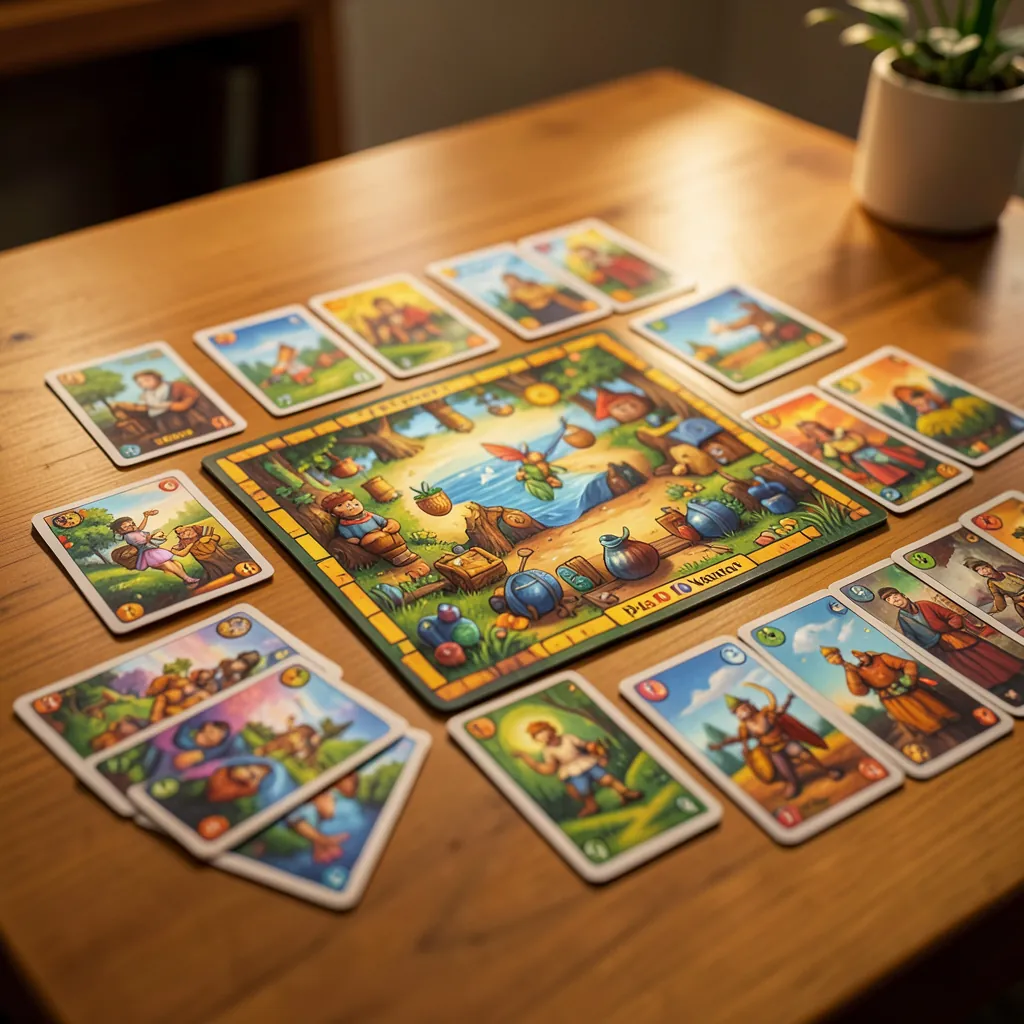
Phase 10 Rules and Variations: How to Play, Score, and Customize the Game
Contents
🃏 Phase 10 is a contract-rummy card game in which players race through 10 specific card combinations, called phases, in order; the first player to complete all 10 phases wins. It is easy to learn but strategically swingy, and many groups extend or modify it with house rules, alternate phase lists, and themed variants. This guide synthesizes the standard rules and the best-supported Phase 10 variations, flagging where sources disagree.
Players: 2-6 (best with 3-6)
Play Time: 30-90 minutes typical; longer variants can run 4-5 hours
Age: Not specified in the supplied sources
Difficulty: Easy to learn, strategic after several rounds
Type: Contract-rummy card game
Setup
- Shuffle a standard Phase 10 deck: 108 cards total—96 numbered cards (two each of 1-12 in four colors), 8 Wilds, and 4 Skips. Conflict note: one guide says 12s act as Wilds, but that conflicts with the stated deck composition; use the Wild cards in your edition.
- Choose a dealer. Deal 10 cards face down to each player, one at a time. Players hold their 10 cards in hand.
- Place the remaining deck face down as the draw pile.
- Turn the top card of the draw pile face up next to it to start the discard pile.
- Edge-case note: sources describe different first-card procedures for a turned-up Wild or Skip. Agree before play; one source lets the first player pick up a starting Wild, and another skips the first player if a Skip starts the discard pile.
How to Play
- Start every player on Phase 1. Each player works on their own current phase; players can be on different phases at the same time.
- On your turn, draw one card from either the draw pile or the discard pile. Exception: a Skip card may never be picked up from the discard pile.
- Check whether you can lay down your current phase. You must have the whole phase in hand before laying it down. A set is two or more cards with the same number, any colors. A run is two or more consecutive numbers, any colors in standard play. Runs can go from 1 to 12.
- Use Wild cards as substitutes for a number or color. You may use more than one Wild in a phase as long as you use at least one natural card. Once a Wild is played in a phase, it cannot be replaced later. A Skip cannot be used to complete any phase, including Phase 8 (seven cards of one color).
- You may lay down only one phase per hand. Phases must be completed in order in standard play; a run of nine when you are on Phase 4 does not also complete Phases 5 and 6. If you fail to complete your phase before the hand ends, you stay on that same phase for the next hand. Masters Edition variants change this; see Variations.
- After you have laid down your own phase, you may “hit”: add cards from your hand to any laid-down phase, including opponents’ phases, if the cards properly fit. You cannot hit before your own phase is down. You may hit with as many legal cards as you can play on that turn.
- End your turn by discarding one card face up onto the discard pile. The discard is normally your final play of the turn.
- To use a Skip, discard it and choose a player to lose their next turn. Any player can be chosen, not just the next player. Restrictions vary by source: one source says a player cannot be skipped twice in the same round until they have missed a turn; another says you cannot skip a player who is going out or who has already been skipped. Agree on the restriction before play.
- The hand ends when a player “goes out” by getting rid of all cards, usually by discarding their last card. Conflict note: one source says the round ends immediately when someone goes out; another says the other players get one final turn. Decide which rule your group uses before starting.
- After the hand, players who completed their current phase advance to the next phase; players who did not stay on the same phase. The deal usually rotates left after each hand.
- Continue hand after hand until one player completes all 10 phases.
Standard phase sequence:
- Two sets of three
- One set of three + one run of four
- One set of four + one run of four
- One run of seven
- One run of eight
- One run of nine
- Two sets of four
- Seven cards of one color
- One set of five + one set of two
- One set of five + one set of three
Scoring
At the end of each hand, players who did not go out count the cards left in their hand as penalty points. The player who goes out scores no penalty for that hand. Players who completed their phase still advance even if they did not go out.
| Card left in hand | Penalty points |
|---|---|
| Numbered cards 1-9 | 5 each |
| Numbered cards 10-12 | 10 each |
| Skip | 15 each |
| Wild | 25 each |
Winning: the first player to complete all 10 phases wins. If two players complete the final phase in the same hand, the player with the lower overall score wins. If those scores are also tied, one source says play a tiebreaker round where the tied players attempt Phase 10, or the last phase each had tried to complete.
Conflict note: one guide adds “completing a phase subtracts 50 points.” That conflicts with the penalty-only scoring described by other sources, so confirm which scoring system your group or edition uses before play.
💡 Strategy Tips
- Do not hoard Wilds automatically. They are powerful, but a Wild left in hand costs 25 points if someone else goes out first.
- Use Skips offensively, especially when an opponent looks close to going out. First agree on skip restrictions so the game does not become a pile-on.
- Learn the phase list and save useful middle cards for the long-run phases. For Phase 8, commit to one color early and discard other colors aggressively.
- Play defense: watch what opponents pick up and discard. Holding a card an opponent needs can slow their phase.
- Always check for legal hits before discarding. Common beginner mistakes are trying to lay a future phase, forgetting that the whole phase must be in hand, and ignoring hitting opportunities.
🎲 Variations
| Variation | Players / time | How it changes phases | Special rule or conflict note |
|---|---|---|---|
| Standard Phase 10 | 2-6 players; best with 3-6; time varies | Fixed 10-phase sequence in order | First to finish all 10 wins; final-hand tie goes to lower score. |
| Masters Edition | Uses edition rules | Players may choose which phase to attempt each deal; one source also describes a private “save” pile once per deal, while another mentions additional specialty cards and modified scoring | Sources summarize the extra rules differently; use the rulebook for your edition. |
| Phase 10 +10 | Very long; one source warns 4-5 hours | Adds 10 more phases after the standard 10 | Only play if you want a marathon game. |
| Super Wild Phase 10 | 60-90 minutes per one source | Uses Masters-style contracts | One normal Skip may skip the next player or reverse direction; “Super Skip” skips everyone else and gives the holder another turn; “Super Wild” counts 50 points and acts as two Wilds. Other summaries describe Super Wild/Skip differently—confirm the version. |
| Mixed Up Masters | 2-4 players; 30-60 minutes; harder 2-player version deals 20 phase cards each | Players receive phase cards and turn up the phase to complete | No discard-pile pickup after laying a phase; Skips do not count as a color; win by finishing all phases in your pile. Conflict note: one source describes dealing phase cards, another says drawing them randomly and not repeating phases. |
| The Crazy Twenties | 20-phase long game | Adds 10 extra phases after the standard 10 | Phases may be played in any order but cannot be repeated; keep notes on completed phases. Some phases ban Wilds or restrict Wild colors; disregard color restrictions if your deck has same-color Wilds. |
| Alternative phases | Standard 10-phase game | Replaces the official list with a custom 10-phase list | Example list from one source: set of 3 + run of 4; set of 4 + run of 5; run of 6; run of 7; run of 8; run of 9; 3 sets of 2; 2 sets of 3; 2 sets of 4; set of 5 + set of 3. |
| Themed variants: Enchanted Forest, Volcano Island, Safari Expedition, Haunted Mansion, Underwater Adventure, Outer Space Odyssey | Group game | Each has its own 10-phase list | Special rules include banning a player from Wilds next round, making the next player draw extra, requiring an animal sound, forcing non-finishers to draw, making everyone else discard/draw, or making someone lose a turn. |
| 2-player standard adjustment | 2 players | Same 10 phases | One source recommends dealing 13 cards each, playing through all 10 phases, and using lowest score after Phase 10 to win; some groups remove Skips. Other sources simply allow 2-6 players without special changes—agree before play. |
Common house rules:
- Color runs: require all cards in a run to be the same color, making long-run phases harder.
- No Wilds in color phases: Phase 8 must use natural cards only.
- Skip limits: limit Skips to once per player per game, or forbid skipping the last-place player or the player closest to winning.
- Turn timer: use a 60-second limit for draw, phase attempts, hits, and discard.
- Alternative scoring: some groups make points good, remove scoring for a pure race, or give the winner bonus points based on how far behind others are.
❓ FAQ
How many players can play Phase 10?
Phase 10 supports 2-6 players; one guide says it plays best with 3-6. Mixed Up Masters is described for 2-4 players.
How do you win Phase 10?
The first player to complete all 10 phases wins. If two players complete the final phase in the same hand, the lower total score wins; if still tied, play a tiebreaker round.
Can you play Phase 10 with 2 players?
Yes. One source recommends dealing 13 cards instead of 10, playing through all 10 phases regardless of who finishes first, and awarding the win to the lowest score after Phase 10. Other sources just allow 2-6 players, so agree on the 2-player adjustment before starting.
Is Phase 10 hard to learn?
No—it is easy to learn because turns are draw, lay down a phase if possible, hit if allowed, then discard. The challenge comes from the later phases, Wild management, and tracking opponents.
How long does a game take?
A typical game is about 30-90 minutes depending on player count and variant. Longer variants are much longer: Phase 10 +10 is warned at 4-5 hours, while Mixed Up Masters is listed at 30-60 minutes.
What do you need to play Phase 10?
A standard Phase 10 deck of 108 cards: 96 numbered cards, 8 Wilds, and 4 Skips. It can also be played with two regular decks if suits represent colors, kings represent Wilds, and jokers represent Skips.