Phase 10 Custom Phases: How to Play, Score, and Adapt the 10 Phases
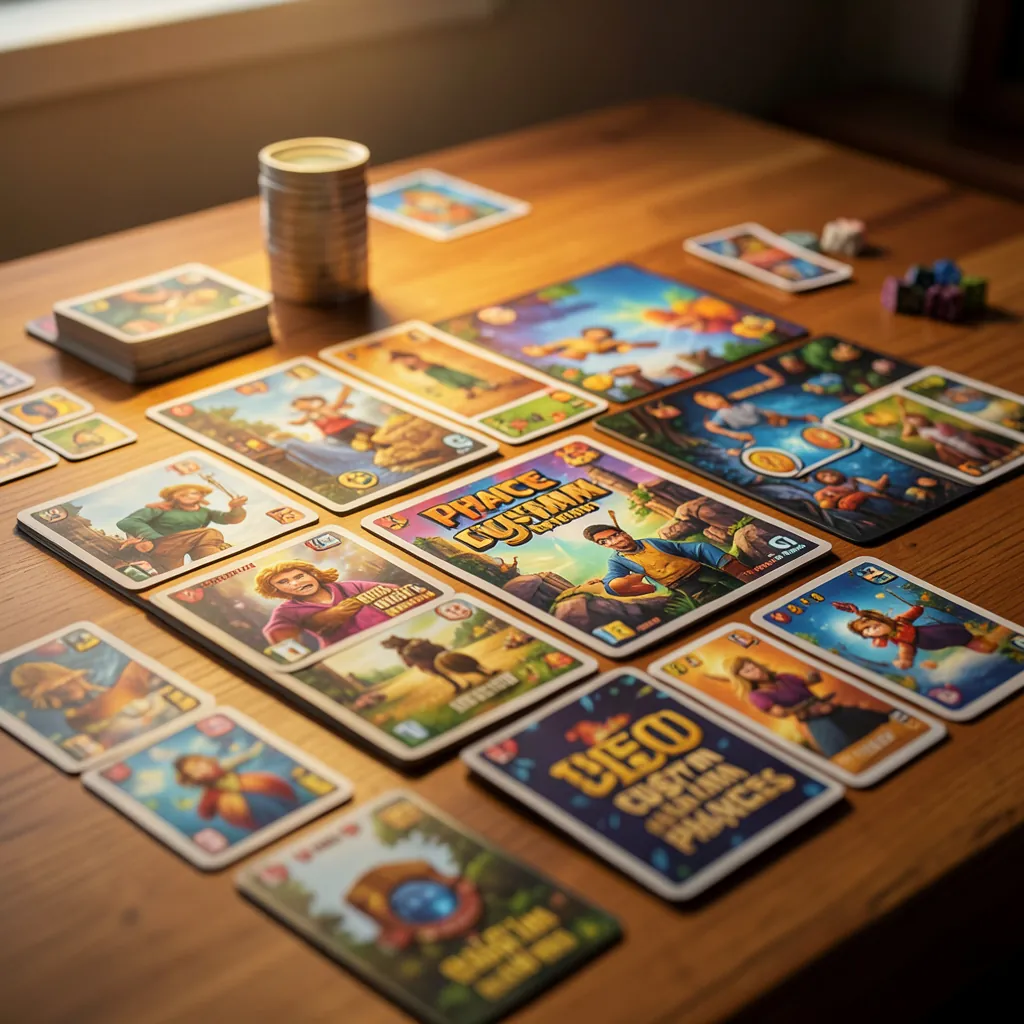
Phase 10 Custom Phases: How to Play, Score, and Adapt the 10 Phases
Contents
🃏 Phase 10 is a contract-rummy card game where players race to complete 10 set/run/color combinations called phases; the first to finish all 10 wins. This guide explains the standard rules, scoring, and source-backed custom-phase variants—from Floating Phases to Super Phase 10—so your group can choose and track house-rule phases accurately.
Players: 2–6 (best with 3–6; some custom variants use 2–4 or teams)
Play Time: Varies by variant; 30–90 minutes for some, 4–5+ hours for extended phase sets
Age: Not stated in the supplied sources
Difficulty: Easy to learn; custom phases can make it much harder
Type: Contract rummy card game (the supplied sources do not support “trick-taking”)
Setup
- Use a Phase 10 deck. A standard deck has 108 cards: 96 numbered cards (two each of numbers 1–12 in four colors), 8 wild cards, and 4 Skip cards.
- Choose the phase list. Play the official 10 phases in order, or replace/add custom phases. Write down each player’s current phase or give each player a phase tracker.
- Deal 10 cards to each player for the standard game. Place the rest as the draw pile and flip the top card to start the discard pile.
- Set up variant-specific pieces. For Floating Phases, give each player a list of all 10 phases to cross off. For Dealer’s Choice, the dealer selects the phase each hand. For Mixed Up Masters, shuffle the phase cards and deal 10 to each player without looking through them.
- Agree on house rules before play. Decide whether players can hit on other players’ phases, whether wilds are allowed in color phases, how Skips are limited, and which scoring system you will use.
How to Play
- Pick your contract and track it. In standard Phase 10, players begin on Phase 1 and must complete phases in order. Custom variants may let players choose any unfinished phase, use random phase cards, or add phases 11–20.
- On your turn, draw one card from either the draw pile or the discard pile.
- Build your current phase. A set is cards with the same number; colors do not matter for sets. A run is a sequence of consecutive numbers; colors do not matter for standard runs. Wilds can substitute for any number or color, and multiple wilds can be used in one phase unless a house rule says otherwise.
- Lay down the phase when complete. In standard play, you cannot skip ahead to a future phase even if you accidentally complete it. In variants like Floating Phases or Masters Edition, you may choose which phase to attempt.
- Hit on laid-down phases if allowed. After laying your phase, you can add valid cards to existing sets, runs, or color phases—your own or another player’s. Hitting helps you empty your hand faster.
- Use Skip cards carefully. Playing a Skip card makes a chosen player miss their next turn. The sources say you cannot skip a player who is going out or who has already been skipped.
- Discard one card to end your turn. The discard is normally your final play for the turn.
- End the round when someone goes out. A player goes out by completing their phase and playing all remaining cards through hitting or discarding. One source says other players get one final turn; another says the round ends immediately—agree on this before play.
- Advance or stay. Players who completed their phase advance to the next one. Players who did not stay on the same phase.
- Repeat rounds until someone wins. In standard Phase 10, the first player to complete all 10 phases wins. Extended variants may require 20 phases or all phase cards in a player’s pile.
What are the official 10 Phase 10 phases?
| Phase | Requirement |
|---|---|
| 1 | 2 sets of 3 |
| 2 | 1 set of 3 + 1 run of 4 |
| 3 | 1 set of 4 + 1 run of 4 |
| 4 | 1 run of 7 |
| 5 | 1 run of 8 |
| 6 | 1 run of 9 |
| 7 | 2 sets of 4 |
| 8 | 7 cards of one color |
| 9 | 1 set of 5 + 1 set of 2 |
| 10 | 1 set of 5 + 1 set of 3 |
Source conflicts to settle before play
| Topic | What one source says | What another source says | Practical fix |
|---|---|---|---|
| Player count | 2–6 players; best with 3–6 | Mixed Up Masters uses 2–4 players | Use 2–6 for standard; restrict custom variants as written |
| 2-player deal | Deal 13 cards instead of 10 | “Always 10 cards per person” | Agree before the first deal |
| Round end | Other players get one final turn after someone goes out | Round ends as soon as a player discards their last card | Choose one and announce it |
| Scoring | Skips = 15, Wilds = 25 | Skips/Wilds = 25 in a campaign-style score | Use one score sheet for the whole game |
| Game type | Contract rummy | Template label says “trick-taking” | The sources support contract rummy |
Scoring
Standard end-of-round scoring penalizes cards left in hand:
| Card left in hand | Points |
|---|---|
| Numbers 1–9 | 5 each |
| Numbers 10–12 | 10 each |
| Skip cards | 15 each in some sources; 25 in another |
| Wild cards | 25 each |
Winning the standard game: Most sources treat the first player to complete all 10 phases as the winner. One source also describes the objective as completing all 10 phases and having the lowest score, so some groups use score as a tiebreaker or as an additional win condition.
House and campaign scoring options: One source describes a campaign where the winner gets 0 points, everyone else scores cards left in hand, and the lowest total after five games is champion. Another source lists a 50-point subtraction for completing a phase, plus alternative systems where points are good, scoring is removed, or the winner gets bonus points based on how many phases others are behind. Because scoring varies by source, write down your scoring rule before play.
💡 Strategy Tips
- Do not hoard wilds too long. Wilds are worth 25 points if stuck in your hand, so use them when they help you lay down a difficult phase.
- For long runs, collect middle cards early. The 5–8 range is valuable for runs of 7, 8, and 9, even if those cards do not help your current phase.
- Commit to a color for the 7-cards-of-one-color phase. Choose your color early, discard other colors aggressively, and hit on other players’ color phases when possible.
- Always check for hitting before discarding. Adding cards to existing phases can empty your hand faster and reduce penalty points.
- Clarify hitting, saving, and Skip rules before the first turn. Many mid-game arguments come from unclear house rules; one source specifically recommends deciding these up front.
🎲 Variations
| Variant | Best for | Key phase/rule change | Length/complexity |
|---|---|---|---|
| Floating Phases | Strategic players | Complete any unfinished phase; cross it off; first to complete all 10 wins | Slightly shorter, medium |
| Dealer’s Choice Mayhem | Unpredictable fun | Dealer chooses any of the 10 phases for each hand; first to 10 checkmarks wins | Variable, low complexity |
| Phase 10 Teams | Couples or larger groups | Teams of two sit opposite; after drawing, pass one card to partner and receive one back | Slightly faster, medium |
| Mixed Up Masters | Players who dislike being stuck in order | Shuffle phase cards; deal 10 to each player; turn up the first phase | 30–60 minutes |
| Super Phase 10 / Phases 11–20 | Extended play | Adds 10 harder phases after the official 10 | Longer, medium-high |
| Phase 10 +10 | Very long game nights | Adds a different set of 10 extra phases | 4–5+ hours |
| Crazy Twenties | 20-phase strategic groups | Official 10 plus 10 advanced phases; phases may be played in any order with no repeats | Long, high |
| Twisted Phase 10 | Super fans seeking a challenge | Demanding phases with odd/even runs, exact card totals, color rules, and wild restrictions; needs 2 decks | Half a day, very high |
| Color Runs Rule | Harder run phases | All cards in a run must share the same color | Harder, medium |
| No Wilds in Color Phases | Hard mode | Phase 8 cannot use wilds as any color | Harder |
| 2-Player Variant | Two-player games | Some groups deal 13 cards and play all 10 phases; lowest score wins | Medium |
| Themed phase sets | Themed game nights | Replace the 10 phases with themed lists and special rules | Variable |
Floating Phases
Give every player a list of all 10 phases. On your turn, if you can lay down any phase you have not completed before, you may do so and cross it off. You cannot repeat a phase. The first player to complete all 10 phases on their list wins. This rewards long-term planning and hand management.
Dealer’s Choice Mayhem
The dealer looks at their cards before announcing which of the 10 original phases everyone will attempt for that hand. If you complete the phase, you get a checkmark or token. The first person to accumulate 10 checkmarks wins; the completed phases do not have to be different.
Phase 10 Teams
Play in teams of two, with partners sitting opposite each other. After drawing, you may give one card from your hand to your partner, and they must give one back. This is the only allowed communication. A team completes a phase when one partner lays down the required cards; both partners advance together. The first team with a member completing Phase 10 wins.
Extended phase sets: Super Phase 10, Phase 10 +10, Crazy Twenties
The sources do not agree on a single “extra 10 phases” list. Treat these as separate custom sets.
| Extra phase | Super Phase 10 (Source 2) | Phase 10 +10 (Source 3) |
|---|---|---|
| 11 | 1 set of 5 + 1 set of 3, same colors | 4 sets of 2 |
| 12 | 1 set of 4 + 1 run of 5 | 1 set of 4 + 1 run of 5 |
| 13 | 2 runs of 4 | 1 set of 5 + 1 run of 5 |
| 14 | 1 run of 10 | 1 run of 4 + 4 cards of one color |
| 15 | 2 sets of 5 | 1 run of 5 + 4 cards of one color |
| 16 | 1 run of 4 + 1 set of 4, same color | 1 run of 10 |
| 17 | 8 cards of one color | 1 set of 4 + 1 set of 5 |
| 18 | 1 run of 6 + 1 set of 3 | 9 cards of one color |
| 19 | 1 set of 3 + 1 run of 7 | 1 set of 6 + 1 set of 2 |
| 20 | 1 set of 6 + 1 set of 2 | 1 set of 6 + 1 set of 3 |
Crazy Twenties also adds 10 phases, but with different requirements: 3 sets of 3; 4 sets of 2 with no wilds; a run of 10; 8 of one color with no wilds; and other color/wild-restricted combinations. In Crazy Twenties, phases may be played in any order, players announce and commit to a phase, no phase may be repeated, and the first to complete all 20 wins.
Twisted Phase 10 is a separate hard-mode list. It requires two Phase 10 decks for best play, includes odd/even runs, exact card totals such as 10, 25, 30, and 20, same-color requirements, and several no-wild restrictions. The source warns it can take half a day.
Alternative 10-phase list
One source offers a different 10-phase list for groups that want to replace the official phases: set of 3 + run of 4; set of 4 + run of 5; run of 6; run of 7; run of 8; run of 9; 3 sets of 2; 2 sets of 3; 2 sets of 4; set of 5 + set of 3.
Themed custom phase sets
Source 5 lists six themed Phase 10 variants that replace the phases and add a special rule:
| Theme | Special rule | Phase flavor |
|---|---|---|
| Enchanted Forest | Use a Wild to ban one player from Wilds next round | Color runs, odd-numbered runs, 6 even cards |
| Volcano Island | Complete a phase and the next player draws an extra card | 8 cards of one color, color run of 5, 7 odd-numbered cards |
| Safari Expedition | Make an animal sound when using a Wild | Color sets, color run of 6, 9 even-numbered cards |
| Haunted Mansion | If you did not finish your phase, draw a card | 6 even cards, color runs, 7 cards of one color |
| Underwater Adventure | Lay a phase and everyone else discards one, then draws one | Color run of 7/8, 7 odd-numbered cards |
| Outer Space Odyssey | Complete a phase and pick someone to lose their next turn | Run of 8 even, color run of 7, 8 even-numbered cards |
Other house rules and variants
- Color Runs Rule: All cards in a run must share one color, making runs of 7–9 harder.
- No Wilds in Color Phases: Phase 8 cannot use wilds, forcing players to collect seven actual same-color cards.
- Skip restrictions: Some groups limit Skips to once per player per game, or prevent skipping the last-place player or the player closest to winning.
- Time limit: A 60-second turn timer can prevent analysis paralysis.
- Masters Edition: Players choose which phase to attempt each deal; a private “save” pile can store one card per deal; scoring and specialty cards are modified.
- Super Wild Phase 10: Adds a Super Wild worth 50 points that can act as two wilds, and a Super Skip that skips everyone else and gives the holder another turn immediately.
- 2-player adjustments: One source says deal 13 cards, play through all 10 phases, and lowest score wins; some groups remove Skips. Another source says players always get 10 cards. This is a source conflict—agree before playing.
- Tournament rules: Use a timer, track phase completion times, set a maximum number of rounds per phase, and use official scoring without house rules.
❓ FAQ
How many players can play Phase 10?
Phase 10 supports 2–6 players according to the FundexGames source, and it plays best with 3–6. Some custom variants narrow this: Mixed Up Masters is listed for 2–4 players, while team play can suit larger groups or couples.
How do you win Phase 10?
In standard play, the first player to complete all 10 phases wins. Some scoring descriptions also use the lowest score as the objective or tiebreaker, and extended variants may require 20 phases or finishing all phase cards in a player’s pile.
Can you play Phase 10 with 2 players?
Yes, but sources conflict on the deal. One source says to deal 13 cards instead of 10, play through all 10 phases, and use lowest score to win; another says players always get 10 cards. Decide which rule you are using before the first deal.
Is Phase 10 hard to learn?
Phase 10 is easy to learn as a contract-rummy game: draw, build sets and runs, lay down your phase, hit, and discard. Custom phases can make it much harder—Twisted Phase 10 is specifically described as a challenge for super fans, not light card gamers.
How long does a Phase 10 game take?
Time varies by variant. Mixed Up Masters is listed at 30–60 minutes, Super Wild Phase 10 at 60–90 minutes, Phase 10 +10 at 4–5 hours, and Twisted Phase 10 can take half a day. Standard Phase 10 is not given a fixed time in the supplied sources.
What do you need to play custom Phase 10 phases?
You need a Phase 10 deck (108 cards: 96 numbered, 8 wilds, 4 Skips), a written phase list or phase tracker, and paper/pen or a score sheet. Twisted Phase 10 recommends two Phase 10 decks for faster, more practical play.