Phase 10 Rules: How to Play, Score, and Win
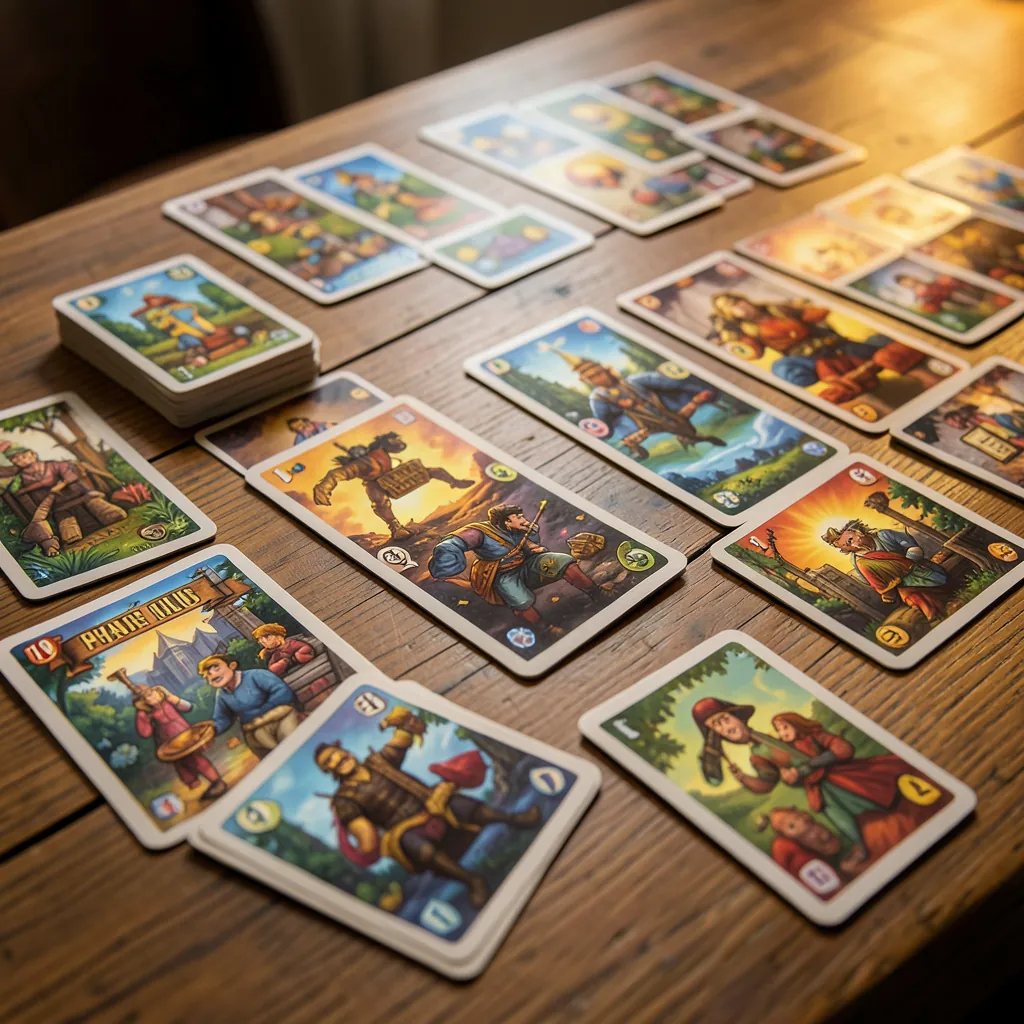
Phase 10 Rules: How to Play, Score, and Win
Contents
🃏 Phase 10 is a rummy-style card game from Mattel in which players race through 10 ordered phases by building sets, runs, or color groups. The goal is to be first to complete all 10 phases; if multiple players finish in the same hand, the lowest score wins. Standard games use 2–6 players and usually take about 60–90 minutes.
Players: 2–6 standard; Phase 10 Masters Edition supports 2–4
Play Time: 60–90 minutes for a full game; some standard games run about an hour-plus
Age: 7+ per Mattel
Difficulty: Easy to learn, moderately strategic
Type: Rummy-style card game, not trick-taking
Source conflict note: The quick-fact template values “3–5 players,” “20–30 minutes,” “age 10+,” and “trick-taking card game” do not match the Phase 10 sources. The source-supported values are listed above, and edition differences are flagged below.
Setup
Edition quick comparison
| Version | Players | Age | What’s in the box / key contents | Rules note |
|---|---|---|---|---|
| Standard Phase 10 | 2–6 | 7+ | 96 numbered cards, 8 Wild cards, 4 Skip cards, plus 2 Phase Reference cards; sources list 108 or 110 total depending on whether reference cards are counted | Core draw/lay/hit/discard game; fail a phase and repeat it |
| Phase 10 Masters Edition | 2–4 | 7+ | 40 Phase Cards; 24 each of red, yellow, green, and blue cards numbered 1–12; 2 Skip cards; 8 Wild cards | Uses Phase Cards and a Save Pile; listed as a 60–90 minute game |
| Phase 10 40th Anniversary, 2022 | 2–6 | 7+ | Anniversary keepsake box and cards; standard 10-phase gameplay | Same goal: complete 10 phases in order |
Deal and start
- Choose a dealer. In standard Phase 10, place the two Phase Reference cards where everyone can see them. In Masters Edition, give each player a set of colored Phase Cards.
- Shuffle the deck and deal 10 cards face down, one at a time, to each player. Players hold their cards so others cannot see them.
- Place the remaining deck face down as the draw pile. Turn the top card over beside it to start the discard pile.
- The player to the left of the dealer goes first. Play continues clockwise.
- Special starting discard: if the first discard is a Wild, the first player may pick it up. If it is a Skip, the first player’s first turn is automatically skipped.
- Keep paper and pencil for scoring.
How to Play
-
Draw one card. On your turn, draw either the top card of the draw pile or the top card of the discard pile and add it to your hand. In Masters Edition, you may instead draw one saved card from your Save Pile.
-
Check your current Phase. A Phase is made from sets, runs, all-one-color groups, or a combination.
- Set: two or more cards with the same number, in any color combination.
- Run: four or more cards in consecutive number order, in any color combination.
- All one color: cards of the same color; they do not need to be in number order. Phases must be completed in order from 1 to 10 in standard Phase 10, and you may make only one Phase per hand.
Phase Requirement 1 2 sets of 3 2 1 set of 3 + 1 run of 4 3 1 set of 4 + 1 run of 4 4 1 run of 7 5 1 run of 8 6 1 run of 9 7 2 sets of 4 8 7 cards of 1 color 9 1 set of 5 + 1 set of 2 10 1 set of 5 + 1 set of 3 -
Lay down the complete Phase, if you can. You must have the whole Phase in hand before laying it down — no partial Phases. You may add extra cards directly to the laid Phase, such as extra matching-number cards to a set, but you cannot add extra sets to a Phase that does not call for them. Wild cards may substitute for a number or color; you may use multiple Wilds as long as at least one natural card is used. Once a Wild is played in a Phase, it stays as that card for the rest of the hand. You receive credit for a Phase as soon as you lay it down; you do not have to win the hand to advance. If you fail to complete your Phase before the hand ends, you must try the same Phase again next hand.
-
Hit after your Phase is down. During your turn, add matching cards from your hand to any laid-down Phase, yours or another player’s. For example, add a 4 to a set of 4s, add a 2 to a run of 3-4-5-6, or add matching-color cards to a 7-card color Phase. You may hit multiple cards and multiple Phases, but only on your turn and only after your own Phase is laid down.
-
End your turn by discarding one card face up onto the discard pile. In Masters Edition, you may instead save one card per hand to your Save Pile by saying “SAVE”; saving counts as your discard for that turn.
-
Use Skip cards. Discard a Skip on your turn and choose a player to lose their next turn. A Skip counts as your discard and ends your turn. It cannot be picked up from the discard pile and cannot be used in a Phase. Mattel rule sheets differ slightly by edition: some say only one Skip may be used against each player per round, while others say a player cannot be skipped two turns in a row. Follow your edition’s rule.
-
Go out to end the hand. After laying your Phase, get rid of all remaining cards by hitting and/or discarding your last card. The first player to go out wins the hand. The winner and any other players who also completed their Phase advance to the next Phase; players who did not complete their Phase repeat the same Phase next hand.
-
Start the next hand. The player to the left of the last dealer becomes the new dealer. Gather and shuffle all cards, excluding any saved card in Masters Edition, and deal new 10-card hands. Continue until someone completes all 10 Phases.
Scoring
The winner of each hand scores zero. Every other player scores points for cards still in their hand — low score is better.
| Cards left in hand | Points |
|---|---|
| Numbered 1–9 | 5 |
| Numbered 10–12 | 10 |
| Skip | 15 |
| Wild | 25 |
Only cards in your hand are scored, not cards already laid down. Keep a running total for each player.
How to win: The first player to complete Phase 10 at the end of a hand wins. If two or more players complete Phase 10 in the same hand, the player with the lowest total score wins. Mattel’s standard rules say tied players replay Phase 10, and the first to go out wins; one review source describes the lowest score as the tiebreaker, so follow your edition if this comes up.
Scoring conflict to flag: Source 1 says Skip cards and Wild cards are both worth 25 points. Mattel’s standard and Masters rule sheets say Skip = 15 and Wild = 25. Use the Mattel values unless your specific edition says otherwise.
💡 Strategy Tips
- Learn the Phase order and focus on your current Phase. Do not hoard cards that only help a future Phase unless they are strong Wild or Skip cards.
- Never lay down part of a Phase. You must have the entire Phase in hand before placing it down; trying to lay a partial Phase is a common beginner mistake.
- Save Skip cards for key moments. Skipping a player who is close to going out can be more valuable than using the Skip early. Remember that a Skip cannot be picked up from the discard pile and cannot be used in a Phase.
- Watch laid Phases and hits. Opponents’ laid cards and the cards they add reveal what they still need; use that information when choosing draws and discards.
- Shuffle thoroughly between hands. Source 1 specifically warns that weak shuffling can deal cards too similar to the last hand and “rig” a Phase.
Common beginner mistakes: hitting before your own Phase is down, forgetting to draw before discarding, trying to use a Skip card in a Phase, and assuming that completing your Phase wins the hand — you still need to go out.
🎲 Variations
- 10-hand variation: All players advance to the next Phase each hand whether they completed the current Phase or not. After 10 hands, the player with the lowest total score wins.
- Shorter game: Before play starts, decide how many Phases must be completed to win, such as 5 or 7 Phases. All other rules stay the same.
- Even Phases only: Play only Phases 2, 4, 6, 8, and 10 instead of all 10 Phases.
- Player-count variants: Standard Phase 10 supports 2–6 players. Masters Edition supports 2–4 players. The sources do not list a separate two-player rule, so use the standard rules for a two-player game.
- Masters Edition Save Pile: A player may save one card per hand instead of discarding it, then later draw that saved card instead of drawing from the draw or discard pile.
❓ FAQ
How many players can play Phase 10?
Standard Phase 10 supports 2–6 players. Phase 10 Masters Edition supports 2–4 players. The difference is an edition difference, not a conflict in the core standard rules.
How do you win Phase 10?
Be the first player to complete all 10 Phases at the end of a hand. If multiple players complete Phase 10 in the same hand, the lowest total score wins; Mattel’s standard rules say tied players replay Phase 10, while one review source describes lowest score as the tiebreaker.
Can you play Phase 10 with 2 players?
Yes. Standard Phase 10 is listed for 2–6 players, so two players can use the normal rules. Masters Edition also supports two players because it is listed for 2–4 players. The sources do not give a separate two-player rule set.
Is Phase 10 hard to learn?
No — it is easy to learn, and Mattel lists it for ages 7+. It can still be strategic and tense; Source 1 calls it “the chess of card games,” but also notes that an 8-year-old can learn it.
How long does a game take?
A full standard game usually takes about 60–90 minutes, and Source 1 describes it as an “hour-plus” game. Masters Edition is listed as a 60–90 minute game. The commonly cited “20–30 minutes” figure is not supported by these Phase 10 sources.
What do you need to play Phase 10?
You need a Phase 10 deck: standard editions include 96 numbered cards, 8 Wild cards, 4 Skip cards, and 2 Phase Reference cards, though sources count the total as 108 or 110 cards depending on whether reference cards are included. You also need paper and pencil for scoring. Masters Edition uses Phase Cards, a different deck mix, and a Save Pile.
Related guides
- How to Play War: Rules for the 2-Player Card Game
- 5 hundred card game
- 🃏 How to Play 500: The Complete Card Game Guide