How to Play Stacking UNO: A Complete Guide to a New Way to Play UNO
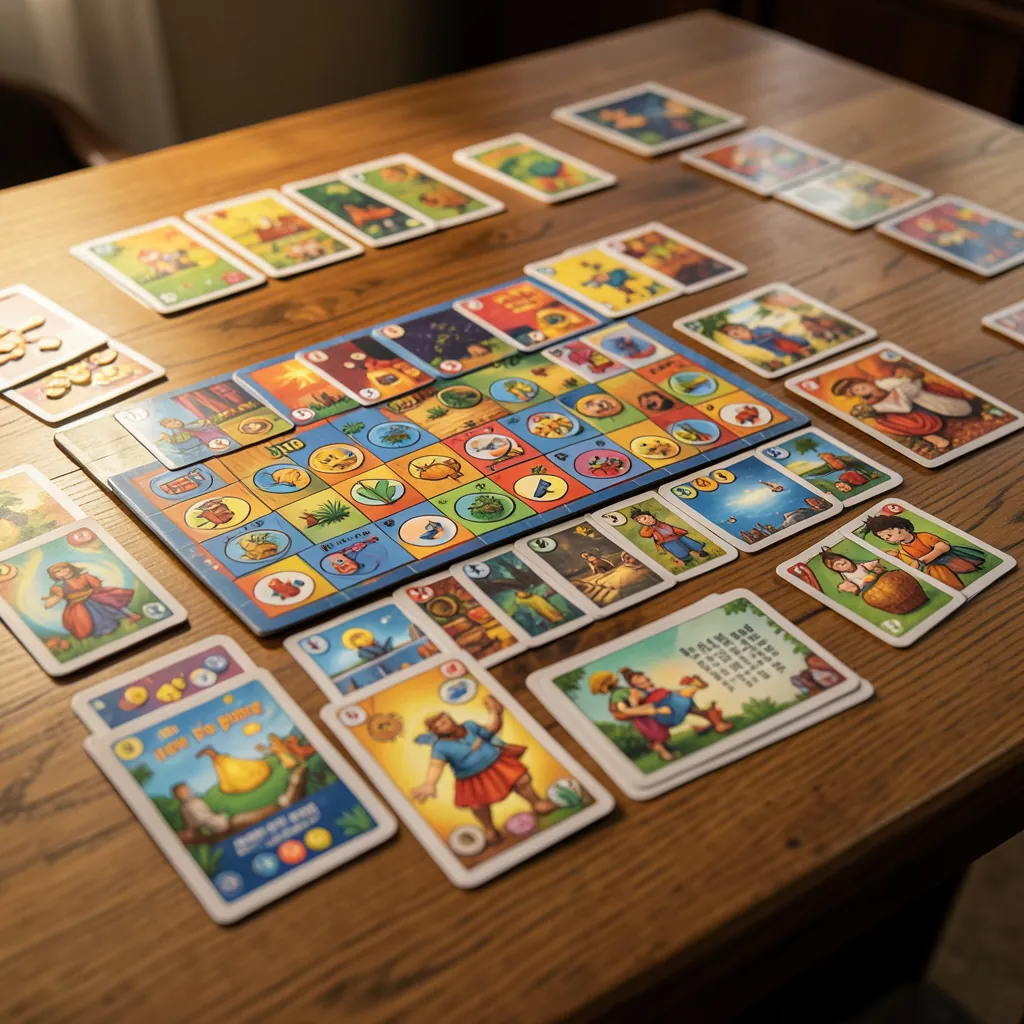
How to Play Stacking UNO: A Complete Guide to a New Way to Play UNO
Contents
🃏 Stacking UNO is a house-rule twist on classic UNO where Draw 2 and Draw 4 penalties can be passed onward by playing another matching Draw card; the goal is still to empty your hand first. This guide explains Progressive/Stacking UNO step by step, then compares other source-documented new ways to play UNO: UNO Flex, UNO Triple Play, Aussie Yeah-Nah cards, and UNO Wonder.
Players: 3-5
Play Time: 20-30 minutes
Age: 10+
Difficulty: Easy
Type: Trick-taking card game
Quick-facts source check: The five lines above are the required template values, but the UNO sources do not support all of them. UNO is a shedding/matching card game, not trick-taking; Source 4 rates Stacking UNO as best for 3-6 players; Source 3 lists UNO Triple Play as ages 7+. Use the source-corrected values where accuracy matters.
Setup
- Choose the rule set and write it down. Source 4 recommends stating which house rules are in effect before the first card is dealt, ideally on a whiteboard or paper. For Stacking UNO, decide whether Draw 4s can stack only on Draw 4s; Source 4 says most players agree like-for-like only and that mixing them causes arguments.
- Use a standard UNO deck and follow your normal base-UNO setup. The sources describe Stacking as an overlay on UNO’s foundation, not a separate deck; they do not give a separate deal sequence for the variant.
- Set the draw pile/discard pile and choose the first player according to your base UNO rules. Because this is a house-rule variant, any deal/first-player detail not in Source 4 should come from the base game you are using.
- Set an optional “mercy cap” before play. Source 4 suggests that stacking games can agree no player may be forced to draw more than a set number—such as 16 cards at once—to keep the game moving.
- If using special cards, read them first. Source 2’s Yeah-Nah/Nah-Yeah cards, Source 1/5’s Flex cards, and Source 3’s Triple Play unit each change timing or draw effects; do not combine variants unless everyone agrees, following Source 4’s house-rules advice.
How to Play
- Play a normal UNO turn as your base. Match the top discard by color, number, or symbol, or draw when you cannot; the new rule below only changes Draw-card penalties. This guide assumes you know base UNO because Source 4 treats Stacking as an overlay on UNO’s foundation.
- When a player plays Draw 2, the next player chooses: draw two cards and end their turn, or play their own Draw 2. This is the core Progressive/Stacking rule from Source 4.
- If they play another Draw 2, the stack grows. The next player now faces a four-card penalty (2+2). This continues until a player cannot play a Draw 2; that player draws the total accumulated penalty. Source 4 describes this as the “pass the buck” element.
- Use like-for-like stacking for Draw 4s. Source 4 says most players agree Draw 2s stack only on Draw 2s and Draw 4s only on Draw 4s; mixing them is a common source of arguments.
- After the stack is resolved, resume normal UNO play in the current direction. Source 4’s description implies normal turn flow resumes after the penalty is taken; it does not add a separate scoring step.
- If you add an official variant, apply its card text. Source 1 says Flex Draw Two forces all other players to draw one, Flex Wild Draw Four targets one opponent for four, Flex Wild All Draw makes everyone else draw two, and Flex Skip skips every player once. Source 5 words Flex Skip as skipping all other players, so agree which wording you use.
- For UNO Triple Play, play like classic UNO but discard only to lit pile(s). If a pile overloads, the LED display dictates how many cards must be drawn; Timer Mode speeds play; when a player has one card left they must yell “UNO!” according to Source 3.
Scoring
- Stacking UNO round win: the first player to empty their hand wins the round. Source 4 does not define a separate point-scoring system for Stacking UNO, so do not invent one; if you want points, use your base UNO deck’s scoring rules.
- Elimination variant: Source 4 says the round winner is safe, the player holding the most cards at the end of the round is eliminated, tied players are all eliminated, and play continues until one champion remains. No point totals are mentioned.
- Official UNO products: the sources do not provide complete point tables for UNO Flex, UNO Triple Play, the Aussie Mulga deck, or UNO Wonder. Triple Play says to yell “UNO!” at one card; Flex and Wonder focus on new action cards; the Mulga deck alters actions with Yeah-Nah/Nah-Yeah. Follow the product/app rules for scoring.
💡 Strategy Tips
- Agree the house rules before dealing. Source 4’s “House Rules Manifesto” tip is to write them down to prevent mid-game arguments.
- Stack like-for-like unless your group explicitly allows mixing. Source 4 notes that most players agree Draw 2s stack only on Draw 2s and Draw 4s only on Draw 4s.
- Use a mercy cap. Source 4 suggests a limit such as 16 cards at once so one player is not knocked out of contention by a massive stack.
- Time Flex/Power cards carefully. Source 1 says your Power determines when you can use a Flex card, and timing can turn the game in your favor.
- Match the variant to the group. Source 4 warns that Jump-In may be too frantic for relaxed groups, while Elimination may be too long for short attention spans.
🎲 Variations
Source 4 documents four tabletop house-rule variants, while Sources 1, 2, 3, 5, 6, and 7 document official or digital “new ways to play UNO.” Use this table to choose.
| New way to play UNO | Format / source | Core change | Best player count / notes | Win condition / scoring |
|---|---|---|---|---|
| Stacking UNO | House rule, Source 4 | Draw 2 can be passed/stacked; Draw 4 like-for-like only under common rule | Best 3-6; moderate pace; high chaos; low strategy | First to empty hand wins round; no point system in source |
| Jump-In UNO | House rule, Source 4 | Exact match to top discard can be played out of turn; if two try, first card to pile wins | Best 4-8; very fast; very high chaos; low strategy | Source does not restate scoring; play resumes from the jumper |
| 7-0 UNO | House rule, Source 4 | 0: all pass hands in current direction; 7: swap hands with chosen player; no swap if 7 is final winning card | Best 3-7; moderate pace; medium chaos; high strategy | Standard round win; source gives no separate points |
| Elimination UNO | House rule, Source 4 | Round winner safe; most cards eliminated; ties all eliminated | Best 5-10; slow multiple rounds; medium chaos/strategy | Last surviving champion |
| UNO Flex | Official digital DLC, Ubisoft/Mattel; Source 1 dated 29 Sep 2026; PS/Xbox/Switch/PC | Flex cards + Power timing; Flex Draw Two, Flex Wild Draw Four, Flex Wild All Draw, Flex Skip | Switch listing says it requires UNO base game; easy to learn | Follows UNO; full scoring not in source |
| UNO Triple Play | Electronic tabletop unit, Mattel; Source 3 | Three discard piles; only lit piles; overload LED dictates draws; Timer Mode | Age 7+; price $19.89–$97.50 on 21 Mar 2026; all-time low $15.07 on 2 Jul 2025 | Classic UNO win; yell “UNO!” at one card; source gives no points |
| Aussie UNO Artiste x Mulga | Limited edition deck; Mattel Creations, Amazon, select retailers; Source 2 | Yeah-Nah blocks previous move (Skip, Draw 2, or Draw 4); Nah-Yeah cancels Yeah-Nah and restores original action | RRP $39.99 | Follows UNO; new wilds alter actions |
| UNO Wonder | Official app by Mattel163; Sources 6-7 | 9 new action cards incl. Wild Skip All and Number Tornado; cruise adventure | Release 23 Jan 2024; update 26 May 2026; 395 MB; 4.5★, 2K votes | Level/boss progression; source gives no tabletop scoring |
Conflict notes: Source 4 calls stacking a house rule, while the UNO Wonder app advertises “stack up Draw 2s” as part of its official app; those are not the same ruleset. Source 1 says Flex Skip skips every player once, while Source 5 says it skips all other players. Source 6 says Number Tornado clears all number cards, while Source 7 says it discards every card numbered 0-9 from your hand.
❓ FAQ
How many players can play Stacking UNO?
Source 4 lists Stacking UNO as best for 3-6 players. It does not state a hard minimum or maximum, so treat that as the recommended range rather than an official cap.
How do you win Stacking UNO?
The first player to empty their hand wins the round. Source 4 does not define a separate point system for Stacking UNO, so use base UNO scoring only if your group agrees to it.
Can you stack a Draw 2 on a Draw 4?
Under the most common house rule in Source 4, no: Draw 2s stack on Draw 2s and Draw 4s stack on Draw 4s. If your group wants to allow mixing, agree before the game because Source 4 says mixing is a common argument starter.
Can you play Stacking UNO with 2 players?
Source 4 does not document a 2-player Stacking variant and rates Stacking as best for 3-6 players. If you adapt it for two, agree house rules first; the source does not confirm balance for two.
Is Stacking UNO hard to learn, and how long does a game take?
It is easy if you already know UNO; Source 4 describes it as one simple change to the game. The sources do not give a fixed play time for Stacking UNO, so the template’s 20-30 minutes is not source-verified.
What do you need to play the new UNO variants?
For Stacking UNO, use a standard UNO deck and agree the house rules. For official variants, you need the relevant product: UNO Flex DLC (Switch listing says it requires UNO base game), the UNO Triple Play electronic unit, the Aussie UNO Artiste x Mulga deck, or the UNO Wonder app.
Related guides
- How to Play Phase 10: Rules, Scoring, and Strategy
- How to Play War: Rules for the 2-Player Card Game
- 5 hundred card game
- 🃏 How to Play 500: The Complete Card Game Guide