How to Play Kings in the Corner: Rules, Scoring, and Variations
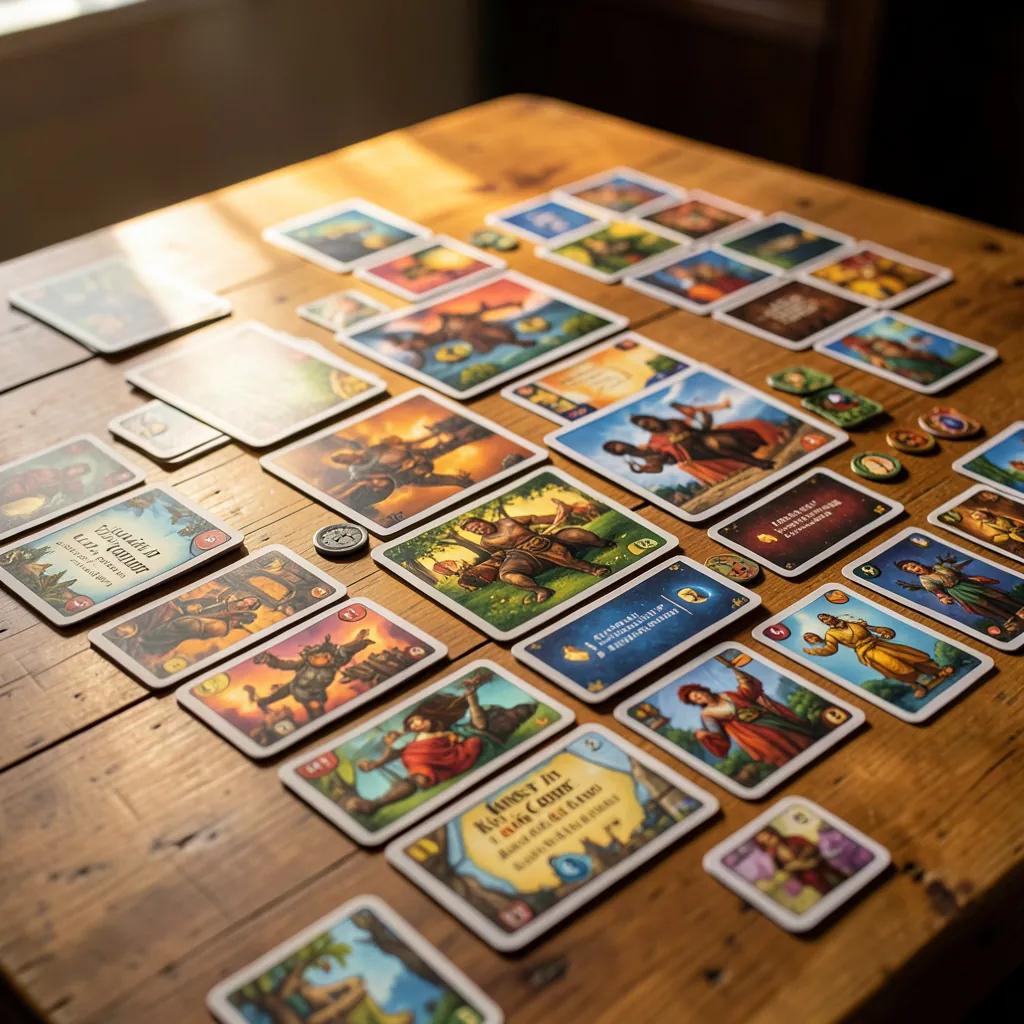
How to Play Kings in the Corner: Rules, Scoring, and Variations
Contents
🃏 Kings in the Corner (also called Kings Corner) is a solitaire-style shedding card game. The goal is to empty your hand first by playing cards in descending, alternating-color sequences and by placing kings in the four corner spaces. It is easy to learn, but sources differ on drawing and passing rules.
Players: 2–6 (4 best); some rules list 2–4 — sources conflict.
Play Time: Not stated in the sources; a round ends when one player goes out.
Age: 8+ (Bicycle); the App Store app is rated 4+.
Difficulty: Easy.
Type: Solitaire-style shedding card game (not trick-taking).
Setup
- Use one standard 52-card deck with no jokers. Optional: chips, pennies, or a scorepad for scoring and pass penalties.
- Deal 7 cards to each player.
- Place the remaining deck face down in the center as the stock/draw pile.
- Turn 4 cards face up and place them in four unmarked foundation/layoff spaces around the stock, often described as a cross: north, south, east, and west.
- Reserve four corner/crown spaces for kings. Only kings can start corner piles. The app listings describe 8 spaces around the deck: four king spaces and four unmarked spaces.
- Start with the player to the dealer’s left; play moves clockwise.
Setup conflict to flag: HowStuffWorks says corner spaces are reserved for the four kings and that a king dealt to the layout can be moved into a corner by the first player. Bicycle says the four face-up cards form the cross foundation piles and that kings go in the corners. Agree before play whether an initial face-up king is moved immediately or on the first player’s turn.
How to Play
-
Agree on draw timing before starting. Bicycle and the app listings say draw 1 card at the start of your turn. HowStuffWorks says play first, then draw 1 card at the end of your turn unless you go out. Do not draw after playing your last card.
-
Play valid cards from your hand to the layout. The main valid plays are:
- Play a card one rank lower and of the opposite color onto the top card of any pile. Rank order is K-Q-J-10-9-8-7-6-5-4-3-2-A, with Ace low. Example: a red 9 can go on a black 10; a black Ace can go on a red 2.
- Play a king into an empty corner/crown space. Only kings may start corner piles.
- Start or refill an empty unmarked/foundation space. Sources describe this slightly differently: Board Game Arena says you may play any card onto an empty orthogonal pile; Bicycle says an empty foundation spot can be played on with any valid card or sequence; the app says any non-king card can start a stack in an unmarked spot.
- Move an entire pile onto another pile if the bottom/base card of the moved pile is one rank lower and opposite in color to the top card of the destination pile. King piles do not move because there is nothing higher than a king.
-
Make as many valid plays as your version allows. HowStuffWorks says you may play any number of cards as long as the plays are valid, and its strategy tips suggest saving some plays. Bicycle says to make as many valid plays as possible. This is a real rules conflict; choose one before play.
-
If you cannot make a play, end your turn. In the HowStuffWorks chip-penalty version, a player who makes no play pays one chip into the pool. Some versions do not mention or use this pass penalty.
-
Draw or pass to the next player according to the agreed draw timing. If using the end-of-turn draw rule, draw after your plays unless you went out. If using the start-of-turn draw rule, you already drew at the beginning of the turn.
-
Continue clockwise. The first player to play their last card wins the round. If you are playing only one round, that player wins the game.
Where do the sources differ on key rules?
| Rule point | HowStuffWorks | Bicycle | Board Game Arena / app listings |
|---|---|---|---|
| Players | 2–6; 4 best | 2, 3, or 4 | App: you vs. 1–3 AI/opponents, about 2–4 total |
| Draw timing | Play, then draw at end unless out | Draw 1 at start of turn | App/BGA: draw a card, then play |
| Must play all possible cards? | May play any number; can save plays | Make as many valid plays as possible | BGA: if you cannot do any valid move, end turn |
| Pass penalty | Pay a chip if you make no play | Not mentioned | Not mentioned |
| Kings | Play a king in a corner; corner spaces reserved | Only kings start corner piles | BGA: may play a king to a corner; app: king stacks do not move |
| Scoring | 10 chips per king, 1 per other card; winner collects chips | No scoring listed; first out wins | BGA: kings -10, other cards -1 each; solo mode: leave 5+ cards in deck to win |
Scoring
The first player to get rid of all their cards wins the round; if playing a single round, that is the game winner.
If scoring with chips or paper, count the cards left in the losers’ hands:
- Each king left in hand scores -10 or costs 10 chips.
- Each other card left in hand scores -1 or costs 1 chip.
- In the HowStuffWorks chip version, losers pay those chips and the winner collects all chips.
- If scoring on paper, HowStuffWorks says to omit the penalty chips paid for passes.
Bicycle’s rules do not list a scoring system; that version simply treats the first player out as the winner. Board Game Arena also lists a solo-mode win condition: leave 5 or more cards in the deck to win.
💡 Strategy Tips
- Do not waste kings. A king is hard to place if no corner is open, and a king left in hand costs -10 at scoring. Clear kings when you can.
- Use pile moves to open spaces. Moving a whole pile can free an unmarked space, giving you or later players a new place to start a pile.
- Hold back a play only when the rules allow it. HowStuffWorks suggests saving a legal play so it can spare you from a future pass penalty and may block the next players. Do not do this in versions that require you to make as many plays as possible.
- Watch colors and rank order. Beginners often forget that Ace is low and that sequences must alternate red on black or black on red.
- Do not try to move king piles. The app rules state that king stacks do not move because nothing ranks higher than a king.
🎲 Variations
- Player count: HowStuffWorks supports 2–6 players and says 4 is best. Bicycle lists 2, 3, or 4 players. The app supports play against 1–3 AI opponents or pass-and-play.
- Two-player play: The sources include 2-player play but do not give a separate two-player rule set. Use the standard deal and rules, and agree on draw timing and pass penalties.
- Draw timing house rule: Choose either draw at the start of your turn or play first and draw at the end.
- Pass penalty house rule: Use HowStuffWorks’ chip-penalty rule for passing, or play without it.
- Single round vs. scored rounds: Bicycle treats first out as the game winner; Board Game Arena and HowStuffWorks describe round-winning and scoring.
- Solo/digital variant: Board Game Arena’s solo win condition is to leave 5 or more cards in the deck.
❓ FAQ
How many players can play Kings in the Corner?
Kings in the Corner is usually listed for 2–6 players, with 4 often called best. Bicycle lists 2–4 players, so player-count rules conflict by source.
How do you win Kings in the Corner?
Play all your cards from your hand first. In scored versions, the winner then collects penalties from opponents’ remaining cards: 10 per king and 1 per other card.
Can you play Kings in the Corner with 2 players?
Yes. HowStuffWorks allows 2 players, and Bicycle lists 2 as a valid player count. The sources do not give a separate two-player variant, so use the standard deal and agree on the optional rules.
Is Kings in the Corner hard to learn?
No. Sources describe it as easy to pick up. The main complications are rule variations: draw timing, whether you must play all possible cards, and whether passing costs a chip.
How long does a game take?
The sources do not give a fixed play time. A round ends when one player goes out; playing multiple scored rounds makes the session longer.
What do you need to play Kings in the Corner?
You need one standard 52-card deck with no jokers. Chips, pennies, or a scorepad are optional for scoring and pass penalties.
Related guides
- How to Play Phase 10: Rules, Scoring, and Strategy
- How to Play War: Rules for the 2-Player Card Game
- 5 hundred card game