How to Play King’s Corner (Kings in the Corner): Rules, Scoring, and Variations
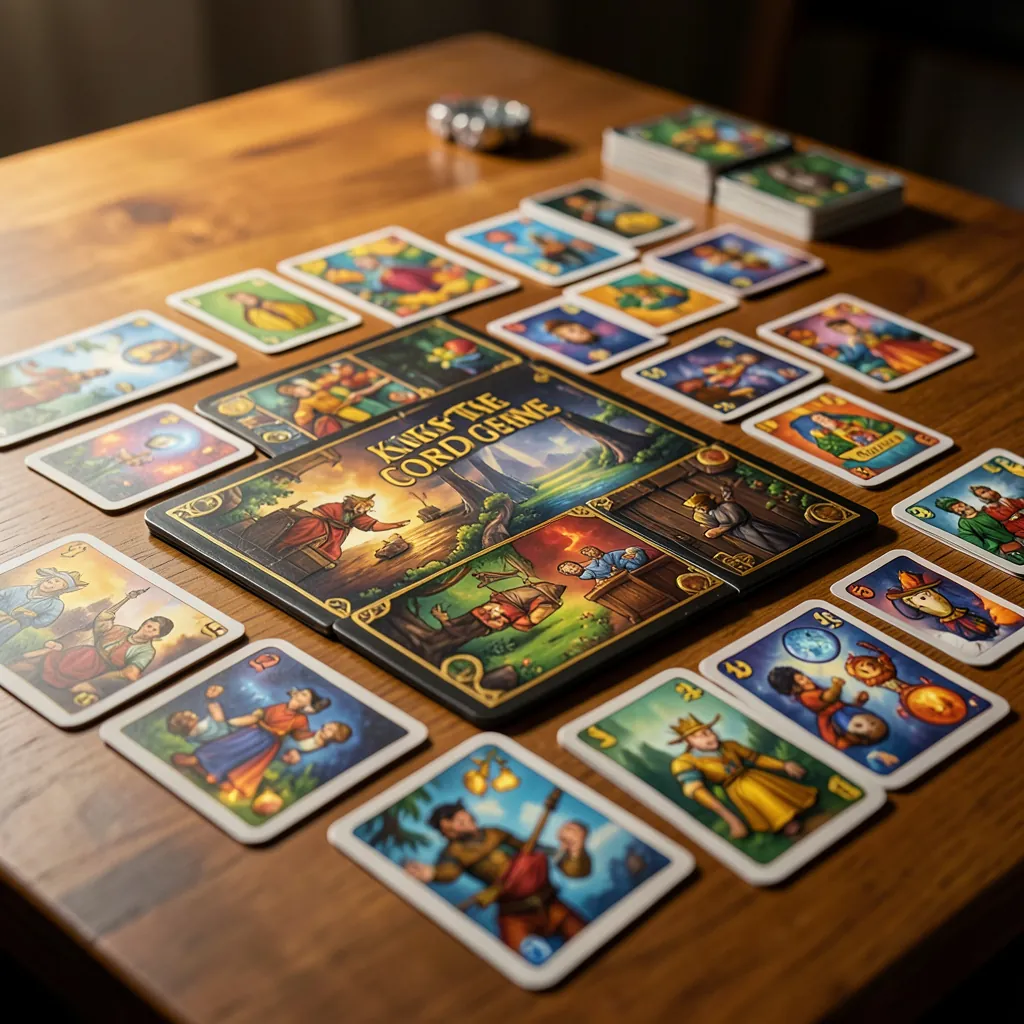
How to Play King’s Corner (Kings in the Corner): Rules, Scoring, and Variations
Contents
🃏 Kings in the Corner (also called King’s Corner) is a solitaire-style card game for 2–6 players in which everyone builds descending, alternating-color piles around a central draw pile. The goal is to be first to play off all your cards; some editions then award chips for opponents’ remaining cards and play to 100 points. It is easy to learn but rewards saving plays.
Players: 2–6 (4 is best)
Play Time: Not specified in the sources; described as “snappy”
Age: 4+ app rating; 7+ for the retail Michaels edition
Difficulty: Easy to pick up
Type: Solitaire-style card game
Setup
- Use one 52-card deck and a supply of chips or pennies for the traditional table game (Source 3). The Michaels retail set includes a custom deck, 80 custom playing chips, and a fold-away control center (Source 5).
- Deal 7 cards to each player (Source 3).
- Build the center layout with a face-down draw pile and spaces around it. App descriptions specify 8 spaces: 4 king spaces marked with a crown/K and 4 unmarked spaces (Sources 1, 2, 4). Source 3 says to turn 4 cards face up to start layoff piles and reserves the four corner spaces for kings; follow the diagram or rule sheet for your edition if it differs.
- Place the remaining cards face down in the center as the draw pile (Source 3).
- The player to the dealer’s left goes first, and play moves clockwise (Source 3).
- Keep chips handy for no-play penalties and end-of-round scoring (Source 3; Source 5).
How to Play
- Take turns clockwise, starting with the player to the dealer’s left (Source 3).
- On your turn, make any number of valid plays you want, as long as each play is legal (Source 3). Valid plays are:
- Put a king in a corner space (Source 3).
- Place a card one rank lower and of the opposite color on top of any pile; Ace is the lowest card (Sources 1, 2, 3, 4). Examples: a red 9 on a black 10, or a black Ace on a red 2.
- Move an entire layoff pile onto another pile if the bottom card of the moved pile is one rank lower and opposite in color to the top card it lands on (Source 3).
- Play any card onto an empty unmarked layoff space (Source 3; Sources 1, 2, 4). Only kings can start corner stacks, but any other card can start a stack in one of the four unmarked spaces.
- Do not move king stacks; there is nothing higher than a king (Sources 1, 2, 4).
- If you cannot make any play, pay one chip into the pool (Source 3; Source 5 says pay the pot with one game chip).
- Draw according to your edition. Traditional Source 3 says: at the end of your turn, whether you made a play or not, draw one card unless you went out. App sources 1, 2, and 4 instead say you get a new card at the beginning of every turn. Source conflict: use the draw timing in your rulebook or app.
- If you play your last card during your turn, you go out and win the round/hand (Source 3; Source 5).
- For a multi-round game using the Source 5 scoring variant, record chips/points and start the next round until one player reaches 100 points.
Scoring
- Single-round chip payout (Source 3): When a player goes out, each loser pays 10 chips for every king still held and 1 chip for every other remaining card. The winner collects all those chips. If you score on paper, Source 3 says to omit the penalty chips paid for passes.
- Retail 100-point variant (Source 5): The first player to empty their hand wins the pot plus opponents’ point chips for their unplayed cards. The first player to reach 100 points/chips wins the overall game. Source 3 does not mention a 100-point target, so this is an edition/variant conflict rather than a universal rule.
- App versions: Sources 1, 2, and 4 describe the goal as getting rid of your cards first, and Source 4 mentions winning streaks and achievements, but these app descriptions do not give full chip-scoring details.
💡 Strategy Tips
- Save a legal play for later. Source 3 notes this can help you avoid paying a chip on a future turn and may keep the next players from making plays.
- Remember Ace is low and colors must alternate. A black Ace can go on a red 2; a red 9 can go on a black 10 (Sources 1, 2, 3, 4).
- Treat kings as corner-only cards. They start corner stacks, and king stacks do not move (Sources 1, 2, 4).
- Use empty unmarked spaces carefully: any card can start an unmarked stack, but only a king can start a corner stack (Sources 1, 2, 4).
- Check the draw-timing rule before you play. Traditional Source 3 draws at the end of a turn; app sources draw at the beginning. Drawing at the wrong time is a common beginner mistake when switching between editions.
🎲 Variations
- Player count: Source 3 says 2–6 players, with 4 best. Source 5’s retail edition also lists 2–6 players. No special 2-player rule is given in the sources; use the normal deal and turn order.
- App play: Sources 1, 2, and 4 describe AI opponents (1–3 opponents), online play via Game Center, and in-person pass-and-play. These are app modes, not a replacement for the table-game player count.
- Scoring target: Source 5 describes a first-to-100-points/chips game; Source 3 describes a single-round chip payout without a 100-point target.
- Pass penalty: Source 3 and Source 5 both use a one-chip penalty when you cannot play; Source 3 adds that paper scoring can omit pass penalties.
- Draw timing: Source 3 draws at the end of a turn; app sources draw at the beginning of a turn. This is a source conflict, so follow your edition.
What do the sources disagree about?
| Feature | Source 3: traditional rules | Source 5: retail game | App sources 1, 2, 4 |
|---|---|---|---|
| Players | 2–6; 4 best | 2–6 | AI 1–3 opponents; online and pass-and-play modes |
| Age | Not stated | 7+ | 4+ app rating |
| Equipment | 52-card deck plus pennies/chips | Custom deck, 80 chips, control center | iOS/iPadOS/macOS app |
| Draw timing | End of turn unless out | Not specified | Beginning of every turn |
| No-play penalty | Pay 1 chip | Pay 1 chip into pot | Not specified |
| Win/scoring | First out; losers pay 10 per king and 1 per other card; winner collects | First out wins pot plus opponents’ unplayed chips; first to 100 wins | First to get rid of cards; tracks streaks/achievements |
| Price/format | No price given | $18.19 (reg. $27.99) | Source 1: Free; Source 2: $2.99; Source 4: initial release Feb. 1, 2011 |
❓ FAQ
How many players can play King’s Corner?
King’s Corner is a 2–6 player table game, with 4 players considered best by Source 3. The Michaels retail edition also lists 2–6 players. App versions add AI opponents (1–3) plus online and pass-and-play modes.
How do you win King’s Corner?
The first player to play off all their cards wins the round/hand. Under Source 3 scoring, that winner collects chips from opponents based on the cards left in their hands; under the Source 5 retail variant, players keep score and the first to 100 points/chips wins the overall game.
Can you play King’s Corner with 2 players?
Yes. Source 3 lists 2–6 players and does not give a special two-player rule. Use the standard deal, turn order, valid plays, and scoring for your edition.
Is King’s Corner hard to learn?
No. The app descriptions call it easy to pick up, and the core rules are solitaire-like: descending ranks, alternating colors, and kings in the corners (Sources 1, 2, 3, 4).
How long does a game take?
The sources do not give a specific play time; Source 3 describes the game as “snappy.” Time will vary with player count and whether you play one round or use the first-to-100-points variant.
What do you need to play King’s Corner?
For the traditional table game, you need one 52-card deck and a supply of pennies or chips (Source 3). The retail set includes a custom deck, 80 chips, and a fold-away control center (Source 5). The app versions need an iOS/iPadOS/macOS device (Sources 1 and 2).
Related guides
- How to Play Phase 10: Rules, Scoring, and Strategy
- How to Play War: Rules for the 2-Player Card Game
- 5 hundred card game
- 🃏 How to Play 500: The Complete Card Game Guide