How to Play the Requested Trick-Taking Card Game (Source-Limited Guide)
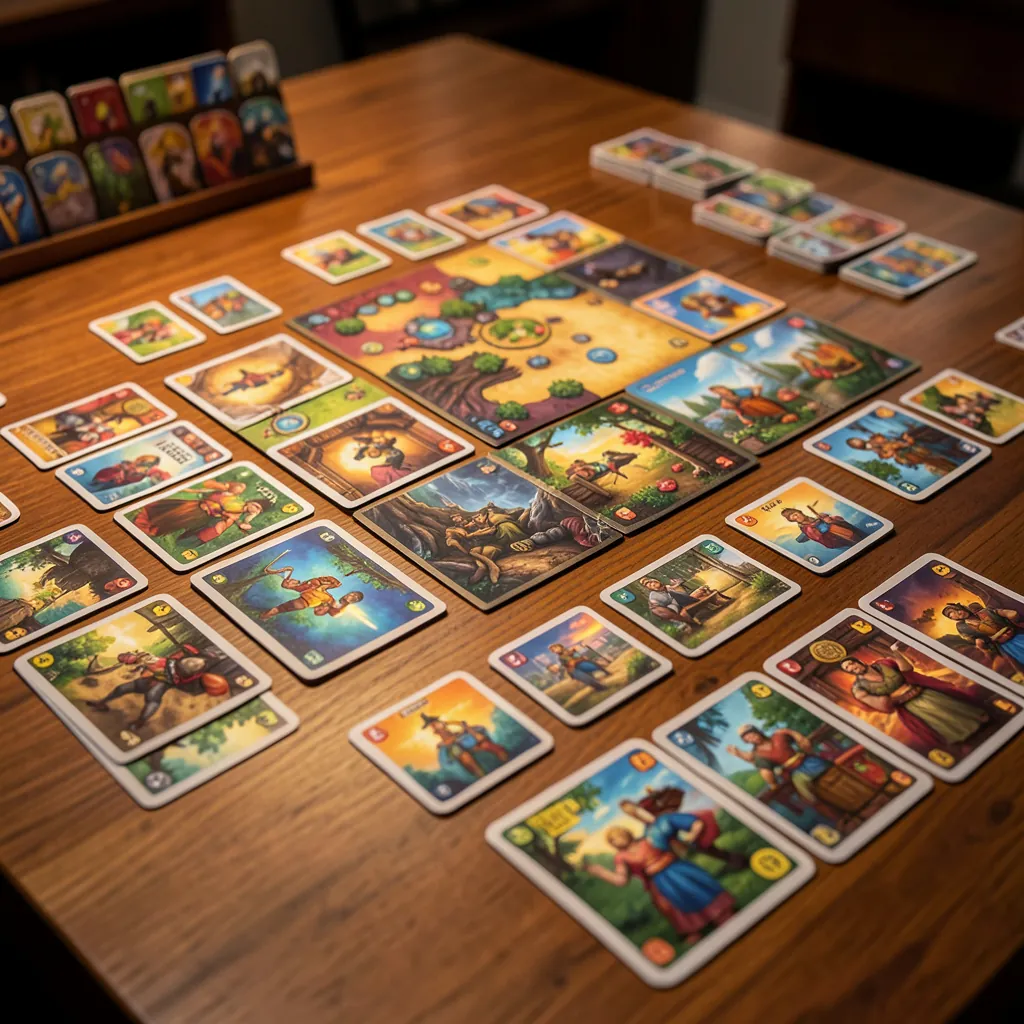
How to Play the Requested Trick-Taking Card Game (Source-Limited Guide)
Contents
🃏 No specific tabletop or card game can be verified from the supplied sources, so this cannot be a reliable how-to-play guide. The sources cover video-game “sequence” systems—online match flow, Amnesia scripting, Assassin’s Creed memories, and Fortnite cutscenes—not cards, dealing, tricks, or scoring. The requested goal and quick-facts values are therefore unverified and not safe to present as rules.
Players: 3–5 (requested template value; not supported by the supplied sources)
Play Time: 20–30 minutes (requested template value; not supported by the supplied sources)
Age: 10+ (requested template value; not supported by the supplied sources)
Difficulty: Easy (requested template value; not supported by the supplied sources)
Type: Trick-taking card game (requested template value; not supported by the supplied sources)
Setup
No tabletop/card-game setup can be accurately derived from the provided sources. A “sequence” in the sources refers to video-game sequence intervals, scripting sequences, mission sequences, or cinematic sequences—not card dealing, board layout, starting hands, trump, or turn order.
| Source | What it actually covers | Relevance to a tabletop/card-game how-to |
|---|---|---|
| Source 1: US20110053686A1 | Online game sequence intervals: lobby, character selection, data load, battle, game result; packet transfer using interval ID | None: no cards, board, dealing, trick-taking, or tabletop scoring |
| Source 2: Frictional Game Wiki | Amnesia scripting sequences: integer part tracker, timers, switch cases; last update 2011-07-29 | None: code tutorial for scripted events |
| Source 3: IGN | Assassin’s Creed Unity Sequence 04: Cafe Theatre, Phantom Blade, memories | None: video-game mission guide |
| Source 4: Epic Developer Community | Fortnite Cinematic Sequence device: starting weapon sequence, platforming minigame, rhythm game | None: UEFN cutscene/device examples |
| Source 5: IGN | Assassin’s Creed Unity Sequence 10: three memories, third is an extended cutscene | None: video-game mission guide |
Conflict flag: The requested quick facts—3–5 players, 20–30 minutes, age 10+, Easy difficulty, and trick-taking card game—are unsupported by every listed source. The sources do not conflict with each other; they conflict with the article request.
How to Play
No core trick-taking procedure can be written from these sources. The numbered list below records what is missing rather than inventing rules.
- Name the game. The supplied sources do not identify a specific tabletop/card game. “Sequence” appears only as video-game sequence intervals, scripting sequences, mission sequences, or cinematic sequences.
- Prepare the deck or board. No cards, board, tokens, deck size, shuffle, or deal are described.
- Set starting conditions. No starting player, hand size, trump suit, or opening lead is described.
- Play a trick. No rules for following suit, trumping, taking tricks, or passing are described.
- End the round or game. No end condition or winner check is described.
Scoring
No scoring method or winning condition for the requested tabletop/card game can be verified. Source 1 mentions a “game result display” and “battle end effect” for a video game, but that is not tabletop scoring. Do not infer points, trick values, or win conditions from it.
💡 Strategy Tips
- Do not treat “sequence” as a rules hint. The sources use it for video-game flow, scripting, missions, and cutscenes—not the board game Sequence or a trick-taking mechanic.
- Get the official rulebook or publisher sheet. No official rules, card counts, deal procedure, or scoring are in the supplied sources.
- Verify player count before teaching. The requested 3–5-player range is unverified; do not tell players it is confirmed by these sources.
- Common beginner mistake: assuming the Quick Facts are sourced. They are template values only and are not supported by the listed sources.
- If accuracy matters, stop and request tabletop sources. Use a named game, edition, publisher, and official rulebook before teaching or citing rules.
🎲 Variations
None can be verified from the supplied sources. The sources do not describe house rules, two-player variants, partnership rules, or player-count changes. The requested 3–5-player range cannot be expanded to a two-player variant from these sources.
❓ FAQ
How many players can play?
The requested template says 3–5, but the supplied sources do not verify that number or name a game. Do not cite this guide as confirmation.
How do you win?
No winning condition can be verified. The sources contain video-game battle/result screens and scripting examples, not tabletop scoring.
Can you play with 2 players?
No two-player variant is described in the sources. There is no source-supported answer for the requested game.
Is it hard to learn?
The template says “Easy,” but that value is not supported by any listed source. Difficulty cannot be confirmed.
How long does a game take?
The template says 20–30 minutes, but no source gives a play time for a tabletop/card game.
What do you need to play?
No components are listed: no deck, board, tokens, or score sheet. The sources discuss video-game software, code, memories, and cinematic devices only.
Related guides
- How to Play Phase 10: Rules, Scoring, and Strategy
- How to Play War: Rules for the 2-Player Card Game
- 5 hundred card game
- 🃏 How to Play 500: The Complete Card Game Guide
- 500 Card Game Rules: How to Play Five Hundred