How to Play the Card Game Kings: Setup, Rules, Scoring, and Variations
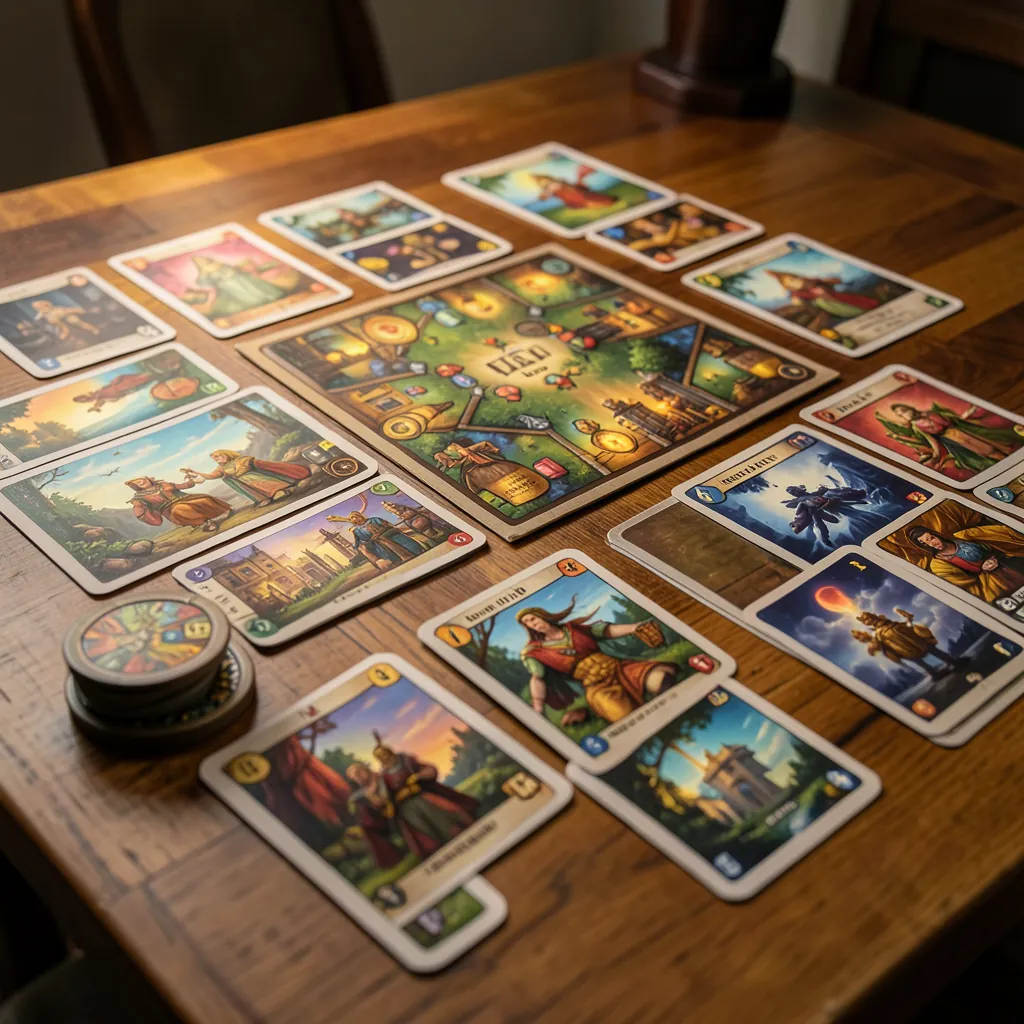
How to Play the Card Game Kings: Setup, Rules, Scoring, and Variations
Contents
🃏 Kings is most commonly a party/drinking card game (also called King’s Cup, Ring of Fire, or Circle of Death): players draw from a 52-card deck and each rank triggers a rule, dare, or group action. The goal is to follow the agreed rules and avoid penalties; the drinking-game versions have no standard point-scoring winner.
Players: 2+ in Source 1; 3–99 in Source 2’s printed deck; Source 4 says no limit; Source 3’s patented King Card Game example uses 4 players.
Play Time: 20–40 minutes in Source 1; 30–60 minutes in Source 2.
Age: 18+ in Source 2 and the Source 4 app; Source 1 describes alcoholic drinks; Source 3 does not state an age.
Difficulty: Easy for newcomers (Source 4 says newcomers can play right away), but rules vary by house rule.
Type: Party/drinking card game with house rules in Sources 1, 2, 4, and 5; Source 3 describes a different King Card Game with climbing-style play. The sources do not describe Kings as a trick-taking game.
Setup
What do you need?
- 1 standard 52-card deck. Jokers are optional and only used if agreed as a house rule (Sources 1 and 5).
- 2 or more players in Source 1; Source 2’s printed deck lists 3–99 players; Source 4 says there is no limit.
- Drinks, as described in the drinking-game sources; Source 2 and the Source 4 app are rated 18+.
- A large cup or can for the King’s Cup in common King’s Cup/Ring of Fire versions (Source 1). Some versions omit the cup.
- Source 1’s equipment list also mentions dice, but its common rules do not explain how the dice are used.
Which version are you setting up?
The sources describe more than one game called Kings, so confirm the version before dealing.
| Source/version | Game type | Players | Play time | End or win condition |
|---|---|---|---|---|
| Source 1 — common Kings / King’s Cup / Ring of Fire | Drinking/party card game | 2+ | 20–40 min | Ends when all cards are chosen, the King’s Cup is consumed, or cards fall off the cup; the player who knocks them off drinks the King’s Cup |
| Source 2 — printed “Kings” deck | Drinking game with rules printed on cards | 3–99 | 30–60 min | End condition not stated; age 18+ |
| Source 4 — Kings app | Party punishment/drawing game | No limit | Not stated | Ends when all 52 cards are drawn; 18+ |
| Source 3 — patented “King Card Game” | Different card game: players follow with the same quantity of higher cards; Kings close hands | Example uses 4 players | Not stated | Titles and points; play to 10 or 20 points |
Setup steps
- Choose which version you are playing: the common drinking-game Kings, the Source 2 printed-rule deck, the Source 4 app, or the separate Source 3 patented game.
- Seat players in a circle and choose clockwise or counterclockwise play; Source 1 lists both directions.
- Shuffle a standard 52-card deck. Add Jokers only if the group agrees; Source 1 calls Joker a “Wild Card” house rule, and Source 5 treats Jokers as extra Jacks or random-rule cards.
- Agree on the card assignments before the first draw. Source 1 says rules and card assignments are normally confirmed at the start, and Source 2’s deck has the rules printed on the cards.
- For common Kings / King’s Cup, spread the shuffled cards face down in a circle around an empty cup or a full can/King’s Cup (Source 1).
- Decide the end condition before play: all 52 cards drawn (Source 4), King’s Cup consumed or cards knocked off the cup (Source 1), or another house rule.
How to Play
- Confirm every card rule before the first draw. This is essential because Sources 1, 2, and 5 conflict on several ranks, especially 4, 5, 6, and 7.
- On your turn, draw one card from the face-down circle, deck, or app and show it to the group. Source 1 says each player takes turns drawing cards; Source 4 uses an app to draw cards.
- Apply the instruction for that card immediately. Some cards are one-time actions; others create ongoing roles or rules.
- Follow ongoing rules until they are replaced or the game ends. For example, Source 1 says a Queen’s “Question Master” lasts until another Queen is drawn, an 8’s “Mate” drinks with you for the rest of the game, and a King’s “Rulemaster” makes a rule everyone must follow for the remainder of the game.
- If using the King’s Cup/ring-of-fire setup, place or insert drawn cards as agreed. Source 1 describes placing cards on top of the King’s Cup; when cards fall off, the player who knocked them off must consume the King’s Cup. In the full-can variation, cards are placed under the can tab, and the player whose card pops the can open must chug the can.
- Continue in the chosen direction until the agreed end condition is reached: all 52 cards are drawn (Source 4), the King’s Cup is consumed or cards fall off the cup (Source 1), or the group’s house rule ends play.
- Resolve the final penalty or action. The common drinking-game versions do not define a competitive winner; Source 1 explicitly says Kings is not a competitive game.
What does each card mean?
Sources agree on several ranks but conflict on others. Use one agreed list; the table below flags the main conflicts.
| Card | Source 1 common assignment | Source 2 printed-deck assignment | Conflict or note |
|---|---|---|---|
| Ace | Waterfall | Waterfall; stop when the person to your right stops, starting with the drawer | Source 5 lists alternatives such as spelling, race, dirty pint, and ace on forehead |
| 2 | “You” — pick someone to drink | You pick someone to drink | Consistent |
| 3 | “Me” — you drink | You drink | Consistent |
| 4 | “Whores” — ladies drink in Source 1’s first list; Source 1 alternate says “Floor” | Floor — last person to touch the floor drinks | Major conflict; agree before play |
| 5 | Beer Bitch — fetch drinks until another 5 is drawn | Guys — males drink | Major conflict |
| 6 | Dicks — men drink | Chicks — females drink | Major conflict |
| 7 | Game of Sevens | Seven Heaven — last person to point up drinks | Major conflict |
| 8 | Mate — pick a person to drink with you | Date — pick a person who drinks when you drink | Similar idea |
| 9 | Bust a Rhyme | Nine Rhyme | Similar idea |
| 10 | Categories | Ten Categories | Similar idea |
| Jack | Never Have I Ever in Source 1’s first list; Source 1 alternate says New Rule | Never Have I Ever | Source 5 lists Make a Rule and other Jack rules |
| Queen | Question Master | Queen Questions | Similar; Source 1 says Question Master lasts until another Queen |
| King | Rulemaster — make a rule for the rest of the game | Make a Rule | Source 1 alternate says everyone drinks if not using the cup; Source 5 has community-cup rules |
| Joker | Wild Card/house rule | Not in Source 2’s listed deck | Source 5 treats Jokers as extra Jacks or random-rule cards |
Scoring
| Version | How points and winning work |
|---|---|
| Common drinking-game Kings (Sources 1, 2, 4, and 5) | The sources do not define standard point scoring or a standard winner. Source 1 says Kings is not a competitive game. Play ends by house rule: all 52 cards drawn (Source 4), King’s Cup consumed or cards knocked off the cup (Source 1), or another agreed condition. Penalties are drinks or actions, not points. |
| Patented “King Card Game” (Source 3) | This is a different game. The King/Queen gets 3 points for 1st place; the Prince/Princess gets 2 points for 2nd; the Duke/Duchess gets 1 point for 3rd; others get 0. The player with more points wins, and the group can choose to play to 10 or 20 points. |
💡 Strategy Tips
- Agree on the exact card list before the first draw. The sources conflict heavily on 4, 5, 6, and 7, so a “standard” rule set is not reliable.
- Write down persistent rules and roles. Common beginner mistake: forgetting the Question Master, Mate/Date, Beer Bitch, or Rulemaster.
- Use a printed-rule deck or app if your group keeps arguing about assignments; Source 2’s deck prints the rules on the cards, and Source 4 uses an app.
- Announce rule changes clearly when a King or Jack creates a new rule. In Source 1, the Question Master and Mate roles can last for the rest of the game.
- Pace the drinking penalties and set safe limits. The sources describe alcoholic versions and 18+ ratings; if your group uses non-alcoholic drinks, agree that as a house rule before play.
🎲 Variations
- King’s Cup / Ring of Fire: In Source 1, the player who breaks the circle of cards drinks the King’s Cup in UK, Ireland, Australia, New Zealand, and Canada variations.
- Full-can variation: Players place cards under the can tab; when a player’s card pops the can open, that player must chug the can (Source 1).
- Cards-on-cup ending: Source 1 says the game can end when cards placed on top of the King’s Cup fall off; the player who knocked them off consumes the cup.
- Jokers: Source 1 treats Joker as a wild/house-rule card; Source 5 treats Jokers as extra Jacks or random-rule cards.
- Player count: Source 1 says 2+ players; Source 2’s deck says 3–99; Source 4 says no limit. The sources do not provide a separate dedicated 2-player rule set.
- Different game, similar name: Source 3’s patented “King Card Game” uses titles such as King, Prince, Duke, and Jester and a different follow-with-higher-cards mechanic; it is not the same as the drinking-game Kings.
❓ FAQ
How many players can play Kings?
It depends on the version: Source 1 says 2+, Source 2’s printed deck says 3–99, and Source 4 says there is no limit. Source 3’s patented King Card Game example uses 4 players.
How do you win at Kings?
In the common drinking-game versions, the sources do not define a standard winner; Source 1 says Kings is not a competitive game. In Source 3’s separate patented King Card Game, players score points by finishing 1st, 2nd, or 3rd and play to 10 or 20 points.
Can you play Kings with 2 players?
Source 1 lists 2+ players, so it allows two players. However, Source 2’s printed deck lists 3–99, and the sources do not give a separate 2-player rule set, so two players must agree which group-style rules still make sense.
Is Kings hard to learn?
No. Source 4 describes its Kings app as a party game newcomers can play right away. The main difficulty is that house rules vary, so confirm the card assignments before starting.
How long does a game take?
Source 1 lists 20–40 minutes, while Source 2 lists 30–60 minutes. Source 4 says the app game ends when all 52 cards are drawn, so actual length depends on player count, pace, and house rules.
What do you need to play?
You need a standard 52-card deck and players; Source 1 lists 2+ players, drinks, and a large King’s Cup, and Source 2’s deck has the rules printed on the cards. Jokers are optional, and Source 1’s equipment list mentions dice but does not explain their use in the common rules.
Related guides
- How to Play Phase 10: Rules, Scoring, and Strategy
- How to Play War: Rules for the 2-Player Card Game
- 5 hundred card game
- 🃏 How to Play 500: The Complete Card Game Guide
- 500 Card Game Rules: How to Play Five Hundred