How to Play Sushi Go: Rules, Scoring, and Strategy
How to Play Sushi Go: Rules, Scoring, and Strategy
Contents
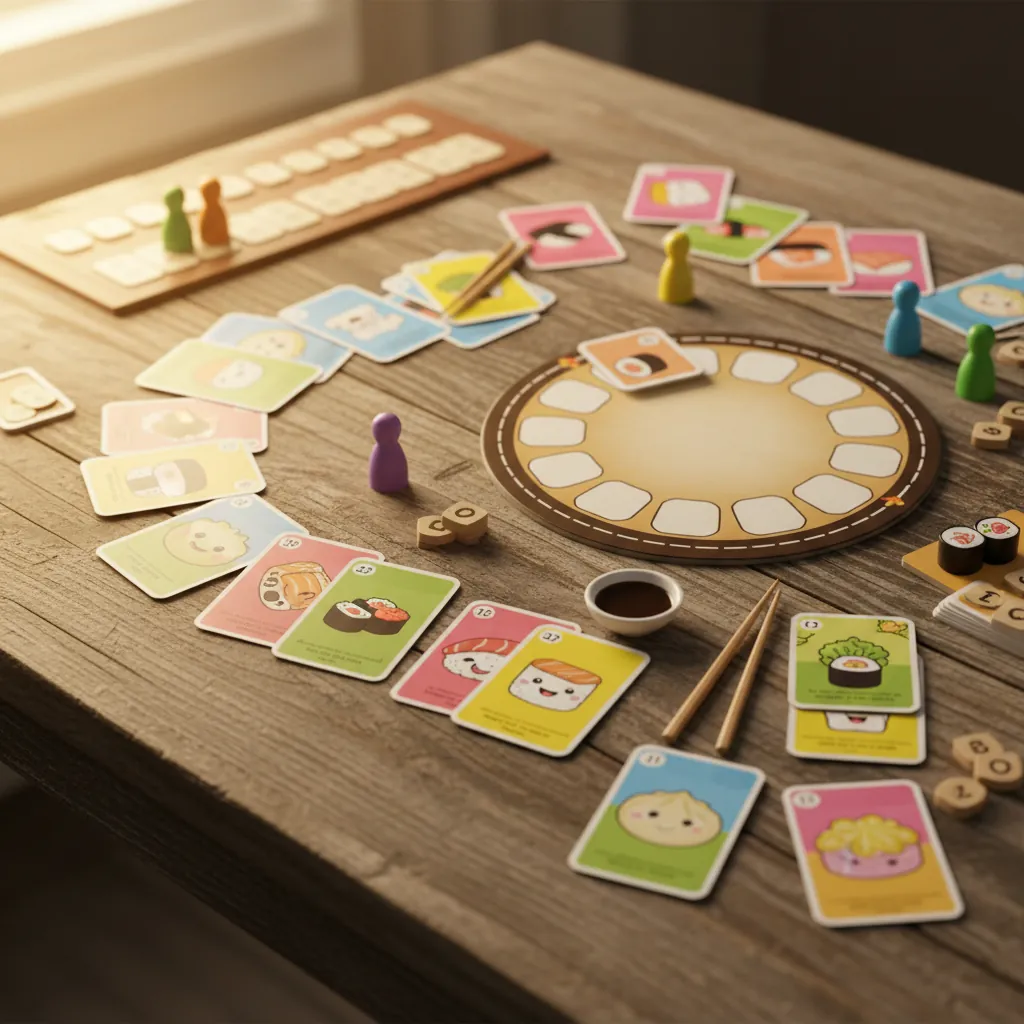
Sushi Go is a fast-paced card-drafting game for 2-5 players (ages 8+) where players collect sushi dishes to score points over three rounds. Each round involves passing hands of cards clockwise while selecting one card per turn, aiming to create valuable combos like sets of tempura or nigiri with wasabi.
What You Need
- Components: 108 sushi-themed cards (including maki rolls, nigiri, tempura, sashimi, wasabi, and pudding)
- Players: 2-5 (best with 3-5; 2-player requires a dummy third hand)
- Playtime: 15-20 minutes
How to Play
- Deal cards: Shuffle and deal 8-10 cards per player (varies by player count).
- Draft cards: Simultaneously select one card from your hand, place it face-down, then pass the remaining cards left.
- Repeat drafting until all cards are chosen.
- Score the round (see card types below).
- Play 3 rounds, adding pudding scores from all rounds at the end.
Card Types and Scoring
| Card Type | Scoring Rules |
|---|---|
| Nigiri | 1 (egg), 2 (salmon), or 3 (squid) points |
| Wasabi | Triples next nigiri played on it |
| Tempura | 5 points per pair |
| Sashimi | 10 points per set of 3 |
| Maki Rolls | Most gets 6, second gets 3 |
| Pudding | Most gets +6, least loses -6 (endgame) |
How to Win
The player with the highest cumulative score after three rounds wins. Pudding points are only tallied at the end.
Strategy Tips
- Prioritize high-value combos: Aim for sashimi (3 cards) or tempura pairs early.
- Block opponents: Steal maki rolls or deny sashimi if others need them.
- Balance risk: Don’t hoard sashimi/tempura if you can’t complete sets.
- Track puddings: They often decide close games.
- Adapt per round: Adjust strategy based on passed cards.
FAQ
Q: Can you play Sushi Go with 2 players?
A: Yes, but a dummy third hand is required (draw 3 cards per turn). It’s less dynamic than 3+ players.
Q: Is Sushi Go Party better than the original?
A: Party adds more cards and supports up to 8 players but is less portable. The original is simpler for beginners.
Q: What age is Sushi Go for?
A: Rated 8+, but younger kids (5-7) can play with slight rule adjustments.
Related guides
- How to Play Phase 10: Rules, Scoring, and Strategy
- How to Play War: Rules for the 2-Player Card Game
- 5 hundred card game
- 🃏 How to Play 500: The Complete Card Game Guide
- 500 Card Game Rules: How to Play Five Hundred