How to Play Crazy 8s (Crazy Eights): Setup, Rules, Scoring, and Variations
How to Play Crazy 8s (Crazy Eights): Setup, Rules, Scoring, and Variations
Contents
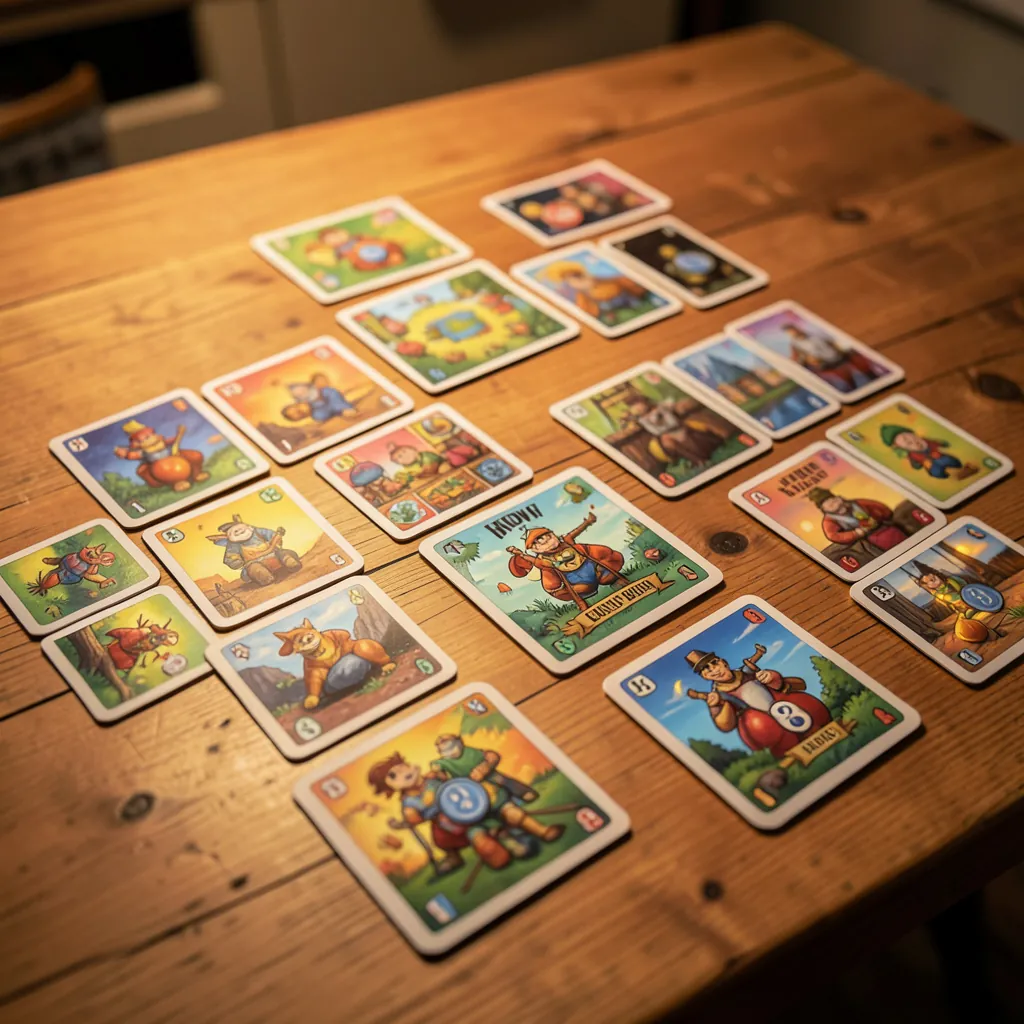
🃏 Crazy 8s—also called Crazy Eights—is a shedding card game in which players match the top discard by rank/number or suit/color and race to empty their hands first. Most children’s editions use 2–4 players and ages 5+ (some products say 4+), while standard-deck Crazy Eights can support 2–7 players; draw and special-card rules vary by source, so agree on one rule set before dealing.
Players: 2-4 in the Peaceable Kingdom/Ideal children’s editions; 2-7 with a standard deck in Wikipedia’s Crazy Eights rules (2+ overall) Play Time: Varies by version/source; no fixed time is stated Age: 5+ (Peaceable Kingdom rules); 4+ (Ideal product) Difficulty: Easy (children’s rules; no formal rating in sources) Type: Shedding card game (not trick-taking)
Setup
What do you need to play?
- A standard 52-card deck for standard-deck rules, or a dedicated Crazy 8s deck for children’s editions.
- 2-4 players with the children’s editions; standard-deck rules can support 2-7 players. For more than five players, Wikipedia says to use two decks (104 cards).
- A flat playing area with space for a face-down draw pile and a face-up discard pile.
How do you deal and start?
- Shuffle the deck and choose a dealer.
- Deal 5 cards to each player. For a two-player game, sources conflict: deal 7 cards each under FPCC/Wikipedia rules, or 8 cards each under the Peaceable Kingdom rules. Follow the deck/edition you are using.
- Place the remaining cards face down as the draw pile. Turn the top card face up next to it to start the discard pile.
- Peaceable Kingdom and Ideal rules say that if the opening card is an 8, return it to the draw pile and flip a new starting card. FPCC and Wikipedia do not state this opening-card rule, so decide before play if you are not using a children’s edition.
- Arrange your hand by suit/color and rank. The first player is usually the player to the dealer’s left; play normally proceeds clockwise unless your group uses a reverse-direction variation.
How to Play
- Take turns. On your turn, try to play one card from your hand onto the discard pile.
- Your card must match the top discard by rank/number or by suit/color. For example, if the top card is a 6 of clubs, you may play any 6 or any club.
- Play an 8 to change the suit/color. Conflict: Peaceable Kingdom’s English rules only allow an 8 when you cannot play any other card, or when you draw an 8 while drawing; its Chinese text says an 8 may be played at any time. Ideal and Wikipedia rules also allow any 8 to be played at any time. When you play an 8, announce the new suit/color; the next player must follow that suit/color or play another 8.
- If you cannot play, draw from the draw pile. Under Peaceable Kingdom, Ideal, and Wikipedia rules, draw until you draw a playable card; all drawn cards join your hand, and you then play the playable card. Conflict: the FPCC language guide says to draw only one card—if it is playable, play it immediately; otherwise keep it and end your turn.
- If the draw pile runs out, rules conflict. Ideal says the player must pass. FPCC says to reshuffle the discard pile to make a new draw pile. Wikipedia says the player passes if they cannot play after the stock is exhausted, and played cards except the top discard can be reshuffled to form a new stock.
- Wikipedia also notes an optional standard-deck rule: a player may draw from the stock at any time, even when holding a playable card. The children’s editions do not mention this, so use it only if your group agrees.
- Continue taking turns in order. The hand ends as soon as one player has no cards left.
Which rule conflicts should you settle before dealing?
| Rule area | Children’s editions (Sources 1, 2, 4) | FPCC language guide (Source 3) | Wikipedia Crazy Eights (Source 5) |
|---|---|---|---|
| Players and deal | 2-4 players; deal 5 cards; Peaceable Kingdom deals 8 cards each in a two-player game | Standard 52-card deck; deal 5 cards; deal 7 cards each in a two-player game | 2-7 players; deal 5 cards; deal 7 cards each in a two-player game; use 104 cards if more than five players |
| Playing an 8 | Peaceable Kingdom’s English text restricts 8s to when you cannot play another card or draw an 8; Ideal allows any 8 as a wild card | Any 8 may be played; player declares the suit | Any 8 may be played at any time; player declares the suit |
| If you cannot play | Draw until you draw a playable card | Draw one card; play it if possible, otherwise keep it and end turn | Draw until a play can be made or stock is exhausted; may draw at any time |
| Exhausted draw pile | Ideal: pass; Peaceable Kingdom does not state | Reshuffle discard pile to form a new draw pile | Pass if still unable to play; reshuffle all but top discard to form new stock |
| Special-card variations | 1 skips; 2 requires next player to discard two; 12 reverses | 2 draws two and skips; Jack reverses; Queen skips | Queen skips; Ace reverses; 2 draws two and may stack |
| Scoring | First player out wins; no point scoring in these rules | First player out wins; no point scoring | Point-payment scoring to a target score |
Scoring
- In the Peaceable Kingdom, Ideal, and FPCC rules, there is no point scoring: the first player to empty their hand wins the hand/game.
- Wikipedia describes a point-scoring version. After a player empties their hand, each opponent pays points equal to the cards left in that opponent’s hand:
| Card left in hand | Points |
|---|---|
| 8 | 50 |
| Court cards (Jack, Queen, King) | 10 |
| All other cards | Face value |
- In Wikipedia’s scoring version, the game target is 50 points multiplied by the number of players: 2 players = 100, 3 = 150, 4 = 200, 5 = 250, 6 = 300, 7 = 350. Wikipedia also describes a rule for when the deck runs out: the player with the lowest point score in hand scores the difference between that hand and each opponent’s hand.
- Conflict: do not mix “first player out wins” with the point-target game. Choose one scoring system before play.
💡 Strategy Tips
- Decide before dealing whether 8s are restricted or always playable. If you use the Peaceable Kingdom English rule, save an 8 for the moment you cannot match; if you use the Ideal/Wikipedia rule, use an 8 to switch to a suit/color you can follow or to make the next player struggle.
- Track the declared suit/color after an 8. The next player must follow that suit/color or play another 8, so an 8 can redirect the table.
- Avoid being caught without a match if you are using “draw until playable” rules, because every drawn card stays in your hand. In the one-draw FPCC variant, a failed draw ends your turn, so play a match early when you can.
- In point-scoring games, get rid of 8s (50 points) and court cards (10 points) before the hand ends. In first-out games, the only goal is emptying your hand.
- Common beginner mistakes: forgetting to announce the new suit/color after an 8, thinking an 8 must match the discard, mixing the “draw until playable” and “draw one” rules, and forgetting what to do when the draw pile is empty.
🎲 Variations
| Variation | What it does | Source/conflict note |
|---|---|---|
| 1 skips | When a 1 is discarded, the next player loses a turn. | Peaceable Kingdom rules call it a “1”; the source does not map it to a standard rank, so confirm before play. |
| 2 has a penalty | Peaceable Kingdom: next player must discard two cards; if unable, draw until they can play two. FPCC: next player draws two and skips. Wikipedia: next player draws two unless they play another 2; twos stack. | Conflict: three different 2 rules. Choose one. |
| 12 reverses | When a 12 is discarded, the direction of play reverses. | Peaceable Kingdom rules. The source calls the card “12”; other sources assign reverse/skip to Jacks, Queens, or Aces. |
| Jacks reverse | Playing a Jack reverses the direction of play. | FPCC rule. |
| Queens skip | Playing a Queen skips the next player. | FPCC and Wikipedia rules. Peaceable Kingdom uses a “12 reverses” variation instead, so flag the conflict. |
| Aces reverse | Playing an Ace reverses direction. | Wikipedia rule. |
| Two-player deal | Deal 7 cards each under FPCC/Wikipedia, or 8 cards each under Peaceable Kingdom. | Conflict: check your edition. |
| More than five players | Use two decks, 104 cards, for standard-deck play. | Wikipedia rule. |
| Language-learning variant | Say every card you pick up or place down, and say “your turn”; if you forget, lose your next turn. | FPCC classroom/language activity, not a standard competitive rule. |
| Crazy Eights Countdown | Start at 8 points; deal cards equal to your score; the wild rank changes as scores drop; first to zero wins. | Wikipedia advanced variant. |
❓ FAQ
How many players can play Crazy 8s?
2-4 players is the range for the Peaceable Kingdom and Ideal children’s editions. Standard-deck Crazy Eights is described by Wikipedia as 2-7 players (2+ overall), and with more than five players Wikipedia says to use two decks.
How do you win at Crazy 8s?
In basic children’s rules, you win by being the first player to empty your hand. In Wikipedia’s point-scoring version, you collect points from opponents’ remaining cards after each hand and win when you reach 50 points multiplied by the number of players.
Can you play Crazy 8s with 2 players?
Yes. The two-player deal count conflicts: deal 7 cards each under FPCC/Wikipedia rules, or 8 cards each under the Peaceable Kingdom rules. Follow the edition or house rule you are using.
Is Crazy 8s hard to learn?
No. The sources present it as a simple shedding game with ages 4+ or 5+ in children’s editions. The main thing to learn is the matching rule and what an 8 does; after that, the biggest source of confusion is which draw and special-card rules your group is using.
How long does a game take?
The sources do not give a fixed play time. Wikipedia lists playing time as “Various,” and length depends on player count, whether you draw until playable or only once, and whether you play a single hand or a point-target game.
What do you need to play Crazy 8s?
You need a standard 52-card deck or a dedicated Crazy 8s deck, at least two players, and space for a draw pile and discard pile. Some editions match by color rather than suit, so check the deck and rules you have.
Related guides
- How to Play Phase 10: Rules, Scoring, and Strategy
- How to Play War: Rules for the 2-Player Card Game
- 5 hundred card game
- 🃏 How to Play 500: The Complete Card Game Guide
- 500 Card Game Rules: How to Play Five Hundred