Phase 10 Card Count and How to Play: Complete Guide
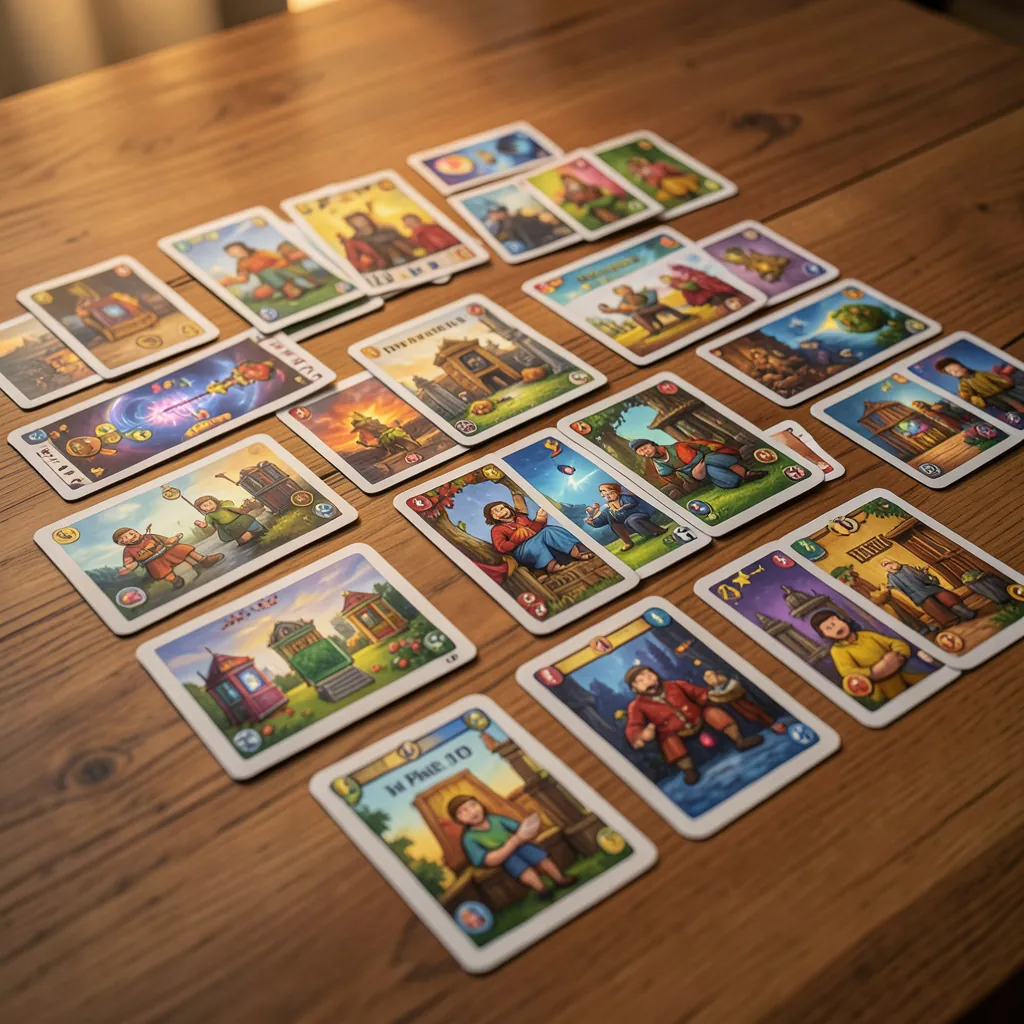
Phase 10 Card Count and How to Play: Complete Guide
Contents
- How Many of Each Card Are in a Phase 10 Deck?
- Setup
- How to Play
- Scoring
- 💡 Strategy Tips
- 🎲 Variations
- ❓ FAQ
🃏 Phase 10 is a Mattel contract-rummy card game created by Kenneth Johnson in 1982; the goal is to complete all 10 phases first. A standard playable deck has 108 cards: 96 numbered cards (24 per color; 2 of each number 1–12 per color), 8 Wilds, and 4 Skips. Newer boxes may add 2 reference cards, not part of the play deck.
Players: 2-6
Play Time: 45-90 minutes (6 players)
Age: 7+ (some listings say 10+)
Difficulty: Easy to learn; luck-heavy
Type: Contract-rummy card game
How Many of Each Card Are in a Phase 10 Deck?
A standard playable Phase 10 deck has 108 cards. The key breakdown is: 96 numbered cards, 8 Wild cards, and 4 Skip cards. Each of the four colors has 24 numbered cards—two copies of every number from 1 through 12—so a specific card like “red 1” appears twice, and a given number like “all 1s” appears 8 times total across the four colors.
| Card type | Count | Details |
|---|---|---|
| Numbered cards | 96 | 4 colors: red, blue, green, yellow |
| Each color | 24 | 2 copies of each number 1–12 |
| A specific color-number card, e.g. red 1 | 2 | Two of that exact card per color |
| A given number across all colors, e.g. all 1s | 8 | 2 per color × 4 colors |
| Wild cards | 8 | Can substitute for number/color; cannot act as Skip |
| Skip cards | 4 | Cause another player to lose a turn; cannot complete phases |
| Reference cards | 2 in newer Mattel boxes | List the 10 phases; not part of the 108-card play deck |
| Total playable deck | 108 | 96 numbered + 8 Wild + 4 Skip |
Conflict flag: Some sources describe the box as having 108 cards while also listing 2 reference cards, which mathematically gives 110 physical cards; another source says a Phase 10 box contains 110 cards including 2 reference cards. The practical playable deck is 108 cards; reference cards are aids, not part of play.
Conflict flag: Original print runs had colored Wilds (two per color) and blue Skip cards; current editions use black or multi-colored Wilds and black Skips to reduce confusion.
Setup
- Choose a dealer. The deal can rotate left after each hand.
- Shuffle the Phase 10 deck.
- Deal 10 cards face down to each player, one at a time.
- Place the remaining deck face down in the center as the draw pile.
- Turn the top card of the draw pile face up beside it to start the discard pile.
- If the first discard is a Wild, it may not be picked up; flip the next card to start the discard pile.
- If the first discard is a Skip, the first player’s turn is skipped.
- All players begin on Phase 1 unless you are using a variant such as Master’s Edition.
How to Play
- Draw one card at the start of your turn from either the draw pile or the top of the discard pile. You may not pick up a Skip from the discard pile, and a Wild used as the first discard may not be picked up.
- Lay down your current phase if you can complete it. You must have the whole phase in hand, lay it face up immediately, and complete phases in order from 1 to 10. Only one phase may be completed per hand.
- Use Wilds correctly. A Wild can represent any color or number in a phase, and you may use more than one Wild as long as at least one natural card is used. Once a Wild is played in a phase, it cannot be replaced by the intended card and moved elsewhere.
- Hit after your own phase is down. Hitting means adding fitting cards to any laid-down phase—your own or another player’s. You may hit only on your turn, and you cannot replace a Wild in a phase with the natural card it represents.
- Discard one card to end your turn. If you discard a Skip, choose any player to lose a turn. A player cannot be skipped twice in the same round until they have missed a turn. Sources conflict on whether a drawn Skip may be saved for later: Source 1 says it may be discarded immediately or saved; Source 3 says it must be played immediately. Treat that as an edition/house-rule conflict.
- Go out to end the hand. After laying down your phase, get rid of all remaining cards by hitting and discarding. The first player to go out wins the hand.
- Advance or repeat. Players who completed their phase advance to the next phase next hand; players who did not remain on the same phase. Players receive credit for a phase as soon as it is laid down, even if they do not win the hand.
- Win the game. The first player to complete all 10 phases wins. If two players complete the last phase in the same hand, the player with the lower total score wins.
What are the 10 phases in Phase 10?
A set is two or more cards with the same number in any color. A run is three or more consecutive numbers in any color; runs can go from 1 to 12. A color phase requires cards of one color.
| Phase | Requirement |
|---|---|
| 1 | 2 sets of 3 |
| 2 | 1 set of 3 + 1 run of 4 |
| 3 | 1 set of 4 + 1 run of 4 |
| 4 | 1 run of 7 |
| 5 | 1 run of 8 |
| 6 | 1 run of 9 |
| 7 | 2 sets of 4 |
| 8 | 7 cards of one color |
| 9 | 1 set of 5 + 1 set of 2 |
| 10 | 1 set of 5 + 1 set of 3 |
Scoring
The player who goes out wins the hand and scores 0 penalty points for that hand. Every other player counts the cards left in their hand and adds penalty points; lower scores are better. The game winner is the first player to complete all 10 phases, but if multiple players complete the final phase in the same hand, the lower total score wins; if those scores are also tied, a tiebreaker round is played.
| Cards left in hand | Penalty points |
|---|---|
| Number cards 1–9 | 5 each |
| Number cards 10–12 | 10 each |
| Skip | 15 each |
| Wild | 25 each |
💡 Strategy Tips
- Lay down your phase as soon as you can. You get credit immediately, and you cannot hit other phases until your own phase is down.
- Use Wilds carefully. They are powerful but expensive if left in hand at scoring—25 points each. Use them to finish a phase, not to hoard unnecessarily.
- Hit early and often. Once your phase is down, add every fitting card you can to any laid-down phase to reduce your hand size.
- Track the discard pile. You cannot pick up Skips, and a Wild used as the first discard cannot be picked up; plan around what is actually available.
- Common beginner mistake: trying to complete multiple phases in one hand. You may complete only one phase per hand, even if your cards could satisfy a later phase.
🎲 Variations
- Two players: Phase 10 officially supports 2–6 players, so 2-player games use the normal rules. No special 2-player rule is given in the sources.
- Master’s Edition: Players may choose which phase to attempt after being dealt their hand and before play begins.
- Phase 10 Twist: Uses a different set of ten phases from the original/Master’s Edition list; check the reference cards in your edition.
- Wild replacement: Some groups allow replacing a Wild in a laid-down phase with the natural card it represents; the standard rules do not allow this.
- Substitute deck: Sources conflict on how to use regular cards. Source 1 says suits can represent colors, kings can be Wilds, and jokers can be Skips; Source 3 says remove face cards, use aces as Wilds, and use jokers or written cards as Skips. The official special deck is safer.
- Reference cards: Newer Mattel boxes include 2 reference cards listing the phases; older editions may not.
❓ FAQ
How many cards are in a Phase 10 deck?
A playable Phase 10 deck has 108 cards: 96 numbered cards, 8 Wilds, and 4 Skips. Newer boxes may also include 2 reference cards, which are not part of the playable 108.
How many of each number are in Phase 10?
Each number from 1 to 12 appears 8 times total across the deck—2 copies in each of the 4 colors. A specific color-number card, such as red 7, appears 2 times.
How many players can play Phase 10?
Phase 10 supports 2–6 players; source 3 notes it works best with 3–6 players.
Can you play Phase 10 with 2 players?
Yes. Phase 10 is officially a 2–6 player game, and the sources give no separate 2-player rule set; use the normal rules.
How do you win Phase 10?
Be the first player to complete all 10 phases. If two players complete the final phase in the same hand, the lower total score wins; if tied, a tiebreaker round is played.
How long does a game of Phase 10 take?
A hand takes at least about 3 minutes, and a full game can run 45–90 minutes with 6 players, depending on luck and phase progress.