How to Play War: Rules, Setup, Scoring, and Variations
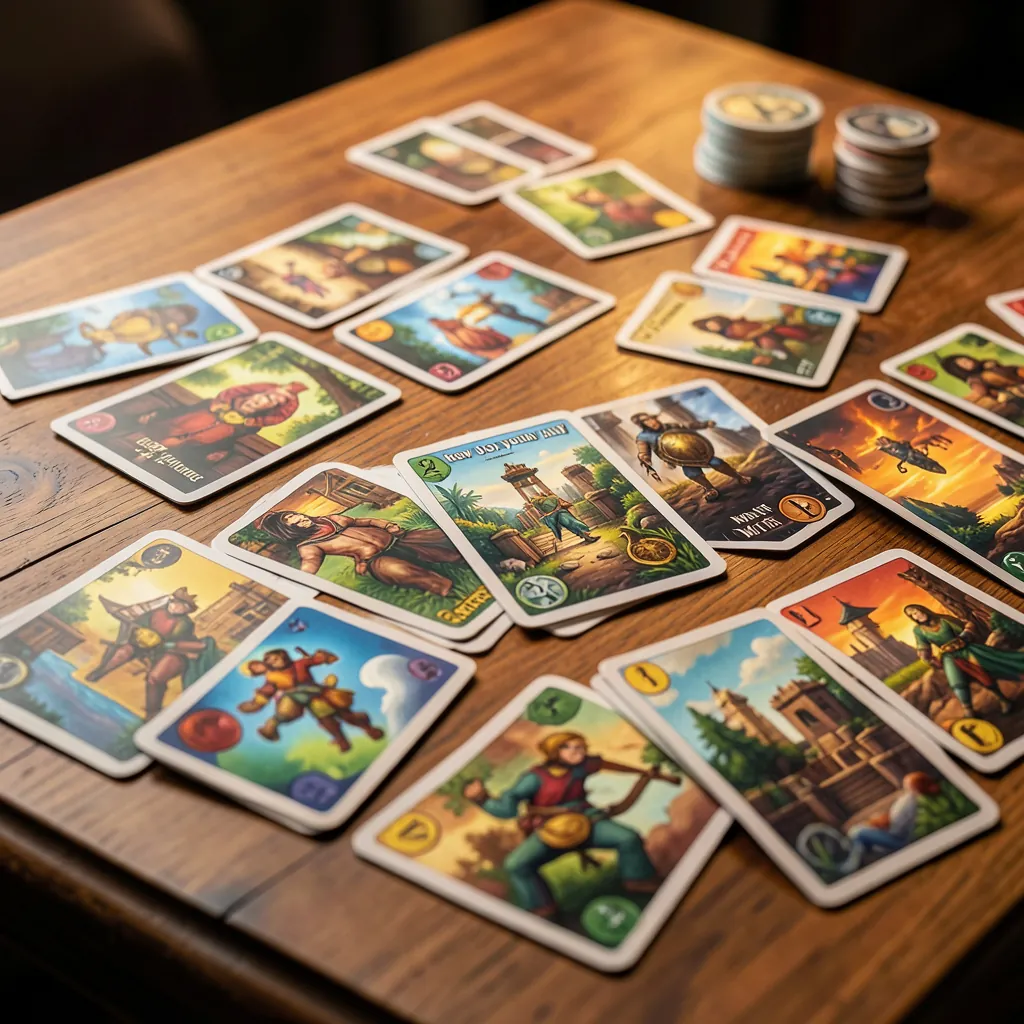
How to Play War: Rules, Setup, Scoring, and Variations
Contents
🃏 War is a simple, luck-based card game usually played with a standard 52-card deck by two or more players. Each player flips their top card; the higher rank wins the cards, and ties trigger a “war.” The goal is to collect every card in the deck.
Players: 2 standard (also playable with 3–4 or more; deal evenly)
Play Time: 10–40 minutes (some games run longer)
Age: Any age (often played by children)
Difficulty: Easy
Type: Catching/luck-based card game (not a trick-taking game)
Setup
- Use a standard 52-card deck. In standard War, suits are ignored and jokers are not used. One NCESC answer mentions jokers but then gives contradictory rankings, so treat jokers as a non-standard variant only.
- Shuffle and deal all cards evenly. For 2 players, deal 26 cards each. Wikipedia gives 17 cards each for 3 players and 13 each for 4 players; for other player counts, deal as evenly as possible.
- Each player keeps their cards in a face-down stack and does not look at them.
- Agree before starting on the “war” tie rule and the run-out rule, because sources describe more than one version.
How to Play
- In each “battle,” every player turns over the top card of their own face-down stack at the same time.
- Compare card ranks from high to low: A, K, Q, J, 10, 9, 8, 7, 6, 5, 4, 3, 2. Aces are high, twos are low, and suits do not matter.
- The player with the highest card wins all cards played in that battle and places them face down at the bottom of their stack.
- If the highest card(s) tie, a “war” begins. Sources disagree on the exact procedure:
- One-card war: each tied player places one card face down, then one card face up; the higher face-up card wins all cards.
- Three-card war: each tied player places three cards face down, then a fourth card face up; the higher face-up card wins all cards. If the face-up cards tie again, repeat the same agreed war procedure.
- In multiplayer games, Wikipedia says all players—including those not tied—add one face-down card and one face-up card when the highest cards tie. Other guides describe only the tied players dueling, so agree on this before play.
- Continue until one player has all the cards in a 2-player game, or until all other players are eliminated in a multiplayer game. A player with no cards is out. If a player runs out during a war, sources conflict: some say that player immediately loses, some allow the last card to be played face up, and one says replay the game.
How do sources differ on the “war” tie rule?
| Rule version | What happens in a war | Cards in first 2-player war | Source examples |
|---|---|---|---|
| One-card war | Each tied player plays 1 card face down, then 1 face up | 6 | Wikipedia/Pagat; some NCESC answers |
| Three-card war | Each tied player plays 3 cards face down, then 1 face up | 10 | NCESC, Coolmath Games; some NCESC answers |
| Three-face-up variant | Original cards stay face up; 3 additional cards are dealt face up; battle again | Not clearly stated | BBC h2g2 |
NCESC also contains conflicting answers on its own page, so the tie rule should be agreed before play.
Scoring
War normally has no point total. The cards themselves are the score: winning battles adds cards to your stack, and losing battles reduces your pile. The standard winner is the last player with cards—or the player who collects all 52 cards in a two-player game.
Wikipedia says the objective is to win all cards. NCESC says the winner is the person with the most cards at the end of play; in a completed standard game these are the same, because play continues until one player has every card. If you stop early, agree on a cutoff; the sources do not define one.
💡 Strategy Tips
- Accept that standard War is mostly luck. There are no meaningful strategic choices in the basic game; the main skill is following the agreed rules consistently.
- Agree on the war rule before the first tie. One-card and three-card wars change the pace and the number of cards at stake.
- Do not use suits to break ties. Suits are ignored in standard War; only rank matters.
- Keep won cards in a consistent order at the bottom. Wikipedia notes that if cards are returned in a non-random order, the order can affect the outcome.
- Common beginner mistake: assuming jokers or suits matter. Standard War uses a 52-card deck, no jokers, and suits have no value.
🎲 Variations
| Players | Cards each | Notes |
|---|---|---|
| 2 | 26 | Standard game |
| 3 | 17 | Wikipedia multiplayer rule; players eliminated when out |
| 4 | 13 | Wikipedia multiplayer rule; players eliminated when out |
| More than 4 | Deal as evenly as possible | NCESC says War can be played by two or more |
The 3-player setup uses 51 of the 52 cards; sources do not describe what happens to the extra card. Sources also differ on the upper limit: one guide says up to four players, while another says two or more with cards dealt evenly.
- Three-card war: Many players use three face-down cards during a war, as described in the three-card war version above.
- Prisoners of War: Usually for more than 2 players. After winning a battle, a player may take one opponent’s card as a “prisoner.” On a later battle, they may play that prisoner instead of drawing from their deck; if they lose, they give the winner the prisoner plus the card they would have drawn.
- Peace: The opposite of War—the lowest card wins.
- Automatic War: Playing a two of any suit immediately starts a war.
- Underdog: The losing player of a war steals the victory if one of their three discard cards is a Jack.
- Tod und Leben / Bettelmann: A German 32-card Skat-pack variant for 2 players, with 16 cards each. Higher card wins; on a tie, the next card decides and the winner takes all four. In Tod und Leben, one player uses red suits and the other uses black suits; the player with the most cards at the end wins.
- Casino War: A casino money variant of War; it is not the standard home version.
❓ FAQ
How many players can play War?
Two players is standard, but War can be played by more. Wikipedia gives 17 cards each for 3 players and 13 each for 4; other guides say deal as evenly as possible for two or more. In multiplayer, players are eliminated when they run out of cards.
How do you win at War?
You win by collecting every card or by being the last player with cards. There are no points; each battle is decided by rank, with Aces high and twos low. Suits are ignored.
Can you play War with 2 players?
Yes—two players is the standard version. Shuffle a 52-card deck, deal 26 cards to each player, and flip top cards simultaneously; the higher card takes both.
What happens when both cards are the same in War?
A “war” occurs. Sources disagree on the exact procedure: one common rule is one card face down plus one face up per player; another is three cards face down plus a fourth face up. The higher face-up card wins all cards; if it ties again, repeat the agreed war rule.
Is War hard to learn?
No. War is very easy and is usually described as a luck-based or catching card game. Standard War has no meaningful strategic choices, though players must follow the agreed tie and run-out rules.
How long does a game take?
Sources vary: Wikipedia lists 10–40 minutes, Coolmath Games says around 10 minutes, and BBC h2g2 says games can last upward of an hour. Length depends on ties, variants, and how long the piles last.
Related guides
- How to Play Phase 10: Rules, Scoring, and Strategy
- How to Play War: Rules for the 2-Player Card Game
- 5 hundred card game
- 🃏 How to Play 500: The Complete Card Game Guide
- 500 Card Game Rules: How to Play Five Hundred