How to Play Spoons: Rules, Setup, Scoring, and Variations
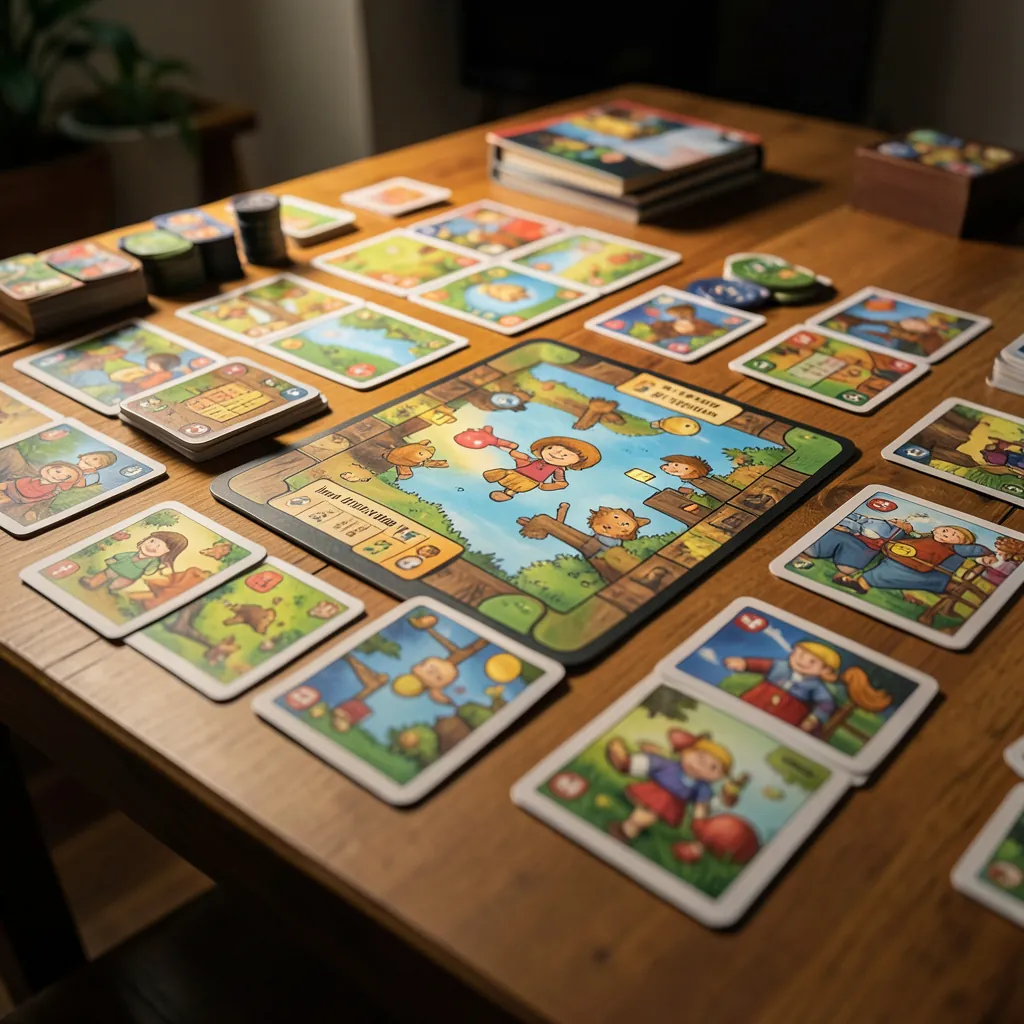
How to Play Spoons: Rules, Setup, Scoring, and Variations
Contents
🃏 Spoons is a fast, rowdy card game in which players pass cards around a circle trying to collect four of a kind, then race to grab a spoon from the center. The last player without a spoon loses the round or takes a letter; play continues until one player remains or a set number of lives is lost.
Players: 3–8 in the patent text; BBC recommends 5–10; USC says 4 is typical but more can play
Play Time: 20–30 minutes for a full session; individual rounds are shorter, and sources do not give exact totals
Age: 10+ (sources do not state an age; rough play is a known risk)
Difficulty: Easy
Type: Speed-matching card game (sources do not describe trick-taking play)
Setup
- Seat players in a circle, ideally on the floor if the group expects to dive for spoons. Keep everyone roughly the same distance from the spoon pile.
- Use a standard 52-card deck with no jokers.
- Place one fewer spoon than there are players in the center: 5 players = 4 spoons. This is the common rule in the National Park Service, BBC, and USC descriptions.
- Choose a dealer. The deal rotates after each round in the BBC description.
- Shuffle the deck and deal the starting hand. The common NPS/BBC version deals 4 cards per player; USC and the patent’s conventional description use 5 cards per player. Agree which version you are using before dealing.
- Place the remaining deck face down in front of the dealer. In the four-card version, each player will keep four cards in hand; in the five-card version, each player keeps five while trying to collect four of a kind.
- Safety note from the BBC source: remove shoes and sharp objects, and keep a first-aid kit or plasters nearby because players may dive at spoons.
How to Play
-
Pick up your hand and identify the goal. In the common version, the goal is to collect four cards of the same rank—for example, four 7s, four Jacks, or four Aces. In the five-card variant, you still aim for four of a kind while holding five cards.
-
The dealer starts the passing chain. The dealer takes the top card from the deck, adds it to their hand, chooses one card to discard, and places that discard face down in front of the player to their left.
-
The next player picks up the discard and passes one card on. That player adds the incoming card to their hand, discards one card face down to the next player, and keeps the hand size correct—four cards in the four-card version, five in the five-card version. This continues quickly around the circle.
-
Do not wait for formal turns. The BBC source is explicit: there are no turns. As long as cards are coming to you from your right, you can pick up and discard; the dealer keeps drawing and passing until someone gets four of a kind.
-
If the draw deck runs out, recycle the discards. The NPS says the dealer continues by picking up from the discard pile to the right side of the circle; the BBC says the dealer picks up from the discard pile of the player on their right. In practice, the dealer starts taking the discards that have piled up beside the last player in the passing chain.
-
When you get four of a kind, grab a spoon. You do not need to announce it. The NPS notes players may grab “sneaky” or “loud,” depending on style. As soon as one spoon is taken, everyone else scrambles for the remaining spoons.
-
The player left without a spoon loses the round. Apply the agreed penalty: a letter, a life, elimination, or a tracked loss. Reset the deal and play another round.
What do the sources disagree about?
This is the key conflict to flag: sources do not all describe Spoons the same way. The main guide above follows the common four-of-a-kind race described by NPS, BBC, and USC. The patent text also records a different “conventional” ruleset in which players shed cards by matching suit or rank and grab a spoon after discarding their last card.
| Rule point | NPS | BBC h2g2 | USC folklore | Patent text |
|---|---|---|---|---|
| Cards dealt | 4 | 4; more than 4 can speed up small games | 5 | 5 in the conventional description; 5 in the patented variant |
| Main goal | Four of a kind | Four of a kind | Four of a kind | Conventional text says shed cards; patented variant requires four matching cards plus a data card |
| Spoons | One fewer than players | One fewer than players | One fewer than players | One fewer than players; next round N−2 spoons; patented variant uses N−2 playing spoons plus a data spoon |
| Losing penalty | Take a letter in S-P-O-O-N; spell it and you are eliminated | Short game: out; longer game: six lives spelling SPOONS; very long game: keep playing | Elimination, or casual games track who lost most often | Letter penalty; remove player at final letter; patented variant also removes a spoon and data card |
| Player count | Not specified | 5–10 recommended | Typically 4, but more can play | 3–8 |
Scoring
Spoons has no numeric point system in the cited sources. “Scoring” is usually a penalty or lives system.
| Penalty system | How losing works | How winning works |
|---|---|---|
| NPS S-P-O-O-N | The player without a spoon gets the next letter in S-P-O-O-N. Spell S-P-O-O-N and you are eliminated. | Last player not eliminated wins. |
| BBC short game | The player without a spoon is out of all subsequent hands. | Last player remaining wins. |
| BBC lives game | Six lives are common, tracked by spelling S-P-O-O-N-S. Lose your last life and you are out. | Last player with lives remaining wins. |
| BBC very long game | Players keep playing “for honour” with no required eventual winner. | No fixed winner unless the group agrees one. |
| USC casual play | Track who lost the most times instead of eliminating players. | The player with the fewest losses, or the last player remaining if using elimination, is the winner. |
| Patent conventional/elimination | The player without a spoon leaves the game; the next round uses one fewer spoon. | Continue until one player is left. |
💡 Strategy Tips
- Do not stare at your cards. The BBC source warns that the more you look at your hand, the less likely you are to see the first person grab a spoon. Glance often, but watch the spoon pile and other players.
- Decide on a target rank early. Keep useful cards and pass the rest quickly; hesitation slows the chain and gives opponents more chances to complete a set.
- Be ready to grab without warning. If you get four of a kind, a slow or unobtrusive reach can work better than a loud lunge, because another player may snatch the spoon if you attract attention too soon.
- Use safe positioning. Sit with your weight toward the center and keep a clear path to the spoons, but avoid sharp objects and rough diving. The BBC source treats injuries as a real risk.
- Common beginner mistakes: looking at cards too long, forgetting to discard down to the correct hand size, grabbing a spoon before you actually have four of a kind, and ignoring the spoon pile until someone else moves first.
🎲 Variations
- Player-count variations: The patent says Spoons can be played by 3–8 players. The BBC recommends 5–10. USC says 4 is typical but more can play. Use one fewer spoon than players in the standard version.
- Four-card vs. five-card hands: NPS and BBC describe four-card hands. USC and the patent’s conventional description use five-card hands. Agree before play; do not mix hand sizes mid-game.
- Elimination vs. lives vs. casual losses: NPS uses S-P-O-O-N elimination. BBC offers immediate elimination, six lives spelling SPOONS, or a very long “for honour” game. USC says casual games can simply track who lost most often.
- Changing spoon count: The patent’s conventional description says the next round uses one fewer spoon after a player is eliminated. NPS, BBC, and USC describe keeping one fewer spoon than the current number of players, so the spoon count effectively drops when players leave. Flag this if your group expects a fixed spoon count.
- Spoons outside the circle or hidden: NPS suggests placing spoons outside the circle so players must run to them, or having one person hide the spoons so everyone searches after a four of a kind. This increases exercise and chaos.
- Patent’s educational data-card variant: This is not standard Spoons. The patented version inserts N−1 data cards into the deck, places N−2 playing spoons plus a data spoon in the center, deals five cards each, and requires one data card plus four matching playing cards to win.
- Two-player play: The sources do not give a complete standard two-player Spoons ruleset. The patent broadly says the game may be played by “two or more,” but the standard descriptions assume a larger circle and use one fewer spoon than players. If you try two players, agree on house rules first.
❓ FAQ
How many players do you need for Spoons?
Standard descriptions point to at least 3 players: the patent says 3–8, BBC recommends 5–10, and USC says 4 is typical but more can play. The game needs one fewer spoon than players, so a very small group changes the feel quickly.
How do you win Spoons?
In a round, the first player to collect four of a kind grabs a spoon, and everyone else races for the remaining spoons; the player left without a spoon loses. Overall, you win by being the last player remaining after eliminations or lives are lost, or by having the fewest losses in a casual tracked-loss game.
Can you play Spoons with 2 players?
No source gives a complete standard two-player version. The patent says the game may be played by two or more in broad terms, but the standard NPS, BBC, and USC rules assume a larger circle and one fewer spoon than players. With two players, you would have only one spoon, so agree on house rules before trying it.
Is Spoons hard to learn?
No. Spoons is easy to learn: collect four of a kind, grab a spoon, and avoid being the last player without one. The difficult part is the speed and physical scramble, not the rules.
How long does a game take?
The sources do not give an exact total. Individual rounds are very short because players pass cards rapidly, but a full session can run longer depending on whether you use immediate elimination, six lives spelling SPOONS, or casual tracked losses. A full session often lands around 20–30 minutes.
What do you need to play Spoons?
You need a standard 52-card deck with no jokers, one fewer spoon than players, and a circle of players. For safety, remove shoes and sharp objects, and keep a first-aid kit nearby if your group plays the diving version.
Related guides
- How to Play Phase 10: Rules, Scoring, and Strategy
- How to Play War: Rules for the 2-Player Card Game
- 5 hundred card game
- 🃏 How to Play 500: The Complete Card Game Guide
- 500 Card Game Rules: How to Play Five Hundred