How to Play Kings Corner (Kings in the Corner): Rules, Scoring, and Variations
How to Play Kings Corner (Kings in the Corner): Rules, Scoring, and Variations
Contents
- How Do the Sources Compare on Kings Corner Rules?
- Setup
- How to Play
- Scoring
- 💡 Strategy Tips
- 🎲 Variations
- ❓ FAQ
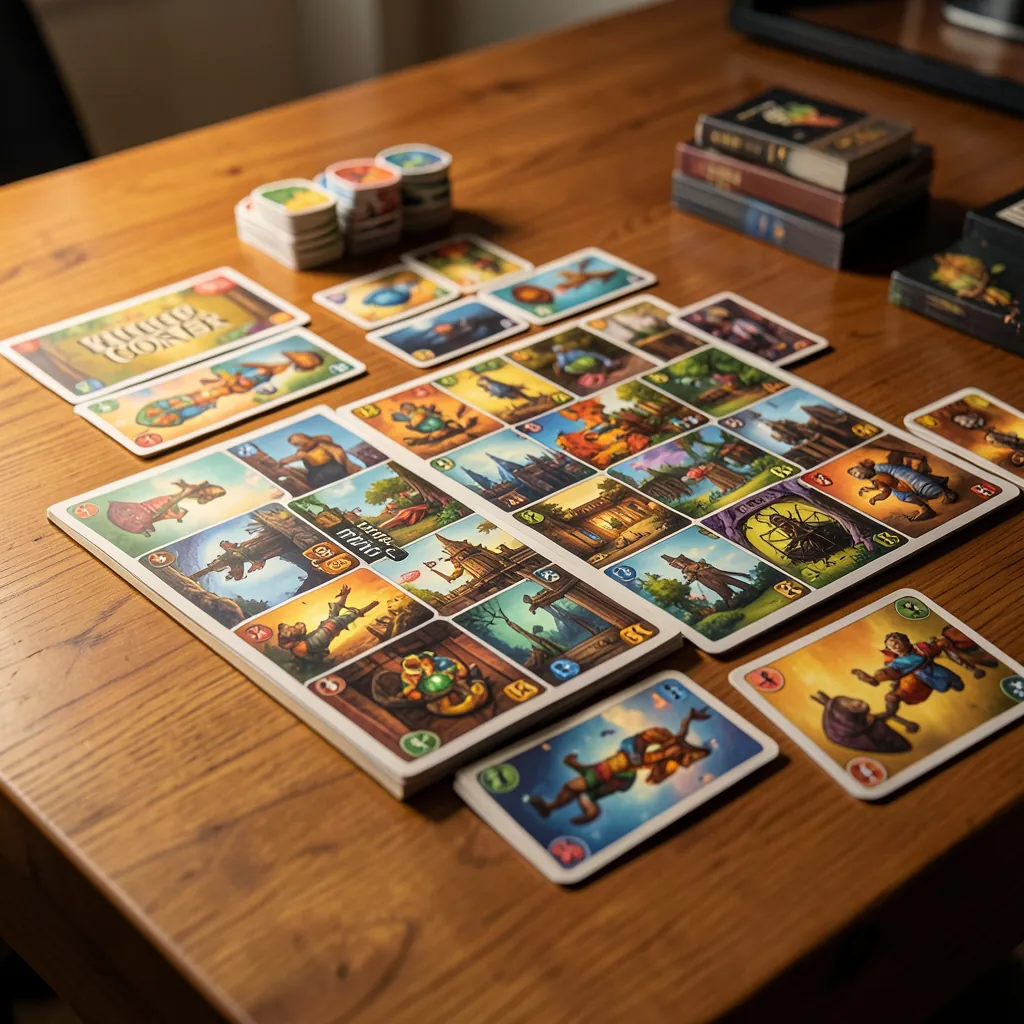
🃏 Kings Corner—also called Kings in the Corner—is a solitaire-style card game played with a standard 52-card deck. The goal is to be the first to empty your hand by building descending, alternating-color stacks on foundation piles and placing kings in the corner spaces.
Players: 2–6 (best with 4; app versions support 2–4 total)
Play Time: 20–30 minutes per round (estimate; sources do not specify)
Age: 8+ for tabletop rules (app listings show 4+)
Difficulty: Easy
Type: Solitaire-style shedding card game (not trick-taking)
How Do the Sources Compare on Kings Corner Rules?
| Rule point | What the sources say | Conflict / how this guide handles it |
|---|---|---|
| Players | Bicycle Cards: 2, 3, or 4. Temple PDF: 2+; best with 4. HowStuffWorks: 2–6; best with 4. App versions: 2–4 total (one to three opponents). | Sources conflict on the upper limit. Use 2–6 for tabletop; best with 4. App versions are 2–4. |
| Setup | Bicycle/Temple: deal 7; stock in center; turn 4 face-up cards around stock as N/E/S/W foundation piles; kings go in corner spaces. HowStuffWorks: deal 7; 4 face-up layoff piles; corner spaces reserved for kings. | Sources agree on the 7-card deal and 4 face-up piles; “foundation” vs. “layoff” wording differs. |
| Turn draw | Bicycle Cards and the app: draw at the start of your turn. Temple PDF and HowStuffWorks: draw at the end of your turn. | Conflict. The main steps below use draw-at-end and flag the start-draw alternative. |
| Must you play all possible? | Bicycle: make as many valid plays as possible. Temple: make any number; draw after usable cards are played. HowStuffWorks: play any number; tips suggest saving plays. | Conflict. Agree before play whether “must play all” or “may hold back.” |
| Scoring | Bicycle: first out wins only. Temple: penalty points, King 10, others 1. HowStuffWorks: chips, King 10, others 1; winner collects; pass chips optional. | Sources agree on 10/1 penalty values but not all use scoring. Use scoring for rounds/impasse; a single round can end immediately. |
| Age/type | Bicycle: age 8+, game type Solitaire. App: age 4+, solitaire-like. Temple: card game. HowStuffWorks: solitaire-like. | Use 8+ for tabletop, 4+ for app; it is a solitaire-style shedding game, not trick-taking. |
Setup
- Use one standard 52-card deck and remove the jokers. Shuffle the deck.
- Choose a dealer. The dealer deals 7 cards face down to each player.
- Place the remaining cards face down in the center as the stock/draw pile.
- Turn 4 cards face up from the stock and place them around the stock as the four foundation piles, roughly north, east, south, and west. HowStuffWorks calls these four face-up layoff piles; the layout idea is the same.
- Reserve four diagonal corner spaces for kings. Only kings can start corner piles.
- The player to the dealer’s left starts; play moves clockwise.
- If one of the initial face-up cards is a king, the first player may move it into a corner space on their turn.
How to Play
- Before the first turn, agree on draw timing. Sources conflict: Bicycle Cards and the app draw at the start of your turn; Temple PDF and HowStuffWorks draw at the end. The steps below use draw-at-end; if you use start-draw, draw first instead.
- On your turn, play any valid cards from your hand. Valid plays are:
- Add a card to a foundation pile if it is one rank lower and opposite color than the top card. Example: red 9 on black 10; Ace is low.
- Put a king in an empty corner space. Only kings can start corner piles.
- Move an entire face-up pile onto another pile if the bottom card of the moved pile is one rank lower and opposite color than the top card of the destination pile. Corner king stacks do not move because nothing ranks higher than a king; some rules allow moving a king from a foundation pile to a corner.
- Fill an empty unmarked foundation spot with any card. Empty corner spots still require a king.
- If a king appears on a foundation pile, move it to a corner space if your rules allow.
- You may make multiple valid plays in one turn. Sources conflict on whether you must make as many as possible or may stop early; Bicycle says “as many valid plays as possible,” while HowStuffWorks tips suggest saving plays. Decide before play.
- At the end of your turn in the draw-at-end version, draw one card from the stock unless you went out. In the start-draw version, draw at the beginning of the turn.
- If the stock is empty, continue playing without drawing a card.
- In the HowStuffWorks chip version, if you make no play, pay a chip into the pool.
- Turn passes clockwise to the next player.
- The round ends when a player empties their hand. If the stock is empty and everyone is unable or unwilling to play, the round ends at an impasse.
Scoring
- Single-round win: The first player to empty their hand wins. Bicycle Cards, Temple PDF, HowStuffWorks, and the app versions all agree on this basic goal.
- Penalty scoring: If you play with chips or multiple rounds, players count cards left in hand at the end of the round. A king costs 10 points/chips; every other card costs 1 point/chip.
- Chip version: Losers pay that amount into the pool, and the winner collects all chips. If scoring on paper, omit the pass chips paid for passes.
- Multiple rounds: Add up penalty points across rounds; the lowest total score wins.
- Impasse: If the stock runs out and no one can or will play, use the same penalty scoring to settle or continue.
- Conflict note: Bicycle Cards only states that the first player out wins and does not give penalty scoring. Temple PDF and HowStuffWorks add the 10/1 penalty values.
💡 Strategy Tips
- Hold back a play when it helps. HowStuffWorks suggests saving a valid play can spare you a pass chip and may block the next players. Skip this tip if your group uses “must play all possible.”
- Use empty unmarked spots. Any non-king can start a new stack in an unmarked foundation spot; only kings can start corner stacks.
- Move whole piles to expose cards. Moving a pile can empty a foundation spot or uncover a useful card, but remember that corner king stacks do not move.
- Manage kings carefully. Move kings to corners when possible, and avoid being stuck with a king at the end—it is worth 10 penalty points.
- Watch the stock. If the stock runs out, the game can end at an impasse; avoid holding high-penalty cards when that is likely.
Common beginner mistakes: forgetting Ace is low, forgetting alternating colors, trying to start a corner with a non-king, drawing at the wrong time, and playing every possible card too early when holding back would block opponents.
🎲 Variations
- Player count: Tabletop sources allow 2–6 players; 4 is best. Bicycle Cards lists 2–4, HowStuffWorks lists 2–6, and app versions support 2–4 total.
- 2-player game: Use the same rules; the sources do not give a separate 2-player rule. For a simpler or faster game, start with 4–5 cards each.
- Teams: Play in teams of two and work together to get rid of cards in hand.
- Add another deck: Use a second deck for more players or a longer game.
- Play multiple rounds: Continue after a round, add penalty points, and let the lowest total score win.
- Change penalty values: Adjust the king/other-card penalties to make the game easier or harder.
- Remove the king’s corners: Play only the four foundation piles, similar to SkipBo.
- Use one color or suit: For simpler play, ignore alternating colors and use one color or suit.
- Draw-timing house rule: Choose start-draw or end-draw before play.
- Pass chip penalty: In the HowStuffWorks version, pay a chip into the pool when you make no play.
❓ FAQ
How many players can play Kings Corner?
2–6 players, best with 4. Bicycle Cards lists 2–4, HowStuffWorks lists 2–6, and app versions support 2–4 total.
How do you win Kings Corner?
Be the first to empty your hand. If you play with scoring or multiple rounds, players count penalty points for cards left in hand; a king is 10 and every other card is 1.
Can you play Kings Corner with 2 players?
Yes. Sources allow 2 players, and no separate 2-player rule is given. For a faster or simpler game, start with 4–5 cards each.
Is Kings Corner hard to learn, or is it a trick-taking game?
It is easy to learn and is not a trick-taking game. It is a solitaire-style shedding game where you build descending, alternating-color piles and try to go out.
How long does a game take?
The cited sources do not state a play time. A round is short; 20–30 minutes is a reasonable estimate.
What do you need to play Kings Corner?
One standard 52-card deck with jokers removed. Pennies or chips are optional for scoring and pass penalties.
Related guides
- How to Play Phase 10: Rules, Scoring, and Strategy
- How to Play War: Rules for the 2-Player Card Game
- 5 hundred card game