How Do You Play UNO? Complete Rules, Setup, Scoring, and Variations
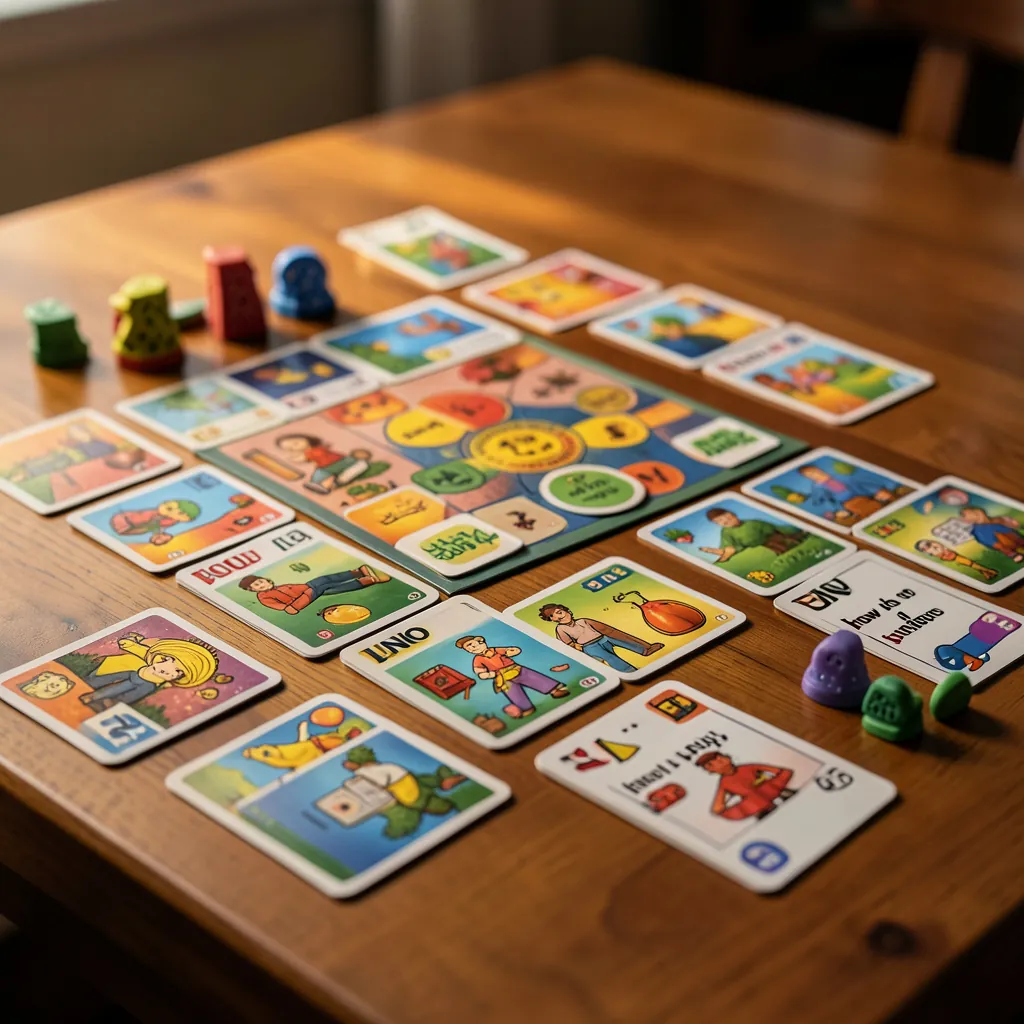
How Do You Play UNO? Complete Rules, Setup, Scoring, and Variations
Contents
🃏 UNO is a fast, color-and-number matching card game where players race to empty their hand; the overall winner is the first to reach 500 points across rounds. It is played with 2–10 players, and the core goal is simple: match the top discard by color, number, or symbol, and play action cards to slow opponents.
Players: 2–10
Play Time: Varies by round; scored games continue to 500 points
Age: 7+
Difficulty: Easy
Type: Matching card game
Setup
- Shuffle the deck. Sources conflict on deck size: Asmodee lists 108 cards, while Tabletop Gaming and HowStuffWorks cite 112 cards. Use the card count and instruction sheet included with your edition.
- Deal 7 cards face down to each player. The remaining cards become the face-down draw pile.
- Flip the top card of the draw pile face up to start the discard pile.
- Handle special starting cards. If the first flipped card is a Wild Draw Four, HowStuffWorks says to return it and flip another; Asmodee says to return a wild card and flip the next card. Follow your edition’s instruction sheet.
- Choose a dealer and first player. The player to the dealer’s left normally starts play. Asmodee also allows the youngest player to start if the group agrees. HowStuffWorks describes choosing a dealer by having each player draw a card, with the highest-point card dealing.
How to Play
- On your turn, play one card that matches the top discard by color, number, or symbol/action type. Wild cards can change the color, subject to the Wild Draw Four restriction below.
- If you cannot play, draw one card from the draw pile. If the drawn card is playable, you may play it immediately; otherwise your turn ends. If the draw pile runs out, reshuffle the discard pile and continue. HowStuffWorks notes that some groups allow a player to draw voluntarily even with a playable card; if you do that, you can only play the card you just drew if it matches the last played card.
- Resolve action cards as they are played:
- Draw 2: The next player draws 2 cards and, under standard Asmodee rules, misses their turn.
- Reverse: Reverse the direction of play, from clockwise to anticlockwise or vice versa.
- Skip: The next player loses their turn.
- Wild: The player chooses the next color, including the same color as before.
- Wild Draw 4: The player chooses the next color and the next player draws 4 cards and misses their turn. You may only play it when you do not have a card matching the current color.
- Wild Shuffle Hands: If your deck includes it, all players give up their hands to be shuffled and redistributed. Sources describe distribution differently: Asmodee says distribute evenly; HowStuffWorks says deal one at a time until none are left.
- Wild Swap Hands: If included, swap hands with a player of your choice.
- Wild Draw 4 can be challenged. If you are suspected of playing it illegally, show your hand. If you had a matching-color card, you draw 4 instead; if you did not, the challenger draws 4 plus 2 extra cards, for 6 total. Other Wild cards in hand do not make the challenge succeed.
- Call “UNO!” when you are down to one card, before the next player begins. If you are caught forgetting, the penalty conflicts by source: standard tabletop sources say draw 4; the UNO! mobile app says draw 2.
- Win the round by playing your last card. If your last card is a Draw 2 or Wild Draw 4, the next player still draws the penalty cards, and those cards count toward scoring.
- Continue rounds until a player reaches 500 points under the standard scoring method, or use the alternative scoring method below.
Stacking note: Stacking +2 or +4 cards is not part of the official standard rules according to Asmodee and HowStuffWorks. UNO! mobile lists a Stack house rule, and many groups play it, but agree on it before starting.
Scoring
The player who empties their hand first wins the round and scores points for the cards left in opponents’ hands. The first player to reach 500 points wins the overall game. Some groups use the alternative method: each player totals the points left in their hand, and when someone reaches 500, the player with the lowest total wins.
| Card type | Point value |
|---|---|
| Number cards | Face value |
| Draw 2 | 20 |
| Reverse | 20 |
| Skip | 20 |
| Wild Shuffle Hands / Wild Swap Hands / Customizable cards, if included | 40 |
| Wild | 50 |
| Wild Draw 4 | 50 |
💡 Strategy Tips
- Use Skip, Reverse, or Draw 2 to stop a player who has just called “UNO.”
- Save Wild cards to switch to a color you hold in quantity, or to finish the round with an action card.
- Play Wild Draw 4 only when you legally have no matching color; an illegal play can backfire if challenged.
- Call “UNO!” promptly. Standard tabletop rules penalize a missed call with 4 cards, though the UNO! mobile app says 2.
- Agree on house rules before play. Stacking is popular but is not official standard UNO.
🎲 Variations
| Rule area | Official standard | Common house rule / UNO! mobile |
|---|---|---|
| Stacking +2/+4 | Not allowed | Allowed in many groups; UNO! mobile lists a Stack rule |
| Forgetting “UNO” | Draw 4 if caught before next player acts | UNO! mobile says draw 2 |
| Seven-O | Not standard | On a 7, swap hands; on a 0, rotate hands in play direction |
| Jump-in | Not standard | Play an exact matching card out of turn |
| Force | Not standard | A drawn playable card is played automatically |
- 2 players: UNO supports 2–10 players under standard rules. The sources do not list a separate 2-player rule set, so use the same turn and action-card rules.
- Larger groups: Tabletop Gaming notes that larger groups can play by adding another deck.
- UNO! mobile: Room Mode supports single or 2v2 matches and includes house-rule toggles such as Stack, Swap on 0, Swap on 7, and Force.
- Alternative editions: Tabletop Gaming lists UNO Flip, UNO Extreme, UNO Flex, UNO No Mercy, Dos, UNO Team, UNO All Wild, UNO Dare, and others.
❓ FAQ
How many players can play UNO?
Standard UNO is generally for 2–10 players. Larger groups can use an additional deck, according to Tabletop Gaming.
How do you win UNO?
Win a round by being the first to play all your cards. In standard scoring, you earn points from opponents’ remaining cards, and the first player to reach 500 points wins the overall game. Some groups instead total remaining hand points and award the win to the lowest total when someone reaches 500.
Can you play UNO with 2 players?
Yes. Standard UNO supports 2–10 players, and the sources do not give a separate 2-player rule set; use the normal rules.
Is UNO hard to learn?
No. UNO is a simple matching game: play a card matching color, number, or symbol, or draw if you cannot play. Asmodee lists the standard game for ages 7+.
How long does a game take?
The sources do not give a fixed minute count. A round ends when one player empties their hand, and a full scored game continues until someone reaches 500 points, so length varies with player count and number of rounds.
What happens if you forget to say UNO?
In standard tabletop rules, if you are caught before the next player acts, you draw 4 cards. The UNO! mobile app says the penalty is 2 cards, so follow your edition or agree on a house rule.
Related guides
- How to Play Phase 10: Rules, Scoring, and Strategy
- How to Play War: Rules for the 2-Player Card Game
- 5 hundred card game
- 🃏 How to Play 500: The Complete Card Game Guide
- 500 Card Game Rules: How to Play Five Hundred