How to Play Garbage (Trash): Rules, Setup, Scoring, and Variations
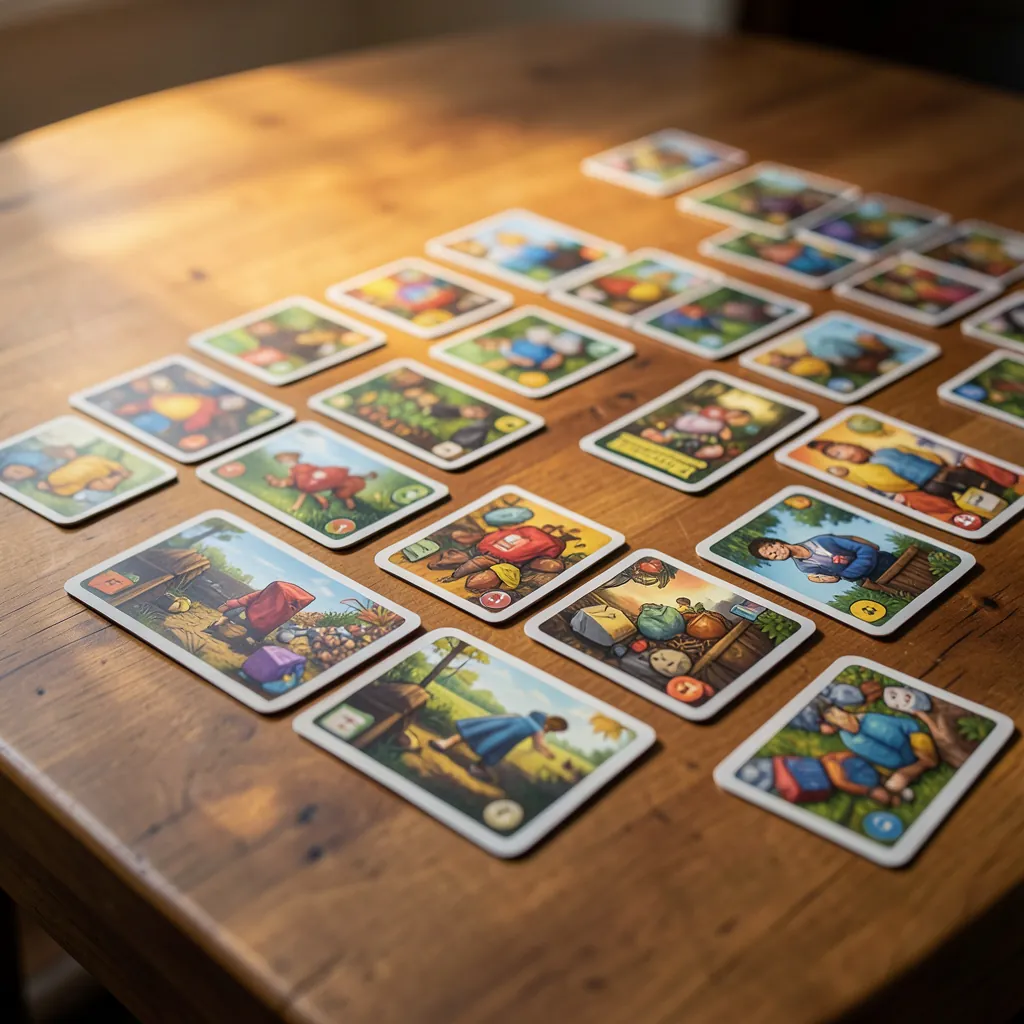
How to Play Garbage (Trash): Rules, Setup, Scoring, and Variations
Contents
🃏 Garbage (also called Trash) is a quick sequencing card game in which each player races to turn 10 face-down cards into an Ace-through-10 order, then repeats with one fewer card each round. The first player to complete the final one-card round wins. It uses a standard deck, is easy to learn, and works for 2 or more players (extra decks help larger groups).
Players: 2+ (commonly 2–6; add decks for larger groups) Play Time: About 15–30 minutes Age: 7+ Difficulty: Easy Type: Sequencing/shedding card game
Setup
- Use a standard 52-card deck. For larger groups, sources recommend adding extra deck(s): Source 2 says additional decks are needed for 4+ players; Source 4 says 2–4 players can use one deck and 4+ should add a deck; Source 5 treats 2–6 as typical and uses a double deck for big groups.
- Shuffle and deal 10 cards face down to each player. Players should not look at their cards (Sources 2–5).
- Place the remaining deck face down in the middle as the draw pile. Turn the top card face up beside it to start the discard pile (Sources 3 and 5; Sources 2 and 4 describe the draw pile and later discards).
- Arrange each player’s 10 cards face down in numbered positions 1 through 10. Sources conflict on layout: Source 2 and Source 4 use one straight row; Source 3 and Source 5 use two rows of five. The positions still run 1–10, so either layout works if everyone agrees.
- Agree on face-card roles before play. This is the biggest rules conflict in the sources; see the comparison table below.
Source note: Source 1 describes a different “Garbage” training/simulation card game using spades, clubs, diamonds, and red cards. That is not the same as the common Ace-through-10 Garbage/Trash game covered here, so its rules are not merged into this guide.
What layout and deck count should I use?
There is no single source consensus. Use one deck for small groups, add decks when the group is large or the draw pile runs too low, and choose either one row of 10 or two rows of five. Just make the 1–10 positions clear before the first turn.
How to Play
Before playing, choose one face-card version from the table below and use it consistently. The numbered rules below follow Source 2’s face-card roles for a complete playable version, with conflicts flagged.
What do the face cards do? (source comparison)
| Card | Source 2 | Source 4 | Source 5 | Practical note |
|---|---|---|---|---|
| Ace | Goes in the 1 spot | Goes in the 1st spot | Always counts as 1 | Ace = 1 in all versions |
| 2–10 | Go in matching numbered spots | Go in matching numbered spots | Go in matching numbered spots | Core sequencing cards |
| Jack | Garbage; discard when picked up | Garbage; discard when picked up | Wild; can stand in for any number | Major conflict: Jack is dead in Sources 2/4, wild in Source 5 |
| Queen | Garbage; discard when picked up | Discard and draw again | Garbage/dead; ends turn immediately | Conflict: Source 4 treats Queen differently |
| King | Wild; can go in any spot | Wild; can go in any spot | Garbage/dead; ends turn immediately | Conflict: King is wild in Sources 2/4, dead in Source 5 |
| Joker | Not mentioned | Not mentioned | Optional extra dead card under some house rules | Use only if your table agrees |
- The player to the left of the dealer goes first. On your turn, draw the top card from the draw pile or take the top card from the discard pile (Sources 2, 3, 4, and 5).
- If the card is an Ace through 10, place it face up in its matching numbered spot. Ace goes in spot 1; a 5 goes in spot 5; a 10 goes in spot 10 (Sources 2–5).
- Pick up the face-down card that was in that spot, look at it, and if it can be placed, place it in its matching spot. Continue this chain until you cannot place the revealed card (Sources 2–5).
- If the card is a wildcard under your chosen version, place it in any open spot. In Source 2’s rules, a wildcard can later be replaced by the correct card and moved to another open spot.
- If the card cannot be placed, discard it face up to the discard pile and end your turn. In Source 2, Jacks and Queens are garbage; in Source 4, Jacks are garbage and Queens are draw-again; in Source 5, Queens and Kings are garbage and Jacks are wild.
- The next player may take the top discard or draw from the deck, then repeats the same process (Sources 2, 3, 4, and 5).
- A round ends when a player has flipped all cards in their current hand face up in order. Source 2 gives every other player one final turn; if another player also completes the round on that final turn, they also advance. Source 4 more simply says the first player to flip all cards wins the round. Agree on this detail before play.
- In the next round, players who completed the round are dealt one fewer card and need a shorter sequence: 10 cards becomes 9, then 8, and so on. Players who did not complete the round keep the same hand size (Source 2; Sources 4 and 5 describe the winner dropping to 9 while others stay at 10 in the first round).
- Continue until the final one-card round. Source 2 says the first player to flip an Ace in the last round wins. Source 5 says the final one-card sequence decides the match. Source 4 says the game is officially over once someone gets down to 1 card, which conflicts with the final-round win condition in Sources 2 and 5.
Scoring
Garbage is not a point-scoring game in the sources. Winning is tracked by completing sequences and reducing your required hand size each round.
- Round win: Complete your current sequence—Ace through 10, then Ace through 9, then Ace through 8, and so on (Source 2).
- Progression: A player who completes 10 cards is dealt 9 next round; a player who completes 9 is dealt 8 next round. Players who fail to complete the round usually replay the same hand size (Source 2).
- Match win: The first player to complete the final one-card/Ace sequence wins (Source 2 and Source 5). Source 4 instead says the game ends when someone gets down to 1 card, so flag that conflict if your table uses Source 4’s ending.
💡 Strategy Tips
- Track the discard pile. Do not waste turns chasing a number that has already been discarded (Source 5).
- Reveal face-down cards early. The sooner you flip hidden cards and build chains, the faster you can complete your sequence (Source 5).
- Save wildcards for hard gaps. Do not spend a wild too early if you can use it later where no matching card is likely to appear (Source 5). Remember that the wildcard may be a King or Jack depending on your chosen version.
- Watch opponents’ filled spots. Their face-up cards can hint at which numbers they still need (Source 5).
- Common beginner mistake: mixing face-card versions mid-game. Decide before play whether Jacks, Queens, and Kings are wild or garbage, and do not switch rules halfway through.
🎲 Variations
- Two-player Garbage: Yes, you can play with 2 players. Source 5 says one deck works fine for 2 players, and Source 2 supports 2 or more players.
- More players / double deck: Add extra decks for larger groups. Source 5’s “Double Deck Garbage” shuffles two full decks together, deals 10 cards to each player, and uses shared draw/discard piles. Duplicate numbers can exist, but each sequence still needs only one of each number.
- Speed Garbage: Everyone plays simultaneously instead of taking turns. The first player to complete their layout calls it and ends the round; misplaced cards mean an automatic round loss (Source 5).
- Reverse Garbage: Play the sequence backward: 10 goes in the first slot, 9 in the second, down to Ace. Source 5 keeps Jacks wild and Queens/Kings garbage in this version, and the first to complete the single-slot “10” wins.
- Multiples Garbage: An educational skip-counting variant uses printable cards. For example, a “4s” deck contains 4, 8, 12, 16, 20, 24, 28, 32, 36, and 40, and players put those multiples in order instead of Ace through 10 (Source 3).
- Not a variation: Source 1’s spade/club/red-card “Garbage” simulation is a separate training game, not a house rule for the Ace-through-10 game.
❓ FAQ
How many players can play Garbage?
Garbage usually supports 2 or more players. Source 5 says 2–6 is typical, Source 2 says 2 or more, and Source 4 lists 2–4 with an extra deck for 4+. Larger groups can add decks, but sources differ on exactly when extra decks become necessary.
How do you win Garbage?
Complete the Ace-through-10 sequence, then keep winning rounds with one fewer card each time. The first player to complete the final one-card/Ace round wins. Note the conflict: Source 4 says the game ends once someone gets down to 1 card, while Sources 2 and 5 require completing that final sequence.
Can you play Garbage with 2 players?
Yes. Source 5 says one deck works fine for 2 players, and Source 2 lists 2 or more players. Use the same rules, but ignore extra-deck advice meant for larger groups.
Is Garbage hard to learn?
No. Sources describe it as easy to learn and easy to play; Source 4 lists it for ages 7 to adult, and Source 5 says kids can play while the strategy still engages adults.
How long does a game take?
About 15–30 minutes. Source 5 gives 15–30 minutes, and Source 4 lists an expected time of 30 minutes.
What do the face cards do in Garbage?
They depend on the source version. Source 2: Kings are wild; Jacks and Queens are garbage. Source 4: Kings are wild; Jacks are garbage; Queens are draw-again. Source 5: Jacks are wild; Queens and Kings are garbage. Choose one version before play and do not mix them.
Related guides
- How to Play Phase 10: Rules, Scoring, and Strategy
- How to Play War: Rules for the 2-Player Card Game
- 5 hundred card game
- 🃏 How to Play 500: The Complete Card Game Guide