Deck Sequence: How to Play — Source-Based Guide Status
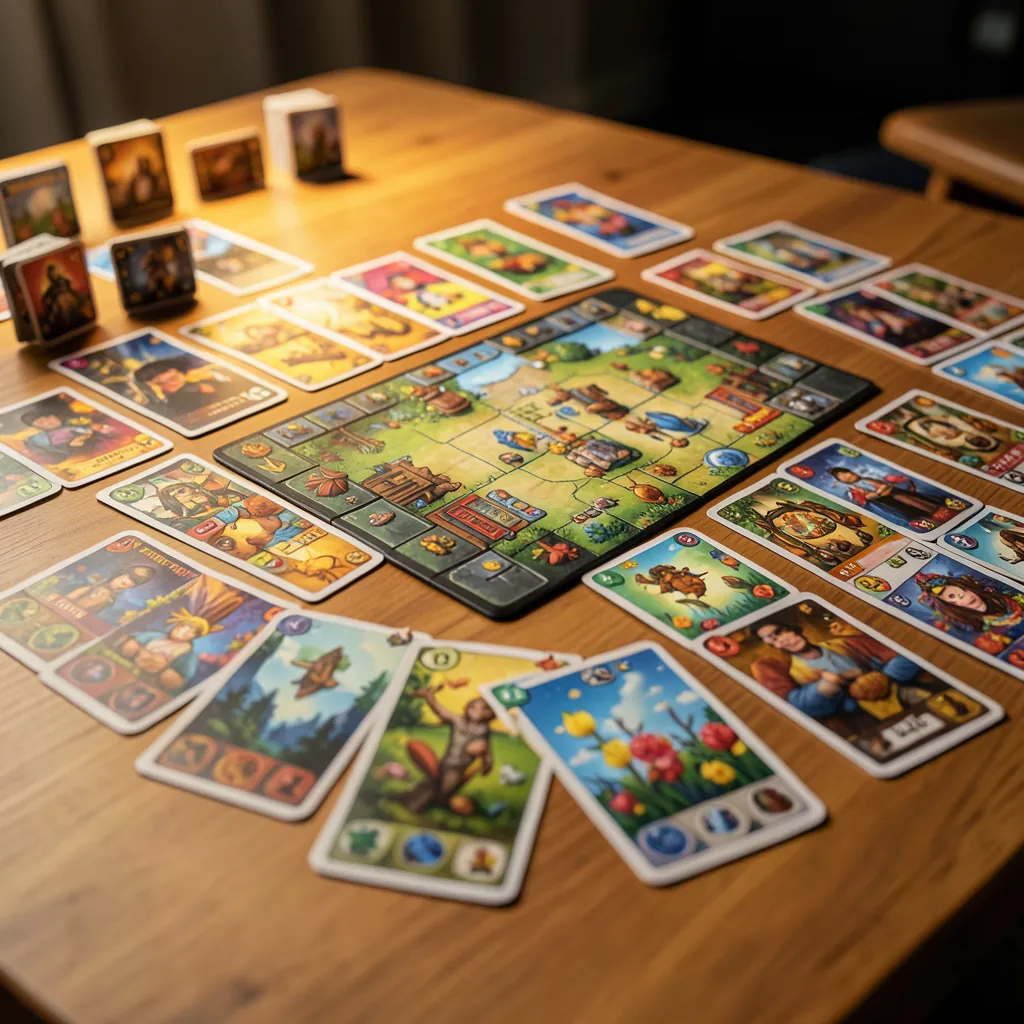
Deck Sequence: How to Play — Source-Based Guide Status
Contents
🃏 The supplied sources do not describe a playable tabletop or card game called “deck sequence”; they cover unrelated software, card-shuffling mathematics, card-sequencing hardware, bridge deck construction, and semiconductor decks. Because no setup, turn order, scoring, player count, or win condition is provided, an accurate how-to-play guide cannot be created from these sources without inventing rules.
Players: Not specified in the supplied sources; the brief’s “3–5” is unsupported
Play Time: Not specified in the supplied sources; the brief’s “20–30 minutes” is unsupported
Age: Not specified in the supplied sources; the brief’s “10+” is unsupported
Difficulty: Not specified in the supplied sources; the brief’s “Easy” is unsupported
Type: Not specified in the supplied sources; the brief’s “Trick-taking card game” is unsupported
Setup
No tabletop/card-game setup can be stated from the sources. The supplied material does not include deal instructions, starting conditions, board layout, player roles, or hand sizes for a game.
| Source | What it actually covers | Supports a “deck sequence” game guide? |
|---|---|---|
| Source 1 | Serato Studio’s Deck Sequencer / Piano Roll: note and step data, velocity, copy/paste, Fill In/Clear Row | No — music-production software |
| Source 2 | Mathematical analysis of riffle shuffles and “rising sequences” in card permutations | No — probability/shuffling theory |
| Source 3 | Automated hardware and method for sequencing a standard deck of playing cards | No — card-sorting device patent |
| Source 4 | LEAP Bridge Steel “Deck Placement Sequence” dialog for bridge analysis | No — civil-engineering software |
| Source 5 | Construction sequence for a bridge roadway deck: deck pans, rebar, concrete, screed | No — bridge construction |
| Source 6 | Fabrication of multi-deck 3D NAND memory devices with sequences of openings | No — semiconductor manufacturing |
How to Play
- Do not treat Source 1 as game rules: it describes a Deck Sequencer for creating/recording notes or steps in Serato Studio, including a 16-step drum page, Fill In/Clear Row, velocity 1–127, and copy/paste shortcuts.
- Do not treat Source 2 as game rules: it defines a “rising sequence” as a maximal increasing sequential ordering of cards in a deck and analyzes riffle shuffles.
- Do not treat Source 3 as game rules: it describes an automated method/apparatus for putting playing cards back into a “properly sequenced deck,” such as diamonds, clubs, hearts, spades, with the ace of spades at the bottom.
- Do not treat Sources 4–5 as game rules: they describe bridge deck placement and roadway deck construction.
- Do not treat Source 6 as game rules: it describes stacked semiconductor decks and fabrication sequences.
- To produce a real how-to-play guide, provide a rulebook or a source that states the game’s setup, turn structure, allowed actions, scoring, and win condition.
Scoring
No scoring or winning rules for a tabletop/card game are provided in the sources. No source states how points are earned, how rounds end, or how a winner is determined.
💡 Strategy Tips
No game strategy tips can be derived accurately because the sources do not provide playable rules. Common beginner mistakes cannot be identified without a rule set.
🎲 Variations
No house rules, player-count variants, or two-player adjustments are described in the sources. The sources do not contain a game to vary.
❓ FAQ
Is “deck sequence” a tabletop or card game in the supplied sources?
No. The supplied sources use “deck sequence” or related terms in music software, card-shuffling theory, card-sequencing hardware, bridge construction, and semiconductor fabrication.
How many players can play?
Not specified. The supplied sources do not give a player count for a game.
How do you win?
Not specified. No win condition or scoring system is provided.
Can you play with 2 players?
Not specified. No player-count variants are provided.
Is it hard to learn?
Not specified. There are no game rules to assess.
What do you need to play?
Not specified. The sources do not list components, decks, boards, tokens, or other game materials.
No source conflict on game rules can be flagged because none of the sources provides game rules for a tabletop/card game called “deck sequence.”
Related guides
- How to Play Phase 10: Rules, Scoring, and Strategy
- How to Play War: Rules for the 2-Player Card Game
- 5 hundred card game
- 🃏 How to Play 500: The Complete Card Game Guide
- 500 Card Game Rules: How to Play Five Hundred