How to Play Haggis: Rules, Scoring, and Sequence Combinations
How to Play Haggis: Rules, Scoring, and Sequence Combinations
Contents
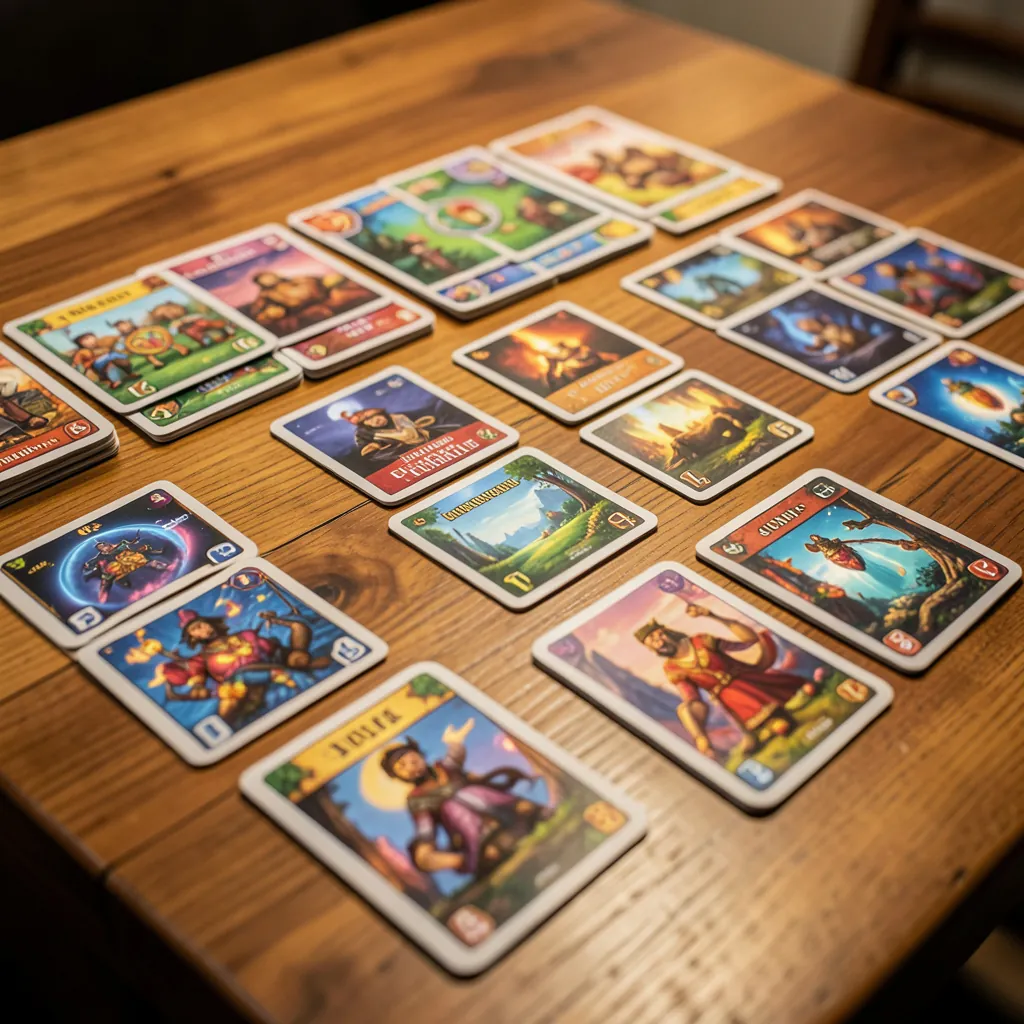
🃏 Haggis is a 2–5 player trick-taking and shedding card game in which you build sets, sequences, and bombs to empty your hand first. You score by going out, capturing cards in tricks, and making successful Little or Big bets. The goal is to finish with more points than your opponents.
Players: 2-5
Play Time: 20-30 minutes
Age: 10+
Difficulty: Easy
Type: Trick-taking card game
Setup
- Choose 2–5 players. Haggis supports 2–5 players; the 3–6 player count in US792345A belongs to a different patented sequence game, not Haggis.
- Use a Haggis deck or the Board Game Arena implementation. On BGA, the deal is handled automatically.
- Each player starts a round with a Jack, Queen, and King. These face cards are public.
- Treat the public face cards as wild cards for sets and sequences. They may represent equal or lower face cards — for example, a Queen can act as a Jack.
- Choose the scoring rule for the game: old scoring or new scoring (see Scoring below).
- Deal the remaining cards according to the Haggis rules for your player count. The first leader opens the first trick with any valid combination.
How to Play
- Learn the valid combinations: sets, sequences, and bombs. A set is any number of cards of the same rank. A sequence is 3 or more cards of the same color with consecutive rank. A sequence can also be 2 or more pairs or larger sets of consecutive rank sharing the same suits between sets.
- The first leader plays any valid combination. That combination sets the type and exact number of cards required for the trick.
- On your turn, play a higher-ranking combination with exactly the same type and same number of cards as the first combination played. You may also pass.
- Use face cards as wild cards in sets or sequences. They may represent equal or lower face cards.
- Bombs are the exception: you can play a bomb to beat any combination, except a higher bomb.
- When all but one player pass in succession, the player who played the highest combination captures all cards played. Important exception: if the highest combination is a bomb, the cards are captured by the player with the next higher combination.
- The winner of the last trick leads the new trick with any combination.
- Continue until one player sheds their last card. Once there is only one player with cards in hand, the first player to go out captures them all along with the Haggis.
- Score the round using the chosen scoring rule, then continue play over rounds and track total points.
What combinations are valid in Haggis?
| Combination | Definition | Example | Key rule |
|---|---|---|---|
| Set | Any number of cards of the same rank | 7; 5 5; 8 8 8 8 | Face cards can be wild |
| Sequence | 3+ cards of the same color with consecutive rank | 8 9 10 in one color | Face cards can be wild |
| Multi-set sequence | 2+ pairs or larger sets of consecutive rank sharing the same suits between sets | 3 3 4 4 5 5 | Treated as a sequence type |
| Bomb | Special combination with its own ranking | See bomb table below | Beats non-bombs except a higher bomb |
What is the bomb ranking in Haggis?
| Rank | Bomb |
|---|---|
| Lowest | 3 5 7 9 in any 4 different colors (“rainbow bomb”) |
| J Q | |
| J K | |
| Q K | |
| J Q K | |
| Highest | 3 5 7 9 in one color (“suited bomb”) |
Scoring
| Scoring setting | How captured cards score | When chosen |
|---|---|---|
| Old rule | 2, 4, 6, 8, 10 = 0 point; 3, 5, 7, 9 = 1 point; J = 2 points; Q = 3 points; K = 5 points | Selected at game start |
| New rule | 1 point per captured card | Selected at game start |
- At the moment you shed your last card, score 5 points per card in the hand of the player who held the most cards.
- Once only one player has cards in hand, the first player to go out captures them all along with the Haggis.
- A successful Big bet scores 30 points. A successful Little bet scores 15 points.
- Points from unsuccessful bets are added to the scores of the round’s winner and to player(s) who did not bet.
- The overall winner is the player with more points than their opponent(s).
💡 Strategy Tips
- Track the public face cards. The Jack, Queen, and King are public wilds, so everyone can see which flexible cards are available.
- Do not waste bombs too early. Bombs beat non-bombs, but if the highest combination is a bomb, capture goes to the player with the next higher combination — so bomb timing can backfire.
- Match type and card count exactly. A common beginner mistake is playing a higher set or sequence with the wrong number of cards.
- Use wilds to stretch sequences. Face cards can represent equal or lower face cards, which helps you complete or extend sequences.
- Bet only when your hand supports it. A failed Little or Big bet gives points to the round winner and to non-bettors.
Common beginner mistakes: forgetting the bomb capture exception, playing wilds too early, and ignoring how many cards the leader played.
🎲 Variations
- Old vs. new scoring: The BGA sources list two scoring settings — old scoring with card-specific values, and new scoring at 1 point per captured card. Choose one at the start.
- Player-count variant: Haggis supports 2–5 players. Two-player play is supported; the sources do not describe a separate two-player rule set, so use the standard rules.
- Do not import brake-cards: US792345A describes a different patented sequence game with brake-cards, a custom 56-card pack, and a 3–6 player count. Those rules are not Haggis rules.
How is Haggis different from the US792345A patented sequence game?
| Feature | Haggis (BGA rules sources) | US792345A patented game |
|---|---|---|
| Player count | 2–5 | 3–6 |
| Core play | Sets, sequences, bombs; same type and card count; pass allowed | Play next card in sequence; brake-cards can end a sequence |
| Special cards | Public J/Q/K wilds | Brake-cards; value-cards A-5 and A-10 |
| Scoring | Going out, captured cards under old/new rule, Little/Big bets | One point per opponent card; value-card points; example target of 100 |
| Date/identity | Haggis rules on Board Game Arena | US patent 792345A, patented June 13, 1905 |
❓ FAQ
How many players can play Haggis?
Haggis supports 2–5 players. It is not limited to 3–5; two-player play is supported. The 3–6 player count in US792345A belongs to a different patented game.
How do you win Haggis?
You win by having more points than your opponents. Points come from going out, capturing cards under the chosen scoring rule, and successful Little or Big bets.
Can you play Haggis with 2 players?
Yes. Haggis supports 2–5 players, so two-player play is allowed. The sources do not describe a separate two-player variant; use the standard rules.
Is Haggis hard to learn?
It is easy to learn the basic turn: play the same type and number of cards at a higher rank, or pass. The challenge comes from tracking wilds, bombs, captures, and bets.
How long does a game take?
A game typically takes about 20–30 minutes.
What do you need to play Haggis?
You need a Haggis deck or the Board Game Arena implementation, public Jack/Queen/King wild cards for each player, and a chosen scoring rule: old or new.
Related guides
- How to Play Phase 10: Rules, Scoring, and Strategy
- How to Play War: Rules for the 2-Player Card Game
- 5 hundred card game
- 🃏 How to Play 500: The Complete Card Game Guide
- 500 Card Game Rules: How to Play Five Hundred