How to Play Rummy: Rules, Setup, Scoring, and Variations
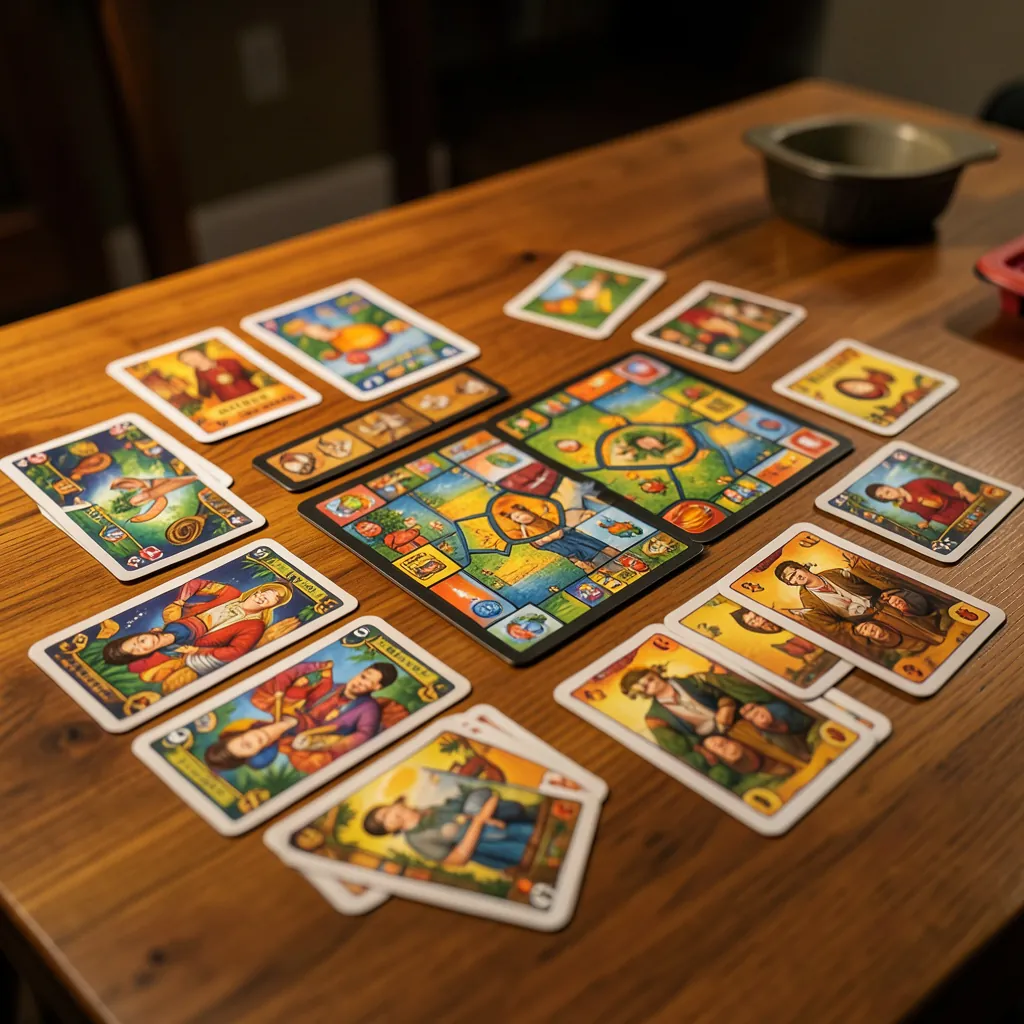
How to Play Rummy: Rules, Setup, Scoring, and Variations
Contents
🃏 Rummy is a card game in which players race to arrange their hand into valid sequences and sets; in the 13-card Indian Rummy described by most app sources, the goal is to use all 13 cards and declare before opponents. It is usually played with 2–5 players, two decks, and at least one pure sequence. Rules vary: Pagat’s basic/straight Rummy uses one deck, different hand sizes, and melding/laying off.
Players: 2-5 in Indian Rummy apps; up to 6 in basic Rummy
Play Time: Varies by format; basic Rummy is played to an agreed target score or number of deals
Age: 18+ app-store rating for real-money rummy apps; social/play-money apps may differ
Difficulty: Easy
Type: Card game (set-collection/rummy)
Setup
Which Rummy are the sources describing?
The sources describe two related but different games: app-style Indian Rummy, usually 13 cards with two decks, and basic/straight Rummy as described by Pagat, using one 52-card deck and melding/laying off. Agree which version you are playing before dealing.
Conflict note: Source 1 says rummy originated in India; Source 3 says rummy games first appeared in the early twentieth century and were probably derived from the Mexican game Conquian. Sources also disagree on player counts and hand sizes, so the table below separates the two rule sets.
| Feature | Indian Rummy (app sources 1, 2, 4, 5) | Basic/Straight Rummy (Source 3) |
|---|---|---|
| Players | 2–5 | 2–6; best with 2–4 |
| Deck | Two decks in the 13-card version | One standard 52-card deck |
| Hand size | 13 cards each | 10 cards each for 2 players; 7 each for 3–4 players; 6 each for 5–6 players |
| Main goal | Arrange all 13 cards into valid sequences/sets and declare before opponents | Dispose of all cards by melding, laying off, and discarding |
| Required combinations | At least two sequences; one must be a pure sequence without a joker; the second can be pure or impure. Sets are 3–4 cards of the same rank in different suits and may include jokers. Creating sets is optional according to Source 2. | Melds are sequences or groups/sets; no mandatory pure sequence is described |
| Jokers/wild cards | Allowed in non-pure sequences and sets, but not in the mandatory pure first sequence | Standard basic Rummy does not use jokers; Source 3 mentions a Wrotham variant with three jokers |
| How you win | Declare with a valid 13-card hand before opponents | Go out by melding, laying off, or discarding your last card |
| Scoring | App/format-specific; one 80-point Indian Rummy version starts each player at 80 and aims to reach 0 | Face cards 10, aces 1, number cards face value; winner scores opponents’ remaining cards; play to agreed target or deals |
Deal and starting piles
- Indian Rummy, 13-card version: Use two decks. Deal 13 cards to each player. The remaining cards form the face-down stock, with a face-up discard area; on a turn a player may pick up a face-up or face-down card and exchange it with a card from their hand. Jokers/wild cards may help non-pure sequences and sets, but the mandatory first sequence must be pure without a joker.
- Basic/Straight Rummy: Use one 52-card deck. Deal 10 cards each for two players, 7 each for three or four players, and 6 each for five or six players. Place the next card face up to start the discard pile and the rest face down as the stock. The first dealer is chosen randomly; with two players turns alternate, and with more than two play rotates clockwise.
How to Play
Indian Rummy, 13-card app-style
- On your turn, draw one card from the face-down stock or take the face-up discard/top card.
- After drawing, discard one card from your hand to the face-up discard pile, keeping your hand at 13 cards.
- Build valid combinations. A sequence is three or more consecutive cards of the same suit. A set is three or four cards of the same rank but different suits, and it may include jokers.
- Meet the Indian Rummy minimum: at least two sequences, including one pure sequence with no joker. The second sequence may be pure or impure with a joker.
- Use all 13 cards in valid sequences and/or sets. Source 2 notes that creating sets is optional if the rest of the hand is valid.
- Continue drawing and discarding until your full 13-card hand is valid.
- Declare before your opponents once your hand is valid. In app formats, follow the app’s declaration and drop rules.
Basic/Straight Rummy
- Choose the first dealer; with two players, turns alternate, and with more than two, play begins with the player to the dealer’s left and rotates clockwise.
- On your turn, draw one card from the top of the stock or the top card of the discard pile.
- Optionally meld one valid sequence or group/set from your hand face up on the table. Source 3 says you cannot normally meld more than one combination in a turn unless a house rule allows it.
- Optionally lay off cards from your hand onto melds already on the table, as long as the added cards make a valid meld. You may not rearrange existing melds to do this.
- At the end of your turn, discard one card face up onto the discard pile. If you took the top discard card that turn, you may not discard that same card immediately.
- Go out by melding, laying off, or discarding your last card. As soon as one player goes out, the hand ends.
- If the stock runs out and the next player does not want the discard, Source 3 describes turning the discard pile over without shuffling to form a new stock; some variants shuffle or end the game instead.
Scoring
How does Indian Rummy scoring work?
Indian Rummy scoring is not universal across the sources. Source 4 and Source 5 describe an 80-point version: each player starts with 80 points and forms sequences and sets to reduce their points from 80 to 0; reaching 0 with the correct sequences and sets wins. Source 2 lists Points, Pool, Deals, and Spin & Win formats but does not give a single point table. Source 1 mentions point value in Bet Rummy and chips in Deal Rummy. Treat Indian Rummy scoring as app- or format-specific rather than assuming one universal table.
How does basic/straight Rummy scoring work?
In Source 3’s basic Rummy, when a player goes out, the other players add up the value of the cards left in their hands:
- Face cards K, Q, J = 10 points each
- Aces = 1 point each
- Number cards = face value, such as 6 for a six and 4 for a four
The winner adds the total value of all remaining cards in opponents’ hands to their cumulative score. Play continues until a player reaches the agreed target score or until the agreed number of deals has been played.
If the game ends without anyone going out, all players count the cards left in their hands. The player with the least points wins and scores the sum of the differences between their score and each other player’s score. Source 3 gives this example: A has 6, B has 15, C has 7, and D has 21; A wins and scores 25, calculated as 9 + 1 + 15. Some groups use penalty scoring instead: losers score penalty points, and when someone reaches 100 or more, the player with the lowest score wins.
💡 Strategy Tips
- Build the mandatory pure sequence first. In Indian Rummy, the first sequence must be pure and cannot use a joker, so make that your priority.
- Discard unmatched high-value cards early. Source 2 recommends getting rid of high-value cards that do not fit your sequences or sets.
- Use jokers wisely. Jokers can help non-pure sequences and sets, but relying on them for the first sequence is a beginner mistake because the first sequence must be pure.
- Watch opponents’ moves and discards. Source 2 lists this as a core tip; the discard pile can reveal what other players need or are avoiding.
- Know when to drop. Source 2 advises dropping out if you feel you do not have winning cards, especially in app formats that offer a drop option.
🎲 Variations
- Player-count variations: Indian Rummy apps describe 2–5 players. Basic Rummy supports 2–6 players, with 10 cards each for two players, 7 cards each for three or four, and 6 cards each for five or six.
- Indian Rummy formats: Source 2 lists Points, Pool, Deals, and Spin & Win. Source 1 lists Play Now, Lobby, Training, Bet Rummy, and Deal Rummy, and mentions Pool Rummy and Tournament as coming features. Source 5’s title also references Fast Rummy.
- Multiple melds: Some basic Rummy groups allow players to lay down as many melds as they want in a turn instead of only one.
- Going rummy bonus: Some groups double the score or award a 10-point bonus when a player who has not previously melded or laid off goes out in one turn.
- Ace high or low: Standard basic Rummy treats aces as low, so A-2-3 is valid but Q-K-A is not. Some groups allow aces high or low and value aces at 15 points when high.
- Last discard rule: Some groups require the final card to be discarded, rather than allowing a player to meld all remaining cards.
- Stock and discard recycling: Basic Rummy groups differ on whether to shuffle the discard pile when it is reused as a new stock. Block Rummy does not reuse the discard pile at all; the game ends when the stock is exhausted.
❓ FAQ
How many players can play Rummy?
Indian Rummy apps list 2–5 players. Basic/straight Rummy supports 2–6 players, though Source 3 says it is best with two to four.
How do you win at Rummy?
In 13-card Indian Rummy, you win by arranging all 13 cards into valid sequences and sets, including at least two sequences and one pure sequence, then declaring before opponents. In basic Rummy, you win a hand by going out—melding, laying off, or discarding your last card.
Can you play Rummy with 2 players?
Yes. Indian Rummy sources list 2–5 players, and basic Rummy deals 10 cards each when only two players are in the game.
Is Rummy hard to learn?
No. Sources describe rummy as easy to learn and easy for new players to start. The main Indian Rummy challenge is forming the two required sequences, especially the pure first sequence.
How long does a game take?
The sources do not give a fixed play time. Basic Rummy is played to an agreed target score or number of deals, while app formats vary by game mode and table rules.
What do you need to play Rummy?
For 13-card Indian Rummy, you need two decks, 2–5 players, and 13 cards per player. For basic/straight Rummy, you need one 52-card deck and 2–6 players, with hand sizes varying by player count.
Related guides
- How to Play Phase 10: Rules, Scoring, and Strategy
- How to Play War: Rules for the 2-Player Card Game
- 5 hundred card game