How to Play 500 (Five Hundred): Setup, Bidding, Scoring, and Variations
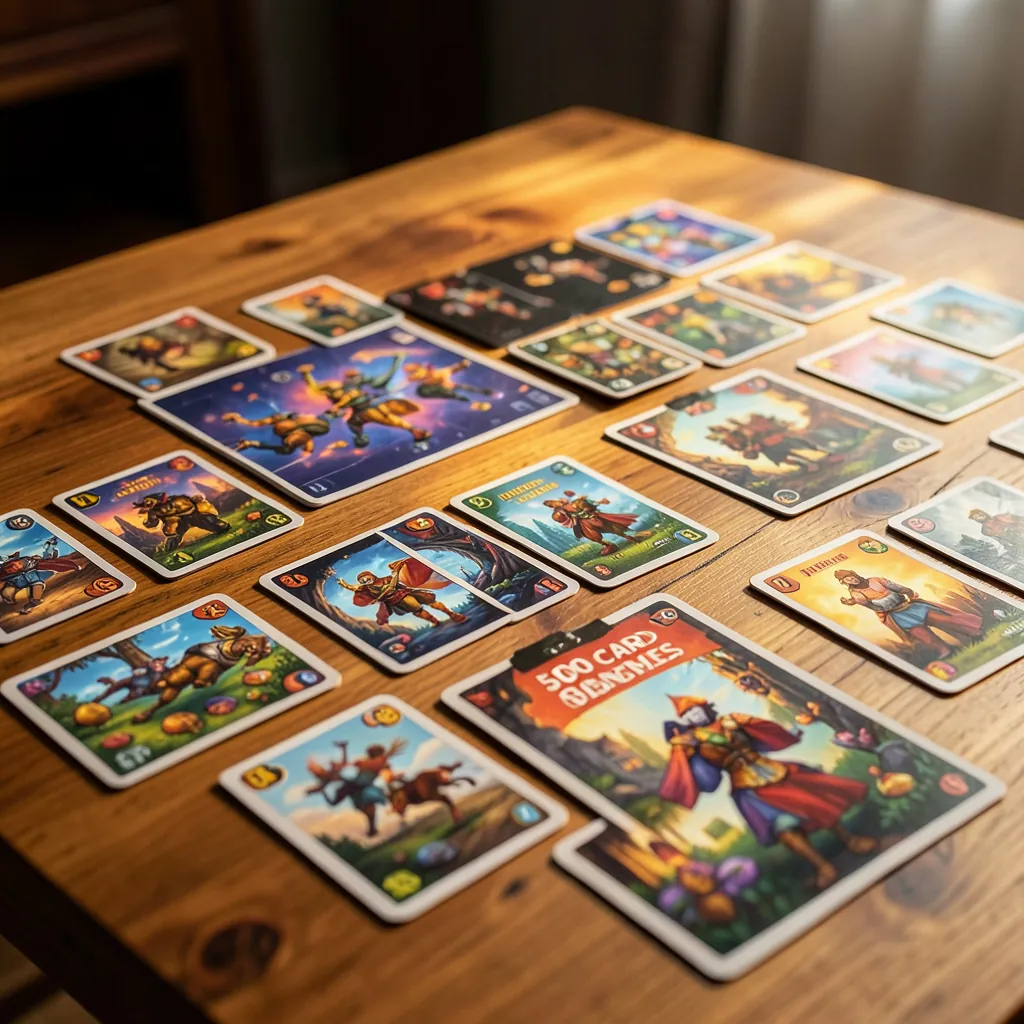
How to Play 500 (Five Hundred): Setup, Bidding, Scoring, and Variations
Contents
🃏 500 (Five Hundred) is an American trick-taking card game descended from Euchre. In the standard four-player partnership version, players bid for how many tricks their team will take with a chosen trump or no trump, then play ten tricks; the first team to reach 500 points by making bids wins. Sources list 2–6 players and about 30 minutes.
Players: 2–6 (standard partnership game is 4)
Play Time: About 30 minutes
Age: Not specified in the sources
Difficulty: Not specified in the sources
Type: Trick-taking card game
Setup
What do you need to play 500?
- Standard game: Four players in two partnerships, usually sitting opposite each other.
- Cards: A French deck with a joker. The standard 43-card deck removes the 2s, 3s, and two 4s. Sometimes two jokers are used; if so, the black joker beats the red one.
- Conflict to agree on: One Wikipedia source says either remove the two black 4s, or remove the 4 of spades and 4 of diamonds so the 4 matching the trump colour is also treated as trump. An archived 2003 Wikipedia source says remove the red 4s. Agree on one convention before play.
- 45-card variant: Keep all 4s; use 45 cards with one joker or 46 with two jokers. Each player still gets 10 cards, but the kitty grows to five cards, or six with two jokers.
- Six-player variant: A special 63-card pack is needed, with 11s, 12s, and red 13-spot cards.
How do you deal?
- Deal 10 cards to each player.
- Place three cards face down in the centre as the kitty (also called the widow, blind, or hole). With two jokers, use four kitty cards.
- Traditional four-player deal: three cards to each player, one to the kitty, four to each player, one to the kitty, three to each player, one to the kitty.
- For a 45-card deck, the deal can run: three to each player, three to the kitty, four to each player, two to the kitty, then three to each player.
- In some versions, a player who receives no face card may call a misdeal and require a redeal.
How to Play
- Form partnerships. The standard modern form is four-player partnership play, with partners opposite each other. Sources list 2–6 players overall, but the detailed rules describe four-player partnerships.
- Deal and set the kitty as described above.
- Bid clockwise. A bid states how many tricks the bidder believes their team will take and the trump suit, or no trump. Bidding starts at the level of 6. For the same number, suit order from low to high is spades, clubs, diamonds, hearts, no trump.
- Follow bidding rules. A player may pass; a player who passes cannot later bid in that hand. In American play, bidding usually goes around only once. A bid of 6 is often an “inkle,” a hint rather than a winning contract; if the auction does not reach 7, cards are usually reshuffled. Some American rules allow only the first two players to inkle.
- Handle no bids. Most commonly, if nobody bids, the hand is dead and redealt, usually no more than twice before the deal passes. Variants play no-bid hands as no-trump at 10 points per trick, pass the deal without reshuffling, or require the dealer to bid.
- The successful bidder takes the kitty. They add those cards to their hand, then discard the least useful three cards face down. In a 45-card game, discard five. Discarded cards play no further part.
- Play ten tricks. The bidder leads the first trick, or the previous trick winner leads. Each player clockwise must follow suit if possible; if unable, they may play any card. The highest card wins the trick, and the winner leads the next trick.
- Use the correct card order. In trump, the order is: joker, jack of trumps (“right bower”), jack of the same colour (“left bower,” treated as trump), ace, king, queen, 10, 9, down to 5 or 4 if used. In non-trump suits: ace, king, queen, jack, 10, 9, down to 5 or 4. The joker is always highest and adopts the trump identity for the round.
- No-trump details. In no trump, the joker is the only trump card. When the joker is played, its suit may be nominated, but under one source it may only be played as the first or last card in that suit. If the joker is led, the suit must be declared.
- Score the hand after all ten tricks, then deal the next hand. Play continues until a team reaches 500 or falls to -500.
How do special bids work?
- Misère / Nula / Nullo: The bidder tries to take zero tricks. The partner sits out. It is usually worth 250 points and is often placed between 8 spades and 8 clubs in bidding. It can be bid once the auction reaches 7.
- Open Misère / Lay Down Misère: Same as misère, but after the first trick the bidder reveals their hand. It is usually worth 500 and often placed between 10 diamonds and 10 hearts. One source says it may be bid at any time; another says it can only be bid after an eight-trick bid, so this varies.
- Grand Nula: In one US app version, this falls between 8 spades and 8 no trump. The partner sits out, the bidder must take no tricks, and the bidder’s hand is played face up starting on the second trick.
- Double Nula: Falls between 9 spades and 9 no trump. Both partners must take no tricks.
Scoring
The full standard scoring table below comes from the archived 2003 Wikipedia source. Other sources agree on the 500-point finish but differ on failed-contract penalties.
| Bid | Spades | Clubs | Diamonds | Hearts | No Trumps |
|---|---|---|---|---|---|
| 6 tricks | 40 | 60 | 80 | 100 | 120 |
| 7 tricks | 140 | 160 | 180 | 200 | 220 |
| 8 tricks | 240 | 260 | 280 | 300 | 320 |
| 9 tricks | 340 | 360 | 380 | 400 | 420 |
| 10 tricks | 440 | 460 | 480 | 500 | 520 |
- If the bidding team makes the contract: they score the bid value from the table.
- If the bidding team fails: one source says subtract the bid value from their score. A US app source instead says the bidding team loses 10 points per trick. This is a real scoring conflict; agree on the rule before play.
- Defending team: in the archived 2003 source, the non-bidding team scores 10 points for each trick they win.
- All-ten-trick bonus: if a team wins all 10 tricks and the bid scores less than 250, or they did not bid, they score 250.
- Special contracts: Misère is usually 250; Open Misère is usually 500. Values and bidding precedence vary by house rule.
- Winning: the first team to reach 500 points by making a bid wins. A team whose score falls below -500 loses. In one source, 10-point trick scoring that would put a team over 490 is rounded down to 490.
Where do the sources conflict?
- Which 4s are removed: Wikipedia allows either removing the two black 4s or removing the 4 of spades and 4 of diamonds; the archived 2003 source says remove the red 4s.
- Failed contract penalty: the archived source subtracts the bid value; the US app source loses 10 points per trick.
- Open Misère timing: one source says it may be bid at any time; another says only after an eight-trick bid.
- No-bid hands: dead hand and redeal is most common, but no-trump at 10 points per trick, passing the deal, and forcing the dealer to bid are all described.
- Player count: sources list 2–6 players, but the fully described standard game is four-player partnerships.
💡 Strategy Tips
- Count the bowers before bidding. The joker, right bower, and left bower are the top trumps. A hand with several of them is much stronger for a trump contract.
- Treat 6 as a hint in American play. The “inkle” 6 bid is generally a signal, not a contract you expect to win; if the auction does not reach 7, the hand is usually redealt.
- Use the kitty discard carefully. After winning the bid, add the kitty, then discard your three least useful cards. Do not keep low off-suit cards that cannot win tricks.
- Remember the left bower is trump. A common beginner mistake is forgetting that the jack of the same colour as the trump suit belongs to the trump suit.
- Use only legal partnership agreements. Sources describe bidding conventions as part of tactics; avoid illegal table talk or signalling. Defenders should also remember they score 10 points per trick in the common archived scoring method.
🎲 Variations
- 45-card game: Keep all 4s. Each player still gets 10 cards, but the kitty is five cards, or six with two jokers.
- Two jokers: The black joker beats the red joker.
- Six-player game: Requires a special 63-card pack with 11s, 12s, and red 13-spot cards.
- American bidding: Often one round only; 6 is an inkle; if the auction does not reach 7, redeal.
- Longer auction: Some versions allow a player who has bid and not passed to bid again even without an intervening bid.
- No-bid variations: Play as no-trump at 10 points per trick, pass the deal, or force the dealer to bid.
- Special-contract variations: Misère and Open Misère scoring and precedence vary; some groups use Nula, Grand Nula, Double Nula, or “super open misère.”
- Two-player play: The sources list 2–6 players, but they do not give a detailed two-player rule set. The standard described form is four-player partnerships, so do not assume the partnership rules apply unchanged with two.
❓ FAQ
How many players can play 500?
Sources list 2–6 players, but the standard and most popular modern form is four players in two partnerships. Six-player 500 requires a special 63-card pack.
How do you win at 500?
The first team to reach 500 points by making a bid wins. A team whose score falls below -500 loses. In the common archived scoring method, defenders also score 10 points per trick.
Can you play 500 with 2 players?
The sources list 2–6 players, but they do not describe a detailed two-player version. The full rules given are for four-player partnerships, so a two-player game would need an agreed local variant.
Is 500 hard to learn?
The sources do not give a difficulty rating. The basic trick-taking flow is Euchre-like, but bidding, bowers, the kitty, and special contracts add complexity.
How long does a game take?
The sources list about 30 minutes as the playing time.
What do you need to play 500?
You need a French deck and a joker. The standard 43-card deck removes the 2s, 3s, and two 4s; a 45-card variant keeps all 4s. You also need four players for the standard partnership game, or a special pack for larger games.
Related guides
- How to Play Phase 10: Rules, Scoring, and Strategy
- How to Play War: Rules for the 2-Player Card Game
- 5 hundred card game
- 🃏 How to Play 500: The Complete Card Game Guide
- 500 Card Game Rules: How to Play Five Hundred