Sorry! Rules Guide: Can You Slide on Your Own Color?
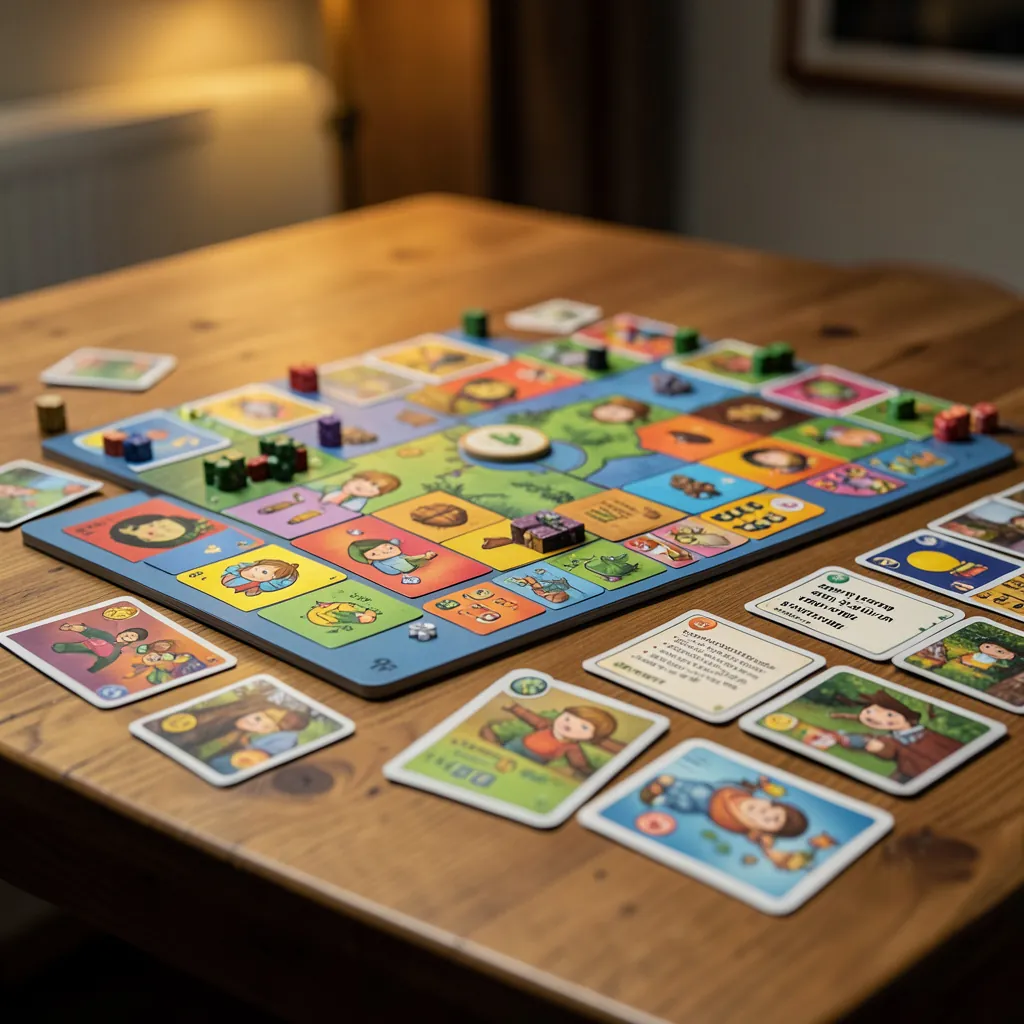
Sorry! Rules Guide: Can You Slide on Your Own Color?
Contents
🎲 Sorry! is a classic race-and-bump board game: players move pawns from Start toward Home and try to get every pawn Home first. The slide rule depends on the edition: Hasbro support says you slide on your own color, while many standard/older rules and the Giant Edition say you slide only on a different color. Check your rulebook before playing.
Players: 2–4 (standard Sorry!; the Giant Edition in the sources uses 3 pawns per player)
Play Time: Not stated in the supplied sources; varies by edition and player count
Age: 6+ for the Sorry! Giant Edition in the sources; standard editions vary
Difficulty: Easy to learn
Type: Board game / family race-and-bump game
Setup
- Standard Sorry!: Each player chooses a color and places all four pawns on the matching color Start area. Shuffle the deck and place it face down on the board’s card area; use the marked discard area for played cards.
- Sorry! Giant Edition: Assemble the spinner first if needed. Unfold the large vinyl mat, choose colors, and place each player’s 3 Giant pawns in the matching Start positions.
- Sorry! Revenge variant: Use 2–4 players. Each player takes four pawns on their color’s START, shuffles the deck face down on “Cards Here,” and each player chooses four cards to hold in hand.
- Starting player: The Giant Edition says the youngest player spins first. Other editions may specify differently or let players agree.
How to Play
- Choose a starting player. In the Giant Edition, the youngest player starts; otherwise follow your edition’s rule or agree on a method.
- On your turn, draw the top card from the deck and follow its instruction, or spin the spinner in the Giant Edition. In Sorry! Revenge, play one card from your hand, discard it, then draw back to the required hand size.
- To move a pawn out of Start, you normally need a 1 or 2; some editions also allow a Sorry! card to bring a pawn out by placing it on an opponent’s space. If an opponent is on your start circle, bump them back to their Start.
- Move pawns clockwise according to the card or spinner. You may pass over pawns, but you cannot normally end on a space with your own pawn. If you end on an opponent’s pawn, send that pawn back to its Start.
- Resolve slides only when you land by exact count on the triangle at the beginning of a slide. The trigger color depends on the edition: some rules say slide when the slide is your color; other rules say slide when it is not your color. When a slide triggers, slide to the end and bump every pawn in the slide path back to its own Start—including your own pawns.
- When you reach your color safety zone, only you may enter it. Opponents cannot enter, bump, or switch a pawn inside your safety zone. You cannot enter your safety zone by moving backward; if a card forces a backward move while you are in it, move out and re-enter later by normal movement.
- To enter Home, you must land there by exact count. Once a pawn reaches Home, it is finished and does not move again.
- Continue taking turns until one player gets all required pawns Home. If the draw deck runs out, shuffle the discard pile to make a new deck.
Can You Slide on Your Own Color? Edition Comparison
| Source / edition | Slide trigger rule | Own-color slide? |
|---|---|---|
| Hasbro support answer | Land by exact count on the triangle at the beginning of your color slide: slide to the end and bump all pawns in the path, including your own. If the slide is not your color, do not slide; stay on the triangle. | Yes |
| Sorry! Giant Edition rulebook | Land on a slider that is a different color from your own: slide to the end and bump pawns in the path. The rulebook also says you cannot slide on your own color. | No |
| Standard/older rules summarized by BoardGame Archive, FunTrivia, and GatherTogetherGames | Land by exact count on a slide that is not your own color: slide to the end. If you land on your own color slide, stay on the triangle. | No |
| Sorry! Revenge variant rulebook | Land by exact count on a triangle and the slide is your color: slide to the end and bump any pawn in your way, including your own. Stay put if the slide is not your color. | Yes |
| BoardGameGeek thread report | A poster says their recent multicolored-slide edition’s rules state to slide on their own color, opposite the original rule; the board has 8 slides with 3 colors each, so slide ownership is unclear. | Conflict—check that edition’s rulebook |
Edition-Sensitive Card and Spinner Actions
- 7: In standard card sources, move one pawn forward 7 spaces or split the move between two pawns; a 7 cannot be used to start a pawn.
- 10: Standard card sources say move forward 10 or backward 1. The Giant Edition spinner says forward 10 or backward 10.
- 11: Move forward 11 spaces or switch places with an opponent.
- Sorry! card: Take a pawn from Start and place it on an opponent’s space, sending that opponent back to Start. Sorry! Revenge also allows moving one pawn forward 4 as an option.
- Deck differences: Standard sources note no 6 or 9 cards, while Sorry! Revenge includes a 6 card and special cards.
Scoring
Sorry! does not use points in the standard rules. You win by being the first player to move all your pawns from Start to Home by exact count. Standard rules use four pawns per player; the Giant Edition in the sources uses three pawns per player. A pawn that reaches Home is finished and does not move again.
💡 Strategy Tips
- Count exact spaces. Slides trigger only when you land by exact count on the starting triangle, and Home also requires an exact count.
- Confirm your edition’s slide rule before play. Hasbro support and Sorry! Revenge say slide on your own color; many standard/older rules and the Giant Edition say slide only on a different color.
- Avoid parking your own pawns in slide paths. When a slide triggers, every pawn in the path is bumped—including your own.
- Use safety zones carefully. Opponents cannot bump or switch pawns inside your color safety zone, but you cannot enter it by moving backward.
- Common beginner mistake: Assuming every Sorry! board uses the same own-color slide rule. Check the rulebook and board markings for your edition.
🎲 Variations
- 2-player play: The sources list Sorry! as a 2–4 player game, so 2 players can use the standard rules. No special 2-player rule changes are given in the supplied sources.
- Giant Edition: Uses a spinner, a 64”×64” vinyl mat, 3 Giant pawns per player, and the youngest player spins first.
- Sorry! Revenge: Uses a hand of four cards, special cards such as Sorry! Swap and Sorry! Backward, and its own-color slide rule.
- Team play: One source notes a team variation where Red is partnered with Yellow and Green is partnered with Blue.
- Recent multicolored-slide boards: Some newer boards may have slides showing multiple colors. If the slide ownership is unclear, follow that edition’s rulebook rather than assuming the older rule.
❓ FAQ
Can you slide on your own color in Sorry?
It depends on the edition. Hasbro support says yes—slide on your own color and stay put on a different color. Many standard/older rules and the Giant Edition say no—slide only on a different color and stay on your own color triangle. Sorry! Revenge says yes. Check your edition’s rulebook.
How many players can play Sorry?
Standard sources list 2–4 players. The Giant Edition uses 3 pawns per player, and Sorry! Revenge also uses 2–4 players.
How do you win Sorry?
Be the first player to get all your pawns from Start to Home by exact count. Standard rules use four pawns; the Giant Edition uses three.
Can you play Sorry with 2 players?
Yes. The supplied sources list Sorry! as a 2–4 player game, and no special 2-player rule changes are provided.
Is Sorry hard to learn?
No—the basic turn is draw or spin, then move. The trickiest parts are exact-count slides, the own-color slide rule changing by edition, safety zones, and exact-count Home entry.
How long does a game take?
The supplied sources do not state a fixed play time. Game length varies by edition, player count, and how often slides, bumps, and exact-count Home moves occur.
Related guides
- Backgammon Direction of Play: Complete How-to-Play Guide
- How to Play Backgammon: Complete Rules, Setup & Strategy Guide
- backgammon how to
- How to Play Backgammon: Complete Rules, Setup, Scoring, and Strategy
- How to Play Basic Checkers (Draughts): Rules, Setup, Strategy and Variations